PART 1
My daughter Sarah asked me to sell my piano because her family needed help with a down payment on a new house. I did not raise my voice when she first brought it up. I had learned a long time ago that arguing too early only gives people time to change their story. I did not want one bad moment to become a family war, especially in my own kitchen.
That mahogany Steinway upright had belonged to my mother. It was purchased in 1968, and she had polished it every week. When I sold my large house in the suburbs and downsized to a smaller single-story property two years ago, I gave away dining tables, solid oak bookcases, and sets of fine china. The piano was the one thing I kept. It held the memory of my mother teaching me scales on Sunday afternoons. It anchored my living room and gave my new, smaller house a sense of permanence.
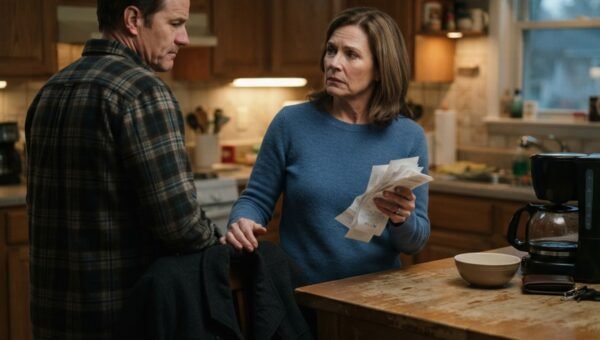
When Sarah made her request, I kept doing little chores and normal things because normal felt safer than admitting something was off. I wiped down the granite island. I refilled the coffee bean grinder. I folded a clean dish towel and placed it over the handle of the oven. I focused on the repetitive motions to keep my hands steady.
Sarah stood near the edge of the living room, watching me avoid her gaze.
She was dressed in her usual expensive workout clothes, holding her car keys tightly.
“It is just sitting there, Mom,” she said. Her tone was tight and impatient. “You barely even play it anymore. Mark and I just need this last bit of cash to close on the property. It is for your grandchildren’s future.”
I still did not answer her. I wanted to process what she was actually asking me to do. She wanted me to liquidate the last piece of my family history to fund her real estate upgrade.
Then she pushed a printed email across the kitchen counter. She told me she had already taken the liberty of contacting a buyer to see what it was worth.
Then one detail caught my attention. It was a firm $12,000 offered by a local collector.
Twelve thousand dollars is a very specific, perfectly rounded number. Professional appraisers usually offer uneven amounts based on market comps and condition.
They also rarely make a firm offer without sending someone to test the soundboard and inspect the keys in person. Furthermore, $12,000 was the exact shortfall Sarah had complained about two weeks prior during a phone call.
I told myself I only wanted one clear answer. If this was a legitimate offer from a real antique specialist, I could at least hear the man out. I almost agreed to the sale right then and there just to help my child. But my intuition told me to slow down the process.
I pushed the printout back across the counter.
“If this collector wants to buy my mother’s piano,” I told her, “he needs to come to my house and inspect it while I am present. I am not signing anything until I meet him.”
Sarah looked panicked for a fraction of a second. She quickly smoothed her expression and agreed, claiming she would set it up for Thursday morning.
PART 2
Thursday morning arrived with heavy rain. I woke up early, drank my coffee black, and waited. The house felt too quiet. Sarah showed up thirty minutes before the scheduled appointment. She paced around my living room, adjusting the curtains and moving throw pillows. She was sweating despite the cool temperature in the house. She avoided making eye contact with me, preferring to stare out the front window at the wet street.
“He should be here soon,” she kept saying, checking her phone every two minutes.
At ten o’clock, a heavy knock rattled the front door.
I opened it to find a large man in a damp leather jacket. He did not carry a professional appraisal kit, tuning forks, or even a branded folder. He just held a cheap plastic clipboard. He introduced himself as Marcus. He explained he was the co-collector, a business associate of the man Sarah had been emailing.
“Victor sent me to finalize the pickup,” Marcus said in a gruff voice.
He did not wait for an invitation. He walked past me, tracking wet boots onto my hardwood floor, and headed straight for the living room.
I followed him, feeling a deep knot form in my stomach. Sarah was standing perfectly still near the window, her hands clasped tightly together.
Marcus did not treat the Steinway like an antique instrument. He did not test the keys or inspect the felt hammers. He simply walked around to the back, checked the serial number stamped near the soundboard, and grunted.
“Looks like the pictures,” he said. He turned to Sarah. “Victor said you had the paperwork ready to go. My truck is parked down the street.”
“Paperwork?” I asked. I stepped between Marcus and the piano. “I have not agreed to sell anything yet. I wanted an inspection and a formal contract first.”
Sarah jumped forward. “Mom, please. Marcus is just checking things off his list. I told Victor we would handle the transfer today.”
Marcus frowned. He looked at me, then glared at my daughter.
“Victor said the surrender agreement was left with the collateral,” Marcus said. His voice was no longer polite. “I am not leaving without the piano or the paper. I need to verify the signature before I call my guys to load it up.”
I thought I had my answer. I assumed Sarah had preemptively drafted a bill of sale and forged my name to speed up the transaction. I turned to look at her, waiting for an explanation.
Sarah looked terrified. She shook her head slightly, her eyes pleading with me to stay quiet.
Marcus ignored our silent exchange. He sat down heavily on the piano bench. He ran his hand under the edge of the wood, feeling for a latch. He stood up and flipped the padded lid open.
I kept all my sheet music in that bench. It was full of old books of Chopin, Beethoven, and Bach that my mother used to play, along with a heavy brass metronome.
Marcus pushed the stack of books forcefully to the side. He reached into the very back corner, feeling along the hinges.
PART 3
He pulled out a folded piece of thick yellow paper. It had been wedged tightly behind the music books, completely out of sight.
Marcus opened the document and scanned the text. “Yeah, this is the collateral release,” he said.
He held it out.
Sarah lunged across the room to grab it. “Mom, do not read that. It is just a technical bank thing for the down payment.”
I stepped in front of her, blocked her arm, and snatched the paper from Marcus.
I looked down at the typed words. It was not a bill of sale. It was not a real estate document. It was a signed loan default agreement.
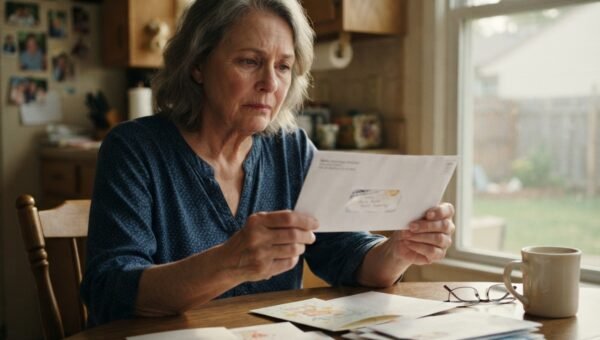
The letter was dated four months ago. It stated that Sarah and her husband Mark had borrowed $12,000 from a private lending company owned by Victor. The interest rate listed was exorbitant. The document clearly stated that the loan was now severely past due.
To avoid immediate collections, Sarah had offered physical collateral. The document listed my mother’s Steinway upright piano, including the exact serial number. At the bottom of the page, there was a signature section. Sarah had signed her own name. Beneath that, she had forged my signature under a typed paragraph claiming I had legally gifted the piano to her due to my declining mental health.
She had hidden the document inside my piano bench during a brief visit the week before. She knew Victor’s associate was coming to collect the debt. She needed the legal surrender form to be physically located with the item so he could remove it without a fight.
The story about a new house was a complete fabrication. She was in severe debt to a private lender, and she had tried to use my family heirloom to buy her way out of the consequences. She had forged my signature to steal from me.
“You forged my name and claimed I was losing my mind,” I said. My voice was completely steady.
Sarah began to sob. “Mom, Mark’s business account got frozen. We had to borrow the money to keep our current house. Victor is not a normal bank. He threatens people. I did not know what else to do. You do not even need the piano.”
I folded the paper in half and slid it into my pocket. I turned to Marcus.
“This is my house,” I told him. “This is my piano. My daughter has never owned it, and she has no legal right to use it as collateral for a private loan. If you or your men attempt to move it out of this room, I will call the police and report a home invasion.”
Marcus looked at the tears streaming down Sarah’s face. He looked at my rigid posture. He raised his hands in surrender.
“I am just the pickup guy, lady,” he said. “Victor did not tell me this was stolen property. I do not want any trouble with the police.”
He picked up his cheap clipboard, walked out my front door, and left it wide open.
ENDING
The house was painfully quiet after the heavy engine of the moving truck faded down the street. I walked over to the front door and pushed it shut, locking the deadbolt.
Sarah was still standing in the middle of the living room. Her tears were completely real now. She was crying because she had run out of options, and her elaborate lie was exposed. She walked toward me and begged me to help her. She asked me to go to the bank and withdraw $12,000 from my retirement savings so Victor would not come after Mark.
I looked at the daughter I had raised. I saw the panic in her eyes, but I also saw the profound disrespect. I realized that keeping the peace for all these years had only taught her that my boundaries did not matter. She believed my home and my possessions were simply backup funds for her mistakes.
“You need to leave my house,” I said.
“Mom, please. They will come to my house next.”
“Leave right now, Sarah. Or I will pick up the phone and report the forgery.”
She stared at me, her mouth slightly open, realizing I was not going to save her. She grabbed her purse and walked out into the rain.
The next morning, I called a professional locksmith to change every lock on my exterior doors. I spent the afternoon sitting in my lawyer’s office. I paid him to update my estate plan and transfer my home, my savings, and my mother’s piano into a secure, irrevocable trust. I made it legally impossible for Sarah to claim ownership or authority over my property ever again.
When I returned home that evening, the living room felt entirely different. It felt safe. I walked over to the mahogany piano and sat down on the padded bench. I opened the wooden lid over the keys and rested my fingers on the cool ivory. I played a single, simple chord. The deep sound resonated against the walls, filling the quiet space.
It stayed exactly where it belonged.