PART 1
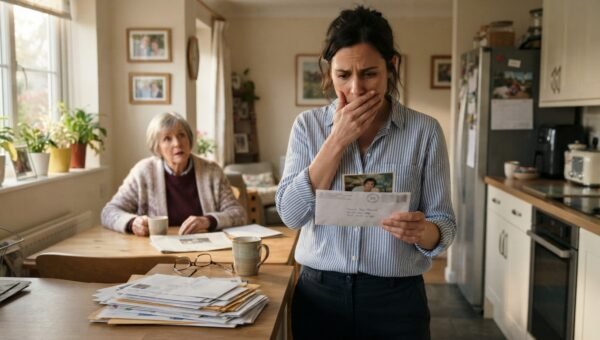
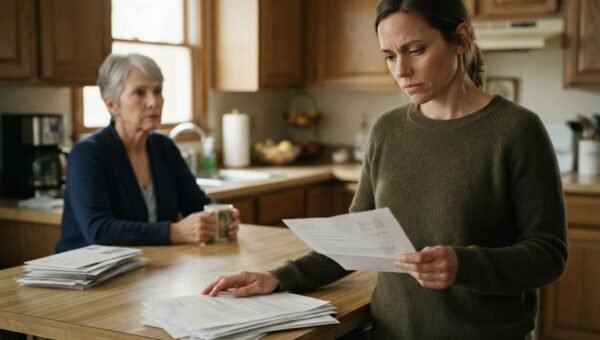
My daughter asked me to sign over my car on a Tuesday afternoon, standing right in my kitchen while holding an empty coffee mug.
She told me her transmission was shot, that the repair was more than the car was worth, and that she had no way to get the kids to school. For a few seconds, I honestly tried to convince myself there had to be a reasonable explanation.
I wanted to believe her. When you raise a child alone after your husband passes, you get into the habit of fixing things before they fall apart completely. But I had a reason for not reacting right away.
My car was a 2018 silver Buick Regal. It had fifty-four thousand miles on it, fresh tires, and the title sat safely in my lockbox with my name alone across the front. It was paid off. It was the last thing David and I bought together six months before he got sick.
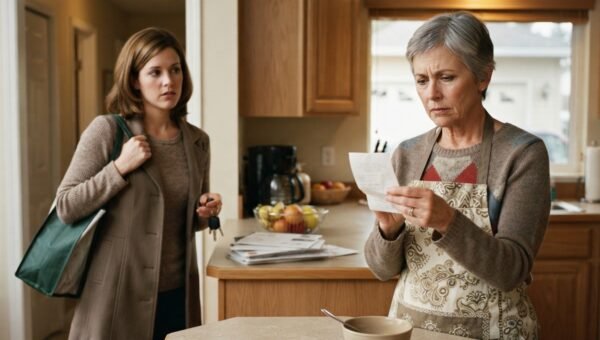
“You can take it for the rest of the week,” I told her, setting a plate of sliced apples on the counter between us. “Take the spare key. Drive it until we get an estimate on your car.”
Her face changed before I even finished the sentence. She did not look relieved. She looked annoyed, her shoulders tightening in that familiar way she has had since high school.
“I don’t need a loaner, Mom,” she said, her tone sharp and impatient. “I need the title. If you sign it over to me, I can transfer the registration, put it on my insurance policy, and handle it. You don’t even drive that much.”
That line stung more than it should have. I drive to the grocery store on Thursdays, to church on Sundays, and to physical therapy twice a month for my knee. Just because my life had gotten quieter did not mean I was ready to disappear from it.
“I’m happy to help you with rides,” I said gently. “Or you can borrow it. But I am keeping the title in my name.”
She set the mug down hard enough on the granite to make a sharp clatter, grabbed her purse, and walked out without saying goodbye. She did not slam the front door, which somehow felt worse. She just pulled it shut with a quiet, deliberate click.
I sat at the kitchen table until the room grew dark. I am not proud of how long I waited to do something about the knot in my stomach. I was scared the answer would hurt more than the wondering. A mother spends decades hoping she taught her children decent values, and admitting that something feels dishonest feels like admitting you failed them somewhere along the line.
I probably would have dropped the whole thing if not for one detail that kept nagging at me. Two weeks earlier, I had taken the Buick in for an oil change at the local service department where we always took it. While I was waiting in the lounge, the manager handed me a printed appraisal sheet. Used car values were unusually high, and he told me with a smile that they would cut me a check for $11,400 that very afternoon if I wanted to sell.
I had folded that appraisal and tucked it into the glove compartment next to the owner’s manual.
That night, after tossing and turning until midnight, I finally did the thing I had been avoiding. I walked out to the garage in my slippers and opened the car door.
The little yellow glove box light flickered on. I reached inside and pulled out the paperwork.
The appraisal sheet was gone. More than that, the registration card that usually lived behind the manual was missing, too.
Two days passed in complete silence. Chloe did not call to apologize, and she did not ask about borrowing the car. I tried to convince myself that maybe I had cleaned out the glove box months ago and forgotten. Old age makes you doubt your own eyes when the truth is too ugly to swallow.
Then Thursday morning arrived. My phone rang just as I was making my second cup of tea.
The caller ID showed an unfamiliar local number with the name of an auto plaza on the highway near the bypass.
“Good morning, Mrs. Miller,” a cheerful voice said when I answered. “This is Jason over at Crestview Motors. I am following up on the trade-in packet for your 2018 Regal. We have the buyers here ready to finalize the paperwork on the new lease, but the system flagged an electronic verification error on the lien release form. I just need you to verbally confirm your consent so we can push the trade allowance through.”
My throat went completely dry. “Excuse me?”
“The trade allowance,” Jason repeated, his voice losing a bit of its bounce. “Eleven thousand four hundred dollars toward the 2024 crossover. Your daughter Chloe brought in the vehicle yesterday for the physical inspection, and she left the title transfer form with us. We just need to verify you signed section B.”
I gripped the counter with my free hand. “My daughter does not have my car. It is parked in my garage.”
There was a long pause on the line. I heard papers rustling, followed by the muffled tap of computer keys.
“Mrs. Miller,” the salesman said carefully, “the title transfer she handed us has your full legal name, date of birth, and your physical signature dated two days ago. Let me send the scan to your email right now.”
My computer was already open on the kitchen desk. Thirty seconds later, the chime sounded in my inbox. I clicked the PDF attachment.
There it was, black ink on white state paper. My name was signed on the seller line. It was my handwriting, or at least a very good tracing of it, complete with the little loop I always make on the capital M.
PART 2
The document on my screen was clear and unmistakable.
It was an Application for Certificate of Title and Registration, stamped with the Crestview Motors dealer number. Right above my forged signature, the trade-in credit was listed down to the penny: $11,400. Chloe had applied that full amount directly toward the down payment and initial fees on a brand-new, three-row luxury crossover with leather seats and a panoramic sunroof.
“Mrs. Miller? Are you still there?” Jason asked through the phone.
“I am looking at it,” I said. My voice did not sound like mine. It sounded small and brittle, like dry leaves. “Mr. Turner, I did not sign this document.”
Silence sat on the line for three full beats. A salesman knows trouble when it walks into his showroom, and he knows legal liability even faster.
“Are you telling me this is an unauthorized transaction?” he asked. His tone had shifted completely from friendly sales representative to cautious corporate employee.
“I am telling you I have never set foot in your dealership,” I answered. “The car is in my garage right now. The original title is locked in a metal security box inside my closet. I have not sold it, I have not gifted it, and I did not sign that paper.”
“Hold on just a moment, ma’am,” he said.
He placed me on hold. A soft instrumental version of an old song hummed through the speaker while I stood by my kitchen window. Outside, the morning sun was hitting the gravel driveway where Chloe used to ride her bicycle with training wheels. David had run behind her holding the back of the plastic seat until his back gave out. He had worked extra shifts at the freight yard for thirty years so she could graduate from college without debt.
When Jason came back on the line, an older man spoke first.
“Mrs. Miller, this is Wayne Vance, the general manager here. I want to apologize for this situation. We have halted the transaction immediately. No paperwork has been submitted to the state bureau, and no vehicle has left our lot.”
“How did she get this form?” I asked.
“She presented a signed title transfer application and a copy of the vehicle registration,” Wayne explained calmly. “She told our finance desk that you were homebound following surgery, which is why she was handling the trade on your behalf. We were running the final remote verification when the discrepancy came up.”
“She told you I was homebound?”
“Yes, ma’am. She said you wanted her to have a safer vehicle for the grandchildren and that the trade credit was a family gift.”
The knot in my stomach turned into a hard, cold weight. Chloe had not just asked for my car out of convenience. When I said no, she had simply decided my answer did not count. She had gone into my glove box, taken the registration, pulled my signature from an old birthday card or an old medical bill, and walked into a showroom prepared to wipe out my only piece of independence so she could drive a car she could not afford.
“What happens now?” I asked Wayne.
“On our end, the sale is canceled,” he said. “We cannot accept this trade-in. But Mrs. Miller, strictly speaking, submitting a forged state title transfer to a commercial entity is a felony offense. If you want to file an official report, we will cooperate with local law enforcement and provide the surveillance footage and the paperwork she submitted.”
The word felony hung between us like a suspended blade.
“Give me two hours,” I told him. “Do not call her yet. Just hold the file.”
“I can hold it until noon,” Wayne said. “After that, company policy requires us to log the incident.”
I hung up the phone. My tea was cold on the counter. I did not drink it. I went to my bedroom closet, pulled down the metal strongbox from the top shelf, and used the small silver key on my key ring to open it.
The title was there. Folded beside it was the spare key to Chloe’s house, which she had given me three years ago when she went to Florida for a long weekend.
I picked up my purse, took my car keys, and walked out to the garage.
PART 3
Chloe lives twelve minutes from me in a subdivision with neat lawns and two-car garages.
When I turned onto her street, the first thing I saw was her car parked in the driveway. It was a dark blue four-door sedan, four years old. The right front tire was parked squarely on the concrete, and there was no tow truck in sight.
I parked at the curb, got out, and walked up her front walk. As I passed her sedan, I glanced through the driver’s side window. The dashboard was clean. The keys were hanging from the ignition switch.
I reached out, pressed the exterior door handle, and pulled. The door clicked and swung open.
I got in, put my foot on the brake, and turned the key. The engine turned over instantly, settling into a quiet, smooth idle. The check engine light was not on. The gas tank was half full. The temperature gauge rested in the normal range.
Her transmission was not shot. Her car was not broken down.
I turned the key off, stepped out, and shut the door.
I did not knock on her front door with my knuckles. I unlocked it with the spare key, stepped inside the front entry hall, and closed the door behind me.
Chloe was sitting on her living room sofa in gray sweatpants, working on her laptop with a mug of tea beside her. When she looked up and saw me standing in the foyer, she jumped.
“Mom? What are you doing here? How did you get in?”
“Your spare key,” I said evenly. “The one you gave me.”
She closed the laptop screen halfway, looking flustered. “You scared me. I told you I had to work from home today because of the car situation.”
“I just started your car in the driveway, Chloe.”
She stopped moving. Her hands remained rested on the lid of her laptop.
“It started right up,” I continued, keeping my voice low and steady. “The transmission sounds fine. There are no warning lights on the dash. You told me it was dead.”
Chloe swallowed hard. A faint flush crept up her neck, staining her cheeks red. “It slipped gears twice last week, Mom. On the highway. The mechanic told me it could fail any day, and it would cost four thousand dollars to rebuild. I didn’t want to risk driving the kids in it.”
“Which mechanic?”
“A shop over by the office,” she said, looking away toward the television.
“What was the name?”
“I don’t remember the exact name. It was near the office.”
“Stop lying to me,” I said.
The room went dead quiet. In fifty-two years of parenting, I have rarely raised my voice at my children. I did not raise it now. But the quiet certainty in my words made her flinch more than shouting would have.
“I spoke with Jason at Crestview Motors twenty minutes ago,” I said. “And after that, I spoke with Wayne Vance, the general manager.”
Chloe’s mouth opened slightly, but no sound came out. The color that had rushed into her face drained away, leaving her skin dull and gray.
“They sent me the paperwork, Chloe. The trade application with my name forged on the bottom. The eleven thousand four hundred dollars of my car’s value transferred directly to a lease for a brand-new vehicle for you.”
She stood up quickly from the sofa, knocking a decorative pillow to the floor. “Mom, listen to me. Let me explain.”
“Explain what?” I asked. “Explain how you told strangers that your mother was homebound from surgery? Explain how you stole the registration from my glove compartment while I offered to make you lunch? Or explain why you thought you had the right to sign away the car your father helped me buy before he died?”
“It wasn’t like that!” she cried, tears suddenly spilling over her eyelashes. “My lease payment was going to be four hundred dollars cheaper with that trade credit! Greg and I are drowning, Mom. He had his hours cut at the firm six months ago, and our credit cards are maxed out, and my car is almost out of warranty. If something big breaks, we can’t pay for it! I needed a reliable car with a warranty that had zero maintenance costs, and you don’t even go anywhere! You sit in that house all week!”
There it was.
The ugly, naked truth of it. She was scared about money, she was in over her head, and in her mind, my life was already over. Because I was seventy-one and lived alone, my possessions were no longer mine; they were just unused surplus waiting to be redistributed to people whose lives still mattered.
“You thought because I am old, I wouldn’t notice,” I said.
“No!” she sobbed, stepping toward me with her hands outstretched. “No, Mom, please. I was going to make the payments. I was going to drive you anywhere you needed to go. I swear I was. I was going to take care of you.”
“You were going to take care of me by taking my property without asking?” I shook my head slowly. “The manager at the dealership told me this is a felony. He has the paperwork. He has the security video of you handing it to the finance department. He asked me if I wanted to file a police report.”
Chloe sank back onto the edge of the sofa, covering her face with both hands. Her shoulders shook with hard, ragged breaths.
“Mom, please,” she whispered through her fingers. “Please don’t do that. The kids. If I get arrested, my job… I’ll lose everything.”
ENDING
I stood in her quiet living room and looked at her.
She was thirty-eight years old. She was a mother herself. For years, I had stepped in whenever things got difficult for her. I paid for braces, I helped with security deposits, and I watched the children on weekends without complaint. Every time life handed her a hard choice, I smoothed the road so she would not feel the bumps.
And by protecting her from every consequence, I had helped build the entitlement that led her straight to that dealership desk.
“I told Wayne Vance not to call the police,” I said.
Chloe lifted her head, her face wet and red, hope flickering across her eyes. “Thank you. Mom, thank you, I swear I will—”
“Do not thank me,” I cut her off. “I did not do it to protect you. I did it because your children do not deserve to watch their mother taken away in front of their school.”
I reached into my pocket, pulled out her spare house key, and placed it on the side table next to her sofa.
“Here is what happens now,” I said. “You will call Crestview Motors from this phone while I am standing here. You will tell them you withdraw the application entirely. You will apologize to Mr. Vance for wasting his staff’s time and making false statements.”
She nodded frantically. “I will. Right now.”
“Second, you will go to a certified mechanic this afternoon and pay out of pocket to have your own car inspected. If it needs work, you and Greg will figure out how to pay for it, or you will take the bus. My checkbook is closed to you.”
She flinched, but she did not argue.
“And third,” I added, looking her straight in the eyes, “you do not come to my house for the foreseeable future. If you need to speak with me, you send an email. I will not have someone under my roof who thinks my independence is something they can steal when life gets inconvenient.”
“Mom, please don’t cut me off from the kids,” she begged, her voice cracking.
“The children are always welcome to call their grandmother,” I told her. “I love them, and I love you. But love does not mean I will let you erase me.”
I turned around and walked out the door.
I did not slam it. I closed it behind me with the same quiet click she had used two days earlier.
I drove my silver Buick back to my house, pulled into the driveway, and parked it squarely in the middle of the garage. I turned the ignition off, took the key out, and walked inside.
The kitchen was quiet. The house was empty. But as I sat down at my table and poured myself a fresh cup of hot tea, the space around me did not feel lonely. It felt like mine.