PART 1
My sister told our relatives I had refused to donate a kidney to her. The strange thing is, I nearly ignored it because that is what I usually do when family gets messy. Whenever my younger sister, Lori, wanted attention or felt cornered by life, she picked someone to play the villain. Usually it was an ex-boyfriend, an old boss, or the mechanic down on Route 4. This time, her kidneys were genuinely failing from chronic nephritis, and the target was me.
I first heard the rumor in late September from our cousin Brenda. Brenda called me while I was folding laundry in my utility room. Her voice was flat and cold, the way people talk when they think they have caught you doing something awful.
“Lori told Aunt Evelyn you said no,” Brenda said, not even bothering to say hello first. “She said you told her your own health was too important to risk.”
I held the warm towel against my chest. My throat went dry. “Brenda, I never told her that.”
“Well, she is sitting over there on dialysis three afternoons a week while you go about your life,” Brenda replied. “Nobody expects you to put yourself in danger, Sarah, but to just turn your back on your own flesh and blood is hard for the family to swallow.”
She hung up before I could explain.
That was how it started. For three weeks, my phone stopped ringing with normal calls.
Family group chats went quiet whenever I posted a photo of my garden or asked about Sunday dinner. Aunt Evelyn did not invite me to her usual Saturday morning coffee. My brother, Mark, sent me a short text that read: “You could have tried harder.”
I kept trying to stay calm. I swallowed the lump in my throat, told myself people were just scared for Lori, and went to work at the public library every morning. I am not proud of how long I waited to do something. The truth is, I was terrified. I was scared that if I forced a confrontation, the answer would hurt more than the wondering. I was afraid to find out that my family actually believed I was that selfish.
The most painful part was that no one had bothered to ask whether I had even been tested.
Back in August, the very week Lori received her formal evaluation packet from the regional transplant center in Richmond, I drove down there on my own morning off.
I did not announce it on social media. I did not make a speech at Sunday dinner. I simply filled out the confidential living donor questionnaire, had six vials of blood drawn, and sat with the donor coordinator in a small beige consultation room. I wanted to see if I was a match before making promises I could not keep.
Then, during the second week of October, the white envelope arrived in my mailbox.
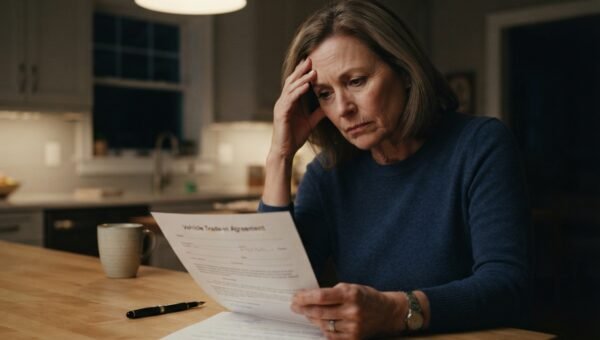
It sat on my kitchen counter beside my coffee maker for two days before I found the courage to open it. When I finally cut the seal, I pulled out a two-page letter signed by the transplant team.
The letter did not say I refused. It stated plainly that due to crossmatch antibodies and blood antigen incompatibilities, I was medically ruled out as a direct donor for Lori. The clinic had logged my results on October 3. Lori had been informed by her nephrology team that same week.
She had the medical facts in her hands before Brenda ever called me. She knew I had walked into that hospital. She knew the doctors said no. Yet she still told our aunts, our cousins, and our brother that I had looked her in the eye and walked away.
I put the letter in my handbag. Aunt Evelyn was having her seventy-second birthday lunch that coming Saturday at the Red Oak Grill. The entire family would be there around one long table. I told myself I only wanted one clear answer from my sister. I would lay the paper beside her plate, ask her why she lied, and clear my name.
Saturday came, cool and gray. I walked into the private back room of the restaurant just as the waitstaff was setting down water goblets. Lori was sitting at the center of the table, wearing a soft gray cardigan that looked too big on her shoulders. Beside her sat her husband, Greg.
Greg had his arms folded across his chest. He was staring at the bread basket, his jaw clenched tight.
Aunt Evelyn gave me a stiff nod from the head of the table. Brenda looked down at her menu the second our eyes met.
I set my purse on the back of my chair and reached inside for the envelope. I took a slow breath, determined to speak before anyone could ice me out again.
Before I could say a single word, Greg pushed his chair back from the table. The legs scraped loudly against the hardwood floor.
He looked around at Aunt Evelyn, at Brenda, and then down at his wife.
“Before we order food,” Greg said, his voice shaking with anger, “I want to know why my own test results are missing from this family conversation.”
PART 2
The room went completely still. Aunt Evelyn stopped unfolding her paper napkin. Brenda lifted her head from her menu, her eyes darting between Greg and Lori.
Lori reached out and touched Greg’s sleeve. “Greg, please. This is Aunt Evelyn’s birthday. Let’s not make a scene.”
“No,” Greg said. He pulled his arm back, out of her reach. He did not yell, but his voice was thick with weeks of held-in frustration. “I sat at home listening to you tell Brenda that Sarah abandoned you. I listened to you tell your brother that nobody in your family cared enough to get checked. And all the while, you let everyone act like I was just the helpless husband holding your hand through dialysis.”
My hand stayed inside my bag, fingers curled around the edge of my own envelope. My mind felt crowded and slow.
“Greg,” Aunt Evelyn spoke up, her voice sharp with caution. “Lori told us your blood pressure was too high. She said the doctors told you right away that you couldn’t be evaluated.”
Greg pulled a folded sheet of paper from his jacket pocket. It was printed on the exact same institutional letterhead as the one in my purse: Central Virginia Transplant Services.
“My blood pressure was elevated one afternoon in July when she had her first kidney crisis,” Greg said, laying the sheet flat on the tablecloth. “The coordinator told me to monitor it for two weeks and come back. I did. I spent the entire month of August going through full donor workups. Blood, urine, heart scans, psychological evaluation. Everything.”
Lori looked down at her lap. Her knuckles were white against her skirt.
“What are you saying, Greg?” brother Mark asked from the far corner of the table.
“I am saying I was cleared on September 12,” Greg said. He looked directly at Lori. “The clinic called our home phone and left a message with the donor advocate’s number. They said my tissue match was suitable. I was ready to set a surgery date for November. And when I came home from work that night to celebrate, Lori told me the paperwork was a mistake. She told me the hospital called back while I was on the highway and canceled it.”
A cold draft seemed to sweep through the restaurant room. Nobody touched their water.
“I believed her,” Greg continued, his chin trembling slightly. “I thought my body had failed her. I felt guilty every time I drove her to dialysis at six in the morning. Then two days ago, I called the transplant office myself to ask why they hadn’t put her on the paired exchange list. The coordinator was confused. She asked me why I had withdrawn my donor consent form.”
Greg stopped to steady his breathing. He pointed a finger at the paper on the table.
“Someone mailed a signed withdrawal form using my name and our home address on September 18,” he said. “The handwriting wasn’t mine. It was Lori’s.”
PART 3
Brenda gasped softly. Aunt Evelyn’s mouth opened, but no words came out.
I took my hand out of my purse and pulled out my own envelope. The paper made a crisp, dry sound in the quiet room. I walked two steps forward and set it right next to Greg’s paper, directly in front of Lori.
“You knew on October 3 that I had been tested,” I said. My voice was quiet, but it did not waver. “You knew the doctors disqualified me because of antibodies. You received that copy in your patient portal the same afternoon I received mine in the mail.”
Lori stared at the two documents. Her face was flushed, red patches rising along her neck.
For two months, she had built a wall between me and our family. She had let our brother send hateful messages. She had let our aunt treat me like a stranger. And she had done it all while sitting on the truth about two different people who had tried to help her.
“Why, Lori?” I asked. “If Greg was a match, and I tried to be one, why tell the whole family I refused?”
Lori did not cry right away. She sat straight, her eyes bright and defiant, like a cornered animal trying to look bigger than it was.
“Because Greg has our mortgage to pay,” she said, her voice cracking on the last word. “Greg is an independent contractor. If he goes under anesthesia, if he has complications, if he is out of work for three months, we lose our house. We have twenty-two thousand dollars in credit card debt from my medical bills last year. Who pays the bills if Greg gets sick?”
“Lori, that was my decision to make,” Greg said, his voice dropping low. “We could have downsized. We could have asked for help. You don’t forge my name and throw away my kidney.”
“And what about Sarah?” Aunt Evelyn asked, her gaze turning cold as she looked at her favorite niece. “Why tell us Sarah refused? Why let us blame your sister?”
Lori finally broke. Tears ran down her cheeks, but they were tears of anger, not remorse.
“Because if Greg couldn’t do it, everyone would expect me to ask Sarah,” Lori sobbed. “And then Sarah would have to say no, or she would be tested and fail, and everyone would feel sorry for her instead of me! I needed people to rally around me. I needed my family to check on me, bring meals, and help me with money. Whenever Sarah does anything, everybody says how responsible she is, how strong she is. I was the one dying, and I didn’t want everyone comforting Sarah!”
The confession hung in the air, ugly and small.
There was no noble sacrifice in it. There was only fear, debt, and an old, bitter jealousy that had rotted inside her until she thought lying was her only defense. She had traded my reputation to buy herself sympathy, and she had forged her husband’s name because she was too terrified of losing their suburban house.
Mark pushed his chair back and walked out into the restaurant lobby without a word. Brenda covered her face with her hands.
Aunt Evelyn slowly turned toward me. Her eyes were rimmed with red. “Sarah… I didn’t know. I should have asked you.”
“Yes,” I said simply. “You should have.”
I did not scream. I did not flip the table or demand an apology from the cousins who had ignored me for weeks. The anger had burned off, leaving behind a clear, clean space where my guilt used to live.
I picked up my envelope from the table and slid it back into my handbag.
ENDING
The lunch never happened. The waitstaff boxed up the salads, and we all left before the entrees were even cooked.
Greg did not ride home with Lori. He asked Mark to give him a ride to his brother’s house in Chesterfield. From what I understand, Greg moved his things into a small rental apartment near his job two weeks later. He told Lori he would still take her to her medical appointments, but he could not stay married to someone who forged his name to control his body.
Lori was placed on the national deceased-donor registry in November. She receives her dialysis on Mondays, Wednesdays, and Fridays. Aunt Evelyn and Brenda still take turns driving her, but the family group chat is permanently dead. Nobody gossips anymore. When we talk, it is brief, practical, and strictly about appointment times and prescription pickups.
Aunt Evelyn came by my house the following Tuesday with a tin of lemon cookies. She stood on my front porch, holding the tin with both hands, looking smaller than she ever had before.
“I believed a lie because it was loud,” Aunt Evelyn told me. “I am sorry, Sarah.”
I took the tin from her hands. “Thank you, Aunt Evelyn. But I need some time.”
I did not invite her in for coffee. For years, I had kept the peace by making things comfortable for people who hurt me. I smoothed over the rough edges, stayed quiet when Lori took credit for things, and took the blame just to keep Sunday dinners peaceful. Walking away from that lunch showed me that keeping the peace had just been another name for letting people treat me poorly.
The letter from the transplant center sits in the top drawer of my nightstand now, filed neatly beneath my insurance papers.
Sometimes, late at night, I hear the hum of the refrigerator and remember how terrified I was to open that envelope. I had spent weeks worrying that my family would think I was heartless.
Now, when the phone rings and I see my sister’s name flash on the screen, I do not rush to pick it up. I let it ring until it stops. Then I go back to whatever I was doing, knowing the truth is already where it belongs.