PART 1
The argument happened on a Tuesday evening in my kitchen, four days before the wedding.
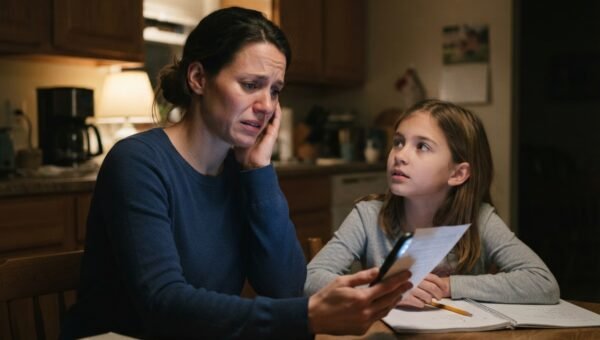
My son, Brian, sat at the kitchen table turning a salt shaker in circles. His fiancée, Vanessa, stood near the refrigerator with her arms folded over her chest. She had asked to come over to talk about the final seating chart, but the conversation turned the second she looked down at my left hand.
“Eileen,” she said, her voice soft and careful in that rehearsed way she used when she wanted her own way, “we really need to talk about your jewelry for Saturday.”
I looked down at my hand. I was wearing my plain gold band and the small diamond Arthur gave me thirty-four years ago outside a diner in Scranton. Arthur had died eleven months earlier from a stroke while raking the backyard. The grass was half-finished when I found him. Eleven months sounds like almost a year to young people, but to me it was still yesterday morning.
“What about it?” I asked.
“You really can’t wear the ring to the ceremony,” Vanessa said. “Arthur died too recently. When people see that band on your finger, all they’re going to think about is how he’s not standing next to you. It brings this heavy, sad cloud over the whole room. We want the pictures to be light and celebratory. We don’t want anything sad in the photos.”
I thought she was making a tasteless joke, but she was staring directly at me without blinking.
“Vanessa,” I said, “this ring has been on my hand since 1991. It stays on my hand.”
“It’s just for six hours,” she said, stepping closer. “Just leave it in your jewelry box at home. For Brian’s sake. If you can’t do that, maybe it’s better if you skip the wedding altogether. It would save everybody the awkwardness.”
I turned to look at Brian. He was twenty-six years old. Arthur had coached his Little League teams, co-signed his first truck loan, and paid off his last two semesters of community college. Brian kept his eyes fixed on the salt shaker. He did not blink. He did not tell his fiancée she had crossed a line. He said nothing at all.
“Brian?” I said.
He cleared his throat, but he kept looking down at the wood table. “Mom, you know how stressed she is. Just do what she’s asking so we don’t have drama.”
“I am not taking off Arthur’s ring,” I told them. “And if that means I am not welcome, then I won’t come.”
“Fine,” Vanessa said immediately, like she had been waiting for the words. “That’s probably for the best.”
She picked up her purse and walked straight out my front door. Brian stood up, muttered that he would call me later, and followed her out to the driveway. The gravel crunched under their tires, and then the house went completely quiet.
Brian never called.
Friday passed. Saturday arrived, bright and mild. I stayed home. I spent Saturday morning cleaning out the hall closet, wiping down baseboards, and ironing tablecloths I had not used in five years. Every hour felt like ten. At three o’clock, which was the time printed on the cream-colored invitation on my counter, I sat on the back porch with a glass of iced tea and looked at the garden Arthur had planted along the fence line. I kept the ring on my finger.
I went to bed early and turned off the ringer on my phone.
When I woke up on Sunday morning at seven, I picked up my phone from the nightstand. The screen was filled with notifications. There were thirty-two missed calls. Twenty-one were from Brian, eight were from Vanessa, two were from Vanessa’s mother, and one was from an unfamiliar local number with an 845 area code.
Before I could dial Brian back, an email notification popped up on the screen. It was from the general manager at High Point Manor, the country club outside town where the reception had been held the night before.
The email was short and blunt:
“Mrs. Miller, we have attempted to contact Mr. Brian Miller regarding the outstanding balance of $7,420 for yesterday’s reception. Per venue policy, no personal property, floral arrangements, or wedding gifts may be removed from the premises until the master bill is settled in full. Please find the attached itemized invoice.”
I opened the PDF attachment on my phone with shaking hands.
My name was listed at the top under billing contact because six months earlier, back when things were still polite, I had put down the initial $3,000 deposit to secure the date. Vanessa had promised they would pay the remaining balance two weeks before the event.
My eyes scanned down the itemized charges for appetizers, extra bar hours, and chair covers. Then I stopped near the bottom.
One line item stood out against all the rest:
“Specialty Staging: In Memoriam Father of the Groom Tribute Display – $1,850.”
PART 2
I stared at that line on the invoice for five full minutes.
Eighteen hundred and fifty dollars for a memorial display using Arthur’s photo. The woman who told me my wedding ring would cast a sad cloud over her pictures had spent nearly two thousand dollars putting Arthur’s face on display.
I called the venue number from the email. A man answered on the third ring. His name was Greg Davis, and his voice sounded tired and irritated.
“High Point Manor, this is Greg.”
“Mr. Davis, this is Eileen Miller,” I said. “I am Brian Miller’s mother. I just received your email.”
His tone shifted immediately from cold to apologetic, though he remained firm. “Mrs. Miller, thank you for calling back. I’m sorry to involve you on a Sunday morning, but your card on file was listed as the primary guarantee. When we ran the final balance at midnight after the reception ended, the transaction was declined. The bank noted the card was locked.”
“I locked that debit card three days ago,” I said plainly. “That was my personal savings account. I gave you that card in March strictly for the three-thousand-dollar deposit. I never authorized Brian or Vanessa to put any final charges on it.”
“Well,” Greg sighed, “Mr. Miller told our banquet coordinator on Friday afternoon that you were handling the final invoice remotely because you were unable to attend in person due to grief. He assured us the card on file was good for the remaining $7,420.”
Hearing those words spoken aloud made my chest tighten. Brian had not told the venue I was excluded. He had told them I was too heartbroken to show up, then offered my bank account to cover their party.
“What is this eighteen-hundred-dollar charge for a tribute display?” I asked.
“Oh,” Greg said, pausing to rustle through papers. “The bride requested an elaborate memorial installation right in the foyer, directly beside the gift table and the card box. It included an easel with an enlarged portrait of Mr. Miller, draped in white linen with custom floral garland, tea lights, and a framed sign. The sign said, ‘Arthur Miller watches over us today. In his honor, please help the newlyweds build the home he always dreamed for them.'”
The room seemed to shrink around me.
“A donation sign?” I asked.
“Yes, ma’am,” Greg said quietly. “There was a wooden box with a slit in the top right next to your husband’s portrait. Guests were dropping cards and envelopes into it all evening. But as I told your son this morning, our contract states that until the event balance is cleared, all items remaining in the banquet room, including the gifts and cards locked in our manager’s safe, stay in our custody.”
“Do not run my card again, Mr. Davis,” I said. “I am not paying that bill.”
“I understand,” he replied. “In that case, the balance falls entirely on the signers of the main contract, Brian and Vanessa. But they are currently outside our front lobby demanding their cards, and the local sheriff’s deputy is already on his way to keep the peace.”
I hung up, put on a pair of slacks, picked up my purse, and drove ten miles down the county road to High Point Manor.
PART 3
When I pulled into the circular driveway of the country club, Brian’s truck was parked crookedly near the main entrance.
Vanessa was pacing the stone porch in yesterday’s makeup and an oversized sweatshirt, her phone pressed to her ear. Her mother, Donna, sat on a stone bench looking furious. Brian stood near the double glass doors with his hands shoved deep into his pockets, arguing with a young man in a black vest. A sheriff’s cruiser was parked quietly by the curb, its lights off, with a deputy leaning against the front fender.
Vanessa saw my sedan first. She dropped her phone and marched straight toward my car before I had even turned off the engine.
I stepped out onto the gravel and shut my door.
“Did you cancel that card on purpose?” Vanessa shouted, her face blotchy and red. “They have our card box in a safe! There’s over six thousand dollars in cash and checks in there from my relatives, and this idiot manager won’t let us touch it because of you!”
Brian walked over quickly, his head down. “Mom, please. Just pay the balance. The bank blocked your card. You can unlock it from your phone in thirty seconds. We’ll pay you back once we deposit the checks.”
I looked at my son. Really looked at him.
“You told the venue I stayed home because I was overwhelmed by grief,” I said.
Brian looked away. He could not meet my eyes.
“And you put Arthur’s picture next to a donation box,” I continued, keeping my voice low and steady. “You told me my wedding band was too sad for your pictures. You told me Arthur’s memory would ruin the mood of your wedding. But then you turned around and charged eighteen hundred dollars to use his face to solicit cash from his brothers and his friends.”
Vanessa stepped up beside Brian, her chin tilted up defensively. “Arthur was his father! Brian had every right to honor him! People wanted to give. That has nothing to do with you.”
“His brothers came from Ohio,” I said. “Arthur’s union friends drove two hours from Binghamton. They saw that table, they saw his portrait, and they thought I helped put it there. They thought they were helping Arthur’s boy out of respect for Arthur’s name.”
“Eileen, stop being dramatic,” Donna called out from the bench. “Just pay the bill so these kids can go on their honeymoon. You’re ruining their start in life over a grudge.”
“I am not paying one dime,” I said.
Greg Davis, the manager, stepped out through the front doors holding a clipboard. He nodded to me politely. “Mrs. Miller.”
“Mr. Davis,” I said, pointing toward the lobby. “My husband’s portrait is inside that building. That photograph belongs to me. It was taken in our living room three years ago. I did not authorize its use, and I am taking it home.”
“Of course, Mrs. Miller,” Greg said. “You’re welcome to take personal photographs that belong to your family.”
“Wait a minute!” Vanessa shrieked. “You can’t just let her take things while our gifts are locked up!”
The deputy pushed off the hood of his cruiser and walked over, his boots heavy on the gravel. “Ma’am,” he told Vanessa, “the manager says the photo belongs to Mrs. Miller. You two need to handle your contract with the facility. Keep your voices down, or I’m going to have you wait off the property.”
I walked past Brian and Vanessa into the cool, carpeted lobby.
There, standing on an ornate wooden easel beside the banquet hall doors, was Arthur. It was the picture I took of him on his sixtieth birthday, smiling in his favorite flannel shirt. Vanessa had framed it in cheap plastic gold, surrounded by faux white roses. Below it sat the framed sign asking for money in his name.
My hands did not shake as I lifted the portrait off the easel. I took the photo out of the frame, left the cheap gold border on the table, and tucked Arthur’s picture under my arm.
When I walked back outside, Brian followed me all the way to my car door.
“Mom,” he pleaded, his voice cracking like it used to when he was twelve. “They won’t let us leave for Florida. The venue won’t release our luggage or the gifts. We don’t have seven thousand dollars in our checking account. You know we don’t.”
I opened my driver’s door and looked at him.
“You had enough to rent this place,” I told him. “You had enough to hire a limousine. And you had enough cruelty to ask your mother to take off her wedding ring so your pictures looked clean. You let your wife use your father’s memory as a tip jar.”
“I didn’t think it was a big deal,” Brian whispered.
“That’s the problem, Brian,” I said. “You didn’t think your father or your mother was a big deal.”
ENDING
I got into my car, locked the door, and drove away.
I found out later that afternoon from Arthur’s brother, Mark, how it finally ended. Vanessa had to call her father, who drove an hour and a half with his business credit card to pay the remaining balance so the club would release their suitcases and the gift box. Mark told me that when the family heard why I was not in the church, half of Arthur’s friends left the reception before dinner was even served. Two of his former coworkers had quietly taken their envelopes back out of the box before the doors were locked.
Brian and Vanessa went on their trip to Florida, but the house on my street stayed quiet.
Brian came by my house two weeks later. He stood on the porch in the late afternoon, looking thinner, holding a small cardboard box containing the rest of the loose photographs of Arthur they had gathered from relatives for their slideshow. He asked if he could come inside to talk.
I stayed standing in the doorway with the screen between us.
“I’m sorry, Mom,” he said. He looked at his sneakers, exactly the way he had on the Tuesday before the wedding. “Vanessa just got overwhelmed with the planning. She got obsessed with how everything looked on social media. I should have told her no.”
“Yes,” I said. “You should have.”
“Can we just get past this?” he asked. “She wants to invite you over for Sunday dinner next week. A fresh start.”
“No, Brian,” I said gently. “A fresh start means you understand what you broke. You don’t understand it yet. You just want the awkwardness to go away.”
He looked at me then, his eyes wet, waiting for me to soften the way I had softened every time he made a mistake growing up. Arthur would have told him that being a man meant taking the hit when you did wrong. Arthur wouldn’t have shouted. He just would have let Brian sit with the weight of what he had chosen.
“Take care of your wife, Brian,” I said.
I took the box of Arthur’s photographs from his hands, stepped back inside, and closed the front door.
I went into the dining room and set the photographs on the sideboard. Then I walked into the kitchen, turned on the kettle for tea, and looked down at my left hand.
The gold was worn thin along the bottom edge where it had rubbed against thirty-four years of groceries, steering wheels, garden trowels, and Arthur’s rough fingers. The small diamond caught the late afternoon sun coming through the window above the sink.
It was still right where it belonged.