PART 1
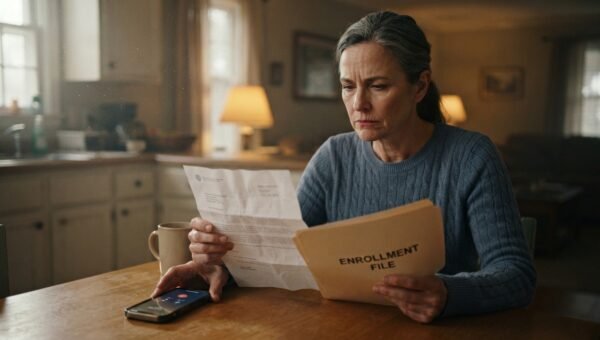
The shelter director called me on my cell phone while I was sitting in a diner two hours outside the city, waiting for my sister to finish her doctor’s appointment.
“Mrs. Miller?” the woman asked. Her voice was careful, the way people talk when they think they are about to give you terrible news. “We have a three-year-old calico cat here. Her microchip is registered to you and your late husband, Robert.
A young man brought her in this morning claiming she had turned violent in his apartment.”
My throat tightened. “My son, Kevin. He told me he was watching her while I visited my sister.”
“He surrendered her,” she said flatly. “He signed the intake paperwork and paid the surrender fee in cash. But that isn’t why I’m calling you directly. The cat is terrified, but she isn’t aggressive. She refuses to leave an old canvas airline carrier he brought her in. When we tried to coax her out with food, our technician noticed the bottom lining was unzipped. Inside the base, wedged under the plastic floor board, there is a thick bundle of mail tied with blue string. Every single envelope is addressed to Kevin, but the return address is a business called Northmark Recovery Solutions. Have you ever heard of them?”
“No,” I said. “Never.”
“There is something else,” the director continued. “When our intake tech blew a low brass pitch whistle to test her reflexes, the cat sat straight up and walked toward the gate. Has your son ever trained animals?”
“Kevin works in logistics for a shipping warehouse,” I told her, my hands starting to shake against the Formica tabletop. “He’s never trained an animal in his life. Robert was the only one who worked with her. He brought her home from the lumber yard two months before he died.”
“Well, you might want to get here quickly,” she said softly. “Your son just walked back into our lobby. He claims he left personal belongings in the carrier by mistake, and he’s demanding the bundle.”
I didn’t wait for my sister. I left thirty dollars on the table, ran to my Buick, and drove straight down Route 9 without turning on the radio once.
Robert had been gone fourteen months. When he passed, our home felt hollowed out, but that little stray cat, Clara, had stayed glued to Robert’s old recliner. Three weeks ago, when my sister fell and needed surgery, Kevin offered to keep Clara at his two-bedroom rental so I wouldn’t have to board her.
He had sounded so considerate on the phone. He told me it was the least he could do after everything Robert and I had carried for him over the years.
When I pushed through the double glass doors of the county shelter forty-five minutes later, Kevin was leaning over the reception counter. His work jacket was unzipped, his face red, his voice loud enough to carry into the waiting area.
“It’s my mail,” Kevin was saying, slamming his palm lightly on the laminate desk. “It was in my apartment. My mother is out of state. I brought the animal in, which means anything inside that crate belongs to me.”
The director, a tall woman in green scrubs with a name tag that read Evelyn, stood behind the counter holding a heavy steel clip clipboard. She looked up and saw me.
“Mrs. Miller,” Evelyn said clearly.
Kevin turned around fast. For a split second, he looked caught, but then he forced a smile and took a step toward me.
“Mom,” he said, breathing hard. “What are you doing here? You were supposed to be at Aunt Brenda’s until Sunday. I told you, Clara went wild. She tore up my drapes and bit my forearm. She’s unhinged. I couldn’t keep her.”
“You told me she was safe with you,” I said.
Before Kevin could answer, a kennel worker carried the faded canvas carrier into the hallway behind the counter. The zipper was unfastened. The moment Clara saw Kevin, the hair along her spine lifted. She let out a low, ragged hiss that sounded nothing like the quiet cat that used to sleep on Robert’s chest.
Then Clara stepped out onto the counter, walked past Evelyn, and dropped a stiff, cream-colored envelope right onto the floor at my feet.
It was sealed with yellowing cellophane tape. On the front, written in the steady, heavy pencil my late husband used for his carpentry work, were the words:
Open only when he asks for her back.
PART 2
Kevin lunged forward to grab the envelope, but Evelyn stepped between him and the counter gate.
“Don’t touch that,” Evelyn said, her voice dropping into a firm, administrative tone. “Mr. Miller, you signed a full surrender of the animal and all associated containers forty minutes ago. The microchip belongs to your mother. The crate belongs to her husband’s estate. Step back, or I will have animal control escort you to the parking lot.”
Kevin pulled his hands back, but his jaw stayed clenched. “Mom, don’t open that. Dad wasn’t in his right mind those last few weeks. He was angry with me about money, and he didn’t know what he was doing.”
I looked down at the envelope. My husband’s pencil strokes were firm and deliberate, the exact same handwriting that filled forty years of household ledgers. Robert didn’t lose his mind before he died. He had heart failure. His body gave out, but his mind stayed sharp until the last evening he spent in our living room.
I picked up the envelope. Under the tape, the paper was creased, as if it had been folded and hidden for months.
“Let’s step into my office,” Evelyn told me quietly.
Kevin followed us to the doorway, his boots scuffing the linoleum. “Mom, listen to me. Northmark is just a consulting firm. Those envelopes in the carrier are private business. If you look at them, you’re violating my privacy.”
“You brought them into a county shelter inside my husband’s cat carrier,” I told him, looking him in the eye for the first time since I entered the building. “You told me Clara attacked you. She didn’t attack you, did she?”
Kevin didn’t answer. He looked past my shoulder into the office, his eyes darting toward the canvas bag sitting on Evelyn’s desk.
Evelyn shut the door and turned the lock, leaving Kevin out in the corridor with the intake receptionist. Clara jumped lightly from the counter onto the small side table next to me, nudging her head against my sleeve. Her purr was rough and uneven, but she was calm now.
I sat down on the vinyl chair and peeled back the brittle tape on Robert’s envelope.
Inside were two folded sheets of notebook paper and a small brass training whistle on a split ring. The whistle was identical to the one Robert used to keep on his key ring for training bird dogs thirty years ago.
The letter began without a date.
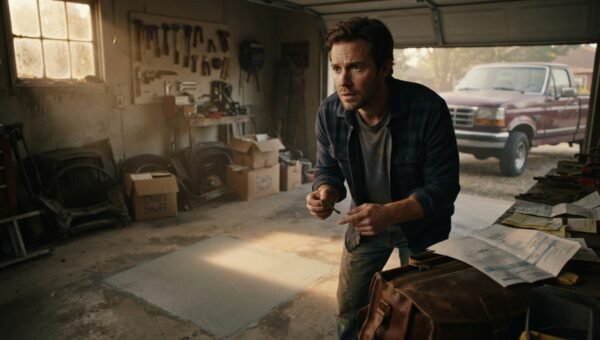
“Martha,” Robert had written. “If you are holding this, it means Kevin took Clara out of the house. I pray he didn’t, but I know our boy better than you want to admit. Last November, Kevin came to the shop behind the garage when you were at the grocery store. He wanted me to sign over the title on the Dodge and pull $45,000 out of our home equity line to pay off debts he swore were business loans. When I refused, he threatened to tell you that our savings were depleted anyway. He said he had already signed paperwork in my name.”
My stomach dropped. I stopped reading and looked up at Evelyn.
“Open the carrier bundle,” I whispered.
Evelyn cut the blue string with a pair of medical scissors and laid out the four thick envelopes from Northmark Recovery Solutions. She opened the top one and slid the contents across the desk toward me.
It was not a business consulting contract. It was a formal notice of default and wage garnishment for an unauthorized private equity loan taken out against Robert’s small engine repair shop sixteen months ago. Attached to the third page was a signature page bearing Robert’s full name, Robert E. Miller, written in shaky, copied blue ink, alongside Kevin’s signature as the designated power of attorney.
A power of attorney Robert had never granted.
PART 3
The second page of Robert’s letter laid the truth bare.
“I found out about the Northmark loan four weeks before the doctors told me my heart was failing,” Robert wrote. “He forged my signature on an online application using our home address and the old shop registration. Northmark began sending certified notices to the shop post office box, which I hadn’t checked in six months. When I confronted him, he broke down and begged me not to tell you. He swore he would pay every cent back from his warehouse wages. I told him if he missed one payment, I would go straight to the county sheriff.”
The letter continued in heavier, darker pencil:
“He thought I kept the forged paperwork in the metal firebox in the garage. He searched that box twice while I was resting. So I took the notices, the original loan application copy I forced him to give me, and the certified letters, and I sewed them into the false bottom of Clara’s travel crate. Clara won’t let anyone touch that crate unless they use the low whistle I used when she was a kitten. Kevin knows the papers are inside that carrier, but he never could get her out of it without her biting him. If he took her from our home, it wasn’t to look after her. It was to get his hands on that crate without you seeing him tear it apart.”
I folded the paper slowly and placed it back inside the envelope.
The loan amount on the Northmark default notice was $42,600. Kevin had paid three installments of $700 right before Robert passed, and then the payments had stopped completely. The last notice in the stack was dated two weeks ago, marked with a red final demand stamp.
Kevin hadn’t offered to watch Clara to be kind. He had volunteered to watch her because he knew I would be two hours away for five days. He had tried to get the papers out in his apartment, failed because Clara fought him, and then panicked when the recovery company threatened legal action. Surrendering her to the shelter was his desperate attempt to discard the animal and take the carrier home without me ever finding out what was hidden inside the base.
I stood up, walked to the office door, and unlocked it.
Kevin was pacing by the water fountain. When he heard the latch click, he stopped and looked at my face.
“Mom,” he began, his voice thin. “Whatever Dad wrote, he was confused. He hated that I took risks.”
“Your father didn’t write this when he was confused,” I said. “He wrote this with a clear head while he was trying to protect me from the mess you made. You took out $42,600 against his shop. You forged his name. And you dumped his cat in a concrete kennel because you couldn’t pry open a zipper without getting scratched.”
Two shelter workers stopped in the hallway and looked over. Kevin’s face turned mottled red, the defensive anger fading into something hollow and small.
“I was going to pay it back,” he muttered, dropping his head. “They were going to freeze my paychecks next Friday. If they garnish my wages, I lose the apartment, Mom. I just needed the original note Dad had so I could dispute the creditor claim. I didn’t mean to hurt Clara. I was going to come back for her under a different name next week.”
“You were going to let them put her down if nobody adopted her,” I said.
He didn’t speak. He couldn’t.
“Evelyn,” I said, turning back toward the office, “please process Clara’s release back to me. And if you have a copy machine, I need three copies of everything in that blue bundle before I leave.”
ENDING
We didn’t go to the police that afternoon, but I didn’t protect Kevin from the consequences either.
I drove straight from the shelter to our family attorney, David Albright, who had handled Robert’s estate. We spent two hours going through the Northmark files. Because Robert had documented the forgery in his own handwriting before his death, David was able to file an immediate affidavit of fraud with Northmark’s legal department, removing Robert’s shop and our home address from the collection action entirely.
The debt did not disappear. It landed where it belonged, squarely on Kevin’s shoulders.
Kevin lost his apartment three months later when his warehouse wages were garnished by thirty percent. He moved into a small room near the rail yard, two towns over. He called me on Thanksgiving, asking if he could come home for dinner, but I told him no. I told him trust was not something that grew back overnight just because the calendar changed.
He is paying his debt back, month by month, seventy-eight dollars at a time out of his adjusted pay.
Clara is lying on Robert’s green wool blanket in the sun room right now. Her carrier sits in the back of my closet, empty, its lining neatly stitched back into place. Every evening at five o’clock, when the house gets quiet and the streetlights come on, I take the little brass whistle out of my pocket and set it on the hallway table.
Robert knew our son’s weaknesses, but he also knew mine. He knew I would have forgiven Kevin too quickly if I had found those papers in a drawer while Robert was still here to soften the blow.
He gave Clara the job of making sure I saw the truth with my own eyes. And she never let go until I did.