PART 1
My older brother, Mark, sat at my kitchen table with an envelope of cash and told me the family garage was falling apart. He said the roof rafters were rotting through, the south foundation was sinking into the mud, and the city was about to slap us with thousands of dollars in safety fines. He looked tired. He placed seven thousand dollars in front of me, stacked in neat hundreds, and told me I should take the cash while I still had the chance to walk away clean.
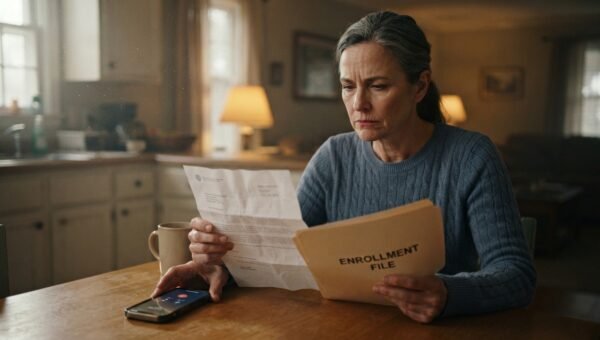
I trusted him. Mark was four years older, and ever since our father died twelve years ago, Mark had handled the small repairs and the property taxes on the old brick auto shop on Elm Street. Dad had run that shop for thirty-five years, fixing carburetors and doing state inspections until his knees gave out. When he passed, he left the building fifty-fifty to Mark and me. Over the last decade, I had raised two kids on my own while working as an administrative assistant at the county clinic. Every dollar mattered to me. Seven thousand dollars felt like a lifesaver for my old sedan’s transmission and my daughter’s community college tuition. Mark told me he would sign the quitclaim paperwork, handle the teardown costs himself, and take the loss so I would not have to deal with the headache. I signed my name on the county deed transfer form without reading the fine print.
Three weeks later, on a rainy Tuesday morning, my phone rang while I was logging patient charts.
“Is this Evelyn Vance?” a man asked. His voice was loud, with the sound of diesel engines idling in the background.
“Yes, it is,” I said.
“This is Greg Miller from Miller & Sons Excavation. We’re looking at the Elm Street site. I need to know when you want to approve the architectural plans for the twelve-unit apartments. We have the zoning board hearing next Thursday, and your brother told me you both needed to sign off on the utility easement before we can break ground.”
I stood up from my desk. “I think you have the wrong person, Mr. Miller. I sold that property to my brother three weeks ago. It was condemned for teardown.”
There was a long pause on the other end. I heard papers rustling.
“Condemned?” Miller let out a short, incredulous laugh. “Ma’am, this is permit number 2026-B-441.
The city re-zoned the entire Elm Street commercial corridor six months ago for mixed-use residential. That corner lot was appraised by our lender at nine hundred and forty thousand dollars. Your brother didn’t file for demolition. He filed for foundation reinforcement for three stories of high-end rentals.”
My hand gripped the edge of my desk so hard my knuckles went white. “Nine hundred thousand?”
“Over nine hundred thousand as of last month,” Miller replied, his tone suddenly cautious. “Wait. Are you telling me you didn’t know about the zoning variance?”
“I didn’t know,” I whispered.
“I think you need to talk to your brother, ma’am,” he said quietly, and hung up.
I left work early with a sick feeling spreading through my stomach. Instead of calling Mark right away, I drove home and pulled down the three metal boxes of Dad’s old paperwork from the top shelf of my hallway closet.
I sat on the floor with old bank envelopes, receipts, and yellow legal pads spread across the carpet.
For four hours, I went through every canceled check and invoice from the past three years. Mark had told me he spent twelve thousand dollars fixing the rear drainage in 2024 and another eight thousand patching the roof trusses in 2025. He had asked me to reimburse him out of our shared maintenance account back then, which had wiped out the last of Dad’s savings. But as I flipped through the original invoices from the local lumberyard and the roofing contractor, the story changed. There were no rotted trusses. The checks Mark wrote to himself were labeled “building maintenance,” but the underlying merchant receipts showed small purchases: a gallon of oil, a box of shop rags, five bags of quick-set cement.
There was no major structural decay. There was never an order from the city. Mark had spent two years laying a paper trail of imaginary rot to convince me the building was worthless.
By dawn, I was sitting with Dad’s heavy brass shop key in my coat pocket. It was the original spare key Dad had cut for us when Mark turned eighteen and I turned fourteen, back when Dad told us the garage would always keep a roof over our heads if times got hard.
At 6:30 in the morning, I drove down Elm Street. The old painted sign that read “Vance & Son Auto” was still hanging over the bay doors. The street was quiet, just a few trucks rolling toward the highway. I walked up to the side pedestrian door, slid the brass key into the lock, and turned it. It turned with a heavy, familiar click.
I pushed the door open. The shop smelled like dry dust, motor oil, and damp concrete. The roof above me was bone dry, the wooden rafters straight and solid under the gray morning light coming through the clerestory windows. But when I looked down at the concrete floor in the center service bay, where Dad used to park his tool chest, I stopped.
In the middle of the floor was a clean, five-foot square of freshly rolled gray epoxy paint. It stood out sharp and bright against the cracked, oil-stained slab around it. Sitting right on the edge of that wet paint was a fresh masonry drill bit and a steel crowbar.
PART 2
The paint was barely dry. A faint chemical smell hung over the bay, sharp enough to sting my throat.
I took two steps forward, my shoes leaving faint marks on the dusty floor. In the center of the fresh gray paint, flush with the concrete, sat a heavy rectangular steel plate. It was three feet wide, secured at each corner with four new anchor bolts. One of the bolts had not been driven all the way down. The threads were stripped, and the crowbar was wedged slightly under the edge of the steel lip, as if someone had been interrupted while trying to pry it back up.
My father had built that concrete slab himself in 1984. He was an old-school mechanic who never trusted commercial banks with his working cash. When I was a little girl, I remember watching him pour that floor, mixing the gravel in a noisy orange drum behind the shop. He had joked that the only thing stronger than concrete was a family that stayed honest with each other.
I knelt down beside the steel plate. My knees touched the cold floor. With both hands, I grabbed the handle of the crowbar and pulled back with all my weight. The metal groaned. A bolt snapped with a sharp crack that echoed off the empty brick walls, and the heavy plate shifted two inches to the left.
Underneath was not dirt. It was a recessed steel utility box, six inches deep, sealed with a rubber gasket.
Inside the box lay a stack of blue commercial blueprints, a manila envelope, and a black spiral-bound notebook.
I pulled the notebook out first. The handwriting inside was Mark’s. The first entry was dated fourteen months ago. Page after page listed phone calls with developers, soil test results, and city planning board agendas. On the fourth page, written in Mark’s sharp, hurried scrawl, was a line that made my breath catch:
“Offer Eve $5k. Tell her roof is compromised. If she pushes, go to $7k max. Deed must be fully transferred before city council votes on Elm Street residential rezoning on the 18th.”
Right below that was an appraisal letter on official letterhead from a commercial real estate firm in the city. The market valuation was nine hundred and twenty-five thousand dollars.
Beside the notebook was an unsigned purchase contract between Vance Properties LLC, a business Mark had formed six weeks earlier under his own name, and a regional development group out of Columbus. The developer was offering one million one hundred thousand dollars for the cleared lot, with a two-hundred-thousand-dollar non-refundable deposit due upon clean title transfer.
Mark had not just hidden the value of the garage. He had spent over a year orchestrating a plan to buy out my half for seven thousand dollars so he could sell the lot for over a million and keep every penny for himself.
A car door slammed outside.
Tires crunched over the gravel driveway. Through the dusty window of the front bay, I saw Mark’s dark blue pickup truck pull up right behind my sedan. He had blocked me in.
The side door flew open, and Mark walked in carrying a thermos of coffee and a box of heavy-duty concrete screws. He stopped dead the second he saw me kneeling by the exposed steel plate with his notebook in my hands.
His coffee thermos slipped an inch in his grip, but he caught it. He didn’t look scared. He looked annoyed, the same look he used to give me when I caught him sneaking out of the house as a teenager.
“What are you doing here, Evelyn?” he asked, his voice flat. “You don’t own this place anymore. You signed the papers.”
PART 3
I stood up, holding the spiral notebook against my chest. “You told me the roof was caving in, Mark. You told me the city was going to fine us into bankruptcy.”
Mark set the thermos down on an old metal workbench. He didn’t rush toward me. He took his time, walking across the shop floor until he stood five feet away, his arms crossed over his jacket.
“The building is sixty years old,” he said, keeping his voice calm and reasonable. “The roof would have caved in eventually. I did the legwork. I spent a year going to boring city council meetings on Tuesday nights while you were home watching television. I dealt with the zoning board. I found the developer.”
“You used Dad’s maintenance money to set this up,” I said, pointing down at the open steel box. “You wrote yourself checks for fake repairs so our shared account would run dry, just so I’d feel desperate enough to sell.”
Mark’s eyes narrowed. “You got seven thousand dollars cash in your hand. You would have never taken the risk of developing this place. You don’t know how to deal with contractors or commercial loans. If I hadn’t pushed you out, this lot would have sat here until the roof really did collapse, and neither of us would have seen a dime.”
“You stole my half of Dad’s legacy,” I said.
“I didn’t steal anything,” he snapped, his voice finally losing its cool edge. “You signed a legal quitclaim deed in front of a county notary. It was recorded downtown two weeks ago. The property belongs to Vance Properties LLC. You have no claim on Elm Street, Evelyn. None. If you don’t put that notebook down and walk out of here, I’m calling the sheriff and having you removed for trespassing.”
I looked at him for three seconds. He truly believed he had outsmarted me. He believed that because he knew about rezoning laws and commercial deeds, basic human decency didn’t apply to him.
“Go ahead,” I said. “Call the sheriff.”
Mark pulled his cell phone from his pocket, watching me closely to see if I would flinch. “I’m not bluffing, Eve.”
“Call him,” I repeated. “And while he’s coming, take a look at page twelve of Dad’s original will.”
Mark paused, his thumb hovering over the screen. “Dad’s will was probated twelve years ago. It’s done.”
“Dad knew you,” I said. “He loved you, Mark, but he knew how you were about money. When Dad set up the commercial deed transfer after Mom died, he put a right-of-first-refusal clause and a five-year appraisal covenant into the deed itself. It says any transfer of ownership between the heirs requires an independent, certified appraisal from a county-approved valuer, or the conveyance is legally void.”
Mark’s hand tightened on the phone. “That’s nonsense. The county clerk stamped the deed.”
“The clerk stamps whatever you put in front of them,” I said. “They don’t read the thirty-year deed restrictions buried in the deed book from 1994. But a real estate lawyer does. I stopped at an attorney’s office at eight o’clock this morning on my way here. I gave him Dad’s original deed packet from my closet.”
I reached into my coat pocket and pulled out a single sheet of paper. It was a formal notice of lis pendens, drafted and signed by attorney Thomas Becker an hour earlier, asserting a cloud on the title due to fraudulent conveyance and breach of fiduciary duty between co-tenants.
“The developer’s bank will run a title search this afternoon before they release that two-hundred-thousand-dollar deposit,” I told him, keeping my voice level. “When this lien pops up, their title insurance company will halt the transaction immediately. No bank touches a property with an active fraud dispute between family members.”
Mark stared at the paper in my hand. His face hardened, the smug confidence draining away until he looked older, exhausted, and small.
“You’re going to blow up a million-dollar deal out of spite?” he whispered.
“No,” I answered. “You blew it up when you valued seven thousand dollars of my trust over your own sister.”
ENDING
We didn’t go to trial. Thomas Becker made it clear to Mark’s attorney that if we took the matter before a judge, the invoices, the spiral notebook, and the deliberate omission of the zoning variance would easily establish constructive fraud. Mark would not only lose the deed, but he could also face civil penalties for mishandling the estate’s maintenance funds.
Two months later, we signed a binding settlement agreement.
The Elm Street property was put on the open commercial market with a licensed broker, not sold under the table to Mark’s hand-picked developer. In November, a regional medical group bought the corner lot for nine hundred and sixty thousand dollars to build an urgent care center.
After broker commissions, legal fees, and city taxes were paid, the proceeds were split down the middle. I received four hundred and fifty-two thousand dollars. My seven-thousand-dollar buyout check was credited back against Mark’s half of the proceeds, along with eleven thousand dollars in estate maintenance money he had improperly withdrawn over the prior two years.
I paid off my mortgage in full. I set up a trust fund that will cover my daughter’s college education and graduate school without a single student loan.
Mark called me once, three weeks after the final checks cleared at the title office. He left a two-minute voicemail saying he had moved down to an apartment near Dayton and that he hoped someday I would realize he had been trying to do what was best for the family business. I didn’t call him back. Some things are too broken to patch, no matter how much money is sitting on the table.
Last Saturday, I drove past Elm Street before the demolition crew came in with the bulldozers.
The old building was quiet, the weathered red bricks glowing under the late afternoon sun. I got out of my car, walked up to the side door, and left Dad’s brass key on the concrete windowsill. I didn’t take anything with me. I just turned around, got back into my car, and drove home.