PART 1
My brother’s daughter called me “Dad” by accident at our Fourth of July barbecue, right beside the picnic table while I was reaching for the tongs.
Everyone around the patio laughed, the way people do when an easy slip happens between relatives. But my brother, David, dropped his ceramic plate directly onto the concrete. It shattered into four large pieces, potato salad and grilled chicken spilling across his work boots.
My niece, Maya, turned red. She stammered out, “Uncle Mark, I meant Uncle Mark,” and bent down quickly to grab a paper napkin. David didn’t bend down. He stood there staring at me with his jaw set tight, his chest moving hard like he’d just sprinted up a hill. I made a joke about clumsy hands, kicked a piece of broken rim toward the trash can, and assumed he was just stressed about work. David had always been high-strung.
That night, around nine thirty, headlights swept across my living room blinds. David didn’t knock or call first. He walked right through my back door, his face pale and grey in the porch light, and stood near the kitchen counter without taking off his jacket.
“Do you remember when you were twenty-three?” he asked. His voice was flat, with no greeting attached. “Back when you were living in that drafty apartment over on Maple? You donated bone marrow.”
I stood by the sink, drying a coffee mug. “Yeah. I remember. The local registry drive at the community college. Why are you bringing that up now?”
“Did they ever tell you who got it?” he asked.
“No,” I said. “They told me it went to an anonymous pediatric case two counties over. Severe immune deficiency. That’s the rule. You know that.”
David didn’t answer with words. He pulled a yellowed, folded envelope from the inside pocket of his canvas coat and slid it across my laminate table.
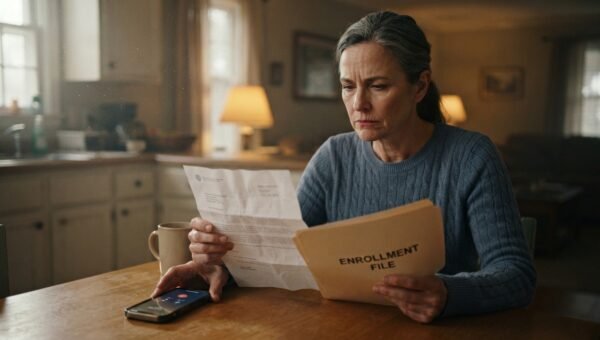
I set the dish towel down and unfolded the top paper. It was an official hospital donor-match record dated seventeen years ago from St. Jude Children’s regional affiliate. In the upper right corner was the recipient case number: NY-04-8819.
I still have my donor card in an old tin upstairs. I knew that alphanumeric string by heart because I had kept the certificate on my desk for five years after the procedure. It was my file number.
“I don’t get it,” I told him, looking up from the page. “Why do you have this?”
David pulled out a metal chair and sat down slowly, his knuckles white against his knees. “Because Maya was sick before she even took her first breath. The doctors caught the cell defect at twenty-six weeks. They told Sarah and me that without an exact stem cell graft right after delivery, the baby wouldn’t survive three months. I got tested. I wasn’t even close. Sarah wasn’t either.”
The kitchen clock ticked loudly on the wall. “You used my marrow for Maya?” I asked, my voice rising. “Why did you hide that from me? For seventeen years, David? I would have given it gladly. I would have sat in that hospital bed twice as long if I knew it was your kid.”
David looked at the floor between his boots. “Because marrow wasn’t the only thing the doctor said you were a match for.”
Then he reached back into his coat pocket and slid a second folded sheet across the table.
PART 2
The second paper was on the letterhead of a private reproductive clinic located forty miles north of our hometown, stamped with a date four months before Maya was born.
I unfolded the paper with stiff fingers. It was an intake summary and donor profile form.
Beside the heading marked “Directed Sperm Donor Selection,” my own name was typed out, accompanied by my Social Security number, blood type, and medical history. Below that were two signatures: my brother’s, and his wife Sarah’s.
“What is this?” I asked. My throat felt like dry paper. “David, what am I looking at?”
David kept his eyes fixed on the salt shaker. “Sarah and I tried for four years. We went through three failed rounds of treatments. We drained our savings. Then the specialist told us my count was zero. A genetic blockage. I couldn’t have biological kids, Mark. Not ever.”
“So you came to me?” I whispered. “I don’t remember this. I never walked into a clinic. I never signed any paper like this.”
“You didn’t,” David said. His voice was barely a rasp. “We knew you’d say yes if we asked, but Sarah was terrified of what it would do to the family. She thought holidays would feel strange. She thought you’d look at the child and see your daughter instead of your niece. And I was ashamed. I couldn’t bear the thought of my younger brother being the real father while I stood by playing the backup.”
“Then how does this document exist?” I demanded, tapping the heavy paper. “How did this clinic use my name?”
“When you went in for the bone marrow workup, they took comprehensive samples,” David confessed. “Full blood panels, tissue typing, viral screens. I worked in hospital facilities back then. I had access to the system records. Sarah and I took your medical file to a private fertility doctor in the next county. We told him you were my brother, that you were deployed overseas with the Guard, and that you had given written consent for family banking before leaving. I forged your signature on the intake release.”
He reached into his pocket one last time and placed a small, round plastic container on top of the papers. It was an at-home DNA swab kit, the seal already broken.
“The clinic stored frozen donor vials under your profile,” he said, swallowing hard. “They used your sample for the intrauterine procedure. Three weeks later, Sarah was pregnant. But when the fetal testing came back showing the immune disorder, the doctors told us the child would need identical stem cells at birth. The registry showed an exact marrow match was already in the pipeline. It was yours, Mark. You saved her life twice before she was even an hour old. Once with your blood, and once with the marrow.”
I sat down in the chair opposite him. My hands were shaking so hard I had to press them flat against the table edge.
For seventeen years, I had watched Maya grow up across town. I taught her how to cast a fishing rod off our uncle’s dock. I bought her the red bicycle for her eighth birthday when David had been laid off from the machine shop. Every Thanksgiving, she sat at the kids’ table until she grew tall enough to sit between David and me, laughing at the same dry family jokes.
“Why tell me tonight?” I asked. “You kept this quiet for almost two decades. Why walk into my house and dump this on the table now?”
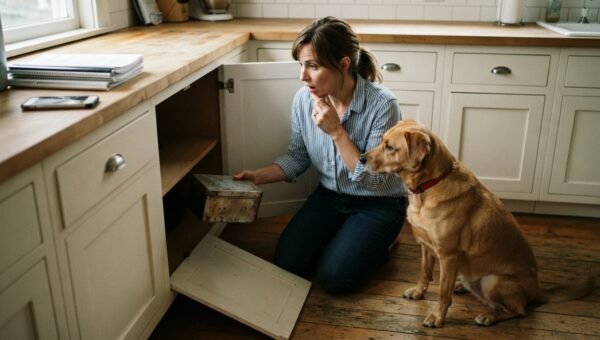
David wiped his forehead with the back of his hand. “Because Maya isn’t stupid. She found this folder in our lockbox last Tuesday while looking for her birth certificate for her driver’s license. She read the clinic names. She read your Social Security number on the form. She’s been staring at both of us for six days. That slip at the grill today wasn’t an accident, Mark. She was testing you to see if you knew.”
PART 3
The quiet between us was heavy. The refrigerator hummed, clicked, and went silent.
“Does Sarah know you’re here?” I asked.
“She’s sitting in the truck,” David said quietly, pointing a thumb toward my gravel driveway. “She wouldn’t come in. She thought you’d call the police. She thought you’d never speak to either of us again.”
I stood up from the table, walked past him, and pulled open the front door. Through the porch screens, I could see David’s old blue pickup idling under the streetlamp. A small figure sat motionless in the passenger seat, staring straight ahead through the windshield.
I walked down the porch steps and knocked softly on the truck window. Sarah jumped. When she rolled the glass down, her face was blotchy and swollen from crying. She wouldn’t look directly at my face.
“Get out of the truck, Sarah,” I said gently. “Come inside.”
She followed me into the kitchen with her head down, wrapping her cardigan tight across her ribs. She sat in the third wooden chair, leaving an empty space between herself and David.
“I don’t even know what to say to you, Mark,” Sarah whispered. Her voice cracked on my name. “We were desperate. That doesn’t make it right. Every time you came over for Sunday dinner, every time you helped her with her homework, I felt sick with the lie. But after the marrow transplant worked, she was healthy. We told ourselves that disturbing the truth would only tear her world apart.”
“And now her world is torn apart anyway,” I said. “Because she found out from a locked box instead of from the people raising her.”
“What do we do?” David asked. For the first time in my life, my older brother looked small. The man who had always taken charge of family reunions and holidays was looking to me for instructions.
“You don’t do anything tonight,” I said, looking at the DNA kit resting on the table. “You go home. You tell Maya that you came to see me. You tell her that I know everything now. And you tell her that I am coming over tomorrow at ten in the morning so the four of us can sit down together.”
“Are you going to tell the rest of the family?” Sarah asked, her hands trembling in her lap.
“That’s not up to you or me right now,” I answered. “That’s up to what Maya needs to feel safe in her own skin.”
David stood up slowly, putting a hand on Sarah’s shoulder. He reached down to pick up the clinic paperwork, but I laid my hand flat over the files.
“Leave the records,” I said.
He hesitated for a second, nodded once, and led Sarah out into the warm summer night. I listened to the truck’s engine turn over, the crunch of gravel as they backed down the driveway, and the fading sound of their exhaust down the county road.
I sat alone at that table until three in the morning, reading through every page of the clinical file. The technical terms were cold: donor genetic markers, cryopreservation dates, cell viability percentages. But between those lines was the reality of my life. The girl who had inherited my father’s cowlick and my mother’s habit of chewing on her thumbnail was my daughter. And David, who had raised her through colic, braces, and high school exams, was the father who had held her hand every single day.
ENDING
At ten o’clock the next morning, I parked my truck in front of David and Sarah’s single-story home.
The front door opened before I reached the walkway. Maya was standing on the porch in faded jeans and an oversized grey sweatshirt. Her arms were folded across her chest, her posture defensive, but her eyes were red and wide.
I stopped at the bottom of the porch steps and looked up at her.
“Your dad told me everything last night,” I said, keeping my hands resting easily in my pockets.
Maya’s mouth twitched. “Which dad?” she asked. The word was sharp, but her chin was trembling.
“The one who changed your diapers at two in the morning,” I answered clearly, gesturing toward the house behind her. “The one who stayed awake in the waiting room while the doctors ran those marrow lines. David is your father, Maya. That will never change as long as we both live.”
She uncrossed her arms slowly. A tear tracked down her cheek, but she didn’t wipe it away. “And what are you?”
“I’m the guy who gave you the start, and the guy who gave you the marrow,” I told her, stepping up onto the first wooden plank. “And from today on, I’m whatever you need me to be. Uncle, father, or just Mark. You don’t have to decide that today, and you don’t ever have to apologize for what you called me at that grill.”
Maya let out a long, shaky breath and stepped forward, wrapping her arms around my neck. I held her against my shoulder, feeling the steady, rhythmic beat of the heart that had survived because of our shared blood.
Behind the screen door, David and Sarah were standing side by side in the dim hallway. They didn’t come outside, and they didn’t speak.
We didn’t fix seventeen years of silence in one morning. We didn’t erase the anger I felt toward my brother for stealing my choice, nor did we erase the guilt Sarah carried across her kitchen floor. But when we finally sat down around their dining table an hour later, the locked box was open, the papers were laid out in the center of the wood, and nobody was hiding behind the salt shaker anymore.