PART 1
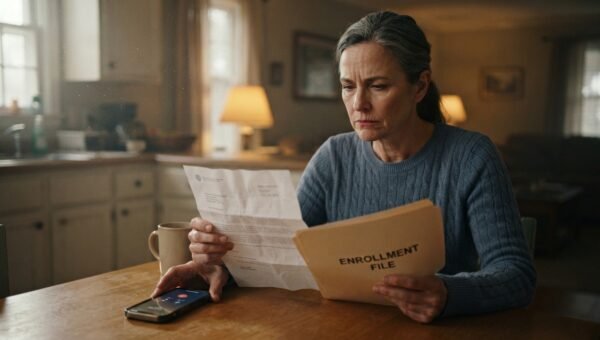
The paper felt slick and cold under my thumb, the way bank carbon copies always used to feel before everything turned into pixels on a screen.
For twenty years, that was my entire relationship with my only child: seventy-five dollars on the third of every month, mailed inside a plain white envelope from a post office box in Ohio to an apartment building outside Pittsburgh.
When Elena packed her bags back in 2007, I told myself I was being the practical one.
I told myself that men who stay around after a marriage turns sour only make things ugly, and that moving nine hundred miles away to work pipeline maintenance was an act of quiet sacrifice. I convinced myself that seventy-five dollars was a real gesture. It paid for gas. It paid for milk. It proved I had not vanished off the face of the earth, even if I never once picked up the phone.
I told myself money counted as parenting.
It was the easiest lie I ever told, and I leaned on it like a cane for nearly two decades. When Tessa graduated high school, I sent a hundred-dollar bill inside a graduation card from the grocery store rack. It came back three weeks later, the envelope unopened and marked refused by recipient in Elena’s neat cursive. When Tessa finished nursing school, I sent another card. That one came back too, the yellow return sticker slapped right across her name.
When Elena got sick with pancreatic cancer six years ago, I heard about it through a second cousin at a family reunion I did not even attend. By the time I worked up the courage to dial the hospital switchboard, Elena had been in the ground for four days. I stood in my kitchen in Cincinnati with a cup of burnt coffee in my hand and told myself it was better this way. I told myself Tessa had her own life, that she was better off without an old pipeline welder turning up to complicate her grief.
I kept the returned envelopes. Every single one of them. Over twenty years, they filled an old metal tackle box I kept on the bottom shelf of my bedroom closet. Twenty-four unopened cards, each with a crisp twenty or fifty or hundred tucked inside, still resting in the folded paper.
Last November, my hip finally gave out completely, and the state placed me in an assisted living wing down near Canton.
I spent my mornings sitting in the dayroom, staring at the parking lot and listening to other men talk about grandchildren they actually knew.
Right before Christmas, a retired clerk named Martha sat down across from me with a cup of ginger ale. Her sister had just passed away in a hospice facility forty minutes north, up near North Canton. Martha was rambling the way lonely people do, talking about the carpet and the cold tea, and then she paused and squinted at me over her glasses.
“There was a girl taking care of my sister,” Martha said, tapping her finger on the laminate table. “A charge nurse. Sweet thing, but quiet. She had an old portrait pinned inside her locker when she opened it to grab her stethoscope. It was Elena Vance. I knew Elena when we were girls back in Mercer County.”
My breath stopped in my throat.
“Her nametag said Tessa,” Martha continued, not noticing the way my hands locked onto the arms of my vinyl chair. “I told her she looked just like her mother.
But when she turned around to look at the chart, Arthur, she had your chin. The exact same stubborn jaw you carry around this hallway every day.”
I didn’t sleep that night. I used the library computer the next morning and searched the staff directory for St. Jude Hospice Care.
There she was. Tessa Vance, BSN, RN.
Her face was Elena’s face, but her eyes were mine. She looked tired, steady, and entirely grown up. A local newspaper clipping from two years prior showed her standing on the front porch of a small yellow cottage with dark green shutters. The caption congratulated her on closing on her first home, bought for $173,000 on an FHA loan after years of shift work.
She had built an entire life without a single word of guidance from me. She had survived her mother’s death. She had bought a home. She had made herself into someone people trusted at the end of their lives.
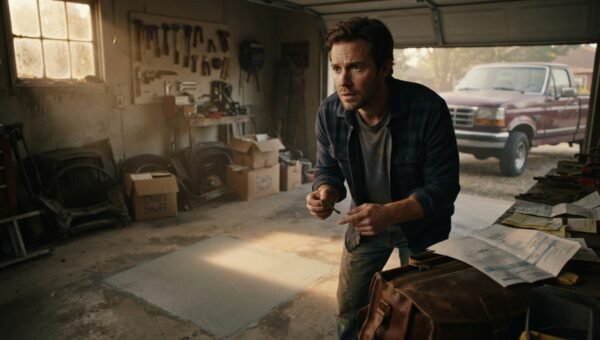
I didn’t own a car anymore, but I had four thousand dollars saved in a credit union account and a battered leather briefcase.
Three days later, on a Tuesday morning when the sky was the color of wet cement, I paid a private driver ninety dollars to drive me up Route 77. I carried that old briefcase on my lap the entire way. Inside were all twenty-four returned envelopes, the faded yellow post office slips, and the carbon receipts from seventy-five dollar checks dating all the way back to the winter of 2007.
I told the reception desk I was there to sit in the public meditation room near the chapel. The receptionist smiled, pointed down the quiet carpeted corridor, and went back to her phone.
I didn’t have a plan. I didn’t know what words a father was supposed to use after twenty years of silence. I just stood near the arched wooden doors of the chapel, my cane shaking against the baseboard, waiting for the shift change.
At two in the afternoon, the double doors at the end of the hall clicked open.
She was carrying a metal clipboard and a fleece jacket over one arm. Her hair was pulled back in a dark clip, just the way her mother used to wear it when she cleaned the kitchen on Saturday mornings. She walked with long, purposeful strides, looking down at a chart, until the sound of my cane scraping the linoleum made her glance up.
She stopped dead five feet away from me.
She didn’t gasp. She didn’t drop her clipboard. She just stood there, her eyes traveling from my silver hair down to my crooked hip, then back to my face.
She looked at my eyes. She looked at my chin.
Slowly, her left hand reached out and gripped the wooden doorframe of the chapel. Her knuckles turned white against the stained pine. Her fingers tightened until the skin strained over the bone.
“You’re Arthur,” she said. Her voice wasn’t loud. It was flat, stripped completely bare of shock.
“Tessa,” I whispered. My voice cracked like dry kindling.
She didn’t step forward. Her fingers stayed locked onto that wood, anchoring herself against the sight of me.
“You sent checks,” she said, each word landing like an iron weight on the carpet between us. “You sent checks for twenty years. You never sent yourself. Why should I listen to a single breath you have to say now?”
PART 2
The hallway was so quiet I could hear the faint hum of an ice machine behind the nurse’s station.
A younger nurse carrying a plastic bin of clean linens stepped out of a patient room, glanced at us, and hesitated. Tessa didn’t turn her head. She kept her eyes pinned to mine, but her posture shifted, the professional mask snapping back over her features before the girl could ask if everything was alright.
“Take room twelve’s vitals, Brenda,” Tessa said, her tone level and controlled. “I will be in the family consultation room for ten minutes.”
She didn’t wait to see if I could keep up. She turned on her heel and walked through a heavy oak door marked Private. I followed her, my cane thumping unevenly against the floor, my bad hip throbbing with every step.
The consultation room was small, designed for breaking bad news to grieving families. It had two upholstered armchairs, a low box of tissues on a laminate table, and a framed print of a lighthouse in the fog.
Tessa stood behind the small table with her arms crossed over her navy scrubs. She didn’t offer me a seat. She didn’t take off her fleece.
“You have five minutes,” she said. “My break ends at two-fifteen, and I have three patients who need pain management adjustments before shift report.”
My hands were trembling as I unlatched the brass buckles on the leather briefcase. I set it on the table between us.
“I don’t expect you to forgive me,” I began, my tongue feeling thick and clumsy. “I know what I did. Or what I didn’t do. When your mother took you and went back to Pennsylvania, I felt like a failure. I was drinking too much back then, Tessa. I was angry at the world, and I convinced myself that staying away was the cleanest thing for both of you. I told myself that seventy-five dollars every month proved I was still your father.”
“Seventy-five dollars,” she repeated. A cold, sharp smile touched the corner of her mouth, but her eyes remained like flint. “Do you know what seventy-five dollars bought in 2008, Arthur? It bought half a week of groceries from the discount store. It bought two pairs of school pants from the thrift bin.”
“I know it wasn’t enough,” I said.
“No, you don’t know,” she interrupted, her voice dropping lower, tighter. “You think the money was the insult. The money was just paper. The insult was the date. Every single month, on the fifth or the sixth, that white envelope would arrive. No letter. No ‘How are your grades, Tessa?’ No ‘Did you make the track team?’ Just a money order from a bank in Zanesville or Steubenville, folded inside a blank sheet of paper so the postal carriers couldn’t see through the envelope.”
She stepped closer to the table, leaning forward until I could see the fine lines of fatigue around her eyes.
“Mom worked two shifts at the laundry facility,” Tessa said. “Her hands were cracked and raw every winter from the bleach and the pressing steam. When I was fourteen, she sat me down at the kitchen table and handed me that month’s check. She told me, ‘Your father thinks this clears his conscience. If we cash it, we agree with him.’ She never cashed another one. Not one.”
I stared at her, stunned. “She never cashed them?”
“Check your bank statements from the last twelve years, old man,” she said, her voice shaking with an anger she had kept locked behind her ribs for half her life. “They expired in the bottom drawer of her nightstand. Every time you sent a birthday card with cash inside, she made me write Return to Sender on the front. I wanted the money back then. I wanted new sneakers. I wanted to go to the movies with my friends. But Mom looked at me and said, ‘A father who only shows up on paper isn’t a father. You do not let him buy your forgiveness for fifty bucks at a time.'”
I reached into the briefcase with fingers that felt completely numb. I pulled out the stack of returned envelopes, bound together with thick rubber bands that had rotted and cracked with age.
“I kept them,” I whispered. “I kept every single one you sent back. Tessa, look at them. I never threw one away.”
“Why?” she demanded, her voice cutting through my defense like a scalpel. “So you could look at a box in your closet and feel like a tragic martyr? So you could tell yourself you tried and we were the cruel ones who rejected you?”
She pointed a finger at the center of my chest.
“Where were you when she started vomiting blood in the hallway?” Tessa asked. “Where were you when I had to lift her out of the tub because she was down to eighty-two pounds and couldn’t stand on her own legs? I was twenty-four years old, Arthur. I was twenty-four, working night shifts at the clinic and coming home to change my own mother’s morphine patches. I had to choose between paying the gas bill or buying her liquid nutrition.”
“I didn’t know,” I choked out. “If I had known she was that sick—”
“You didn’t know because you didn’t ask!” she snapped, and for the first time, a tear broke over her lower lid, though she wiped it away with the back of her wrist before it could hit her cheek. “You didn’t call the cousins. You didn’t drive up the turnpike. You stayed nine hundred miles away because it was comfortable. It was easy to send seventy-five dollars and pretend you had done your duty.”
She looked down at the pile of faded envelopes on the table. For a second, her face softened into something deeply wounded and small, the face of the ten-year-old girl who used to wait on the porch for a truck that never pulled into the gravel drive.
Then she straightened her back, her breathing ragged, and pulled her lanyard tight around her neck.
“My break is over,” she said. “Take your papers and get out of my hospital.”
PART 3
She reached for the doorknob, but I couldn’t let her leave. Not like that.
I reached out and laid my hand flat on the top of the briefcase.
“Wait,” I said. “Just… please. Give me two minutes. Not about the past. About your house.”
She paused, her hand frozen on the brass lever. She turned slowly, her brows drawn together in suspicion.
“What do you know about my house?”
“I saw the article in the local paper,” I said, keeping my voice as steady as my lungs would allow. “The yellow cottage on Maple Street. A hundred and seventy-three thousand dollars. You bought it two years ago.”
“I worked sixty hours a week for four years to save that down payment,” she said, her voice turning cold again. “Every penny of it came from overtime and holiday pay. You don’t get to talk about my home.”
“I don’t want to talk about the mortgage,” I said. I pulled my old leather wallet from my coat pocket. My hands were shaking so hard I could barely pry the billfold open. From behind my Medicare card and my expired Ohio driver’s license, I pulled a folded, yellowed document that had been laminated in plastic decades ago.
It was a property deed from Mercer County, dated September 14, 1994.
“Your mother and I bought three acres out near the reservoir when you were three years old,” I told her, holding it out across the table. “We were going to build on it. When we split, the lawyers drew up a separation agreement, but we never finalized the division of real estate because neither of us had the money to pay the surveyor or the filing fees. I took over the county tax payments. I paid four hundred and twelve dollars every November for twenty-four years.”
Tessa didn’t take the paper. She looked down at it like it was a trap.
“Why are you showing me this?”
“Because three months ago, the state highway authority bought the right-of-way through the back two acres for the new bypass connector,” I said. “The settlement check came to me because my name was primary on the county tax rolls. Half of that land belonged to Elena. And when Elena died without a will, her half passed directly to you.”
Tessa’s eyes narrowed. “I don’t want your money, Arthur. I told you that five minutes ago.”
“It isn’t my money,” I said firmly, looking straight into her eyes. “It’s yours. It was your mother’s sweat, and it is your inheritance. The state escrow office has eighty-two thousand dollars sitting in a county trustee account in Mercer. They couldn’t locate you because your name was listed as Tessa Vance, and the deed records still had Elena’s maiden name hyphenated with mine. I didn’t come here to buy your love with seventy-five-dollar checks, Tessa. I came here because they need my signature to release the title, and I will not touch a single cent of it.”
She stared at the yellowed deed. The silence in the small room stretched so long that the distant chime of an elevator bell sounded like an alarm.
“Eighty-two thousand dollars,” she whispered.
“It pays off almost half of what you owe on that cottage,” I said. “It clears the balance you had to borrow to bury your mother. It’s the only thing left in this world that belongs to her that you haven’t received.”
She looked from the paper up to my face. The coldness in her eyes didn’t vanish—twenty years of neglect doesn’t evaporate over a piece of paper—but the sharp, defensive wall cracked.
She saw the truth of it. I hadn’t come to demand a bedroom in her house. I hadn’t come with an attorney or a plea for her to take care of me in my old age. I had come carrying the only piece of justice I could still hand her.
“Why didn’t you just mail it?” she asked, her voice barely audible above the air vent. “You mailed everything else.”
I felt a tear slip down the creased skin of my cheek. I didn’t bother to wipe it away.
“Because you were right,” I told her. “I hid behind the mail for twenty years. I hid behind bank envelopes because I was too much of a coward to look at what I broke. If you want to throw that deed in the trash the second I leave, that is your right. But I owed it to Elena, and I owed it to you, to stand on my own two feet and let you look me in the eye while I gave it back.”
Tessa stood motionless for nearly a full minute. Her eyes moved over the seal on the deed, the county recorder’s stamp, and then down to my scuffed shoes and my worn cane.
The door behind her clicked open, and Brenda, the floor nurse, stuck her head in.
“Tessa? Dr. Miller is on line two about Mr. Henderson’s morphine drip.”
Tessa swallowed hard. She didn’t look at Brenda.
“Tell him I will be there in thirty seconds,” she said.
Brenda pulled the door shut.
Tessa reached out her hand. Her fingers were steady now. She picked up the laminated deed from the table and held it against her chest, right over her hospital badge.
“I have to go to work,” she said.
ENDING
She didn’t hug me. She didn’t call me Dad.
She turned and walked out of the consultation room, her white rubber soles squeaking softly against the polished floor as she hurried back toward the nurse’s station.
I stood there alone for a few minutes, listening to the muffled announcements over the intercom and the faint beeping of patient monitors down the hall. I packed the rotted rubber bands and the yellowed envelopes back into my briefcase, snapped the brass latches shut, and leaned heavily on my cane as I made the long walk back out through the front lobby.
The private driver was parked near the curb, reading a paperback with the heater running. I climbed into the back seat, buckled my seatbelt, and stared out the window as we pulled out onto the grey highway heading south toward Canton.
My chest felt hollow, but for the first time in twenty years, it didn’t feel heavy. The lie was finally dead. I was an old man who had failed his daughter, and she had told me the truth to my face, exactly as I deserved.
Two weeks went by.
Life at the assisted living facility settled back into its dull, predictable rhythm. Breakfast at seven-thirty, physical therapy on my hip at ten, and the evening news in the dayroom. The tackle box in my closet was gone; I had thrown the returned envelopes into the facility incinerator the day after I got back. There was no point in keeping evidence of my cowardice anymore.
On a rainy Thursday in mid-January, the receptionist called my room and said a visitor was waiting in the small garden alcove near the front desk.
I took my cane and walked slowly down the corridor, wondering if one of the old welders from the union hall had finally remembered where I ended up.
When I turned the corner into the alcove, Tessa was sitting on the wooden bench beneath an indoor fig tree.
She wasn’t in her scrubs. She was wearing a dark wool coat and a pair of blue jeans, her boots wet from the rain outside. On the low table in front of her sat a folder from the Mercer County Title Company and two cups of coffee in paper cups from the gas station down the road.
I stopped near the doorway, my heart hammering against my ribs.
“Tessa,” I said.
She looked up. Her face was calm, though the guarded look had not entirely disappeared from her eyes.
“The title officer said you need to sign page four in the presence of a notary,” she said, nodding toward the folder. “The facility director here is certified. She told me she could stamp it after lunch.”
I nodded slowly, stepping into the room and easing myself into the chair across from her.
“I’ll sign whatever they need,” I said. “Every last page.”
She pushed one of the paper coffee cups toward me. It was black coffee, plain and strong.
“I signed the escrow release yesterday,” she said, looking down at her hands. “The money clears next Friday. It… it takes eleven hundred dollars off my monthly payment. It means I don’t have to work the double shifts on weekends anymore.”
“Good,” I said. “That’s what your mother would have wanted.”
Tessa was quiet for a long moment, watching the rain beat against the large picture window that looked out over the courtyard.
“I still don’t know who you are,” she said softly, her voice steady but honest. “Twenty years of silence doesn’t go away because you signed a land title. You missed everything that mattered, Arthur. You missed the girl who needed you, and she isn’t here anymore.”
“I know,” I said.
“But my mother always said that people who refuse to admit their debts are worse than thieves,” she continued, finally turning her gaze to meet mine. “You came up there and you owned what you did. You didn’t make excuses about the drinking or the distance. You just stood there and took it.”
She unzipped the pocket of her wool coat and pulled out a small, framed photograph, setting it on the table next to the coffee cups.
It was a picture of Elena from the late nineties, sitting on the porch swing of our first rental home, laughing with a plate of fresh sliced peaches in her lap.
“She kept this in her recipe box until the week she died,” Tessa said. “She was mad at you until the end, but she never threw it out. I thought you ought to have it.”
My vision blurred, and a single tear dropped straight onto the plastic lid of the coffee cup. I reached out with a trembling hand and picked up the frame, holding it by the corners like it was made of spun glass.
“Thank you, Tessa,” I whispered.
She picked up her coffee and took a slow sip.
“The title work will take about forty-five minutes once the director gets back from lunch,” she said, looking toward the window again. “I have until three before I need to drive back up to North Canton.”
She didn’t call me Dad, and I didn’t ask her to. But she didn’t get up to leave, either.
For the next half hour, we sat together in the quiet alcove, watching the Ohio rain wash over the grey grass, drinking bitter coffee in the silence we had spent twenty years building, and taking the very first steps toward tearing it down.