PART 1
My daughter called me on a Tuesday morning, sobbing so hard she could barely catch her breath. She told me her power was scheduled to be cut off by noon, that her past-due notice was sitting on the kitchen counter, and that she had nowhere else to turn. I only had $1,500 left in my savings account. That was my emergency cushion, the money I kept set aside every month to cover the co-pays for my blood pressure and heart medication.
I did not want to see my thirty-two-year-old child sitting in the dark. I drove straight down to my credit union, withdrew $1,460 in cash, and transferred it directly into her checking account before noon. When I got back home, my hands shook as I counted out the few twenty-dollar bills left in my purse. I told myself I would skip eating out and stretch my prescriptions for a week until my next Social Security check arrived. A mother does what she has to do.
Two days later, my neighbor Brenda came over to drop off my mail and showed me her phone. Brenda’s niece works at a luxury resort downtown and had posted a public photo from a private rooftop pool. Standing by the edge of the water in designer sunglasses, holding up a tall glass of champagne, was my daughter, Chloe. Hanging directly above her head was a dark green banner that read in gold lettering: WELCOME, PROPERTY OWNERS.
I called her the second Brenda walked out the front door. Chloe answered on the fourth ring, the sound of club music and splashing water loud in the background. When I asked her how she could afford to lounge around at a five-star hotel after taking my medicine money, her voice went cold. She snapped that a friend had won a weekend pass, that the whole trip was completely free, and that I was sick for spying on her social life. Then she hung up on me.
That evening, I was sitting at my kitchen table with a cold cup of tea when the mail carrier dropped a thick manila envelope through my front door slot. It was addressed to Chloe, but it had come to my house. Inside was a twelve-page quarterly rental ledger from Harborview Property Management. It listed three luxury furnished downtown apartments, showing thousands of dollars in monthly rental income.
Every single distribution was being deposited directly into an account that listed my own Social Security number on the tax identification line.
My chest tightened as I dialed the management office number printed on the top corner of the page. The clerk answered, typed in the file number, and pulled up the records. I heard the rapid clicking of her keyboard stop. The line went completely quiet.
“Ma’am,” the clerk said slowly, her tone turning cautious. “Your daughter isn’t listed as the owner of these units. Your late husband is.”
PART 2
I gripped the edge of the kitchen counter until my knuckles turned white. My husband, David, had passed away three years earlier after a long battle with lung disease. As far as I had known, we had liquidated our modest savings to cover his home hospice care, leaving me with our paid-off house and a small monthly survivor benefit.
“My husband died in 2023,” I told the clerk, my voice barely above a whisper. “How can he be the active owner of three apartments?”
The woman on the phone hesitated. “I am looking at the original master deed and the owner portal. David Miller is the titled owner under an LLC established ten years ago. But about fourteen months ago, a Chloe Miller submitted an authorized representative form along with a power of attorney, claiming Mr. Miller was incapacitated. She updated the disbursement routing number and took over digital management of the properties.”
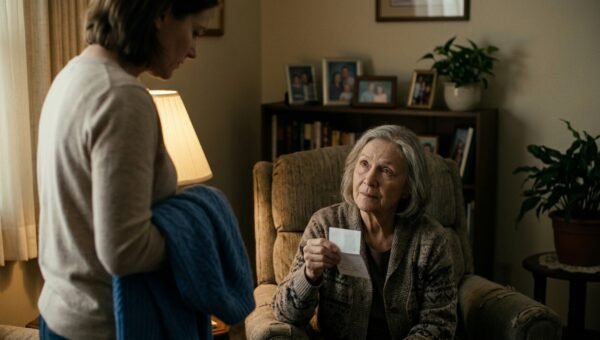
The room seemed to tilt. Chloe had asked David for power of attorney during his final weeks in hospice, telling me she wanted to help handle the medical billing so I could rest. I had thanked her for it. I had spent the last three years scrimping on groceries and skipping doses of my heart medication while my daughter quietly collected monthly rent checks from three high-end downtown properties.
I asked the clerk for the current balance on the account. She told me she could not disclose specific banking balances over the phone without verifying my identity, but she could send me the full digital portfolio file if I brought my identification, David’s death certificate, and our marriage certificate into their downtown office the following morning.
Before I could even process what she was saying, the front door swung open. Chloe walked into the living room, holding her weekend bag and an iced latte. She looked refreshed, sun-kissed, and annoyed.
“I saw your car in the driveway,” she said, dropping her keys on the side table. “Look, Mom, about earlier. You humiliated me. My friend invited me to her timeshare mixer, and you made me look like a criminal.”
I didn’t answer right away. I picked up the thick manila envelope from the table and held it out toward her.
Her eyes dropped to the Harborview logo printed in the top left corner. The color drained from her face.
PART 3
“They sent it to the house because you forgot to update your mailing address on the annual tax filing,” I said, keeping my voice steady. “They have my Social Security number on file, Chloe. And they have Dad’s name on the deed.”
She reached out, grabbed the envelope, and tried to laugh, but it sounded thin and cracked. “Mom, you don’t understand how Dad set things up. He asked me to take care of this. He didn’t want you stressed with property taxes and tenant calls.”
“He didn’t want me stressed?” I walked closer to her. “You called me forty-eight hours ago crying your eyes out, swearing your electricity was getting shut off. You took fourteen hundred and sixty dollars out of my hands. You knew that was my heart medicine money.”
“I had an unexpected repair bill on unit 4B,” she stammered, stepping back toward the front door. “The tenant had a burst pipe, and the management company held the monthly payout until the contractor was paid. I was short on cash for my own bills, okay? It was just a temporary cash crunch. I was going to pay you back next week.”
“You weren’t going to pay me back,” I said. “You’ve been pulling six thousand dollars a month out of your father’s estate for over a year while watching me cut my pills in half.”
She tried to defend herself, arguing that she was the one who answered the maintenance emails, that she had earned the management fee, and that David had verbally promised the apartments to her before he died. But none of that mattered. A power of attorney legally ends the moment a person dies. Chloe had never reported David’s death to Harborview. She had simply continued to act on his behalf, filing taxes under the LLC using my personal tax information to avoid triggering probate.
The next morning, I walked into the Harborview Property Management office with David’s death certificate, our original will, and a probate attorney I had hired with a credit card. The management company froze the owner portal within ten minutes. By noon, the attorney had filed an emergency petition with the probate court to freeze the disbursement account and compel an immediate accounting of all funds collected since David’s passing.
ENDING
Two weeks later, the forensic audit came back. Chloe had collected a little over eighty-two thousand dollars in net rental income over fourteen months. She had spent most of it on luxury clothes, weekend resort stays, and high-end restaurant dinners, treating her father’s secret investment like a private trust fund.
Under the guidance of my attorney, we avoided criminal charges on the condition that she sign a formal settlement agreement. Chloe signed over every scrap of paperwork, relinquished all claims to the LLC, and agreed to an automatic monthly garnishment on her personal paycheck to repay the emergency money she took from me and the taxes owed on the rental income.
The properties are now legally transferred into an estate trust in my name. A licensed property manager handles the tenants, the maintenance, and the deposits. I no longer have to look at my checking account with dread every time my pharmacy calls.
Chloe came by the house once, a month after the paperwork was finalized, to pick up some old boxes from the garage. She stood on the porch, refusing to step inside, her arms crossed tight against her chest. She told me I was cruel for choosing money over my own daughter.
I looked at her, standing on the same porch where I used to tie her shoelaces before school, and felt a quiet, heavy sorrow. I didn’t yell or argue. I just reached into my sweater pocket, pulled out the cashier’s check for the $1,460 she had returned under the settlement, and held it in my hand.
“I didn’t choose money, Chloe,” I said quietly. “You did.”
She turned around and walked down the driveway without saying another word. I locked the front door, went back into the kitchen, and took my morning medication with a full glass of water.