PART 1
My sister Brenda made six phone calls before noon on the day Mom came home from the hospital, and she made sure everyone heard every single one. She sat at Mom’s kitchen table with her company laptop open, her headset resting over one ear, talking about copays and physical therapy schedules in her loud, crisp office voice. When our aunt Carol called from Ohio to check in, Brenda answered on speaker.
She sighed into the receiver and said she was doing everything she could to keep the household running, but caregiving was practically a full-time job on top of her actual job.
I was in the kitchen at that exact moment, wiping down the counters and stirring low-sodium chicken broth on the stove. I had already stopped by the grocery store on my way over at six in the morning to pick up eggs, soft bread, ginger ale, and the paper towels Mom liked. On the kitchen counter sat the electric bill for $168 that had been sitting past due because Mom had gone into the hospital five days before the due date. I wrote a check from my own account, stamped the envelope, and walked it out to the mailbox by the driveway.
Mom was seventy-one and had just undergone hip replacement surgery. The doctor had been clear with us before discharge: she could not bear weight on her left side without a walker, she was a high fall risk, and someone had to stay overnight with her for the first four weeks.
Brenda and I agreed we would split the nights. I took Mondays, Wednesdays, and Fridays. Brenda took Tuesdays, Thursdays, and Saturdays. On Sundays, our cousin Gary usually dropped in for lunch, and we took turns staying the afternoon.
For four weeks, I lived out of an overnight bag. I am fifty-two, and sleeping on Mom’s pullout couch in the den left my lower back stiff every morning. The thin foam mattress smelled like the cedar closet where the extra linens were stored. Every morning at five-thirty, I got up, helped Mom to the bathroom, measured her morning doses into the little plastic cups, made her oatmeal, and helped her into her recliner with her ice pack. Then I drove twenty minutes home, showered, and went to work at the county clerk’s office.
Brenda worked from home in software sales. She lived fifteen minutes farther out than I did, in a gated subdivision with an association pool.
Whenever it was Brenda’s night, she would arrive at seven in the evening carrying her leather work bag and a takeout salad for herself. She would set up her laptop at the dining table, plug her phone into the wall, and tell me she would take it from there.
“You look tired, Sarah,” she told me during the second week. “You don’t handle broken sleep very well. Just let me manage the medical paperwork. That’s really where the heavy lifting is.”
I didn’t argue. I was tired, and Brenda had always been the sister who liked managing things. If she wanted to handle the insurance statements, I was grateful.
The break happened on a Sunday afternoon at the end of that first month. Mom was sitting in her recliner, doing much better. Her incision had healed cleanly, and she was moving around the living room with just a cane. Aunt Carol was visiting from Ohio, and our brother Tom had driven down from Albany with his wife.
We were all in the living room having coffee and store-bought pound cake.
Tom asked how the recovery had gone, and Brenda leaned back against the mantle with her coffee mug.
“It was rough,” Brenda said, shaking her head. “I essentially lived here six days a week. Between managing the supplemental insurance denials and keeping Mom on schedule, I barely slept four hours a night. Sarah came by when she could, of course, but she has her own routine, so she barely helped with the actual care.”
The room went quiet for a second. Aunt Carol looked over at me with a soft, pitying look, as if I were a child who had forgotten to do my chores. Tom nodded at Brenda and told her she was an angel for carrying the family on her back.
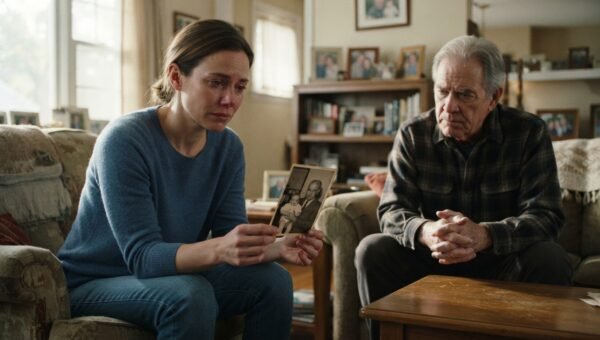
I turned my head toward Mom. She was looking down into her lap, smoothing the hem of her floral blouse with both hands. She didn’t look up. She didn’t say, “Sarah paid the electric bill.” She didn’t say, “Sarah cooked every pot of soup in the freezer.” She didn’t say, “Sarah slept on the pullout couch every Monday, Wednesday, and Friday for thirty days.”
She stayed silent.
My throat felt thick and dry. I stood up, carried my mug into the kitchen, set it in the sink, and picked up my purse from the counter. I didn’t yell. I didn’t cause a scene in front of Aunt Carol. I just walked out the back door, got into my sedan, and sat in the driveway for five minutes with my hands shaking on the steering wheel before I put the car in reverse.
For four days, I stayed away. I didn’t call. I didn’t text the family group chat where Brenda posted daily updates about Mom’s blood pressure readings. My husband told me I had every right to be furious, but by Thursday night, the knot in my stomach wasn’t anger anymore. It was just a dull, sick ache. Mom was still my mother, and she was seventy-one and frail.
On Friday morning, my cell phone rang while I was at my desk at work. It was Mom’s landline.
“Sarah?” Mom’s voice was small, thinner than usual.
“I’m here, Mom,” I said.
She hesitated on the line. I could hear the kitchen clock ticking in the background. “Could you stop by after your shift? I need you to do an errand for me. Nobody else.”
“Is Brenda there?”
“Brenda went to the grocery store,” Mom whispered. “Please, Sarah. Come before five.”
I left the courthouse at four o’clock. When I let myself in through the side door, the house was warm and smelled like peppermint tea. Mom was seated in the floral armchair by the front window, her walker folded against the wall beside her. She had a small notepad in her lap.
“I need you to go into my closet,” she said, before I even took off my coat. “The hall closet where your father’s coats are. Bring me the dark blue cardigan. The thick wool one with the horn buttons. The one I used to wear when I drove your father to his chemotherapy appointments in Syracuse.”
I remembered that sweater. It was heavy navy wool, oversized and warm, with deep patch pockets on both sides. Mom kept it in the back of the hall closet inside a plastic zippered garment bag to protect it from moths.
“Are you cold, Mom?” I asked, walking down the hall.
“Just bring it to me,” she said.
I unzipped the garment bag and pulled the heavy sweater off the wooden hanger. As soon as I took it out, a faint odor drifted off the wool. It didn’t smell like mothballs or cedar. It smelled like menthol cigarette smoke and cheap, artificial cherry car freshener. Mom had never smoked a day in her life. Dad had hated cigarettes.
I carried the sweater into the living room and laid it across Mom’s lap. The right pocket sagged down, weighed down by something inside.
I reached in without thinking, expecting a pack of tissues or an old pair of reading glasses. My fingers touched a stiff slip of folded thermal paper. I pulled it out.
It was a cash register receipt from a 24-hour convenience pharmacy in Glenville, a town twenty-two miles north of Mom’s house. The timestamp printed in faded purple ink read 1:47 AM, dated two weeks earlier, on a Thursday night.
That was a night Brenda was supposed to be sleeping in the guest room, watching Mom.
Under the printed store header, the receipt showed two items: a pack of menthol cigarettes, a bottle of cherry windshield fluid, and a cash-back withdrawal of $200 from an account ending in Mom’s debit card numbers.
I looked at the date again. On that exact Thursday morning, Brenda had sent a text to our family chat at six-fifteen, complaining that Mom had been restless all night and that she had barely gotten a wink of sleep holding Mom’s hand through leg cramps.
I held the slip out toward Mom, my hand unsteady. “Mom, what is this? Were you in Glenville two weeks ago in the middle of the night?”
Mom took the receipt from my fingers. Her hands were spotted with age and slightly crooked from arthritis, but they didn’t shake. She folded the paper once down the center, tucked it into the pocket of her housecoat, and looked straight into my eyes.
“Do not say a word to your sister,” Mom said quietly. “Not yet. You don’t know what I noticed while you were gone.”
PART 2
Mom reached over and touched my wrist. Her fingers were cold. “Sit down, Sarah. Sit right here next to me.”
I pulled the footstool over and sat down beside her chair. “Mom, if Brenda left you alone in the house at nearly two in the morning after major surgery, that’s not just unfair to me. That’s dangerous. You couldn’t even stand up by yourself two weeks ago.”
“I know,” Mom said. Her voice was steady, but her knuckles were white where she gripped the arm of the chair. “On the second week, Brenda started giving me a small white pill with my evening tea around nine o’clock. She told me the surgeon called it in to help with muscle spasms so I could sleep through the night. The first three times she gave it to me, I took it. And by nine-thirty, I couldn’t keep my eyes open. I was so heavy I couldn’t move my legs until eight the next morning.”
A cold knot tightened in my chest. “What was the pill, Mom?”
“It wasn’t a prescription,” Mom said. She leaned closer. “On that Thursday, she brought the tea into my bedroom, but her cell phone rang in the kitchen. She set the mug down and walked out to answer it. I picked up the pill from the little saucer. It wasn’t the shape of my regular medicine. It had a little blue line across the back. I recognized it because your cousin Gary used to take over-the-counter sleep aids when he worked third shift. It was an antihistamine sleeping pill. The kind you buy off the shelf at the grocery store.”
“Did you take it?”
“No,” Mom said. “I tucked it under the rim of my coaster. When she came back in, I took two sips of the tea and told her I was drifting off. She turned off the bedside lamp and closed my door. An hour later, I heard the back door click shut. Then I heard a car engine start in the driveway. It wasn’t Brenda’s little hybrid. It was an older truck with a bad muffler.”
I stared at her. “Whose truck?”
“Kevin,” Mom said softly.
Kevin was Brenda’s ex-husband. They had divorced four years earlier after he blew twenty thousand dollars of their savings on sports betting and lost his contractor license. Brenda had spent three years telling everyone in the county what a liar he was, but six months ago, Tom mentioned he thought he had seen Kevin’s beat-up green pickup parked down the street from Brenda’s subdivision.
“I pulled myself up on the walker,” Mom continued, her voice dropping lower. “It took me ten minutes just to get across the bedroom carpet to the window. I opened the blinds just enough to look out. Brenda was in the passenger seat of Kevin’s truck. She was wearing my navy sweater because it was cold out and she hadn’t brought her winter coat. She left the front door unlocked, Sarah. She left me in this house by myself with a double dose of sleeping medicine in the tea, and she didn’t come back until five in the morning.”
“Why didn’t you call me?” I asked, my voice rising before I could stop it. “Mom, you had your cell phone on the nightstand! Why did you let her sit there last Sunday and tell Tom and Carol that I abandoned you?”
Mom’s eyes welled with water, but she didn’t look away. “Because if I called you that night, you would have come over here screaming. Brenda would have packed her bags, Kevin would have driven off, and Brenda would have taken the records with her.”
“What records?”
“Look in the bottom drawer of the telephone desk,” Mom said, nodding toward the small wooden table in the corner of the hall. “Behind the old phone books. There’s a manila folder I slipped under the liner paper three days ago.”
I stood up and went to the desk. In the very back of the bottom drawer, under the yellowed telephone directories from five years ago, sat a thick folder. Inside were three months of printed bank statements from Mom’s checking account, along with two official letters from Mom’s credit union.
I opened the top statement and scanned down the lines.
On the third of the month: $200 ATM withdrawal, Glenville.
On the eighth: $300 ATM withdrawal, Glenville.
On the fifteenth: $200 ATM withdrawal, Glenville.
On the twenty-second: $400 ATM withdrawal, North Syracuse.
There were eight separate cash withdrawals totaling $2,100 over six weeks, all timestamped between midnight and three in the morning. And stapled to the back of the bank statement was an application form for durable financial power of attorney, printed directly from a legal template website. Brenda’s name was typed in as the primary agent. The only thing missing was Mom’s signature and a notary stamp.
“She brought that paper to me on Saturday morning,” Mom whispered from the armchair. “Before Aunt Carol arrived. She told me that handling the insurance had been so difficult that the hospital needed her to have formal authority over my accounts just to dispute the bills. She told me if I didn’t sign it, the clinic would send my physical therapy bills to collections.”
The whole picture landed in my mind with sudden, brutal clarity. Brenda hadn’t stayed overnight out of devotion. She had used Mom’s house as an alibi to disappear with Kevin every weekend, drugging Mom to ensure she wouldn’t wake up, using Mom’s debit card to pull cash to pay Kevin’s debts, and preparing to take complete control of Mom’s finances before anyone noticed the missing money.
And to make sure nobody looked too closely at what was happening in the house, she had publicly discredited me in front of the entire family. If Brenda was the exhausted martyr and I was the lazy sister who barely showed up, nobody would ever ask me what the house looked like at night.
“Mom,” I said, my chest burning. “We’re going to the bank right now.”
Mom shook her head. “Not the bank. Not yet. Tomorrow is Saturday. That’s Brenda’s night to stay over.”
“You are not letting her stay in this house another night.”
“She thinks she’s coming tomorrow at seven,” Mom said, her jaw tightening. “She told Tom she was bringing the notary from her office on Monday morning to finalize the power of attorney. She thinks I am scared, Sarah. She thinks I’m an old woman who can’t walk to the mailbox without her permission.”
Mom reached down, took her cane from against the wall, and stood up. She didn’t wobble. She planted the rubber tip firmly on the carpet, took three solid steps toward me, and looked down at the manila folder in my hands.
“Call Tom,” Mom said. “Tell him to come here tomorrow at six. And tell him to bring Carol.”
PART 3
Brenda arrived at Mom’s house on Saturday evening at ten minutes past six. She came in through the back kitchen door, balancing her laptop bag on her shoulder and carrying a plastic container of soup from a deli.
“Mom?” Brenda called out, kicking the door shut with her heel. “I brought you some vegetable soup. I had to finish a client call in the car, which is why I’m a few minutes late, but we need to get your vitals done before—”
She stopped dead in the doorway of the living room.
Tom was sitting on the sofa next to Aunt Carol. I was sitting on the pullout couch, which had been folded back into a sofa. Mom was sitting upright in her favorite high-backed chair, dressed in her Sunday church slacks and her navy blue cardigan with the horn buttons.
On the coffee table in front of us sat three things: the manila folder with the bank statements, the uncompleted power of attorney forms, and the faded receipt from the 24-hour pharmacy in Glenville.
Brenda’s eyes flicked from Tom to Carol, and then to me. Her expression hardened immediately.
“What is this?” Brenda asked, keeping her voice light and exasperated. “Is this a family meeting? Because if Sarah is here to complain again about having to buy groceries, I really don’t have the bandwidth tonight. I’ve been managing Mom’s healthcare for five weeks straight.”
“Sit down, Brenda,” Tom said. His voice was unusually flat.
Brenda didn’t sit. She set her laptop bag down on the floor and crossed her arms. “I don’t have time for drama, Tom. Mom needs her dinner, and I have three spreadsheets to finish before Monday.”
Mom didn’t raise her voice. She reached down, rested both hands on the arms of her chair, and looked directly at her oldest daughter.
“Brenda, where were you on the night of the fourteenth at one forty-seven in the morning?”
Brenda blinked. A tiny flicker of irritation crossed her face, followed by an easy, dismissive smile. “What kind of question is that? I was here. In the guest room. Sleeping.”
“No,” Mom said. “You weren’t.”
Mom picked up the receipt from the coffee table and held it out. Brenda didn’t reach for it.
“That’s a receipt from the pharmacy on Route 11 in Glenville,” Mom said. “You bought menthol cigarettes and wiper fluid. And you used my debit card to withdraw two hundred dollars in cash. You were gone for five hours. Kevin’s truck was parked in my driveway, leaking oil on the pavers.”
Brenda’s face lost its color. The confident sales smile vanished so fast it was as if someone had wiped it off with a towel. “Mom, you don’t know what you’re talking about. You had pain medication. You were confused.”
“I was not confused,” Mom said. “I didn’t take the sleeping pill you left on the saucer. I watched you walk out to that truck wearing this sweater. The sweater still smells like Kevin’s cigarettes.”
Brenda looked at Tom, her hands coming up defensively. “Tom, she’s hallucinating. The surgery was major. Elderly patients get sundowning after anesthesia. I’ve been telling you she’s having cognitive decline, which is why we needed the power of attorney form in the first place!”
“Shut up, Brenda,” Tom said. He picked up the bank statements from the table and threw them down so hard the paper slapped against the wood. “There are eight cash withdrawals in Glenville and Syracuse over the last six weeks. Twenty-one hundred dollars. Sarah checked the dates against your text messages in the family chat. Every single time you pulled cash from Mom’s account, you sent a message thirty minutes later saying Mom was sleeping like a baby.”
Brenda stepped back toward the kitchen doorway. For three seconds, she tried to find an angle. I could see her mind working, looking for the person she could blame, looking for the technicality that would let her walk out of the room with the upper hand.
“Kevin was going to lose his van,” she said, her voice dropping to a harsh, thin whisper. “He needed parts to finish a roofing job so he could pay off his back taxes. I was going to put the money back as soon as he got paid on the fifteenth. It wasn’t stealing. I was managing Mom’s accounts anyway. I’ve given up my entire life for the last month to take care of her!”
“You didn’t take care of her,” Aunt Carol said from the couch, her voice trembling with anger. “You drugged your mother and left her helpless in an unlocked house so you could run around with the man who ruined your life four years ago. And then you looked me in the eye on Sunday and told me Sarah wasn’t helping.”
Brenda looked at me then. There was no apology in her eyes. There was only the raw, bitter resentment of someone who had been caught red-handed.
“You think you’re better than me, Sarah?” she hissed. “You bring over a pot of soup and think you’re a saint. You have no idea what kind of pressure I’m under.”
“Give me Mom’s debit card,” I said, standing up. “And the house key.”
Brenda stood there for a long moment, breathing hard. Then she opened her purse, pulled out Mom’s blue plastic debit card, and dropped it onto the floor. She unclipped Mom’s brass house key from her keychain, tossed it onto the kitchen counter, picked up her laptop bag, and walked out the back door without saying another word.
The screen door banged shut behind her. A second later, gravel crunched in the driveway as her car backed out into the road and sped away.
ENDING
We didn’t call the police. That was Mom’s decision, and none of us fought her on it. Instead, on Monday morning, Tom and I drove Mom to the credit union in town. We closed her checking account, opened a new one with two-factor authorization sent directly to my phone, and transferred her remaining balance.
Tom made a single phone call to Kevin that afternoon. He told Kevin that if Brenda didn’t repay the $2,100 within thirty days, Tom would hand the pharmacy receipts and the surveillance timestamps over to the county sheriff’s department. Two weeks later, a cashier’s check for the full amount arrived in Mom’s mailbox in a plain white envelope with no return address.
Brenda hasn’t spoken to me since that Saturday. She didn’t come to Thanksgiving dinner at Tom’s house, and when Aunt Carol called her before Christmas, Brenda told her she was taking some time away from the family to focus on her career.
Mom’s hip healed completely by the middle of November. She can walk to the end of the driveway every morning without her cane to get the newspaper, and on Tuesdays, she goes back to her bridge club at the community center.
Last Sunday, I went over to Mom’s house to help her change the furnace filters for the winter. While I was putting the step stool back into the hall closet, I saw the dark blue wool cardigan hanging in its zippered bag in the back.
“Do you want me to take that to the dry cleaner, Mom?” I asked from the hallway. “To get the cigarette smell out?”
Mom came out of the kitchen holding two cups of black coffee. She looked at the closet door for a moment, then shook her head.
“No,” Mom said, handing me my cup. “I washed it twice in the basin with lavender soap. The smell is gone. Leave it right where it is so I remember.”