PART 1
My sister Karen told me two days before the service that she would be giving the only eulogy for our father. We were standing in the kitchen of Dad’s ranch house in Altoona, surrounded by paper plates and half-eaten casseroles neighbors had dropped off. When I told her I wanted to share a few memories about working with Dad in his woodshop, she set her coffee mug down hard enough to rattle the spoon inside it.
She told me I was too emotional and that I would end up making the entire morning about myself. She said people were coming from three counties away to pay their respects to a respected county commissioner, not to watch me break down and ramble. I kept my mouth shut because I didn’t want a scene in front of our cousins, and because for forty-two years, keeping the peace with Karen had always been my default setting.
On Saturday morning, I sat in the fourth row on the left side of the chapel, away from the immediate family pew where Karen sat with her husband and two grown boys. I watched her walk up to the pulpit in a tailored black suit, pull out four typed pages from a leather folder, and deliver a speech without a single hitch in her voice. She spoke about duty, public service, and Dad’s unwavering dedication to the community.
She didn’t mention his Sunday pancakes, the smell of sawdust on his flannel shirts, or the way he kept every single drawing my daughter ever sent him tacked to his workbench. It was an obituary dressed up as a loving tribute, polished until none of the real man was left inside it.
After the graveside prayer, while the crowd moved toward the fellowship hall for ham rolls and iced tea, Mr. Henderson, the funeral director who had known our family since 1984, caught my elbow near the hearse. He pulled a padded manila envelope from his overcoat and pressed it into both of my hands.
“Arthur gave this to me three weeks ago when he came in to finalize his pre-arrangements,” Mr. Henderson said in a low voice. “He was very clear. He said under no circumstances was this to go through the estate papers or through Karen. He told me to put it directly into your hands once the dirt was turned.”
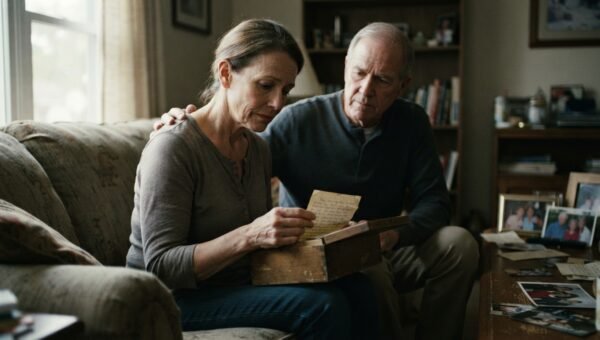
I walked across the damp gravel to my sedan, locked the door, and opened the clasp. Inside was a small black digital recorder with a piece of blue painter’s tape across the back. In Dad’s shaky, late-stage handwriting, it simply said: *Play this alone, Ruth.*
I hit the small round button on the side. The speaker crackled with a breath, followed by the faint hum of his oxygen concentrator in the background.
“Ruthie,” Dad’s voice came through, thin and gravelly from the lung treatments, but completely lucid. “If you’re listening to this in your car like I told Henderson you probably would, Karen made sure you didn’t touch that microphone today. She had to, because she knew if you got up there and talked about the cabin, people would start asking questions she can’t afford to answer.”
PART 2
Dad paused on the recording, and I could hear the wet, heavy click of him taking a drink of water from the plastic tumbler he kept by his recliner.
“Back in November,” Dad continued, “Karen brought over some papers while you were down in Harrisburg helping your girl with the new baby.
She told me the property taxes on the mountain cabin in Huntingdon had gone up past six thousand dollars. She told me the county was threatening a tax sale if we didn’t transfer the parcel into her LLC to protect it from the nursing home spend-down. I was weak, Ruthie. My head wasn’t clear with the chemo, and I signed the quitclaim deed she slid across the breakfast table.”
My hands tightened on the steering wheel. The mountain cabin was eighty acres of timber and a stone cottage my grandfather built with his own two hands in 1952. It was where Dad taught me how to clean a trout, where my daughter caught her first fireflies, and the one place Dad always promised would stay in the family for the grandkids to share.
“About ten days ago,” Dad’s voice went on, “Carl from the county assessment office stopped by to drop off some soup his wife made. Carl let it slip that Karen didn’t save the land from any tax sale. There was never a tax lien on that property. I paid every dime of those taxes in March out of my pension check. She had already listed the timber rights with a broker out of State College for ninety-two thousand dollars, and she has an offer on the land itself for another hundred and forty thousand. When I confronted her about it last Tuesday, she looked me in the eye and told me I was getting senile. She said the family needed liquidity and that you were too sentimental to make practical business choices.”
A car door slammed two rows over in the church lot. I looked up and saw Karen walking toward her SUV, holding a silver tray covered in foil. She looked calm, poised, and entirely in charge.
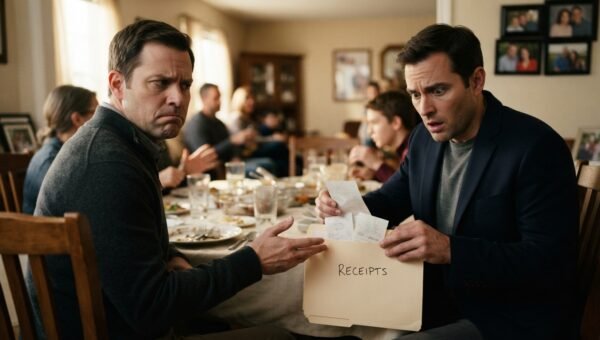
Dad took another breath on the tape. “She knows you kept every tax receipt for me in that green metal box under my desk. She knew if you spoke today, you’d talk about taking your grandkids up there this summer, and someone in the pews would mention the for-sale signs that went up on Route 26 on Monday. In my desk drawer, taped underneath the bottom pencil tray, is the certified revocation of power of attorney I signed with Carl acting as my notary, along with the title complaint my old friend Jim Miller drafted for you. Take it to Jim on Monday morning. Don’t let her bully you, Ruthie. You were always the one who loved that dirt.”
PART 3
I sat in my car until Karen’s SUV pulled out onto the main road toward the reception hall. My stomach felt hollow, but my head was clear. For years, Karen had treated my patience as weakness, assuming that because I hated conflict, I would never push back against her decisions.
Instead of going to the reception, I drove six miles north to Dad’s house. The front porch key was still hidden where it had lived for thirty years, tucked inside the hollow base of the cast-iron boot scraper.
Inside, the house smelled like lemon oil and cold radiator dust. I went straight to Dad’s small den at the back of the hallway. The green metal lockbox was gone from under his desk, Karen had clearly cleared out what she thought mattered, but when I pulled the center pencil drawer all the way out and reached underneath, my fingers brushed against slick packing tape.
I pulled free a thick manila folder. Inside was the revocation document dated twelve days before Dad passed, properly stamped and notarized by Carl. Clipped to it was a letter from Jim Miller, Dad’s personal lawyer of forty years, along with a draft for a lis pendens filing against the Huntingdon property deed. Attached to the very back was a copy of the contract Karen had signed with the timber company, showing an initial deposit of ten thousand dollars already paid into her personal checking account.
I placed the folder into my bag and drove to the fellowship hall.
The crowd had thinned out by two o’clock. A few elderly church ladies were wrapping up leftover sandwich platters in plastic wrap. Karen was standing near the coffee urn, talking to our second cousin Mark about the upkeep costs on older homes.
I walked over and waited until Mark excused himself to grab his coat.
Karen looked at me with that familiar tight smile she used when she wanted to show she was tolerating someone. “Where did you run off to, Ruth? People were asking why you weren’t standing in the receiving line.”
I opened my bag, pulled out the copy of the timber contract, and laid it flat on the folding table right next to her handbag.
“Jim Miller is filing the paperwork at the Huntingdon County courthouse at nine o’clock on Monday morning,” I said, keeping my voice low and steady. “The revocation is valid, and the lis pendens will freeze the deed before your closing on the timber rights goes through.”
Karen looked down at the paper. The color drained from her jaw, and her mouth opened slightly, but she didn’t speak.
“Dad gave Henderson the tape before he died,” I told her. “He knew what you did with the quitclaim deed. You can sign the property back over to the family trust by Friday, or Jim will file the civil fraud complaint with the county court. It’s your choice.”
She reached out and snatched the paper off the table, her knuckles white against the paper. “Dad wasn’t in his right mind at the end, Ruth. You’re going to tear this family apart over a hunting cabin nobody even uses anymore.”
“I use it,” I said. “And so did Dad.”
ENDING
We didn’t have another screaming match. Karen knew Dad’s signature on the revocation was solid, and she knew Carl’s testimony as an elected county official would bury any claim that Dad didn’t know what he was signing.
By the following Thursday, Karen’s lawyer sent over the executed deed transferring the entire eighty-acre parcel out of her company and into an irrevocable family trust with both of us listed as non-selling trustees, requiring unanimous consent for any transfer or harvest. She had to refund the ten-thousand-dollar timber deposit out of her own savings account.
She hasn’t spoken to me directly since that afternoon in the church hall. When Thanksgiving came around, she took her family to North Carolina, and our communication now happens entirely through short, formal emails regarding the property insurance bills and maintenance fees. It is quiet, and some days the silence between sisters feels heavy, but it is an honest silence.
Last Sunday, I drove up to the cabin alone. The road was still muddy from the spring thaw, and the gravel crunched familiar and solid under my tires. I unlocked the front door, opened the windows to let out the winter damp, and sat down on the front porch with a thermos of coffee. Across the clearing, Dad’s old cedar bird feeder was still hanging from the maple tree, weathered gray by the mountain rain, but standing exactly where he had set it.