PART 1
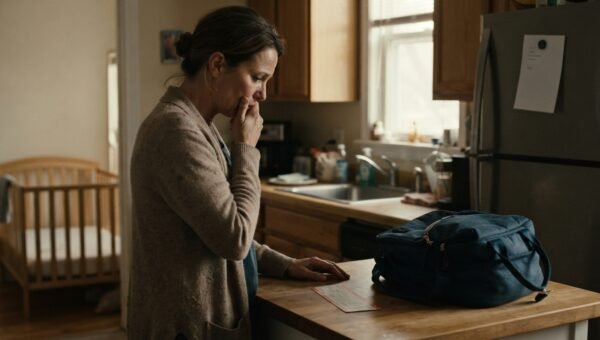
The routine had the weight of church liturgy. Every morning at precisely five-thirty, the soft rhythmic thud of the butcher block counter told me Martha was awake. By six, the smell of toasted rye and sliced roast beef would drift up the stairs, followed by the metallic click of the stainless-steel clasp on the old green thermos. She packed one lunch every morning even after both our kids left for college.
I didn’t want one bad moment to become a family war. I thought it was a habit she couldn’t break after twenty-three years of motherhood.
When the kids, Lucas and Chloe, moved into their university dorms six years ago, I expected the lunch packing to stop. Instead, Martha doubled down. She started baking sourdough from scratch on Sundays just to have the right crust for Monday’s sandwiches. When I mentioned over coffee one morning that a man could get tired of sliced turkey after two decades, she just smiled, her hands dusted with flour, and said some comforts are worth keeping. I let it go. Life with Martha was built on peaceful agreements and unspoken truces. After twenty-seven years of marriage, you learn which hills are worth dying on and which ones are just grassy knolls.
The shift started subtly, the way rust forms on an old gate before you notice the orange flakes.
Martha started asking for extra cash from our grocery envelope, claiming inflation had finally caught up to our local butcher. Then came the mysterious morning phone calls, whispered in the pantry with the door pulled tight, cutting off the moment I walked into the kitchen. But the real anchor of suspicion dropped three weeks ago when I found a duplicate lunch bag tucked away in the back of the pantry. It was identical to the one I carried to my office at the county water authority every single day, right down to the faded blue plaid lining.
“Don’t open that bag.” I probably would’ve dropped it if not for one thing: a thermos with a strip of green tape. I stopped arguing and checked for myself.
The bag was sitting on the bottom shelf behind the bulk paper towels, pushed far back into the darkness. When I reached for it, Martha appeared in the doorway so fast it made my chest tighten.
Her voice wasn’t angry; it was thin, stretched tight like wire before it snaps. She told me it was just an old spare bag she had used for a church picnic years ago and forgot to wash. But the bottom of the bag wasn’t dusty. It smelled faintly of dill pickles and fresh bread.
I didn’t press her right then. I took my usual lunch, kissed her cheek on the porch, and walked out to my truck. But the seed of doubt had taken root. If she had two identical lunch bags, who was eating out of the second one? And why did she look at me with that quiet, defensive terror whenever I got too close to the pantry shelf?
PART 2
One Tuesday I followed her because she had forgotten her coat and the temperature was below freezing. I hadn’t even decided what to say yet. She stopped outside the courthouse and handed the lunch to someone I had spent years refusing to speak to.
I stayed two car lengths back in my gray Ford, my foot hovering over the brake as her silver Civic wove through the morning commuter traffic. My heart hammered against my ribs like a trapped bird. I kept telling myself she was going to the community center to volunteer, or perhaps dropping off supplies for the annual charity bake sale. But when she turned down Elm Street and pulled into the public parking deck directly behind the municipal annex, the cold dread in my stomach turned to stone.
She parked near the rear exit, grabbed the second lunch bag from the passenger floorboard, and pulled her wool scarf high around her chin. I killed my engine, waited thirty seconds, and crept out into the bitter air.
The wind off the river cut right through my flannel shirt, but I barely felt it. I watched from behind a concrete pillar as a young man in a worn canvas jacket stepped out from the shadow of the brick archway. He was lean, with dark curly hair that curled out from beneath a baseball cap, and he carried himself with a slouch I knew better than my own reflection.
It was my brother, Jonah.
The last time I spoke to Jonah, we were standing over our mother’s open grave seven years ago, screaming words that could never be unsaid. He had made choices that tore our family apart, stealing from our father’s estate before the ink on the will was even dry, leaving me to shoulder the debt and pick up the pieces. I swore right then, in front of the pastor and the fading autumn flowers, that he was dead to me.
And there was Martha, my wife of nearly three decades, standing under the gray municipal sky, handing him the green-taped thermos and a warm sandwich with the tender, practiced grace of a mother tending to a sick child. Jonah leaned down, kissed her cheek, and took the bag. Martha reached out, brushed a stray lock of hair from his forehead, and tucked a folded white envelope into his coat pocket. Money. Our grocery money.
PART 3
For forty-eight hours after I saw them, I moved through my life like a ghost. I went to work at the water authority, sat through two budget meetings, and signed off on three valve replacements without retaining a single word. Martha acted normal, asking about my day, pouring my coffee, moving around the kitchen with the quiet efficiency I had loved for half a lifetime. Every time she smiled at me, a cold fury built up behind my ribs, mixed with a sickening sense of betrayal. She wasn’t just helping my estranged brother behind my back; she was funneling our hard-earned retirement savings into the hands of the man who nearly destroyed my family.
On Thursday evening, after dinner plates were cleared and the dishwasher was humming, I finally broke. I didn’t yell. Anger that deep doesn’t need shouting. I walked to the pantry, pulled out the duplicate lunch bag, and set it squarely in the center of the kitchen table.
Martha froze with a dish towel in her hands.
“How long?” I asked. My voice was lower than I intended, flat and heavy.
She didn’t try to lie. She didn’t drop her gaze. She just walked over to the kitchen chair opposite mine, sat down very slowly, and folded her hands over the linen towel.
“Since the winter after your mother passed,” she said, her voice steady. “Three years, Arthur.”
“My brother stole from this family,” I said, the old bitterness rising hot in my throat. “He left us with five thousand dollars in legal fees and never looked back. And you’ve been feeding him? You’ve been giving him our money?”
“He didn’t steal what you think he stole, Arthur,” she said quietly. “Your father changed the distribution on his deathbed because of a misunderstanding about the farm equipment, and Jonah was too proud to fight you in court. He lost his apartment two winters ago. He sleeps in his truck down by the rail yards. He was starving, Arthur. Literally starving.”
“He made his bed!” I slammed my hand on the table, the silverware rattling against the wood. “We agreed. We drew the line!”
“No, Arthur, you drew the line,” Martha said, and for the first time, her voice rose, sharp as broken glass. “You built a wall around your pride and called it family loyalty. I am a mother. I watched two boys grow up in this house, and I couldn’t sit by knowing a man who shared your blood was sleeping in a freezing cab while I baked fresh bread every Sunday.”
ENDING
The silence that followed was heavier than any argument we had ever had. I looked at Martha, really looked at her, seeing the fine network of lines around her eyes and the gray creeping into her temples. For twenty-three years, she had fed our children, and when the nest emptied, she had simply refused to stop being what she was: a woman whose hands knew how to take care of people.
We sat across from each other at that kitchen table for a long time as the hum of the refrigerator filled the quiet room. I didn’t forgive Jonah that night. The old wounds don’t heal just because someone hands you a turkey sandwich in a municipal parking lot. But as I looked at the green-taped thermos sitting between us, I realized something far more uncomfortable than my brother’s presence across town.
Martha didn’t ask for my permission to be decent, and she didn’t ask for my blessing to keep our family from rotting entirely from the inside out.
“He needs to find a real job, Martha,” I said finally, my voice dropping back to a tired whisper. “And the grocery money stops coming from our account.”
Martha didn’t smile, but she nodded once, slow and deliberate. “I know. But I’m still packing the extra lunch tomorrow. You can walk with me to give it to him, or you can stay here and drink your coffee alone. That choice is yours.”
I didn’t answer her that night. But the next morning, when the butcher block counter echoed with that familiar thud at five-thirty, I got out of bed, pulled on my heavy coat, and walked downstairs into the kitchen.