PART 1
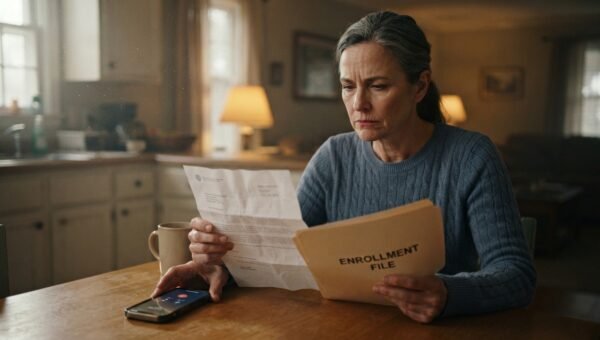
I told my daughter Naomi I would not attend her wedding on an overcast Tuesday in April of 2010. We were sitting at my kitchen table with the wedding invitation between us. It was heavy cream cardstock with silver lettering, formal and proud, and I would not pick it up.
Her fiancé was a Muslim named Tariq. He was born and raised three counties over in a family of educators, and he worked as a civil engineer.
None of that mattered to me that afternoon. My husband Carl had been an elder at Grace Baptist for twenty-two years before a stroke took him in the choir loft, and in my mind, our reputation in our congregation was the shield that kept our home intact.
“You are throwing away your salvation, and you are throwing away your father’s memory,” I told her. The kitchen clock was ticking, that loud plastic tick from the wall above the stove. “A house divided cannot stand. If you walk down that aisle with that boy, you do not have a home here.”
Naomi was twenty-four. She had Carl’s dark eyes and his quiet chin, the stubborn one that never trembled when he made up his mind. She did not raise her voice. She did not cry. She took the invitation off the table, slipped it into her canvas tote bag, and looked straight at me.
“I love him, Mama,” she said. “And he loves the Lord too, just not in our language. You’re choosing your pride over your child.”
“You’ll regret this,” I said. “Mark my words. You’ll be back on this doorstep when it falls apart, asking for grace.”
She stood up, walked out through the back door, and shut the screen without letting it slam.
She married him that June in a quiet courtyard garden forty miles south. My sister Evelyn went, despite my warnings, and came back telling me how peaceful it was, how Tariq’s mother had embraced her with tears in her eyes. I cut Evelyn off mid-sentence and told her I did not want to hear another syllable about it.
That was 2010.
For sixteen years, her chair stayed empty at Christmas. The first two winters, I left the wooden dining chair right where she always sat, like an open wound at the head of the table.
By the third year, my son David asked if he could move it to the garage because looking at it made him sick to his stomach. I let him take it away. But four years later, after David took a job in Texas and only came back every other year, I walked out to the garage, carried that maple chair back in, and slid it beneath the table again. It sat there, dusted every Friday, serving nobody.
I never called. I convinced myself that the first move belonged to her. The righteous parent waits for the prodigal, I told myself during Bible study, while I sipped lukewarm coffee from styrofoam cups and nodded when other women talked about their grandchildren’s soccer games. In private, my hands shook every time the postman walked up the gravel drive, hoping for an envelope with her neat, slanted handwriting. Nothing came.
Then last Sunday arrived.
It was the third Sunday in September. Pastor Lewis finished his benediction, and the organ was playing the postlude while everyone began shuffling toward the foyer for fellowship.
I folded my bulletin into quarters like I always do, slipping it into my black leather purse. But before I snapped the clasp, my eyes caught a small boxed notice on the back page under the mission fund notes.
“Grace Baptist Community Outreach: The 2026 Dr. Naomi Harris Youth Scholarship.”
The name hit my chest like a lead weight.
According to the print, Dr. Naomi Harris had donated twenty-four thousand dollars to fund tuition and trade school supplies for eight local high school graduates from low-income families. Twenty-four thousand dollars, given quietly, directly to the community fund in our small town.
I stood rooted between pew four and pew five while people brushed past my shoulder.
My neighbor Clara nudged my elbow, holding her own bulletin. “Martha, look at this. That’s your girl, isn’t it? Naomi? Dr. Harris?”
“I don’t know,” I lied, my voice sounding paper-thin. “It might be.”
“It is,” Clara said, her eyes wide with that genuine, unmalicious curiosity that cuts deeper than cruelty. “She has that family practice over by the medical plaza on Route 9. My cousin’s girl takes her babies there. They say she’s wonderful. Clara says Naomi has two children, a clinic of her own, and a husband who holds her hand in every photograph on her desk.”
My daughter was thirty miles away, living a whole life, healing people’s children, giving away thousands of dollars to the very community that had watched her grow up. And I was standing in an emptying sanctuary clutching a piece of cheap church paper.
I didn’t stay for coffee. I walked straight out to my Buick, my heart hammering against my ribs, and sat behind the steering wheel until my hands stopped vibrating.
I didn’t look up a telephone number. I didn’t think about what I would say. I looked up the address for the Harris residence on my phone, using the county property records because I knew how to search parcels from my years working in the courthouse clerk’s office. It was a brick home on three wooded acres in Oakridge, just past the county line.
The drive took thirty-four minutes. The entire way, my mind replayed that kitchen table in 2010. “You’ll regret this,” I had told her.
I turned into the driveway. There was a red wagon near the garage and a pair of small mud boots on the flagstone walkway. My knees felt hollow as I walked up the three steps.
At the door, I lifted my hand to knock, and before my knuckles could touch the painted wood, the door swung open.
PART 2
The door had not opened for me.
A tall teenage boy was heading out, wearing a high school cross-country jersey and holding a canvas gym bag in one hand. He stopped dead on the threshold, nearly running into me. He had Carl’s deep-set eyes and Naomi’s dark curls, and for a terrifying second, I felt like the ground was falling out from under my sensible leather shoes.
“Oh, sorry ma’am,” he said, stepping back quickly. “Can I help you?”
He looked to be about fourteen, maybe fifteen. Born around 2011, when I was sitting alone in my living room nursing my cold grievance.
“I’m… I was looking for Naomi,” I said. My voice was raspy, like an engine turning over dry.
A voice called out from down the hall, warm and busy over the sound of running water. “Amir, did you grab your water bottle? Don’t leave it on the counter again.”
A woman stepped around the corner drying her hands on a blue dish towel.
The gray had touched her temples, just a brush of silver through her dark hair, but she was unmistakable. She was wearing simple linen trousers and a soft green sweater. She looked healthy, whole, and completely settled in her own skin.
Naomi stopped walking the moment she saw me through the open screen door. The towel in her hands went completely still.
“Amir,” she said, her voice dropping into a flat, steady register that gave nothing away. “Go ahead out to the car. Your dad is waiting in the driveway.”
The boy looked between us, sensing the sudden drop in temperature, then slipped past me without another word. The side door of a silver station wagon clicked shut in the driveway, and a few seconds later, the engine hummed as it backed down toward the road. Tariq was driving. I caught just a profile of his graying beard through the glass before he turned onto the asphalt.
Naomi did not invite me in. She did not step back to let the screen open. She stood there on the other side of the dark wire mesh, looking at me across sixteen years of absolute silence.
“Mama,” she said.
“Naomi.” I shifted my purse to my left arm. “I saw the church bulletin.”
A faint, tired line appeared between her eyebrows. “The scholarship.”
“Yes. Twenty-four thousand dollars. For local kids.” I swallowed hard, trying to keep my chin steady. “Clara told me you have a clinic.”
“I do. For seven years now.”
“You never called me.” The words spilled out before I could choke them down. It was the old reflex, the defensive wall I had lived behind for nearly two decades. “Sixteen years, Naomi. You never once picked up the telephone to tell your mother you were a doctor.”
Naomi looked at me through the screen, her eyes clear and dry. There was no rage in her face, and that was far worse than shouting. It was the quiet, immovable calm of a woman who had already done all her grieving years ago.
“I didn’t call you because you told me I had no home there,” she said evenly. “You told me I would come crawling back when my marriage fell apart. Tariq and I built a life without your permission, Mama. Why would I call you to brag about surviving your curse?”
“I didn’t curse you,” I whispered.
“You sat at that table and told me I was dead to you unless I walked away from the man who loved me,” she said. “I left you alone because you told me to go. And every year, I waited to see if you would ever show up just to see if I was alive. You didn’t come when Amir was born. You didn’t come when Layla had heart surgery at three years old. You came today because your church newsletter had my name on it.”
The screen door felt like a sheet of bulletproof glass between us.
“I didn’t know about Layla,” I said, the breath leaving my lungs in a painful rush. “Naomi, I swear before God, nobody told me about a surgery.”
“Because you made it clear that hearing my name was forbidden,” Naomi said. “Aunt Evelyn tried to tell you once, right after Amir was born, and you hung up on her. She told me she couldn’t be caught in the middle anymore. So I stopped letting anyone give you updates. If you wanted to know your grandchildren, you had to ask for them. You never asked.”
PART 3
She reached out and pushed the screen door open. She didn’t hold it wide, just enough to step out onto the porch with me. The September breeze was cool, rustling the yellowing maple leaves near the porch rail.
“Why are you here, Mama? What do you want from me today?”
I looked at her face, looking for any trace of the girl who used to sit on the floor of my pantry organizing my spice tins by color. She was gone. In her place was an adult woman who had paid her own way through medical school, raised two babies, and buried whatever need she had for my approval under sixteen years of hard work.
“I don’t know,” I admitted. The confession felt like coughing up gravel. “I saw that paper, and I realized you didn’t fail. I spent sixteen years waiting for you to fail so I could be right. And while I was waiting to be right, I missed everything.”
Naomi looked down at the porch floorboards. Her knuckles tightened on the wooden railing.
“That’s the first honest thing you’ve said to me since I was twenty-three years old,” she said quietly.
“I kept your chair,” I said, my voice cracking completely now. “At the kitchen table. David moved it to the garage for a while, but I brought it back. I keep it set. Every Sunday dinner, every Thanksgiving. Just sitting there empty like a fool.”
“A chair isn’t an apology, Mama,” she said. Her voice didn’t rise, but each word landed like an iron hammer. “A chair is just furniture you look at to feel noble about your own stubbornness. You could have driven these thirty miles any day of the week. You could have written a letter. You could have sent a birthday card to two children who don’t even know what your voice sounds like.”
She turned to face me fully.
“Do you know what Amir asked me when he was seven? He asked why all the other kids at school had grandmothers who came to Grandparents Day, and why his grandmother only lived in an old photo on my nightstand. Tariq told him you were very religious and lived far away. Tariq protected you, Mama. The man you called a heathen made sure my children didn’t think of you as cruel.”
Hearing Tariq’s name spoken with that quiet loyalty broke the last piece of pride I had brought with me in the car. I dropped my head, clutching the leather strap of my purse with both hands, unable to look into her eyes anymore.
“I was wrong,” I said. The wind caught the porch chimes, making a small, hollow tin ring. “I was proud, and I was cruel, and I thought I was serving the Lord. But I was just serving myself. I don’t expect you to forgive me. I just… I needed you to know that I know what I threw away.”
Naomi stood there in silence for a long time. The street at the end of the long driveway was quiet, save for a neighbor’s lawnmower two houses down.
“You don’t get sixteen years back, Mama,” she said at last. “You don’t get to walk into this house today and sit on the couch and pretend we’re a family having Sunday roast. That isn’t real, and it isn’t fair to my children or my husband.”
“I understand,” I whispered. I took a step back toward the gravel steps, feeling every one of my seventy-one years in my lower back and knees. “I won’t bother you again, Naomi. I’m sorry.”
“Wait,” she said.
ENDING
I stopped on the bottom step, looking back up at her.
“I didn’t say never,” Naomi said, her voice strained, carrying the weight of a decision she was making right then on the wood planks. “I said you don’t get to pretend. If you want to know my family, you start from the very beginning. You start by meeting Tariq. You look him in the eye, and you treat him like the man who carried me through residency and held my hand when my daughter was in the ICU.”
“I will,” I said. “Whenever he will let me.”
“Not today,” she said firmly. “He’s taking Amir to a cross-country meet, and Layla is with her cousins. But you can come to my office on Thursday. Route Nine. After five o’clock when the clinic closes. We can sit in my consultation room and we can talk for thirty minutes. Just you and me. No church bulletins. No talk about salvation.”
“Thursday,” I repeated. “At five.”
“If you’re late, the doors lock,” she said. She didn’t smile, but the hard iron edge in her stance softened by an inch. “And Mama? Go home and take that empty chair back out to the garage.”
I looked up at her, confused.
“Don’t leave a ghost sitting at your table,” she said gently. “If I ever come back to your house, I’ll bring my own family, and we’ll bring our own chairs. You don’t get to live with the empty one anymore.”
She stepped back into the house and closed the front door. The lock clicked into place with a firm, solid sound.
I walked back down the flagstone path to my Buick. The autumn air was crisp, smelling of damp cedar and fallen leaves. My legs were trembling so hard I had to sit in the driver’s seat with both feet flat on the floorboard for five full minutes before I could turn the key in the ignition.
When I drove back into my county, the afternoon shadows were stretching long across the pastures. The steeple of Grace Baptist caught the late sun as I passed the turnoff, bright white against the gray sky, but I didn’t turn down that road. I drove straight home.
I walked into my quiet kitchen, took off my coat, and looked at that maple chair sitting at the head of the table. It had gathered dust in the grooves of the spindle back, right where I had polished it every week for sixteen years like a shrine to my own righteousness.
I didn’t dust it. I grabbed it by the top rail, hauled it through the back door, and carried it out to the dark corner of the garage behind the lawnmower. I left it there in the shadows, facing the wall.
Then I went back inside, sat down with a legal pad on the counter, and wrote down Thursday, 5:00 PM in clear block letters.
I don’t know if Tariq will ever shake my hand. I don’t know if those two children will ever call me their grandmother or if they will always see an old stranger who stayed away until she was too tired to be proud. I cannot undo the birthdays I missed or the years I spent being right in an empty house.
All I have is thirty minutes on Thursday in an office on Route Nine. For the first time in sixteen years, that is enough to begin.