PART 1
The silence between Brenda and me had lasted seven years, three months, and twelve days. Not that I was counting, but when your only sibling blocks your number, deletes you from every family milestone, and acts like you do not exist, time tends to stretch out into heavy, miserable blocks. It all started over Grandma Clara’s will. When Grandma passed away at eighty-four, leaving behind a modest house in Ohio and some savings, Brenda was the one who stayed local and handled the hospice visits and the initial paperwork.
I lived two states away, juggling a demanding job and my own teenager’s health issues, so I could only fly in for the funeral.
When the distribution checks finally arrived, mine was for twenty-two thousand dollars. I remember looking at the slip of paper in my kitchen, feeling a strange mixture of grief and relief. It was not a life-changing sum, but it would help clear out my remaining credit card debt and put a little buffer in the savings account. Then Brenda called me, her voice shaking with a cold, righteous fury that still haunts my dreams. She demanded to know why I was taking forty thousand dollars when her share was supposed to be equal and our upbringing had taught us fairness above all else.
I told her my check was twenty-two thousand, not forty. I offered to scan a copy of the stub, but she accused me of playing games, of lying to cover my tracks, and of taking advantage of the fact that she had done all the heavy lifting while Grandma was dying.
She said I had always been selfish, always the favorite who got away with everything, and that she was done. Click. That was the last time I heard her voice before this past Tuesday.
My life went on. I paid off my debts, watched my daughter graduate college, and tried to bury the ache of losing my sister. But family wounds do not heal cleanly when they are based on a ghost argument. I spent years wondering how forty thousand dollars had materialized in Brenda’s mind, assuming she was just grasping at grief or letting resentment poison her memory.
Then came Tuesday morning. My phone rang with an unfamiliar local number from back home. It was a hospice nurse calling from the small community hospital where Brenda had been admitted three weeks ago for advanced liver failure. The nurse did not mince words. Brenda was fading fast, and she had explicitly asked for me.
She had repeated my name twice before slipping back into a medicated doze.
I did not pack a bag. I grabbed my car keys, my purse, and drove four hours straight through a steady autumn drizzle, my stomach churning with every mile marker. When I finally walked into her sterile, quiet hospital room, Brenda looked skeletal. Her skin had that waxy, yellowed tint of someone whose body was shutting down. The nurse discreetly stepped out, leaving the two of us alone with the rhythmic hiss of the oxygen machine.
Brenda opened her eyes, looked at me as if seven years had never happened, and reached with a trembling, paper-thin hand toward the battered leather folder resting on her bedside table.
“I was wrong, Nora,” she whispered, her voice like dry leaves scraping across concrete. “I was so wrong about the money. I kept this all these years because I couldn’t look at it, but you need to see it.”
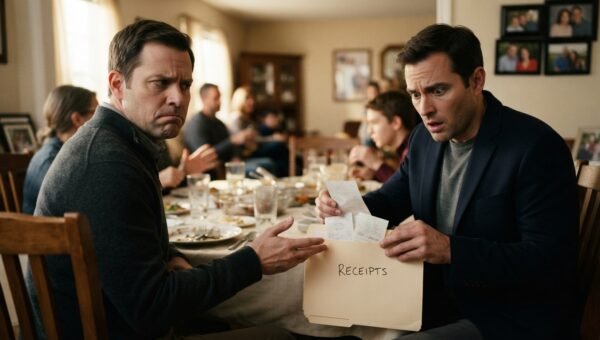
She pushed the folder toward me. Inside was the original estate accounting statement from Grandma Clara’s lawyer, dated two weeks after the funeral. My eyes dropped to the ledger numbers, and my breath caught in my throat. My original designated share was not twenty-two thousand dollars, and it was not forty thousand dollars either. It was sixty-five thousand dollars. Someone had altered the final distribution figures after the fact, and my check had been shorted by forty-three thousand dollars. But Brenda’s check hadn’t been forty thousand either; hers had been tampered with too.
I stood there in that cold hospital room, staring at the numbers, and a dark, sickening wave washed over me. I hated myself for being suspicious of my sister all those years, but I hated even more that every new fact in that folder gave me another reason to be. Part of me wanted to walk away, drop the folder on the floor, and pretend I never saw it. The other part, the stubborn part that had suffered seven years of cruel exile, knew I would replay this betrayal for the rest of my life if I let it go.
Dad had been the executor of Grandma’s estate. And Dad was still alive, living alone in the house on Elm Street, tending to his garden like nothing in the world was wrong.
PART 2
Driving away from the hospital, my hands shook so badly on the steering wheel that I had to pull over at a rest stop for twenty minutes. The rain drummed a frantic rhythm against the roof while I stared at the altered ledger pages spread across my passenger seat. The numbers did not lie, but my mind desperately tried to reject them. Dad. Our father, who had always preached about honesty and family loyalty above all else, was the one who had handled the probate filings. He was the one with the legal authority, the access, and the motive.
I tried to trace back how it could have happened. When Grandma died, Dad was retired and living comfortably on his pension, but he had made some disastrous investments in local commercial real estate a few years prior. At the time, we all thought he weathered the loss, but looking back at the timing of the estate closure, his financial distress aligned perfectly with the discrepancy in our inheritance checks.
Brenda had believed I stole from the estate because Dad told her I had requested an early wire transfer for my portion, altering the records she saw in his home office while she was helping him organize Grandma’s paperwork. Dad had played us against each other masterfully. He kept Brenda close by feeding her tiny drops of resentment, while keeping me at a distance across state lines so I could not verify the paperwork myself. He used my silence and absence as proof of my guilt.
By the time I pulled into the driveway on Elm Street, the sun was cutting through the grey clouds, casting long, bruised shadows across the lawn. I didn’t call ahead. I didn’t announce my arrival. I killed the engine, grabbed the worn leather folder from the passenger seat, and walked straight up the concrete walkway.
Dad was already sitting at the kitchen table.
It was as if he had been waiting for me all afternoon, or perhaps all these years. The back door was unlocked, as it always had been, and when I pushed it open, he didn’t jump or look startled. He was sitting in his usual wooden armchair with a mug of black coffee, watching the yard through the sliding glass door.
“You went to see her, didn’t you?” Dad asked quietly, without turning his head. His voice had that flat, weary timbre of a man who was tired of holding up a crumbling facade.
PART 3
I closed the back door behind me with a soft click and walked over to the table. I laid the leather folder right in front of his coffee mug, flipping it open to the highlighted page where the bank routing numbers and adjusted ledger totals stared back at us.
“Explain this, Dad,” I said, my voice steadier than I felt. “Explain why my sixty-five-thousand-dollar inheritance was hacked down to twenty-two thousand, and why Brenda spent the last seven years hating my guts because you told her I took extra.”
Dad finally turned his head. His eyes looked milky and old, devoid of the fierce pride he used to carry. He didn’t look angry; he looked cornered and profoundly small. He reached out with a trembling finger and traced the edge of the paper.
“The real estate deal went south, Nora,” he said, his voice barely above a whisper. “The bank was threatening foreclosure on this house. I needed liquidity immediately, and probate was taking too long. I borrowed against the estate’s liquid accounts with the intention of paying it back once my commercial lot sold. Only it never sold. The market crashed, and I had to close the estate quickly to avoid an audit. I adjusted the distribution lines so the math balanced out on paper for the lawyer, but I had to short both of you to cover my debts.”
“You stole forty-three thousand dollars from me,” I said, the words tasting like copper and ash in my mouth. “And you let Brenda blame me. You watched her cut me out of her life, you watched us tear each other apart, and you didn’t say a single word to protect either of us.”
“I was protecting my home,” he muttered defensively, his jaw tightening. “I was an old man with nowhere else to go. I figured you girls would get over it, or time would smooth it out. Brenda was angry about everything anyway, so she was an easy target to point in the right direction.”
The casual cruelty of his excuse hit me harder than the theft itself. He hadn’t just stolen our money; he had stolen our relationship, weaponizing our sisterly bond to protect his own skin, knowing full well that Brenda’s stubborn pride would keep her from ever calling me to verify his lies.
“Brenda is dying, Dad,” I said, the tears finally breaking free down my cheeks. “She has days left. And she spent the last seven years living with a lie that you manufactured.”
Dad slumped back in his chair, staring down at his coffee mug as the silence stretched heavy between us. There was no grand apology coming, no dramatic plea for forgiveness that could undo the wreckage of a decade. There was only the miserable reality of an old man sitting alone in a house built on deceit.
ENDING
I left the house on Elm Street twenty minutes later, leaving the leather folder on the kitchen table right where Dad sat. I did not scream, I did not threaten him with the police, and I did not demand repayment. Some debts cannot be settled with money, and some fractures are too deep for a late confession to fix.
I drove straight back to the hospital, parking in the same dim lot as the rain started up again. When I walked back into Brenda’s room, she was awake, her breathing shallow and raspy against the quiet hum of the monitors. She turned her head toward the door, her eyes searching my face for the verdict of my confrontation with our father.
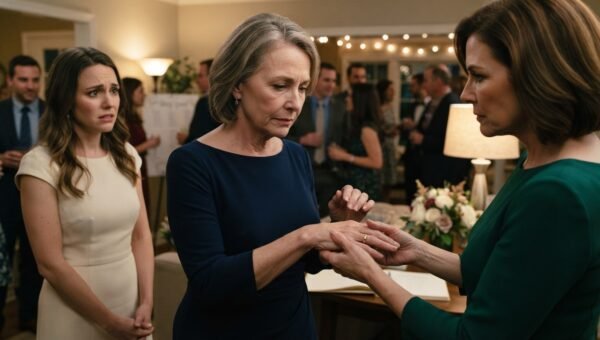
I pulled a chair close to her bed, sat down, and took her cold, fragile hand in mine.
“You were right, Bren,” I whispered, squeezing her fingers gently. “It wasn’t you. It was him.”
Brenda closed her eyes, a single tear escaping down her hollow cheek, and let out a long, shuddering breath that sounded like years of accumulated weight finally leaving her chest. We didn’t talk about Dad anymore after that. We didn’t need to. In the quiet hours that followed, sitting side by side in that sterile room as the storm raged outside, we simply held onto each other in the space he had tried so hard to destroy, reclaiming in our final days together what was left of the sisters we used to be.