The green velvet box on my bureau has an old smudge of lard on the corner where my uncle spilled a biscuit pan back when Eisenhower was still in office. I keep my sewing needles in it now, right alongside three stray buttons from my father’s winter coat and a spare key to the root cellar that hasn’t unlocked anything since the county widened the turnoff in ninety-four.
My mother gave me those emerald earrings the afternoon I brought Arthur home from the hospital with a blanket tucked around his ears so tight he looked like a little loaf of bread.
They weren’t store-bought things with little price tags hanging off them like silver minnows. They had that heavy, old-fashioned clip finding that pinches your earlobe until you can’t feel it anymore, and the stones had tiny little dark specks inside them if you held them up against the windowpane. Mom said they came from her grandmother down in Keokuk, brought up the river in a lard tin along with four silver spoons and a Bible with nobody’s names written in the back.
When Chloe asked to borrow them for that Chamber of Commerce banquet down at the country club, I had a sour taste in the back of my mouth that stayed there all through milking time.
“Are you sure you want these, honey?” I asked her, holding the little green box out across the oilcloth on my kitchen table while the coffee pot sputtered its last few drops. “They aren’t modern. They look heavy on a young face.”
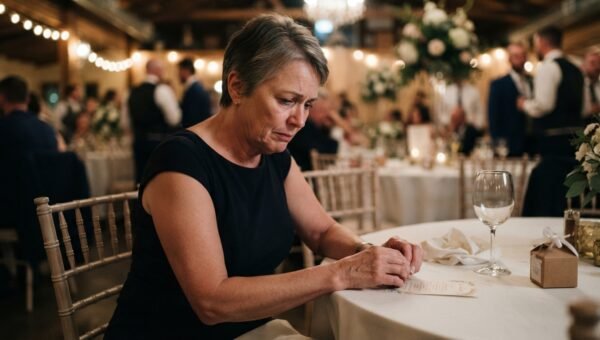
Chloe smoothed down the front of her navy blue dress, the kind with the shiny brass buttons that cost more than my first set of tires, and gave me that bright, hard smile she always used when she wanted something done her way. “They’re vintage, Arlene,” she said, using my first name the way she liked to do to show we were modern and equal. “Everyone at the table is going to be wearing diamonds, and I want something with a little history. I promise I’ll give them back before church tomorrow.”
Arthur was sitting by the dry sink, scrolling through his telephone with his thumb moving so fast it looked like he was swatting a fly. He didn’t look up when I hesitated. He just made that low humming noise in the back of his throat that meant he wanted me to say yes so he wouldn’t have to listen to us talk about it for the next three hours.
“Let her wear them, Ma,” he muttered without lifting his chin. “It’s just one evening.”
So I let them go. I watched her drop them into the little patent-leather handbag she carried to every wedding and funeral in the county, and I told myself I was just being an old hen who couldn’t bear to let anything leave the nest.
The phone rang at seven-fifteen the next morning while I was standing at the stove frying up a couple of eggs in the iron skillet. It wasn’t Arthur’s voice on the line. It was Chloe’s, high and ragged and shaking so hard she sounded like she was standing out in a January blizzard without a coat.
“Someone took my bag, Arlene,” she gasped, and I heard glass rattling in the background like she was sitting in the front seat of their sedan while Arthur drove. “We stopped at that all-night diner off the interstate to get some black coffee after the silent auction, and I left it on the booth seat for two seconds while I went to the ladies’ room. When I came back out, it was gone.”
The eggs started to smell like scorched grease before I managed to turn the burner off. “Did you call the sheriff?” I asked, my hand tightening around the white plastic handle of the telephone until my knuckles went the color of skim milk.
“Arthur’s calling them now,” she said, and then she started crying, real heavy wet sobs that made her sound smaller than she was. “My driver’s license was in there, my checkbook, and your earrings. I am so, so sorry. Arthur says we’ll find whoever did it.”
The police report came in the mail three days later because Chloe wanted a copy for her homeowner’s insurance claim. I sat at the kitchen table with my reading glasses perched on the end of my nose, running my thumb down the typed lines where Deputy Miller had listed everything she claimed was inside that shiny black purse.
There was the wallet with seventy-four dollars in cash. There was the lipstick tube, the house keys on the braided leather strap, the silver-plated compact with the cracked mirror, and the sunglasses with the rhinestone frames.
There was nothing about a pair of antique gold-backed emerald earrings from Keokuk.
When I called Chloe back that afternoon, the house was so quiet I could hear the refrigerator compressor clicking on and off in the pantry. She didn’t sound like she was crying anymore. Her voice had that stiff, starched edge it got whenever she thought someone was questioning her housekeeping or her credit score.
“Oh, that,” she said, and I heard the faint click of a kitchen lighter in the background. “Well, Deputy Miller asked me to list everything from memory right there in the diner parking lot while the squad car lights were flashing in my eyes. I must have left them off the inventory by mistake. I was shaking so hard I couldn’t think straight, Arlene. You can’t expect me to remember every little trinket when my whole life was sitting in that bag.”
“They weren’t just a trinket, Chloe,” I said, and my own voice sounded thin and dry in my ears. “They were your grandmother-in-law’s.”
“Well, they’re gone now, aren’t they?” she snapped, and then she let out a long sigh that sounded like a tire losing its air. “If it’s about the insurance payout, we’ll give you whatever the adjuster says they’re worth. Just don’t make a federal case out of it. Arthur’s got enough on his plate down at the lumber yard without us fighting over family heirlooms.”
That was when Arthur showed up on my porch an hour later. He didn’t even knock; he just pushed the screen door open and stood there in the mudroom taking off his work boots, his shoulders hunched up toward his ears the way they always did when he knew he was in the wrong.
“Ma, please,” he said before I could even get the word out about the police report. “Chloe’s beside herself. She’s been throwing up in the bathroom all morning because she feels so guilty about those stupid earrings. If you keep pushing her about what was and wasn’t on that paper, she’s going to pack her bags and take the kids to her sister’s place in Dubuque. Is that what you want? You want to break up my marriage over a pair of old green stones?”
I looked at my boy, at the grease smudge on his forehead from the front-end loader down at the yard and the way his hair was thinning out right on top where his father’s used to go. I thought about the winter he broke his collarbone sliding off the hay wagon and how I sat beside his cot for three days straight feeding him beef broth out of a chipped china cup.
“She forgot them on the report, Arthur,” I said, and the words felt like dry straw in my mouth.
“People forget things when they’re panicked,” he said quickly, too quickly, his eyes darting over toward the calendar hanging by the bread box. “Just let it go, Ma. Let it go for my sake. We’ve got enough peace in this family without stirring up old mud.”
So I let it go.
I folded the police report in half, tucked it into the bottom of the kitchen junk drawer beneath the rubber bands and the spare keys, and I didn’t say another word about it when they came over for Sunday pot roast. I watched Chloe cut her beef into neat little squares and talk about her garden club committee, and I told myself that family was worth more than gold or old glass.
Three months crawled by like a slow freight train on a hot July afternoon. The corn got knee-high, then shoulder-high, then brown and dry enough to harvest. The leaves on the maples down by the creek turned the color of old copper, and the wind started coming off the northern pastures with that sharp, whistling edge that makes you want to pull your cardigan a little tighter around your chest.
It was a Tuesday evening around nine o’clock. The house was dark except for the little lamp on the desk where I keep my seed catalogs and the electric bill. My eyes were burning from looking at the small print, so I turned on the old black desktop computer Arthur had given me when he bought himself a new one for his office. I didn’t know much about the internet, mostly just how to look up weather reports for planting season and check the prices on fence posts, but I had a notion to look for a wool blanket like the one my sister had over in Des Moines.
I typed in what the granddaughter had told me to type, and then I clicked on some pictures of old jewelry because I wanted to see if anything out there looked like the ones Mom gave me. I wasn’t expecting to find them. People don’t find things like that twice in one lifetime.
Then the page loaded, and there they were.
They were sitting on a black velvet pad inside a glass case belonging to an upscale antique shop over in Cedar Rapids, three counties away. The photograph was clear enough to show the tiny dark inclusion right near the bottom prong of the left stone, and the little notch on the gold wire where my father had filed down the catch back in nineteen-fifty-two because it kept snagging on my mother’s wool scarves.
The price tag beneath them said two thousand four hundred dollars.
My hands felt cold, the way they do when you reach into the deep freeze to grab a pork roast and the frost gets right into your skin. I didn’t call Arthur. I didn’t wait until morning. I picked up the black landline handset from the little table by the desk and dialed the number listed at the bottom of the jeweler’s web page with fingers that wouldn’t quite stop trembling.
A man answered on the third ring, his voice smooth and professional like a church deacon talking about the building fund.
“Miller and Sons Fine Jewelry,” he said. “Can I help you?”
“Those emeralds on your website,” I said, and my voice came out lower and harder than I meant it to. “The ones with the gold wire and the notched catch. Where did you get them?”
There was a pause on the other end, the sound of papers shifting across a wooden counter. “Ma’am, our inventory is fully verified. Every piece we take in goes through a legal intake process with state ID verification.”
“I didn’t ask about your paperwork,” I said, and I felt something inside my ribs snap like a dry cornstalk. “Those were my mother’s earrings. They were supposed to have been stolen out of a diner parking lot three months ago. I want to know who brought them into your shop.”
The line stayed quiet for a long second, just the faint humming of long-distance wires.
“Well,” the man said, his voice dropping down a notch into something more cautious. “According to our intake book, we didn’t buy them from a woman. They were brought in by a gentleman on a Thursday afternoon back in August. Arthur Miller. Said he was liquidating some family property to clear out a storage unit.”
The name sat in the middle of the room between the desk lamp and the wood stove, heavy and grey as a wet fleece.
“Arthur Miller,” I repeated.
“Yes, ma’am. He had his driver’s license right out on the glass. Said he needed the cash settlement by the end of the week, no questions asked. We reset the stones into new mountings last month per his request. Is there a problem with the title?”
I didn’t answer him. I just set the receiver back down on its cradle with a little plastic click that sounded loud enough to wake the dead.
The next afternoon, the gravel in my driveway crunched under tires I knew by heart.
I didn’t go out to meet them on the porch. I stayed right at the kitchen table with the jeweler’s printed page lying flat between the salt shaker and the pepper mill, and the old police report sitting right on top of it like a tombstone. When the back door swung open, Arthur walked in first with his hands shoved deep into the pockets of his windbreaker, and Chloe came right behind him carrying a plastic bag full of fresh garden tomatoes she’d brought over from their patch.
“Ma?” Arthur said, stopping dead near the woodbox when he saw me sitting there without the television on and without supper started. “What’s going on? You look like you’ve seen a ghost.”
Chloe dropped the bag of tomatoes onto the counter with a dull thud. “Arlene, is everything all right? You look terrible.”
I didn’t look at Chloe. I looked right at my boy, at the way his eyes flicked down to the paper on the table and then back up to my face with that same cornered, panicky look he used to get when he broke the neighbor’s window with a baseball and tried to tell me the wind did it.
“You told me they were in the purse, Arthur,” I said. My voice didn’t shake. I didn’t know how it stayed so steady, but it sounded like someone else talking across an empty room.
Arthur’s jaw worked for a second, but no sound came out. He looked at Chloe, and Chloe looked at him, her forehead wrinkling up into three sharp lines.
“What is she talking about, Arthur?” Chloe asked, turning her head back and forth between us like we were playing tennis. “What’s in the purse?”
“She didn’t lose them at the diner, did she?” I asked, leaning my weight forward on my elbows until the oilcloth creaked. “The purse was stolen, yes. Maybe it was. But the earrings weren’t in it. You took them out before she even walked out the door for that banquet, didn’t you, Arthur? Or maybe you two sat down at the kitchen island and decided which story would sound better for the insurance man when those collection notices started piling up from the feed store and the credit union.”
Chloe let out a sharp, gasping sound. “Arthur? What is she talking about? What collection notices?”
“Shut up, Chloe,” Arthur muttered, his face turning the color of a bruised plum. He took a step toward the table, his hands coming out of his pockets. “Ma, you don’t understand. The bank was getting ready to slap a foreclosure notice on the back forty of our acreage. I had thirty days to come up with four thousand dollars or they were going to take the whole operation. I didn’t have anywhere else to turn. Every time I asked for help, you lectured me about being smart with money.”
“So you stole from your own dead grandmother,” I said.
“I didn’t steal them!” he shouted, his voice cracking right on the middle of the word the way it used to do when he was twelve years old and caught lying about his chores. “They were going to be mine anyway! Whose else were they going to go to? You were just going to leave them in that stupid green box until you died, and then what? They’d sit in a drawer while we lost everything we’d worked for?”
Chloe looked like she had been hit right across the face with a wet dish towel. She reached out and grabbed the edge of the refrigerator door to keep her balance. “You sold them?” she whispered. “You told me someone took them out of my bag at the diner. You spent three hours helping me look for them under the sticky booths while those deputies stood there shining their flashlights.”
“I had to cover my tracks!” Arthur yelled, turning on her with his teeth bared. “If I told you I hocked them, you would have told your mother, and then the whole town would have known we were broke! You care more about what the ladies at the club think than whether we have a roof over our heads!”
They stood there in my kitchen, shouting back and forth across my table like two strangers at a livestock auction, while I sat still as a post and watched the last thirty years of my life come apart at the seams. It wasn’t the poverty that hurt, and it wasn’t even the copper-colored earrings sitting in a glass case three counties away. It was the way they looked at each other when the truth finally hit the floor, two people who had built a life out of tissue paper and painted wood, blaming each other for the draft.
“Get out,” I said.
The shouting stopped so fast it left a ringing in the room, like when the church bell finishes its last stroke on a Sunday morning.
Arthur blinked at me, his mouth half-open. “Ma, “
“I said get out,” I repeated, and I pointed my finger right at the screen door. “You can keep whatever money you got from that jeweler, and you can tell the insurance man whatever lie helps you sleep at night. But don’t you ever walk back through this kitchen door until you’ve learned how to look a person in the eye without a script in your hand.”
Chloe didn’t say a word. She turned around, grabbed her black patent-leather handbag off the counter, the new one she’d bought to replace the stolen one, and walked out without looking at her husband once. Arthur stood there for another five seconds, his chest heaving under his work shirt, like he wanted to argue or cry or slam something against the wall. Then he turned on his heel, let the screen door slam behind him with a loud bang, and drove his truck down the gravel lane without looking back.
I sat at the table until the sun went down behind the ridge and the kitchen got so dark I couldn’t see the salt shaker anymore.
The house was quieter than it had been in forty years. There was no radio playing in the background, no telephone ringing with someone else’s emergency, and no excuses waiting in the driveway.
I got up, walked over to the bureau, and picked up the old green velvet box with the smudge of lard on the corner. I opened the lid, took out the three stray buttons and the root cellar key, and dropped them into the bottom drawer. Then I took the deed to the farm and the insurance papers I’d kept locked in the tin box since my husband passed, wrapped them in a heavy canvas mail pouch, and walked out to my sedan in the dark.
It took me twenty minutes to drive down to the brick bank on the corner of Main Street where the night deposit box sits behind a heavy iron gate. I didn’t put the box in my bedroom closet, and I didn’t leave it on the shelf where anyone else could reach it when I wasn’t looking.
An empty velvet jewelry box is sitting on my oak dresser right now, right where it’s always sat, with nothing inside it except a little circle of dust where the old gold used to rest. The emeralds are locked down in a steel drawer three feet beneath the floor of the bank vault, where nobody can borrow them, nobody can sell them, and nobody can lie about where they went.
Truth is heavier than gold, and it stays cold even in the middle of summer, but at least when you lock it up, you know it’s yours.