PART 1
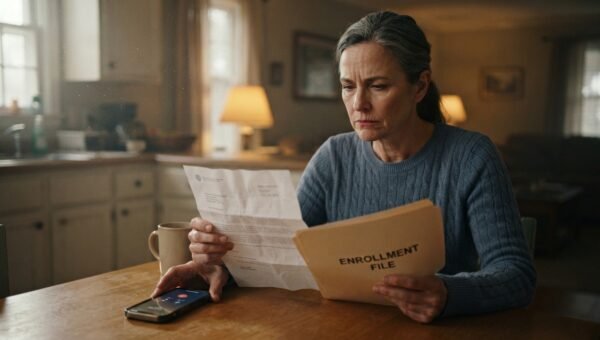
My father spent the last year of his life convinced that someone was slipping into his house and moving his things. At first, it sounded like the small, sad sliips of an eighty-one-year-old mind. He would call me on a Tuesday morning, his voice raspy and agitated over the kitchen phone, insisting his red ceramic coffee mug had been moved from the shelf by the stove to the highest cabinet over the refrigerator.
“I don’t put it up there, Sarah,” he told me more than once. “My shoulder doesn’t even let me reach that high without aching. Somebody was in here.”
Two weeks later, he called because his leather slippers were tucked neatly beneath the hall coat rack instead of next to his reading chair. Then it was his reading glasses sitting on top of the water heater in the utility room, or a box of tea bags sitting on the basement stairs. Every single time, I talked him down. I told him we all misplace things as the years go on. I told him he was tired, or that he probably carried an item into another room while thinking about something else and set it down without noticing.
My older brother, Kevin, was far more blunt about it. Whenever I brought up Dad’s calls, Kevin would sigh loudly into his cell phone and tap his steering wheel.
“It’s dementia, Sarah,” Kevin said during a Sunday lunch in March. “He’s losing his grip. You’re humoring him, and it only makes him fixate more. Next thing you know, he’ll be wandering into the street at night because he thinks a stranger is under his bed. We need to look into an assisted living facility before he burns the kitchen down.”
Kevin lived twenty minutes closer to Dad’s small brick ranch in Oak Creek than I did. He stopped by two or three times a week on his way home from his commercial contracting office, usually bringing Dad groceries or checking the furnace filter. Because Kevin handled the heavier chores, I trusted his judgment. When Dad insisted on staying put in the home he had lived in for forty years, I looked for a compromise that would ease everyone’s anxiety.
In May, I bought three wireless security cameras and set them up myself.
I placed one facing the front door from the entryway corner, one covering the kitchen, and one in the hallway pointed toward Dad’s bedroom door. I showed Dad the green status lights and explained that if anyone stepped inside, a motion-activated clip would record directly to a cloud server.
“Now you don’t have to worry,” I told him, hugging his thin shoulders. “If anybody walks in, we’ll see them.”
Dad just looked at the small black lens with a mixture of suspicion and quiet relief. “Good,” he whispered. “Because I’m not crazy.”
Over the next four months, the cameras captured plenty of ordinary life: Dad shuffling across the linoleum in his flannel bathrobe at dawn, the glare of midday sun moving across the living room rug, and Kevin carrying in brown paper grocery bags around five in the afternoon. Nothing was out of place. Nothing suspicious ever flagged an alert on my phone.
When Dad called to complain that his blood pressure pills had been moved from the bathroom counter to an old wicker basket in the pantry, I checked the motion logs and saw no intruder. I assumed Dad had carried them during a nighttime fog and missed the camera’s blind spot by inches.
Dad died quietly in his sleep on a Thursday in late August. His heart simply gave out.
The three weeks that followed were a blur of grief, funeral programs, stale sandwiches delivered by neighbors, and sorting through fifty years of family belongings. By the second week of September, the house was mostly cleared out, save for a few boxes of documents and Dad’s heavy walnut desk.
On a quiet Tuesday evening, sitting at my own dining table with a cup of tea, I logged into the home security app on my laptop to cancel the thirty-dollar monthly cloud subscription. A message popped up warning me that closing the account would permanently wipe all archived footage from the previous thirty days.
Out of an instinct I can’t quite explain, I decided to scroll through the final batch of unsaved clips before hitting the delete button. Most were five-second clips of shadows shifting or Dad walking slowly to the sink.
Then my finger stopped on a file stamped August 14, at 3:17 a.m.
The motion alert was labeled “Hallway.”
The clip opened in night-vision gray. Dad’s hallway was completely dark, but the infrared lens illuminated the back door off the kitchen unlocking with a key. A figure in a dark hooded sweatshirt slipped inside. The person didn’t turn on a single light. They moved through the shadows with total familiarity, stepping softly across the floorboards without making them creak.
My breath hitched. The intruder was real.
The person walked straight to the kitchen counter, picked up the white prescription bottle of Dad’s heart medication, carried it into the pantry, and shoved it deep into a corner basket. Then the figure turned toward the small den where Dad kept his walnut desk. The person pulled open the center drawer, slid a hand inside, and left it slightly ajar.
The intruder moved back toward the kitchen door to leave. As the person reached for the brass deadbolt, the overhead night-vision sensor cast a direct reflection across the doorframe. The figure raised a left hand to turn the latch, and the heavy fleece sleeve pulled back three inches along the wrist.
Under the harsh gray contrast of the lens, I saw the watch.
It was an automatic diver’s watch with a distinctive brushed steel band and a dark ceramic bezel. Two years ago, I had spent seven hundred dollars buying that exact watch, having the back casing custom-engraved with the initials K.D. for my brother’s fiftieth birthday.
PART 2
I stared at the laptop screen until the video ended and looped back to black. My hand was shaking so hard on the mouse that the cursor drifted across the desktop.
I clicked play again.
I watched the gray figure enter at 3:17 a.m., walk straight past the entryway, and move the medicine bottle with practiced precision. The person knew exactly where Dad’s pantry basket was. They knew which floorboards in the kitchen groaned underfoot and avoided them completely. And when the sleeve rode up against the brass deadbolt, the watch band caught the glare: the heavy links, the safety clasp, the dark face.
It was Kevin.
For nearly a year, Kevin had sat across from me at diners and family dinners, shaking his head and telling me our father was losing his mind. He had looked me in the eyes and said Dad was slipping into senility. Every time Dad had felt frightened, confused, or doubted his own sanity, Kevin had fed that fear.
I opened the camera logs and downloaded every single archived file to an external hard drive before touching the cancel button. Then I grabbed my purse, walked out to my car, and drove the twenty-five minutes to Dad’s empty house.
It was nearly ten at night when I pulled into the gravel driveway. The house was cold and dark. Walking into the living room without Dad sitting in his corduroy recliner felt hollow, but the anger humming in my chest drowned out the sorrow.
I turned on the overhead light in the den. Dad’s walnut desk was stripped bare, except for an old green blotter and an empty pen holder. When we had sorted through Dad’s papers the week after the funeral, Kevin had volunteered to go through Dad’s banking and personal files. He had told me there wasn’t much left: Dad’s modest pension checks, the monthly utility bills, and an old life insurance policy that paid out just enough to cover the burial costs.
I knelt down on the worn carpet and pulled out the desk drawers one by one, shining my phone’s flashlight into the empty wooden cavities. When I pulled the middle drawer all the way out of its track, I noticed the thin plywood bottom had been pried loose at the back edge.
I slid my fingers underneath the false bottom. My nails brushed against heavy paper.
I pulled out a manila envelope. Inside was a carbon copy of an appraisal report dated six months earlier, alongside a blue folder from an estate attorney’s office.
I sat back on the floor and read every line.
Dad’s house sat on a double lot near the edge of town, right where the county had approved a major commercial bypass road the previous winter. An appraisal firm hired by a commercial developer had valued Dad’s property at four hundred and eighty thousand dollars, nearly double what standard residential homes were selling for in the neighborhood. Attached to the back of the appraisal was an unexecuted power of attorney document naming Kevin as Dad’s sole legal and financial conservator.
Tucked behind that was a handwritten letter on Dad’s yellow legal pad, written in Dad’s sharp, slightly shaky cursive. The letter was dated July 28, three weeks before Dad died.
“Kevin keeps asking me to sign the papers to let him take over the property,” Dad had written. “He told me yesterday I forgot where I left my checks again, and that the doctor says people with memory trouble shouldn’t handle deeds. But I didn’t misplace those checks. I know what he’s doing. He thinks if he makes me feel crazy enough, I’ll sign the house over to his development company just to make the confusion stop. I won’t do it. Sarah knows I’m still here.”
Reading those words felt like a physical blow to my ribs. Dad hadn’t been slipping. He had been terrified, fighting a quiet, lonely war in his own living room while his own daughter patted his arm and told him to rest his tired head.
I folded the yellow paper, placed the documents back in the envelope, and drove back to my house. I didn’t sleep that night. Every time I closed my eyes, I heard Dad’s voice asking why his mug had been moved to the top shelf.
PART 3
At eight o’clock the next morning, I called Kevin.
“Hey, Sarah,” he answered, his voice backgrounded by the hum of his truck engine. “Everything all right? I’m heading out to an inspection in Racine.”
“I need you to meet me at Dad’s house,” I said. My voice was level, flatter than I intended. “There are a few final things in the den we have to sign off on before we hand the keys to the realtor.”
He hesitated for a second. “Can it wait until Friday? I’m pretty booked up today.”
“No,” I said. “It has to be this morning. Eleven o’clock.”
He agreed, though his tone was noticeably guarded when he hung up.
I arrived at Dad’s house thirty minutes early. I sat at the kitchen table, the exact table where Dad used to drink his black coffee every morning at six. In front of me, I set my laptop. Next to the laptop, I placed the yellow legal pad and the developer’s appraisal.
At ten minutes past eleven, Kevin’s pickup truck pulled into the gravel drive. He let himself in through the kitchen door using his key, tossing his sunglasses onto the counter. He was wearing his usual khaki work pants and a navy polo shirt. On his left wrist, the silver band of the diver’s watch caught the late morning light.
“All right, what’s so urgent?” Kevin asked, walking over to the table with a casual half-smile. “We already agreed on listing the place with Martha’s agency next month.”
I didn’t smile back. I looked at his wrist, then looked him dead in the face.
“Take off the watch, Kevin.”
His smile vanished. He stopped two feet from the table, his eyebrows pulling together. “What are you talking about?”
“Take off the watch I gave you for your fiftieth birthday and put it on the table.”
“Sarah, if you’re having an emotional breakdown about Dad, that’s fine, but don’t take it out on me. I have work to do.”
I reached out and hit the spacebar on the laptop.
The video filled the screen. The gray infrared footage played in silence: the kitchen deadbolt turning, the hooded figure slipping through the doorway, the quiet movement toward the pantry to hide the medication, the trip to the desk drawer, and finally, the left hand reaching up to latch the deadbolt at 3:17 a.m., exposing the heavy steel links and the dark dial.
Kevin’s eyes fixed on the screen. The color drained out of his cheeks so fast his skin looked gray in the fluorescent kitchen light. His mouth opened slightly, but no sound came out.
“You moved the red mug,” I said. The words came out cold and deliberate. “You moved his slippers. You moved his heart medication. You crept into this house in the middle of the night like a thief to make an old man believe his brain was rotting away.”
“Sarah, listen to me,” he stammered, raising both hands. “You don’t understand the pressure I was under. The business was struggling, and the bank was calling my line of credit. That developer approached me directly. They offered half a million for the land, but only if they could close before the zoning board met in September. Dad was stubborn. He refused to sell the family house to be torn down for a strip mall. He wouldn’t even discuss it.”
“So you decided to drive him crazy instead?” I leaned forward, my knuckles white against the edge of the wood. “You tried to get him declared incompetent so you could sign the deed yourself.”
“I wasn’t trying to hurt him!” Kevin’s voice cracked, rising in volume as panic set in. “I was going to put the money in a trust for him. He would have gone to the best assisted living facility in the county. He would have had twenty-four-hour care. I just needed him to step aside so we didn’t lose the property value.”
“He knew,” I said.
I pushed the yellow legal pad across the table until it touched the edge of his sleeve.
“He knew the whole time, Kevin. Read it.”
Kevin looked down at our father’s handwriting. He read the first few lines, and his shoulders seemed to cave inward. He collapsed into the wooden chair opposite me, burying his face in his hands.
“He never trusted me,” Kevin whispered into his palms. “He never did.”
“He trusted you enough to give you a key to his front door,” I said. “And you used it to terrorize him in the dark.”
ENDING
We sat in that kitchen for another twenty minutes without speaking. The refrigerator hummed, kicked off, and left the room completely silent.
I took the papers off the table and slipped them into my bag.
“The developer deal is dead,” I told him quietly. “The zoning board met last week, and the bypass route was shifted half a mile north. The property is worth what an ordinary three-bedroom house is worth. Nothing more.”
Kevin lifted his head. His eyes were red, his face streaked with sweat. “What are you going to do?”
“I’m taking the house,” I said. “We’re going through probate properly. You’re going to sign over your share of the estate to pay back the twelve thousand dollars you quietly withdrew from Dad’s checking account over the last six months under the guise of household repairs. I went through the bank statements last night, Kevin. I know about those, too.”
He looked at me, open-mouthed, but he didn’t argue. He had no leverage left, no excuses, and no defense.
“If you fight me on this,” I continued, “I take this drive to the county prosecutor’s office. Elder abuse and fraud carry real prison time in Wisconsin. You walk away, or you explain that video to a judge.”
Two days later, Kevin signed the quitclaim deed and the probate waiver in the attorney’s office. He didn’t look at me once while the notary stamped the seal. When he walked out of the conference room, he didn’t say goodbye, and he hasn’t called my phone since.
I didn’t sell Dad’s house.
Last weekend, I drove over to Oak Creek to finish cleaning out the kitchen cabinets. The rooms still held the faint smell of Dad’s pipe tobacco and the lemon oil he used on the baseboards.
I opened the top cabinet above the refrigerator. Reaching all the way into the back corner, my fingers found the smooth, cool handle of his red ceramic mug.
I pulled it down. I washed it in the sink, dried it with a clean dish towel, and set it squarely on the counter right next to the stove, right where he always wanted it.