PART 1
Arthur and I were married for thirty-eight years before a sudden heart attack took him in his sleep. During all those decades, we moved four times. Each time we packed up our lives, downsizing from the farmhouse to the suburban split-level, and finally into this quiet two-bedroom condo, Arthur insisted on treating one specific item like it was made of spun glass. It was a bulky, cream-colored Panasonic dual-cassette answering machine from the late nineteen-eighties.
We hadn’t used a landline in nearly twenty years, long since transitioning to cell phones, yet that machine survived every purge. Whenever I held up the dusty plastic box during a move and asked if it was finally time for the donation bin, Arthur would tense up, his posture stiffening in a way that always made me feel like I was crossing an invisible boundary. He would take it gently from my hands, place it securely near the bottom of his side of the closet, and say he wanted to keep it for sentimental reasons. I figured it held some old message from his late mother or a voicemail from his brother before he moved across the country, so I never pushed. Arthur was a quiet, private man, and I respected his small eccentricities.
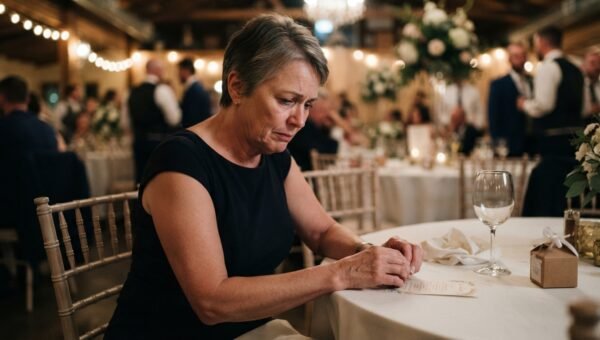
When he passed away, the silence in the condo felt heavy and suffocating. Sorting through his belongings became an exercise in quiet grief.
I found his old hunting gear, his favorite sweaters that still smelled faintly of cedar and pipe tobacco, and eventually, tucked away in the back corner of his bottom shelf, that same cream-colored answering machine. Sitting there on the dining table under the harsh afternoon light, it looked impossibly dated with its faded gray buttons and amber LED light. I hadn’t planned on plugging it in. I actually intended to finally unplug the internal battery, wrap the cord, and throw it away. But the loneliness of the house was pressing down on me, and a sudden, aching wave of longing washed over me. I wanted to hear his voice. Even if it was just a mundane message about picking up milk or confirming a dentist appointment, hearing his deep, steady baritone would be a comfort. I found an old two-prong adapter in the utility drawer, plugged the machine into the outlet beneath the kitchen counter, and watched as the amber light flickered to life, humming with a low, electrical static.
The digital counter on the front displayed a solid number three. Three messages had been sitting on that tape, preserved across decades, waiting in the dark. My hands trembled slightly as I pressed the playback button. The tape whirred and clicked, rewinding briefly before the first message began. It was a loud, abrasive beep, followed by the automated voice of a utility company reminding us about an overdue bill from nineteen-ninety-two. I let out a breath that was half-laugh, half-sigh and hit the button again. The second message was just heavy breathing and the faint sound of a television playing in the background before someone hung up abruptly, likely a wrong number from thirty years ago. I almost stopped there. The machine had already given up its mundane secrets, and I felt foolish for building up any expectations. But curiosity, or perhaps a strange instinct I couldn’t yet name, made me press play one last time.
The third message started with a click, followed by the sound of faint traffic in the background. Then a woman spoke. Her voice was steady, clear, and utterly unfamiliar. She said, “I won’t call again. The baby is healthy. I kept my promise.” The timestamp mechanism clicked softly in my mind. The date of that message corresponded directly to the month our son, David, was born. A cold wave of nausea rolled over my stomach. I sat down hard on the kitchen chair, the plastic seat feeling suddenly freezing. Before I could process the shock, the woman’s voice continued on the tape. She said, “Tell your wife the hospital bracelet mix-up was not her fault.” The tape clicked off, leaving only the low hum of the refrigerator in the quiet kitchen. I sat frozen, staring at the little amber light, my chest tightening as if a fist were squeezing my lungs.
PART 2
I listened to that third message five times in a row, pressing rewind with a finger that wouldn’t stop shaking. Each repetition delivered the exact same words in that calm, resolute woman’s voice. “Tell your wife the hospital bracelet mix-up was not her fault.” The phrase echoed in my head, dragging up memories I had buried deep beneath thirty-eight years of normal family life. Thirty-eight years ago, when David was born at Memorial General, there had been a terrifying forty-eight-hour period where he spent two days in the neonatal intensive care unit. I remembered the exhaustion, the monitors beeping in the sterile white room, and the overwhelming fog of postpartum recovery. Most vividly of all, I remembered the frantic nurse who had rushed into my room on the second day, breathless and apologetic, holding up a plastic bassinet card and admitting that a temporary mix-up had occurred between two newborns in the nursery during a shift change. They had checked the footprints, checked the charts, and assured us everything was straightened out. I had blamed myself for years, wondering how I could have been sleeping so deeply that a nurse could wheel the wrong baby to my bedside even for ten minutes.
Arthur had comforted me back then, holding me close and telling me not to torture myself, that hospitals were chaotic places and mistakes happen. But sitting in my kitchen with the old answering machine humming beside me, his soothing words didn’t feel comforting anymore. They felt calculated. Why did that strange woman on the tape know about the hospital bracelet mix-up? And why had Arthur kept that message hidden for decades, guarding the machine like a dragon hoarding gold? My mind raced through dark, impossible corridors. Could David not be Arthur’s son? Or, more terrifyingly, was David even my son at all? The implications made my head spin. I tried to steady my breathing, telling myself I was jumping to wild conclusions based on a cryptic voicemail from thirty years ago. But the sheer panic in my chest refused to subside. I knew I couldn’t just sit there wondering. I needed hard facts, and the only place left to look was the hospital where it all began.
The next morning, I drove down to the records department at Memorial General. The old brick building had been mostly modernized, but the basement archives smelled the same, a mix of old paper, floor wax, and damp concrete. A polite young clerk named Sarah looked up my request for historical obstetric records from nineteen-eighty-eight. She furrowed her brow at the age of the file, but hospital retention policies, combined with the fact that my son had required specialized neonatal care, meant the records were still archived in their digital-migration database. It took about twenty minutes of waiting in a hard plastic chair while the hum of computer fans filled the small office. Finally, Sarah walked back over with a thick manila folder and a printed compliance sheet. She placed it on the counter with a sympathetic smile, telling me I could review it at the corner desk.
My fingers traced the edge of the printed incident report from the neonatal ward. The document was typed on old typewriter-style font, yellowed at the margins. Under the heading of Nursery Incident Log, dated October twelfth, nineteen-eighty-eight, it detailed a brief mix-up involving two male infants born within twenty minutes of each other. The report listed two separate infant identification numbers. The first number belonged to David. The second number belonged to another baby boy born that same morning. The report noted that the identification bands had been temporarily misplaced during a routine bathing rotation and subsequently corrected after maternal verification. But my eyes dropped down to the handwritten notes at the bottom of the page, scribbled in ink by the attending charge nurse. It noted that the parents of the second infant had been notified of the discrepancy, but due to a clerical oversight in the weekend shift logs, follow-up contact details for the second family had been logged under an alternate file.
Below that, typed in crisp modern text from a later audit, was a cross-reference listing the current legal name and address of the person attached to that second infant identification number. The baby boy who had shared a bassinet mix-up with my son now carried a last name that I recognized with a jolt of sheer horror. It was the last name of the young man David had gone into business with three years ago.
PART 3
The realization hit me like a physical blow, knocking the wind straight out of my lungs. The business partner David had brought into his residential contracting firm two years ago, a quiet, hardworking man named Mark who we had invited to Thanksgiving dinner and treated almost like family, wasn’t just a business associate. According to the hospital records, Mark was the other baby from the nursery mix-up. Or rather, Mark was the baby whose life had somehow intertwined with ours in a way Arthur had clearly known about for decades. My hands were trembling so badly I could barely fold the hospital paperwork back into the folder. I sat at that metal desk in the hospital basement for a long time, the fluorescent lights buzzing overhead, trying to assemble the shattered pieces of my reality. Arthur had known. The message on the machine proved it. The woman on the tape had called Arthur, not me, to tell him the baby was healthy and that she had kept her promise. What promise? Had there been an agreement? Had Arthur known that the babies were permanently swapped, or had he discovered it later and kept it a secret to protect our lives, or perhaps to protect himself?
I drove home in a daze, the city traffic blurring past my windshield like watercolor. When I walked back into the condo, the answering machine was still sitting on the dining table, its amber light glowing like a silent accusation. I didn’t want to accuse David blindly, nor did I want to confront Mark without understanding the full scope of what had happened. But I knew I needed answers. I called David and asked him to come over immediately, telling him it was urgent about his father’s estate. When he arrived, looking concerned and wearing his work clothes straight from the job site, I poured him a cup of coffee and placed the old answering machine right in the center of the kitchen island. David looked at it, confused, asking what the old piece of junk was doing out of the closet. I didn’t answer his question right away. Instead, I told him to listen to the third message.
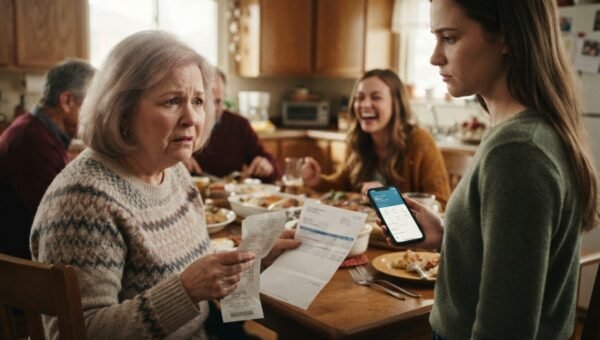
When the woman’s voice played through the tiny speaker again, David’s expression shifted from casual confusion to deep, unsettling bewilderment. He looked at me, then at the machine, asking whose voice that was. I told him I didn’t know, but that the hospital records I had picked up earlier that morning filled in the blanks. I slid the hospital incident report across the counter toward him. I watched his eyes scan the yellowed paper, moving down from the date to the infant identification numbers, and finally landing on the name of his business partner, Mark. Color drained completely from David’s face. He muttered Mark’s name under his breath, stepping back as if the paper on the counter were suddenly hot to the touch. He confessed that Mark had actually been the one to suggest they go into business together, seeking out David out of the blue three years ago because he had ‘vague family ties’ to the area and wanted to partner with someone reliable. The coincidence of them meeting, partnering, and working side by side suddenly looked less like fate and more like a carefully orchestrated reunion.
ENDING
The full weight of the deception settled over the kitchen like a shroud. Arthur hadn’t just kept a secret; he had lived inside a lie for thirty-eight years, carrying the knowledge that the son he raised might not have been his biological child, or worse, that a deliberate choice had been made in the quiet corridors of that hospital. I looked at David, my wonderful, hardworking son who had my grandfather’s nose and Arthur’s stubborn temperament, realizing that biology suddenly felt entirely secondary to the love we had shared across a lifetime. But the betrayal by the man I had trusted with my entire existence cut deeper than any knife. Arthur had listened to that woman’s voice on the tape, accepted her promise, and buried the truth where he thought it could never hurt us, never realizing that secrets have a way of outliving the people who try to bury them.
David and I sat at the kitchen table for hours as the sun dipped below the horizon, talking through the wreckage of what we now knew. We agreed that we needed to speak with Mark, not with anger, but with a desire for the complete truth. When Mark came over the following evening, pale and visibly shaken after David called him with a carefully edited version of the discovery, the three of us sat in the living room as the old answering machine ticked softly on the sideboard, unplugged at last. Mark confessed that his own adoptive mother had told him on her deathbed that he had been part of a nursery mix-up at Memorial General, and that she had always suspected the other family lived nearby. He had tracked David down not out of malice, but out of a quiet, burning need to know where he truly came from.
As the pieces finally fell into place, the overwhelming grief I felt for Arthur turned into a complicated mixture of sorrow and lingering resentment. He had protected his secret until his dying breath, leaving me to clean up the wreckage of a life built on half-truths. Yet, as I looked at David sitting across from me, and even at Mark standing by the window with his father’s quiet posture, I knew one thing for certain. The truth was finally out in the open, and for the first time in nearly four decades, our family’s foundation was built on reality instead of a stranger’s quiet promise.