PART 1
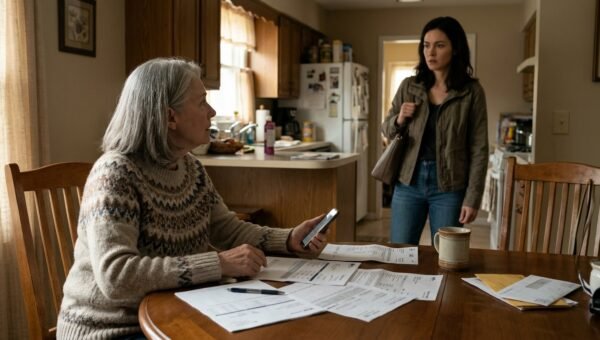
The afternoon my sister Evelyn and her husband Ray came to my house, they looked like two people standing on the edge of a cliff. It was four years ago, in the late spring. I had made a pot of drip coffee, set out a plate of lemon cookies, and sat across from them at my kitchen table in Canton, Ohio.
I was fifty-eight at the time, four years widowed, and working as the billing supervisor for a medical imaging center.
I had paid off my bungalow with the life insurance policy my husband Jim left behind. Every dollar sitting in my savings account had come from thirty years of thrift, careful budgeting, and packing brown-bag lunches.
Evelyn was three years younger than me. She sat with both hands wrapped tight around her coffee mug, her eyes rimmed with red. Ray would not look me in the eye. He stared down at the floral tablecloth, turning his wedding band around and around his knuckle.
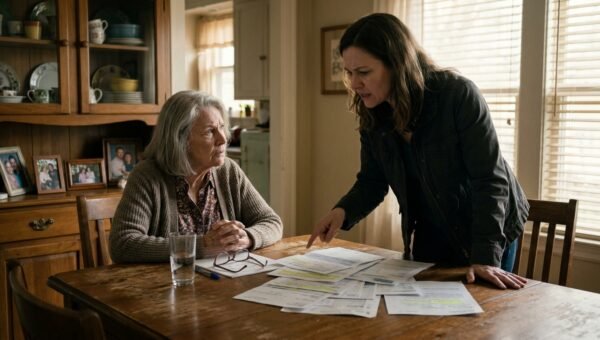
They told me the bank was forty-eight hours away from filing foreclosure papers on their home on Clearview Avenue. Ray claimed his independent commercial painting business had stalled out when a general contractor stiffed him on two municipal school jobs. He said their property taxes had gone unpaid for two cycles, the utility companies were threatening shutoffs, and a second mortgage lender had issued a final demand.
Evelyn reached across the table, grabbed both of my hands, and started crying. She swore on our late mother’s memory that twenty-five thousand dollars would wipe out the immediate arrears, stay the bank proceedings, and give Ray the breathing room to finish an apartment complex repaint in Akron.
“Twelve months, Sarah,” Evelyn whispered, tears dripping onto the Formica. “Just give us twelve months. Ray will pay you two thousand dollars every single month starting in September. We will pay every red cent back. We just cannot lose the roof over our heads.”
I felt sick to my stomach. Twenty-five thousand dollars was not play money for me. It was nearly half of my emergency liquid fund, the cushion I relied on in case my furnace died or my car transmission gave out. But Evelyn was my only sister. Our parents were buried in the hillside cemetery off Route 62, and when we were girls, Mama always told us that when the world turns cold, sisters are all you have left.
Because we were sisters, and because Ray was practically weeping into his paper napkin, I did not call an attorney. I did not print out a formal promissory note from the internet. I did not demand a secondary lien on their property. Looking at them sitting in my kitchen, asking them to sign a legal contract felt like kicking them while they were bleeding.
I walked into my bedroom, retrieved my passbook, and drove with Evelyn down to the Huntington Bank branch on Tuscarawas Street. I had the teller draw a cashier’s check for twenty-five thousand dollars made out directly to Ray and Evelyn. In the memo line, I wrote three words in my own handwriting: *Personal loan / mortgage.*
The teller handed the check to Evelyn. She hugged me in the bank lobby until my ribs hurt, whispering over and over that I had saved her life.
For the first six months, Evelyn called every Sunday evening. She talked about the weather, complained about Ray’s long hours, and repeatedly told me how grateful they were.
September came and went without a payment, but Evelyn apologized profusely, claiming Ray was still waiting on the Akron retainage checks. I told her not to panic and gave them grace through the holidays.
By the following summer, the calls began to thin out. Evelyn was always rushing out the door, or Ray was taking a nap, or they were visiting his family in Dayton. Whenever I gently asked how the commercial jobs were going, Evelyn’s voice would take on a defensive, brittle edge. She would sigh heavily and say, “Sarah, we are doing the best we can. You know we are good for it.”
One full year turned into two. Two years stretched into three.
During those three years, I saw photographs on social media of their daughter’s lavish destination bachelorette party in Nashville. I noticed a brand-new gray Ford Explorer parked in their driveway when I drove past to go to the grocery store. Yet not a single twenty-dollar bill ever made its way to my kitchen table.
Finally, last October, when my water heater ruptured and flooded my basement utility room, I had to pay sixteen hundred dollars out of my remaining checking funds. I had reached my limit. I drove over to their house on Clearview Avenue on a Sunday afternoon, determined to sit down like reasonable adults and set up a realistic, fifty-dollar-a-month repayment schedule.
Ray opened the front door. He had a can of beer in his hand and a football game blaring in the background. When he saw me standing on the porch, his face dropped from relaxed to an ugly, closed-off sneer. He did not invite me in. He stepped onto the porch and pulled the wooden door almost shut behind him.
“Evelyn is resting, Sarah,” he said, crossing his arms.
“Ray, I am not here to fight,” I told him, keeping my voice as calm as I could. “It has been three years. My basement just flooded, and I need to know when you two are going to start repaying the twenty-five thousand dollars you borrowed from me.”
Ray let out a short, mocking laugh that sounded like gravel grinding in a drum.
“We don’t owe you a dime, Sarah,” he said.
The air left my chest. “What did you just say?”
Evelyn pushed through the storm door, standing beside her husband. She was wearing gold earrings and a cashmere cardigan. There were no tears in her eyes now. Her face was set in concrete, cold and insolent.
“You heard him,” Evelyn said, her voice completely flat. “You gave us that money to help your sister during a rough patch. It was a family gift. You never had us sign any loan paperwork, Sarah. There is no contract. There is no promissory note. You have zero legal proof that we owe you anything, so stop coming over here and harassing my husband on his day off.”
I stood on that concrete stoop with my mouth hanging open, my ears roaring as if a freight train were passing through my head.
“A gift?” I choked out. “You sat at my kitchen table and swore on Mama’s grave! You promised me two thousand dollars a month!”
“Do you have that in writing?” Ray sneered, stepping closer to the screen. “Because if you don’t, you’re just an old woman making up stories. Take us to court if you think you can. Now get off our porch before I call the township sheriff for trespassing.”
They stepped back inside and slammed the heavy oak door in my face. The deadbolt clicked into place with a sharp, sickening metallic thud.
I walked down their concrete steps, my legs shaking so violently I had to lean against my car door to keep from falling onto the gravel. The betrayal was so total, so calculated and filthy, that it felt like an actual physical blow to my chest. They had used my grief, my loneliness, and my late mother’s memory to swindle me out of my hard-earned savings, knowing from the very first afternoon that without a written contract, they could simply walk away.
I drove home, sat in my quiet living room, and took down the framed photograph of Evelyn and me from the mantle. I deleted their telephone numbers from my cell phone, blocked them on every platform, and made a silent vow never to speak their names again.
Nine months went by. I worked overtime at the imaging center, paid off my basement repairs, and tried to bury the bitter taste of their greed.
Then came a sweltering Tuesday afternoon last month.
I was walking down the center aisle of the Giant Eagle supermarket on The Strip, carrying a carton of milk and a basket of peaches, when I heard my name called from behind.
I turned around to find Brenda Miller pushing a half-empty shopping cart toward me. Brenda had lived across the street from Evelyn and Ray for twenty-four years. Our parents had known each other through the county fair committee back in the seventies, and Brenda was the kind of woman who knew the history of every roof and lawn on Clearview Avenue.
“Sarah! I haven’t seen you in ages,” Brenda said, stepping in close and lowering her voice with an expression of intense, wide-eyed concern. “I have been thinking about you so much these past two weeks. Have you heard what happened to your sister and her husband recently?”
PART 2
I stood by the dairy cooler, clutching the cold carton of milk against my ribs. My first instinct was to pull back, smile politely, and tell Brenda that Evelyn and I had parted ways. I had spent nine months building a wall around that humiliation, trying to convince myself that whatever happened on Clearview Avenue was none of my business.
“Brenda, to be completely honest, Evelyn and I don’t speak anymore,” I said, keeping my voice neutral.
Brenda looked around the aisle, stepped two inches closer, and leaned over her cart handle. Her eyes were practically vibrating with suppressed news.
“Oh, Sarah, honey, I know you two had a falling out,” Brenda whispered, shaking her gray head. “Evelyn went around the neighborhood last winter telling everyone you had become bitter and stopped speaking to the family over some petty misunderstanding. But you don’t know about last Thursday?”
“No,” I admitted, my stomach tightening despite myself. “I don’t know anything about last Thursday.”
“The county sheriff’s department showed up at their house with three cruisers and a commercial tow truck at seven in the morning,” Brenda said, her voice dropping to a gravelly murmur. “They served Ray and Evelyn right on their front lawn with a civil eviction notice and a seizure writ. Two uniformed deputies stood on the sidewalk while a private crew carried every stick of furniture out of that house and piled it on the grass along the curb. By two in the afternoon, the bank had padlocked the gates and changed the deadbolts.”
I stared at Brenda, the cold air from the open cheese cases blowing against the back of my neck.
“Eviction?” I repeated, the word sounding bizarre in my mouth. “Ray told me three years ago that the house was saved. They bought a brand-new SUV. They renovated their back patio with stamped concrete.”
Brenda let out a dry, bitter snort. “Saved? Sarah, Ray never paid off that secondary mortgage. He didn’t even pay the county taxes. That man hasn’t worked a legitimate painting contract in eighteen months. My husband, Tom, golfs with the township loan officer who handled their original equity line. Ray took your twenty-five thousand dollars back in 2020 and used every single penny of it to put down a non-refundable deposit on a speculative commercial franchise in Canton that went belly-up within six months. He didn’t give the bank a dime.”
The world seemed to spin slightly beneath my sensible walking shoes.
“He never paid the lender?” I asked.
“Not a cent of it,” Brenda said. “The bank let the legal process grind out for three years because of the pandemic backlogs, but the court issued a final summary judgment against them in April. The auction happened on the courthouse steps four weeks ago. A real estate holding group out of Cleveland bought the title for three hundred and ten thousand dollars. Ray and Evelyn ignored the thirty-day notice to vacate, thinking they could stall it out, so the sheriff came and threw them into the street.”
Brenda leaned in even closer, touching my forearm with cold, bony fingers.
“And that isn’t the half of it, Sarah,” Brenda whispered. “While the moving crew was hauling their bedroom dressers out to the curb, Ray was screaming at the deputies, claiming his private papers were being stolen. He got so belligerent he shoved one of the young patrolmen. The deputies tackled him right into the hosta bed, cuffed him behind his back, and threw him in the back of a squad car. He spent forty-eight hours in the county jail on charges of resisting arrest and obstruction.”
I felt a sudden, sickening weight drop in my chest. It was not joy, and it was not triumph. It was the cold, hollow realization of how thoroughly rotten the situation had been from the very start.
“Where is Evelyn now?” I asked.
“She’s staying in a cheap weekly extended-stay motel out off Route 77 near the truck stop,” Brenda said, shaking her head in pity. “Tom saw her yesterday morning sitting on a plastic lawn chair outside unit twelve, smoking cigarettes and crying into her phone. Most of their furniture got rained on Thursday night because nobody came to pick it up from the curb, and the county road crew hauled the ruined mattresses to the dump on Friday morning. Ray is out on bond, but his company truck was repossessed by the commercial finance company right out of the impound lot.”
Brenda gave my arm a sympathetic squeeze. “I just thought you should know, honey. Family is family, but after the way they paraded around town acting like high rollers while treating you like dirt, people on Clearview are saying they finally got what was coming to them.”
I thanked Brenda, paid for my groceries with shaking hands, and walked out to the hot asphalt of the parking lot.
I loaded the brown bags into my trunk, climbed into the front seat, and sat there with the air conditioning blasting against my face. My mind raced back to that afternoon at my kitchen table, to Evelyn’s desperate tears, to the way Ray had sworn on our mother’s memory, and to the cruel, laughing sneer on his face when he told me without a contract I had no proof they owed me a dime.
They had taken my life savings to chase a phantom investment, lied to my face for thirty-six months, and mocked my generosity when I asked for accountability. Now they were sitting in a fifteen-dollar-a-night roadside motel room with their lives scattered across a county landfill.
I put the car in gear and drove home.
I had no intention of going to Route 77. I had no intention of writing another check or playing the savior again. The boundary I had built was made of iron. But as I pulled into my driveway, looking at my quiet, paid-off house and the clean porch where my late husband and I used to drink morning coffee, my telephone rang from inside my purse.
The caller ID showed an unfamiliar 330 area code from an unlisted mobile number.
I stared at the glowing screen for three long rings. Then, with a slow, steady breath, I swiped the green bar and placed the phone against my ear.
PART 3
“Hello?” I said.
A ragged, choking sob came through the speaker. It was a sound so broken, so stripped of pride, that I knew instantly who was on the other end before she even spoke.
“Sarah… please,” Evelyn wept, her voice cracking into high, desperate gasps. “Sarah, please don’t hang up. Please don’t hang up the phone. I am begging you.”
I sat in my parked car in the shade of my garage, keeping my hands resting flat on the steering wheel. I did not shout. I did not ask where she got my number. My voice was as level and cold as a frozen lake.
“What do you want, Evelyn?”
“We have nowhere to go,” she cried, her breathing coming in harsh, wheezing bursts. “Sarah, they took the house. They threw our things into the dirt. Ray was in jail, his blood pressure is through the roof, and the motel manager told us this morning that if we can’t pay six hundred dollars for another week by five o’clock today, he is locking our room and putting our suitcases by the dumpsters.”
I listened to her weep, remembering the exact sound of her voice on my front stoop nine months ago when she told me to get off her porch before she called the law.
“Brenda Miller told me what happened,” I said quietly.
“Sarah, we are ruined,” Evelyn sobbed, completely ignoring the mention of Brenda. “We have eighty-four dollars left in our checking account. Ray’s truck is gone. We don’t have enough money for groceries, let alone a security deposit on an apartment. I am your sister, Sarah. Your only sister. You have that four-bedroom house sitting there all by yourself. Just let us bring our clothes and sleep in your spare rooms for a few months until Ray can find work. We will stay out of your way, I swear to God we will. Mama wouldn’t want you to leave your own flesh and blood on the side of a highway.”
Hearing our mother’s name dragged into her mouth again sent a hot, sharp spike of indignation straight into my throat.
“Do not speak Mama’s name to me, Evelyn,” I said, my voice dropping an octave, each word measured and hard. “You stood on your front porch in October and looked me dead in the eye. You told me that twenty-five thousand dollars was a gift. You laughed at me, Ray threatened to have me arrested for trespassing, and you told me that because we didn’t have a signed contract, you owed me nothing.”
“I was stressed!” she screamed through the receiver, her voice rising in frantic, shrill self-defense. “Ray was yelling at me every night, the notices were piling up, and I didn’t know what I was saying! People say things they don’t mean when their backs are against the wall! You can’t hold a few words against me when we are facing the street!”
“Those were not a few words, Evelyn,” I replied. “That was your character. You took twenty-five thousand dollars from a widow who earned it forty hours a week behind a clinic desk. You took it knowing you were never going to pay it back. You didn’t use it to save your house; you used it to gamble on a franchise while you leased a brand-new truck and threw parties for your daughter.”
There was a dead, suffocating silence on the line. The crying stopped completely. For three seconds, the desperate, weeping sister vanished, replaced by the same bitter, entitled woman who had slammed the door on me.
“So that’s it?” Evelyn hissed, her tone turning sharp and venomous. “You’re going to sit over there in Jim’s paid-off house with your pension and your savings, watching your own sister rot in a flophouse because you’re still pouting over money? You always were cold, Sarah. You always thought you were better than everyone else because you saved every penny and never took a risk!”
“No, Evelyn,” I said, looking out my windshield at my tidy brick garage. “I don’t think I am better than anyone. But I am an honest woman who pays her debts, keeps her word, and doesn’t rob the people who love her.”
“We will die out here!” she shrieked. “Do you hear me? If we get evicted today, we will be sleeping under an overpass by dark! Doesn’t that mean anything to you?”
“You made your choices for three years, Evelyn,” I told her. “You chose pride, you chose deceit, and you chose to treat family like a mark to be conned. And like you told me on your porch, without a contract, nobody owes anybody anything.”
“Sarah, please—”
I pressed the red circle on my screen, ending the call.
I took a deep, shuddering breath, opened the car door, and walked inside my house.
My hands were shaking as I carried the milk into the kitchen. I set the groceries on the counter, walked straight to my telephone settings, and blocked the new number permanently. Then I sat down at my kitchen table, in the very chair where Evelyn had wept and held my hands four years ago, and put my face in my hands.
The tears came then, but they were not tears of guilt. They were tears of mourning for the sister I used to have when we were girls catching fireflies in Mama’s yard, before greed and vanity had eaten her soul clean through.
ENDING
The aftermath of their collapse played out across the county over the next six months, and while I never sought out the details, living in a small Ohio community meant the ripples reached me anyway.
Evelyn and Ray did not sleep under an overpass. When the motel manager locked their door on Tuesday evening, their daughter, the one whose destination bachelorette party had been funded while my loan went unpaid, reluctantly drove up from Columbus to collect them. She put them in a small, run-down basement apartment she owned near the university district, under the strict condition that Ray look for hourly retail work and that Evelyn provide daycare for her toddler.
From what my cousin in Mansfield told me during the holidays, the arrangement was miserable from the start. Ray was forced to take a job as a nighttime janitor at an auto parts warehouse, earning fifteen dollars an hour with bad knees and a suspended driver’s license. Evelyn spent her days changing diapers and cooking meals in a damp basement, stripped of her social circle, her country club luncheons, and the manicured lawn on Clearview Avenue she had prized above all else.
In January, Ray pleaded guilty to a misdemeanor count of disorderly conduct and resisting an officer, receiving a suspended ninety-day sentence, a thousand-dollar fine he could not afford to pay, and a year of probation. The public court docket showed over two hundred and eighty thousand dollars in outstanding deficiency judgments against their names, debts that will follow them to their graves because no bankruptcy court will discharge liens tied to fraudulent commercial loans and back municipal taxes.
As for me, life continued in its quiet, steady rhythm.
In February, I retired from the medical imaging center after thirty-two years of service. My coworkers threw me a lovely luncheon in the conference room, presenting me with a gift certificate to a local garden nursery and a beautiful silver clock engraved with my name.
With my overtime pay and my regular savings, I slowly rebuilt the cushion that had been stolen from me. I paid the sixteen hundred dollars for my new water heater, replaced the carpet in the basement utility room, and in the spring, I hired a young local boy named Caleb to paint the wooden trim and front shutters on my bungalow.
One Saturday morning in May, while Caleb was working on the front porch with his ladder and drop cloths, I sat in my garden swing with a glass of sweet iced tea, watching the red tulips bloom along the driveway fence.
My phone buzzed on the wooden armrest. It was a letter forwarded to my email from a regional collection firm, officially notifying all interested parties that the foreclosure and liquidation of the estate on Clearview Avenue was finalized, and that all subordinate unsecured claims were formally declared uncollectible and closed.
I looked at the number twenty-five thousand dollars on the digital page.
It was a staggering sum to lose. It was thirty years of skipped vacations and patched winter coats. But as I set the phone down and listened to the robins singing in the maple tree, I realized that those twenty-five thousand dollars had bought me something far more valuable than furniture or equity.
They had bought me total, absolute freedom from people who saw love as a transaction and family as a shield for theft.
My sister thought she had outsmarted me because she walked away from my table without signing a piece of paper. She thought the law protected her right to be cruel. But life has an accounting system that runs far deeper than county land records and legal contracts. The debts we refuse to pay to the people who saved us always come due, with interest, on a day when there is nobody left to write a check.
I picked up my gardening shears, stood up in the warm spring sunshine, and walked over to prune my rose bushes, feeling entirely, beautifully at peace.