Why did I keep the photo open after I read the words under it? I was sitting at my kitchen table, still holding the little card from the $2,000 gold bracelet I’d given my daughter-in-law for Christmas. On my phone was a picture of a $14,500 watch, apparently bought for her mother, Evelyn.
Under the photo, Alyssa had typed, “Used the old lady’s card again. She never checks.”
I read it twice. Then I put the phone down, picked it back up, and read it again.
I’m 69. I know how to check a bank account. But for a few seconds, I was more embarrassed than angry, and that’s the part I have a hard time admitting.
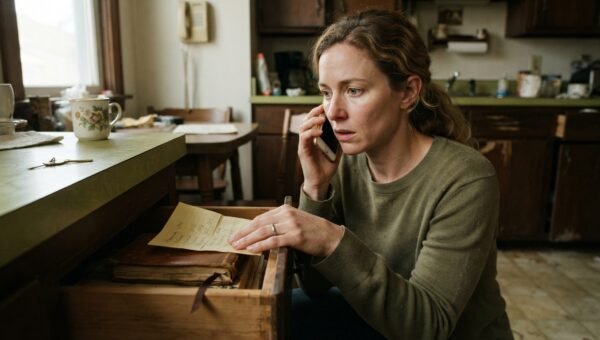
Alyssa had meant to send the picture to someone else. She called almost right away, but I didn’t answer. I didn’t want her voice in my ear before I knew what was true. So I logged into my credit card account and started going through the statements.
I’d just given her the bracelet because she’d complained, more than once, that my gifts were “a little cheap.” I told myself the bracelet was a peace offering. That sounds silly now, but at the time I wanted Christmas to be easy. I wanted Mark and Alyssa to come over, eat, and leave without anyone making a comment about what I could afford.
The first charges looked ordinary enough. Department stores. Online shops I didn’t recognize.
A few smaller amounts. I wrote them on the back of an envelope because I didn’t trust myself to add them in my head. The total kept rising.
$1,280. $3,612. $9,044.
By the time I reached the bottom of the second statement, I had $38,420 in charges I couldn’t explain. I checked the dates. Most had happened in the past six weeks. They were spread around, like someone had tried to make them look like the normal mess of shopping and bills.
My first thought was that I’d missed something. My second was that Alyssa had used the card. I didn’t call her to ask. I froze the card through the bank website and called the number on the back.
The woman at the fraud department asked if I knew who could have seen my card details or used my online account. I almost said no. Then I remembered the hospital.
Two months earlier, I’d spent one night there after getting dizzy and falling in my bathroom. Nothing serious, thank goodness, but Mark was worried and Alyssa came by to help me set up autopay for the electric bill and water. I’d been tired and cranky, and she was good with computers.
She sat at my table, asked for my passwords, and entered the card information while I watched. I didn’t think much of it. I trusted her. I also wanted to get it done before Mark got off work and started fussing over me.
The bank rep asked me to stay on the line while she locked the account and opened a case. She gave me a reference number, which I wrote down beside the charges. My hand shook enough that I had to rewrite the last two digits.
I didn’t call Mark yet. That was a choice. I was afraid he’d tell me I was being unfair to Alyssa before I could show him anything.
He’d done that before when I brought up small things, like her asking me to cover a bill and then not mentioning it again.
I called the bank again the next morning and spoke with Investigator Miller. She told me not to confront Alyssa while they were still checking the transactions. “Let us get the records first,” she said. “It’s easier when nobody has time to clean things up.”
I didn’t like waiting. But I did it.
Miller asked me to send in screenshots of the text, the photo, and every charge I disputed. I saved the message in two places. I printed it too, although I felt ridiculous carrying a piece of paper around with the words “old lady” on it. I kept it in a folder on the counter where I could see it.
Alyssa left me a voicemail that afternoon. Her voice sounded soft, almost worried. “Please don’t call the bank yet. I can explain the charges.” By then I had already called. I saved the voicemail and sent it to Miller.
That was when I stopped thinking there might be some simple mistake. Still, I didn’t know how far it went. The bank was tracing the purchases, and I was trying to keep my mind on what I could prove.
Miller called again three days later. She said several purchases were linked to online accounts and a phone number associated with Alyssa. The bank had also traced access to an internet address connected to Mark and Alyssa’s home.
I asked her if that meant Mark had done it too.
“It means the access came from their home,” she said. “It doesn’t tell us who was at the keyboard.”
That answer mattered to me. I didn’t want to accuse my son because his wife had used their internet. But I also wasn’t going to cover for either of them without proof.
Then Miller told me about a $12,000 deposit. It had been paid as a cash advance linked to my credit account. The papers were for a lease-to-own condo. She said the file listed me as the primary guarantor and payer.
I asked for the address.
She read it slowly. “414 Elmridge Point.”
I knew the name. I’d passed that building when I went to the pharmacy. It was a luxury condo complex, and it was two blocks from the place Evelyn worked. Miller said Evelyn was listed as the occupant.
That was the part I couldn’t make smaller. The watch was a terrible thing to find, but I could still tell myself it was one selfish purchase. A condo agreement with my name on it meant someone had planned to use my credit for more than a shopping spree.
The digital signature on the agreement looked like mine. It wasn’t. It was close enough that I understood how it might pass an automated check, but the last letter of my name was wrong. I don’t write it that way. I’ve signed it the same way since I was twenty.
Miller said the deposit could be stopped because the lease had not started and no one had moved in. She asked whether I wanted the bank to keep pursuing the claim. If I withdrew it, I might avoid some family trouble, but I could be left responsible for charges the bank couldn’t recover.
I said, “Keep going.”
I said it quietly. I meant it.
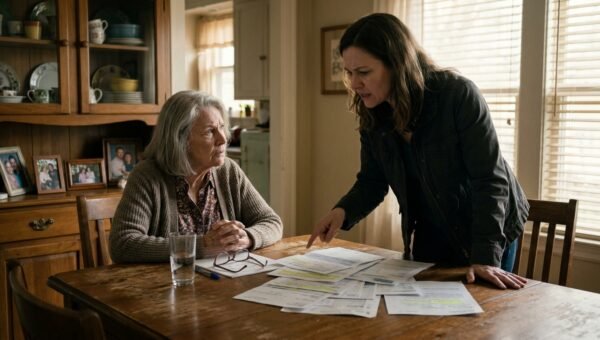
I asked Mark and Alyssa to come over the following Sunday. I told them I was making dinner. I didn’t tell them what it was about. I cooked chicken because I knew Mark would eat it, and I kept the documents in a folder on the table until they arrived.
Alyssa came in first and hugged me. She had the bracelet on. I noticed it because I’d picked the clasp myself. Mark walked in behind her and asked why I looked so serious.
I didn’t sit down right away. I put the folder in front of them.
Mark glanced at the first page. “What’s this?”
“Read it,” I said.
Alyssa leaned over his shoulder. When she saw the charges, she rubbed her thumb over the bracelet. Mark turned the pages more slowly. The paper made a dry scraping sound against the table.
“This is a misunderstanding,” Alyssa said. “I was helping with your bills.”
“You were helping me set up autopay,” I said. “You weren’t buying things.”
She looked at Mark. “I thought she knew.”
Mark looked back at her. “Knew what?”
Alyssa said I could afford it. She said she’d planned to pay me back. She said the watch had been a gift and the condo was only a deposit, not a purchase. Each explanation came out faster than the one before it.
I let her finish. Then I showed Mark the text message.
He read it without speaking. His face changed, but he didn’t turn on her or shout. He just put the phone down and moved his hands off the table.
“Did you write this?” he asked.
Alyssa looked at the screen. “It was a joke.”
“It wasn’t funny,” I said.
She tried again. She said the charges had gotten mixed up with her own cards. She said she’d meant to tell me about the condo. Then she said she’d thought I’d be happy to help Evelyn.
I slid over the lease agreement. Evelyn’s name was under occupant. Mine was under primary guarantor. The $12,000 deposit was marked as a cash advance from my account.
Mark read the address aloud. “414 Elmridge Point?”
Alyssa didn’t answer him.
I played the voicemail. Her voice came from my phone, clear and small in the room: “Please don’t call the bank yet. I can explain the charges.”
Mark sat back. “You knew the bank would find it.”
Alyssa started to cry. I can’t say whether she was scared, ashamed, or both. I didn’t feel good watching her cry. I also didn’t feel responsible for making it stop.
“I made a mistake,” she said.
“You made weeks of choices,” I told her. “This wasn’t one mistake.”
Miller had told me the bank needed a signed fraud affidavit and confirmation that I wanted formal recovery. I had brought it with me. I signed it at the table while Mark watched. My signature looked like mine.
Alyssa asked me not to do that. She said it would hurt her job and her marriage. I told her I knew it would cause trouble. Then I signed the last page too.
The bank’s fraud unit took the case from there. The property manager canceled the lease-to-own agreement before move-in and returned the deposit funds to the creditor. The bank disputed the charges and began recovery proceedings against Alyssa. She surrendered the watch and the bracelet as part of the restitution process.
I didn’t want the bracelet back as a present. I wanted it back because it had been bought with my money, and because I was done pretending an expensive gift could buy peace. When Alyssa placed it on the table, she wouldn’t look at me.
Mark didn’t defend her. He moved into a temporary rental while he figured out what he wanted to do about their marriage. I didn’t tell him what to choose. I told him I loved him, but he couldn’t ask me to carry a lie for him.
I cut off Alyssa and Evelyn. I changed every password and had the bank remove the old account access. I updated my estate papers too. That part felt unpleasant, but I’d rather do it while I’m able to make my own decisions.
It took several months to clear the disputed charges and repair my credit. The balance is now zero. Mark still calls. Some calls are easy. Some aren’t. I haven’t seen Alyssa since she returned the bracelet.
The jewelry box sits empty on my foyer table beside the clean bank statement. In the morning, I take my coffee to the quiet room at the back of the house and let it cool while I read the paper.