PART 1
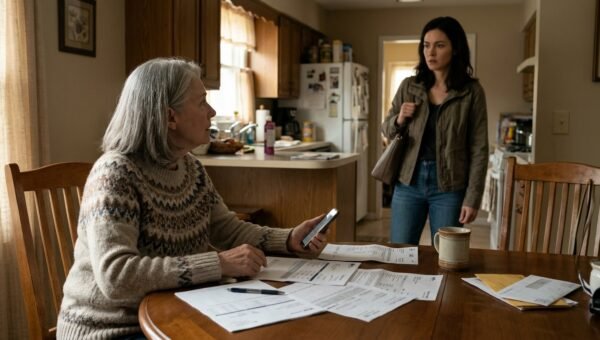
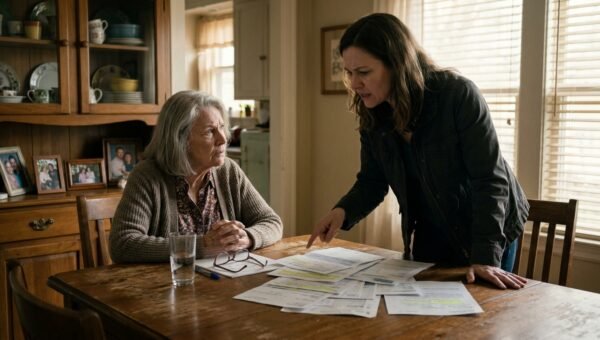
At 9:02 on a Tuesday morning, I sat at our kitchen table and authorized a wire transfer for $150,000.
Julian had spent three months begging me for that money. Every night, he would pace our hardwood floors, rubbing his temples, talking about supplier contracts, payroll shortfalls, and the small commercial printing firm his father had handed down to him eight years ago. If the company went under, he said, we would lose everything.
Our house was tied up as collateral on a personal guarantee he had signed back in 2019, and if his primary creditor foreclosed on the commercial note, the bank would come after our front door next.
“You have the liquid funds in your inheritance account, Clara,” he told me more than once, leaning over my chair with his voice dropped low and strained. “Just clear the lien. Pay off the equipment note. It saves the business, it saves the house, and I can breathe again. I’ll pay you back every dime by next winter.”
He believed I gave in out of panic. He believed I went to the bank, signed the paperwork, and drained my late father’s legacy because I was terrified of losing our marriage and our home.
He did not know I had spent the previous Thursday afternoon in the downtown office of a forensic accountant named Arthur Vance.
Arthur had laid out sixteen months of Julian’s business statements on a conference table.
There were no catastrophic supplier hikes. There was no sudden collapse in commercial orders. What the records showed instead was a steady, calculated siphon. Thousands of dollars a month had been routed toward weekend charges at boutique hotels in Savannah, jewelry receipts from stores Julian had never mentioned to me, and rent for a luxury high-rise apartment on the south side of town leased under the name of a twenty-eight-year-old marketing assistant named Chloe Vance. No relation to Arthur, just an ugly coincidence.
The $150,000 debt was real, but it wasn’t an ordinary business loan. Julian had taken out a high-interest private mortgage and equipment note through a local private lending group called Oakridge Capital, putting his entire company equity and the personal guarantee up as backing. Oakridge had reached the end of their patience. They were preparing to take full legal ownership of the company assets and execute on the default clauses.
So at 9:02, I sent the money. But Julian had fundamentally misunderstood what the documents said, and whose name had been typed onto the release forms.
The following morning at eight, Julian didn’t kiss my cheek on his way to the kitchen. He walked into the dining room dressed in his sharpest charcoal suit, set a manila folder on the table between my coffee cup and the toast, and looked down at me without blinking.
“What is this?” I asked.
“Divorce petition,” Julian said. His voice was steady and flat, stripped of all the desperate pleading from the week before. “I filed the paperwork electronically yesterday afternoon. You have thirty days to respond, but there’s nothing to fight over. The house is titled under my family’s old trust structure, the business is mine, and you’re leaving.”
I looked at the cover sheet. The blue ink was crisp.
“Julian,” I said quietly. “I wired the $150,000 yesterday.”
He gave a dry, dismissive chuckle, tucking his hands into his pockets. “And I appreciate you finally pulling your weight, Clara.
But let’s be honest. You’ve been dead weight for five years. You’re fifty-four, you have no career, and you bring nothing to the table anymore. You kept me tethered to a life I outgrew ten years ago. Now the debt is settled, the business is clear, and I’m moving on.”
Before I could answer, the front door clicked open.
In walked his mother, Evelyn, carrying two large plastic storage bins from Target, followed by his father, Robert. And right behind them, carrying a small designer weekender bag, was Chloe.
Chloe was wearing a beige trench coat and sunglasses, which she pushed up onto her blonde hair as she looked around my foyer.
“Julian said you’d be packed by noon,” Evelyn said, not even looking me in the eye as she marched past the kitchen island and began pulling ceramic bowls out of my lower cabinets. “Don’t make a scene, Clara. We brought boxes for your clothes. We want this done cleanly before the neighbors start peeking out their windows.”
“You brought your parents to kick me out of my own home?” I asked.
“It’s not your home,” Julian said smoothly. “The land was my grandfather’s. You were just living here. Chloe’s moving her things in this afternoon. Be out by three.”
Chloe didn’t say a word to me. She simply smiled a small, tight smile, walked down the hall toward the master bedroom, and closed the door.
Ten minutes later, the bedroom door opened again. Chloe stepped out into the living room. She had taken off her trench coat and was wearing my emerald-green silk robe, the one my sister had bought me for my fiftieth birthday. She ran her hand along the smooth collar, leaning against the archway with an apple she had taken from my fruit basket.
Evelyn dropped a stack of my cookbooks into a plastic bin. “Julian, check the master closet. Make sure she doesn’t take the silver.”
I stood by the counter, holding my car keys in my hand. I didn’t cry. I didn’t raise my voice. I looked at Chloe in my robe, then at Evelyn packing my dishes, and finally at Julian, who stood by the entryway checking his watch like I was an Uber driver who had arrived late.
I took one step toward the front door, paused, and looked directly at Chloe.
“Take that off,” I said, “and tell Julian to check his bank balance.”
PART 2
Julian sneered, pulling his phone from his suit pocket. “What are you talking about? The wire cleared yesterday morning. Oakridge sent the confirmation.”
“Check it anyway,” I said.
Beside the dining table, Evelyn paused with a ceramic serving platter in her hands. “Don’t play games with him, Clara. You lost. Just take your car and go.”
Julian tapped his screen, his expression smug and irritated. But as the banking application loaded, his thumb stopped moving.
His phone didn’t show a zero balance on the debt ledger. And it certainly didn’t show the working capital reserve he had planned to draw against once the lien was supposedly lifted.
His business checking account showed an active freeze notice, accompanied by a negative ledger balance of $4,812. Immediately beneath it was an urgent notification from Oakridge Capital’s legal division, logged at 8:15 that morning.
“What is this?” Julian muttered, his voice losing its sharp edge. He tapped the screen repeatedly, as if refreshing the portal would rearrange the numbers. “Where did the wire go? The funds were supposed to satisfy the loan.”
Chloe walked over, the silk hem of my robe dragging lightly against the floorboards. She looked over his shoulder at the screen, her brow furrowing. “Julian? What does account restricted mean?”
“Shut up for a second,” he snapped, pushing past her toward the kitchen counter. He hit speed dial on his phone and put it on speaker.
The line rang twice before a dry, professional voice answered. “Oakridge Capital, Asset Recovery and Portfolio Management. This is Warren.”
“Warren, it’s Julian Mercer,” Julian said, his voice rising in pitch. “I’m looking at my commercial portal right now. My account is locked, and there’s a negative balance. My wife wired the $150,000 yesterday morning to retire the equipment lien and the default note. Why isn’t the release showing?”
There was a brief shuffle of papers over the speaker.
“Mr. Mercer,” Warren said calmly. “The $150,000 wire was received yesterday at 9:02 AM. However, it was not sent by you, nor was it sent to retire the debt on your behalf.”
Julian froze. “What are you talking about? She paid the balance.”
“No,” Warren replied. “The funds came directly from an escrow account established by Clara Mercer’s legal counsel. Mrs. Mercer did not pay off your debt, Mr. Mercer. Under the default restructuring provisions outlined in Section 14 of your original lending agreement, she purchased the note.”
The room went completely silent.
Evelyn set the platter down on the counter with a sharp clatter. “Purchased what? What is he saying?”
Julian stared at the phone. “She… she what?”
“Oakridge held a primary secured lien over all commercial assets, equipment, receivables, and the underlying equity of Mercer Commercial Print,” Warren explained with the cold detachment of a man reading a utility bill. “When your payment defaulted forty-five days ago, the contract permitted Oakridge to assign the debt instruments to any third-party buyer willing to settle the outstanding principal in cash. Your wife paid the full $150,000 purchase price. As of 5:00 PM yesterday, Oakridge executed a total assignment of the note and all attached security agreements to an LLC solely owned by Clara Mercer.”
Warren paused, then delivered the final blow.
“As the sole secured creditor, Mrs. Mercer’s counsel filed an emergency UCC lien seizure and an immediate freeze on all associated business operating accounts early this morning, citing multiple unauthorized diversions of company revenue over the past twelve months. You no longer control the operating capital, Mr. Mercer. And as of ten minutes ago, the default notice on the underlying equipment was served at your facility.”
Julian’s mouth opened, but no sound came out. The phone slipped slightly in his fingers.
“Wait,” Chloe said, her voice turning sharp and panicked. “What about the payroll? Julian, you said the company was clear. You said we were taking over the downtown accounts!”
“Get off me,” Julian snarled, shoving her hand away from his arm. He glared at me, his eyes wide and bloodshot. “You bought my company’s debt? With your father’s money? That money was marital property!”
“It was an inheritance kept in a separate account in my name for twelve years,” I said evenly. “Not a penny of it was commingled. My attorney verified that before I signed the purchase agreement.”
Evelyn stepped forward, her face flushed with anger. “You spiteful, calculating woman! You planned this! You knew he was going to serve you!”
“I didn’t know he was going to serve me yesterday,” I replied, looking straight at Julian. “I thought he would at least wait until the end of the week, after he had Chloe unpack her bags. But I knew three weeks ago that he was stealing from his own company to pay for an apartment on Market Street. I knew he was bankrupting the business his father built to play the big shot for a girl young enough to be his daughter.”
Robert, who had been standing silently by the front door holding an empty moving carton, slowly lowered the box to the floor. He looked at Julian, then at Chloe, who was suddenly clutching the lapels of my robe tightly against her chest, looking terrified.
“Is that true, Julian?” Robert asked. His voice was cracked and hollow. “The Market Street apartment?”
Julian didn’t answer his father. He was staring at me, his breathing shallow and fast. “You can’t do this, Clara. The house… the house is in the family trust. You can’t touch the house.”
“Check the rest of your mail, Julian,” I said. “The courier delivered the packet to your office an hour ago.”
PART 3
Julian grabbed his car keys off the island, practically shoving Chloe aside as he bolted down the hallway toward the garage.
He didn’t make it to the door.
His phone buzzed violently in his palm. It wasn’t the courier; it was Marcus, his head press operator and shop manager who had worked for Julian’s father for nearly twenty years.
Julian answered on speaker, his hand shaking. “Marcus? What’s going on at the shop?”
“Julian, there are two men in suits here with a locksmith and a private security guard,” Marcus said, his voice echoing loudly in the quiet kitchen. “They showed up at eight sharp. They have a certified copy of a commercial default warrant and a court order appointing an independent receiver over the shop floor. They’re changing the deadbolts on the bay doors right now.”
“Tell them to leave!” Julian shouted, his voice cracking. “Call the police! That’s my building!”
“Julian, I did call the sheriff’s office,” Marcus said bluntly. “The deputy looked at their papers and told me to pack my personal tools and step outside. The receiver handed me a termination notice for you as managing director. They said the company’s operating assets have been seized by the primary noteholder to satisfy an outstanding judgment.”
Marcus hesitated for a second, then added, “Your dad’s name was on the original founding charter, Julian. How could you let this happen to the shop?”
The line went dead.
Chloe let out a choked sound and backed up until her shoulders hit the wall. “Julian, you said you owned the building. You said we were set.”
“Shut up!” Julian screamed at her. He turned on me, his chest heaving, his face contorted with rage. “You ruined me! You ruined my life in twenty-four hours!”
“You ruined yourself over sixteen months,” I told him, keeping my voice entirely level. “You thought you were smarter than everyone else. You thought you could run the business into the ground, let Oakridge take the heat, force me to bail you out with my father’s savings, and then throw me away like an old coat so you could play house with your assistant.”
I reached into my purse, pulled out a folded copy of the county land registry document, and placed it on the counter right next to Evelyn’s Target box.
“And as for the house,” I said, looking at Evelyn, “you might want to remind your son what he signed in 2019.”
Evelyn stared at the paper, then looked at Julian. “Julian? What did you sign?”
Julian didn’t look at her. He stared at the floorboards, his knuckles white against the granite counter.
“When Julian took out the mezzanine line to expand the digital presses five years ago,” I said, “the lender required a secondary personal guarantee secured by real property. The family trust refused to sign off. So Julian used his power of attorney over the trust’s residential parcel to execute a secondary deed of trust against this property. He bet this house on his own business.”
Robert walked over, picked up the paper with trembling hands, and put on his reading glasses. He read the legal description, the parcel number, and the signature line at the bottom.
“Julian,” Robert whispered, looking up with tears in his tired eyes. “You pledged your grandparents’ land? Without telling us?”
“I was going to pay it back, Dad!” Julian cried, his voice breaking into a desperate whine. “The digital contracts were supposed to double our revenue! It was an investment!”
“You bought dinners and hotel rooms,” I said. “And when the debt came due, you begged me to clear it. But I didn’t pay it off. I bought the mortgage note, Julian. I own the debt on the business, and I hold the secondary deed on this house.”
I walked over to Chloe. She shrank back against the wall, her eyes darting between Julian and the door.
“Take off my robe,” I told her.
Chloe didn’t argue. With trembling hands, she untied the emerald silk sash, slid the robe off her shoulders, and handed it to me. Underneath, she was wearing a gray gym shirt and leggings. She looked small, frightened, and entirely out of place.
She dropped the robe into my hands, grabbed her designer weekender bag from the entryway, and practically ran out the front door without looking back at Julian once. We heard her car engine start in the driveway, followed by the crunch of gravel as she sped away.
Julian didn’t even watch her leave. He was staring at his father, his shoulders slumped, completely hollowed out.
“Clara,” Evelyn stammered, her voice suddenly high and fragile, completely stripped of the cold arrogance she had walked in with twenty minutes earlier. “Clara, please. We’re family. We’ve known you for thirty years. You can’t put my son on the street. You can’t take the family business.”
“I am not your family,” I said. “You walked into this house with plastic bins to throw my life into the street thirty minutes after your son served me papers. You didn’t care about thirty years when you thought I had nothing left.”
I picked up my purse and the emerald robe, folding the silk carefully over my forearm.
“My attorney will be in touch with Julian’s counsel by noon,” I said. “The receiver will manage the print shop until the business can be sold to satisfy the outstanding note. Any surplus after the debts are cleared will be split according to the law. As for this house, Julian has until the end of the month to buy out my lien, or it goes to auction.”
I looked at Julian one last time. “You wanted a clean break. Now you have one.”
ENDING
I didn’t stay in that house to watch them finish packing Julian’s things.
I drove down to the marina, parked my car near the water, and sat in the front seat for an hour with the engine off, listening to the gulls and the wind off the sound. My hands shook a little against the steering wheel, but the panic I had lived with for three months was entirely gone.
The following weeks were quiet, marked only by the steady, unglamorous rhythm of legal filings and bank reconciliations.
Julian didn’t have the funds to buy out the lien on the house. His parents tried to secure a second mortgage on their own home to save the family property, but with Julian’s credit entirely ruined and the commercial default on his record, no reputable bank would touch the risk. By late autumn, the house was placed on the market by mutual agreement. It sold four months later. After the primary mortgage and my secured note were paid in full, I walked away with my inheritance completely restored, plus the interest accrued under the default terms.
Julian moved into a small one-bedroom rental on the north edge of town. The print shop was bought out by an independent regional packaging firm from Charlotte. Marcus kept his job as shop manager, along with four of the press operators who had worked there for years. Julian was not offered a position.
Chloe never returned. I heard through an acquaintance that she broke off contact with Julian entirely within forty-eight hours of finding out that the high-rise lease was being terminated by the receiver.
I bought a small brick cottage three miles from the water. It has two bedrooms, a shaded back patio where I drink my coffee every morning, and an old magnolia tree that drops white blossoms across the lawn in early summer. There are no corporate ledgers on my kitchen table, no late-night pacing across the floorboards, and no debts hanging over my head.
Last week, while unpacking a box of linens I had kept in storage, I found the emerald silk robe at the bottom of the cedar chest.
For a second, I thought about throwing it away. The fabric still carried the faint, bitter memory of that morning in the foyer, of people who thought they could strip me of my dignity while standing in my own home.
Instead, I took it out, shook the wrinkles from the green silk, and hung it on the hook behind my bathroom door.
I paid for it, after all. And it belongs to me.