PART 1
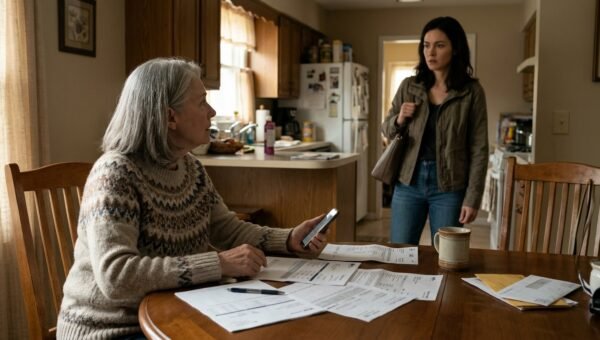
The bakery box on the buffet table had cost ninety dollars, decorated with pale yellow frosting and tiny sugar booties because my husband David and I had decided to wait until delivery to know the gender. For four years, through three rounds of failed fertility treatments and two early miscarriages that nearly broke my spirit, I had prayed for this day. I was thirty-three years old, seven months along, and carrying our miracle.
My mother, Brenda, had offered to host the shower at her home in suburban Richmond. She had hung yellow and white paper lanterns across the screened back porch, set out bowls of chicken salad, and arranged twenty white folding chairs in a circle. Twenty-four of our closest family members and lifelong church friends were there, eating off pastel paper plates and admiring the hand-knitted blankets piled on the gift table.
I had just cut into the lemon sponge cake and placed the first three slices onto dessert plates when my younger sister, Chloe, stood up from the far end of the room.
Chloe was twenty-seven, unmarried, and lived in a rented condo downtown that my mother quietly subsidized whenever Chloe changed jobs. Chloe cleared her throat, tapping the side of her crystal punch cup with a silver fork.
“Excuse me, everyone,” Chloe announced, her eyes bright with excitement. “Before Claire opens her presents, there is something I have to share.
I went to the doctor yesterday morning. I am twelve weeks pregnant.”
The room seemed to pause for half a second. Then, a collective gasp swept through the porch.
Within ten seconds, every single guest had abandoned their seats. Aunt Sarah dropped her napkin, my cousin Rachel gasped and covered her mouth, and four of my mother’s church friends rushed past me to wrap Chloe in hugs. My mother practically shoved past my elbow, nearly knocking the cake knife from my hand, and threw her arms around Chloe, weeping loudly about how blessed our family was.
I was left standing completely alone beside the half-sliced lemon cake, holding an empty silver cake server.
For the next forty minutes, my baby shower ceased to exist. Chloe pulled out a small ultrasound strip from her designer clutch, passing it around the circle. People asked her about morning sickness, what names she liked, and when her due date was.
Nobody asked me to finish serving the cake. Nobody returned to the unopened gifts sitting on the wicker table with my name on the cards.
I swallowed the lump in my throat, keeping my jaw steady and my lips curved in a polite, tight smile. I told myself that pregnancy was a blessing, that a sister’s baby was family, and that showing resentment would only make me look bitter.
Then came the comment that took the air right out of my lungs.
Chloe turned toward the table, looked directly at my rounded stomach, and laughed into her punch glass. “Well, Claire, it looks like our kids will just have to compete from birth for everything. Let us see whose child does it better.”
Several people chuckled awkwardly. But my mother laughed out loud, patting Chloe’s arm with genuine amusement. “Oh, you two always were rivals,” Mom said, wiping a tear of laughter from her eye. “May the best girl win.”
I stood there in my yellow maternity dress, feeling entirely invisible. David, who had arrived outside to help pack the car, stepped onto the porch and saw my face. He quietly helped me gather the unopened boxes, loaded them into our trunk, and drove me home in total silence. I spent that evening sitting on the floor of our nursery, crying until my ribs ached, wondering why my mother always treated our lives like a contest I was destined to lose.
Three months passed. I entered my third trimester, swollen and exhausted, keeping my distance from both of them. Chloe sent occasional text messages showing nursery furniture she bought with Mom’s credit card, but I kept my replies to simple polite emojis.
Then came a freezing Tuesday morning in late October.
At 1:12 a.m., my cell phone vibrated violently against the bedside nightstand.
I fumbled for the glass screen in the dark, my heart racing with the instinctive fear that wakes you when a phone rings past midnight. The screen read: *Chloe*.
I answered with a raspy voice. “Chloe? What is it? Are you okay?”
The voice on the other end was not frantic, crying, or panicked. It was unnervingly flat, quiet, and strangely calm.
“Claire,” she whispered. “I need you to come to Henrico Doctors’ Hospital right now. Don’t call David. Don’t call anyone else. Just come.”
My stomach tightened into a knot. “Are you in labor? What happened?”
“It isn’t labor,” she said, her voice dropping lower. “I am in consultation room four, down the hall from the emergency admitting desk. Just get here.”
She hung up before I could ask another question.
I threw a heavy wool sweater over my flannel pajamas, slipped my swollen feet into loafers, and scribbled a quick note for David on the kitchen counter. The drive through the empty city streets took twenty minutes. My mind spun through every terrible medical scenario, fearing my sister was losing her baby.
I pushed through the emergency department doors, checked in at the security desk, and followed the directional signs to the private consultation rooms.
Room four was dimly lit by a single overhead fluorescent fixture. Chloe was sitting on an examination stool, wearing a gray knit dress, staring at the linoleum floor. Sitting on the side counter right beside her was our mother’s structured burgundy leather handbag, with Mom’s car keys resting on top.
Chloe looked up as the door clicked shut. Her face was pale, devoid of all her usual theatrical energy.
Without saying hello, she picked up a multi-page printed laboratory packet from the counter and pushed it across the small laminate table toward me.
“I discovered why Mom celebrated your shower so much,” Chloe said quietly. “And you need to read page two before she comes back from the parking deck.”
PART 2
I picked up the packet with trembling fingers. The hospital’s logo was stamped across the top left corner: *Department of Clinical Genetics and Maternal-Fetal Medicine*.
The report was dated that afternoon at 3:45 p.m. My eyes moved to the patient name. It was not Chloe’s name on the test.
It was mine.
The paperwork listed Claire Vance, thirty-three years old, along with my patient identification number from my private obstetrician’s clinic in the West End. Attached behind it was a complete diagnostic panel from the non-invasive prenatal testing and amniotic fluid analysis I had undergone during my sixteenth week of pregnancy, after two previous miscarriages made my pregnancy strictly high-risk.
“Why do you have my medical records from August?” I asked, my voice barely a whisper in the cold room. “Where did you get this?”
Chloe gestured toward our mother’s burgundy handbag on the counter.
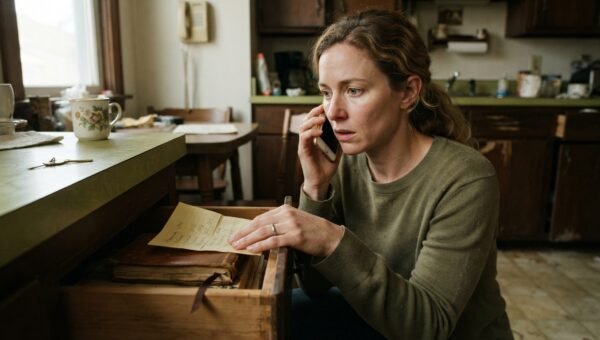
“Mom left her purse in my car when she drove me to my twenty-four-week ultrasound this afternoon,” Chloe said. “Her phone kept vibrating inside the zipper pocket. I opened it to see who was calling, and I saw three text messages from a private genetic counselor at the university medical center. The texts were asking for you, Claire. The counselor said she had been trying to reach you on your home landline for six weeks regarding the follow-up karyotype report on your child.”
I stared at her, uncomprehending. “My obstetrician told me all my genetic screens came back completely normal. She said my baby was healthy.”
“Your doctor did think that,” Chloe replied, her voice shaking with quiet horror. “Because Mom intercepted the clinical results.”
My legs gave out. I sank into the vinyl armchair against the wall, clutching the paper to my chest.
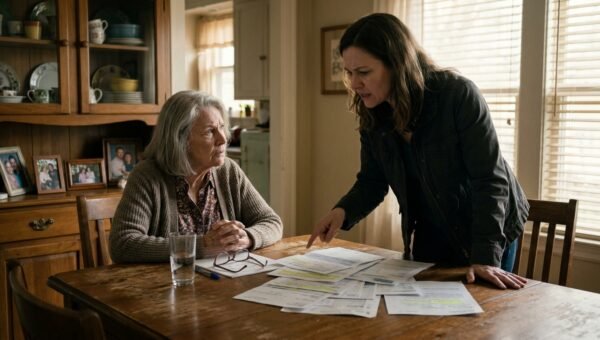
Chloe leaned forward, resting her elbows on her knees. “Mom has medical power of attorney listed on your primary healthcare portal from five years ago, back when you had your emergency appendectomy and David was stationed out of state. You never revoked it. When the genetic lab flagged an anomaly in your sixteen-week blood panel, they sent a notification through the patient portal. Mom logged into your account from her iPad, rerouted all mail correspondence to her PO box, and contacted the geneticist directly, claiming she was your authorized healthcare representative.”
I flipped to page two of the clinical summary. The dense medical terminology swam before my eyes, but the bold diagnostic conclusion was impossible to misunderstand:
*Confirmed Trisomy 21 (Down Syndrome) with associated ventricular septal defect detected in fetal cells.*
*Recommendation: Immediate pediatric cardiology consult and high-risk neonatal delivery planning.*
Beneath the diagnosis was an official notation of a phone conversation dated July 18th, two weeks before my baby shower:
*Spoke with patient’s mother/proxy, Brenda Miller. Proxy requested full hold on digital communication to primary phone numbers, stating patient was under extreme psychiatric distress and family would deliver diagnosis privately.*
The room seemed to spin. My baby, the child I had prayed for through years of tears, had a heart defect and Down syndrome. And my own mother had known for three months, keeping every phone call, letter, and medical warning buried in her desk while I shopped for crib sheets and nursery rugs.
“Why?” I choked out, tears finally breaking past my eyes and burning down my cheeks. “Why would she keep this from me? My baby could need emergency surgery at birth! Why would she do this?”
“Because of me,” Chloe said. A single tear tracked down her cheek, leaving a clean line through her makeup. “Or rather, because of the sick game she has been playing with both of us our entire lives.”
Chloe reached into her purse, pulled out her phone, and opened an audio memo file.
“Two hours ago, after I confronted Mom in the car about finding these papers in her bag, she broke down in my living room,” Chloe said. “She didn’t know I had the voice recorder running on my coffee table. Listen to her, Claire. Listen to what she said.”
Chloe pressed play.
The familiar, sharp voice of our mother filled the small consultation room:
*You do not understand what I protected us from, Chloe! Claire has always been the golden child, the perfect daughter with the corporate husband and the suburban home, looking down on you while you struggled. When I saw that lab result, I realized God had finally leveled the playing field. If Claire knew about the baby’s heart, she would have spent the rest of her pregnancy in specialized clinics, getting all the sympathy, draining her savings, making everyone pity her. I wanted you to have your moment. I wanted you to walk into that shower, announce your healthy baby, and show everyone that my youngest daughter was the one who succeeded. I was going to let her find out at the hospital when she delivered. The doctors would handle the heart surgery anyway. What difference did a few months make?*
PART 3
The recording ended with the sharp sound of Chloe’s apartment door slamming shut on the audio track.
I sat in that fluorescent-lit consultation room, holding the paper that proved my unborn daughter had a congenital heart condition, listening to the recorded voice of the woman who gave birth to me explain why she hid life-saving medical data to settle a petty, manufactured sibling rivalry.
“When you were standing beside that cake at the shower,” Chloe said softly, looking at me with eyes full of shame, “Mom whispered in my ear right before I stood up. She told me, ‘Do it now, Chloe. Take the spotlight. She has had everything handed to her, and she is about to get knocked off her high horse.’ I was so insecure, Claire. I had spent twenty-seven years feeling like the family screw-up, and Mom handed me a weapon to hurt you. I took it because I was weak and jealous.”
Chloe stood up from the stool, walked over to my chair, and dropped to her knees on the linoleum floor. She took my ice-cold hands in hers.
“I don’t expect you to forgive me for ruining your shower,” Chloe sobbed, burying her face against my sweater. “I was horrible to you. But when I read that your baby had a heart defect, and realized Mom withheld treatment to make you look bad, I felt sick to my stomach. I called the on-call pediatric cardiologist at this hospital immediately. He agreed to meet us right here tonight to review your file. I brought Mom’s purse with me so she couldn’t shred the original correspondence.”
At that exact moment, the heavy door of consultation room four pushed open.
My mother walked in, carrying a large cardboard cup of takeout coffee. She was wearing her tailored camel hair coat, her silver hair perfectly styled. When she saw me sitting in the armchair with the clinical papers on my lap, her steps hitched. Her eyes darted from me to Chloe on the floor, and then to her open handbag on the counter.
The color drained from her cheeks, leaving her face an ash-gray mask.
“Claire?” she whispered, the coffee cup trembling in her grip. “What are you doing here? Chloe, what did you do?”
I didn’t scream. I didn’t throw the papers. A cold, absolute quiet settled deep in my bones, the kind of stillness that arrives when a lifetime of illusions is stripped away in an instant.
I stood up from the armchair, resting my hand over my belly.
“My daughter has an atrioventricular septal defect, Mother,” I said, my voice dead, even, and clear. “And you have known since July eighteenth.”
Brenda swallowed hard, backing up until her shoulders touched the doorframe. “Claire, listen to me. You were so delicate after the miscarriages. The doctor said stress could trigger preterm labor. I was only trying to protect your emotional state until you were closer to full term—”
“Stop lying,” I said, cutting through her excuses like a scalpel. “Chloe recorded you in her apartment two hours ago. I heard every word you said about leveling the playing field. I heard you say you wanted Chloe to take the spotlight because you resented me.”
Brenda’s mouth fell open. She whipped her head toward Chloe, her eyes blazing with sudden, venomous fury. “You recorded me? In your own home? After everything I have sacrificed for you? I gave you eight thousand dollars for your rent last month, Chloe! I bought your nursery furniture!”
“And you used me to hurt my sister,” Chloe yelled back, standing up from the floor, her voice echoing off the hospital tiles. “You turned us against each other since we were in elementary school! You told Claire I was lazy, and you told me Claire thought she was better than me! You weaponized my pregnancy to humiliate her, and you risked a baby’s life to do it! You are sick, Mom. You are completely sick.”
A tall man in blue surgical scrubs and a white laboratory coat knocked gently on the open door and stepped inside. It was Dr. Marcus Reed, the chief of pediatric cardiology at the hospital.
“Excuse me,” Dr. Reed said, his eyes taking in the scene with quiet professional authority. “I am looking for Claire Vance. Chloe Miller called my answering service regarding a prenatal cardiology consult.”
“I am Claire Vance,” I said, stepping forward.
“Mrs. Vance, we need to take you upstairs to the maternal-fetal assessment unit right now,” Dr. Reed said gently. “Your daughter’s ventricular septum requires an immediate detailed echocardiogram so we can assemble the surgical team for your delivery. Every day of planning matters with this condition.”
I looked at Dr. Reed, nodded once, and walked past my mother without a single glance. Chloe grabbed her coat and walked beside me, her arm linked tightly in mine.
Behind us in the hallway, my mother stood alone, clutching her cold coffee cup, surrounded by the silence of an empty corridor.
ENDING
We spent three hours in the specialized ultrasound suite on the fourth floor. David arrived at 2:30 a.m., having rushed across the city the moment I sent him a brief text, his face white with worry. He held my hand on the examination table while Dr. Reed mapped out our daughter’s tiny heart on the high-resolution monitor.
The diagnosis was confirmed, but Dr. Reed gave us something my mother had tried to steal: hope and preparation.
Because we had five weeks before my delivery date, Dr. Reed scheduled our delivery at the university medical center where a specialized pediatric cardiothoracic surgical team was on standby. They arranged for prostaglandin therapy immediately after birth to keep the blood vessels open, scheduled her corrective patch surgery for three months of age, and connected us with the regional Down syndrome support network.
“If this had caught us off guard during an emergency delivery in an ordinary community hospital,” Dr. Reed told David and me honestly, “your daughter would have gone into severe respiratory distress within forty-eight hours. Having this time to prepare has saved her life.”
David and I left the hospital at sunrise. The first thing David did when business offices opened at eight o’clock was contact our family attorney.
We revoked every healthcare proxy, digital access portal, and emergency contact listing that carried Brenda Miller’s name. We filed a formal complaint with the state medical board regarding the unauthorized communication hold, and our attorney served my mother with a formal legal cease-and-desist letter, forbidding her from contacting our home, my medical providers, or our delivery facility.
When my mother realized she was completely cut off, she tried her usual routine. She called Aunt Sarah, our pastor, and my cousins, crying that her daughters had turned on her over an innocent misunderstanding.
She did not know that Chloe had already sent the audio recording to our entire family group chat.
When my aunts and cousins heard Brenda’s own voice explaining how she concealed a newborn’s heart condition to knock her eldest daughter off a high horse, the fallout was absolute. My aunts stopped speaking to her. The church ladies removed her from the hospitality committee. The social standing she had spent thirty years cultivating in Richmond crumbled into humiliating dust.
Six weeks later, on December 4th, I gave birth to a beautiful, dark-haired baby girl named Hannah.
She arrived with the soft, almond-shaped eyes of Trisomy 21 and the sweetest cry I had ever heard in my life. The neonatal team stepped in immediately, stabilizing her circulation, and placed her on my chest within the hour. David and I looked down at our daughter, weeping tears of pure, unadulterated love. She was not a competition. She was not a tragedy. She was our child, and she was fought for.
Chloe was sitting in the waiting room the entire time. When David brought her into the recovery room, Chloe broke down, gently holding Hannah’s tiny fingers.
Four months later, Chloe gave birth to a healthy baby boy named Liam.
My sister and I spent that following year healing the fractures our mother had spent decades creating. We live four miles apart now. We take Hannah and Liam to the park together every Tuesday morning, watching them crawl through the clover. Chloe took evening classes in medical billing, got a steady job at an outpatient clinic, and completely severed her financial dependence on our mother.
Hannah had her corrective heart surgery at four months old. The procedure was an absolute success. Today, she is a vibrant, laughing two-year-old who runs across our living room rug with steady little feet, chasing her cousin Liam and babbling with pure joy.
My mother has never met Hannah, and she has never held Liam. She lives alone in her quiet house in Richmond, entirely excluded from the lives of the grandchildren she tried to use as pawns.
Standing beside that ruined baby shower cake two years ago, I thought I had lost everything. But the truth stripped away the poison that had infected our family for generations. My sister and I did not raise rivals. We raised cousins who love each other, and we learned that real family is built on protection, honesty, and unconditional love.