PART 1
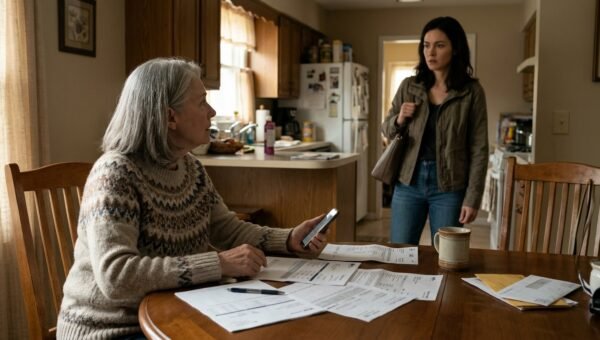
The landline at my design studio rang at twenty minutes past four on a damp Thursday afternoon in late October. It was not a number I recognized. The caller ID read St. Jude Guild Committee, which was the auxiliary charity board where my mother, Eleanor, had served as recording secretary for twenty-five years.
I picked up the handset, expecting a routine question about a print invoice or an event program layout.
“Mary Miller, sweetheart,” a honey-coated voice purred into my ear. “It has been entirely too long.
You need to come home for Thanksgiving this year. Your father wants to discuss investments with you.”
I sat back in my desk chair, looking at the rain beating against the high glass windows of my converted warehouse office in Portland. It took three seconds for my chest to register the voice. I had blocked my mother’s personal cell phone, my father’s number, and my older brother Brandon’s phone thirty months ago. She was calling from the charity office line because she knew it was the only number with a local area code that would make it through my screen.
“Hello, Eleanor,” I said. My voice was level, almost bored.
“Don’t call me Eleanor, darling,” she said, letting out a tinkling little laugh that made my jaw tighten. “A daughter should never call her mother by her given name. We have missed you terribly. The house feels completely empty without you.
Brandon and his wife, Sarah, are flying in from Dallas, and your father has been reviewing our portfolio. He genuinely wants your perspective on some major commercial ventures.”
I almost laughed out loud right into the mouthpiece.
Thirty months earlier, when I packed two suitcases into the back of my ten-year-old hatchback and drove four hundred miles north, not a single person in that house noticed I was gone until the yard service invoice came due. For thirty-two years, I was the quiet shadow in the Miller family. Brandon was the golden boy, sent to private prep schools, funded through business college, and gifted a forty-thousand-dollar down payment on his first home. My younger sister, Claire, was the delicate artist whose culinary school tuition and European trips were paid without question.
I was the daughter who stayed back. I kept the house books. I ran errands for my father’s struggling regional hardware supply firm.
When I spent five years developing an automated inventory tracking software on my own laptop at night, my father told me I was wasting time that could be spent answering customer service calls for his warehouse.
When I finally launched the platform independently, they refused to invest even five hundred dollars for initial server space. Brandon called it a hobby project. My father said women in logistics were an embarrassment.
Then, six weeks ago, an international supply chain conglomerate acquired my software platform in a full asset buyout.
After taxes, legal retainers, and the settlement of my early angel debt, my personal wire transfer cleared at sixteen million, two hundred and forty thousand dollars.
I did not buy a mansion. I did not buy sports cars. I bought a quiet studio loft near the river, set up a secure private trust with an established legal firm, and took four days off to walk along the cliffs in Big Sur.
A former college roommate who worked at an architectural firm in Carmel ran into me at a cliffside cafe, snapped a picture of us overlooking the Pacific, and posted it online with a caption congratulating me on the acquisition.
Within forty-eight hours, the news had circulated through the business community in my hometown.
“I am not coming for Thanksgiving,” I told my mother directly.
The sweetness vanished from her voice like grease wiped off a hot pan. Her tone went stiff and cold.
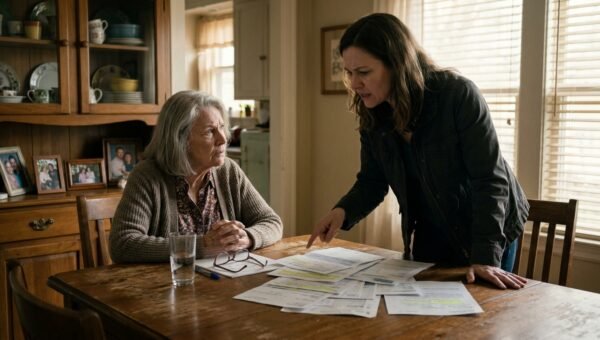
“Family comes first, Mary. You have an obligation to this household. People in town are talking. Everyone is asking why our daughter moved away and hasn’t attended a single family dinner in two years. Your father is seventy-one years old. You owe him the respect of a face-to-face conversation.”
“I don’t owe him anything,” I said.
“If you don’t come,” she warned, her words tight with barely concealed anger, “we will drive up there ourselves. We know where your office is located.”
She hung up before I could answer.
I set the black plastic handset back in its cradle. I knew my family. Eleanor did not make empty threats when money was involved. My father’s supply business had been sliding into red ink for five years because he refused to upgrade his systems, and Brandon’s real estate speculation in Texas was drowning in rising interest rates.
Their plan was obvious. They wanted to corner me in my father’s mahogany-paneled living room, surround me with family pressure, bring out old childhood photo albums, and guilt me into writing a check to rescue their failing company.
I leaned over my desk, picked up my pen, and called my estate attorney, David Vance.
If they wanted a family meeting about money, I was going to give them one. But it was not going to happen on their terms.
PART 2
The drive south from Portland took six hours through the damp valley fog. I left on the Tuesday before Thanksgiving, arriving in my hometown around four in the afternoon.
I did not drive to my parents’ four-bedroom brick colonial on Oakridge Drive. Instead, I checked into a modest suite at the downtown business hotel two blocks from the county courthouse, hung my dark woolen coat in the closet, and went straight to a private conference room on the fifth floor of the First National Bank building.
David Vance was waiting for me at the mahogany conference table with three thick manila folders and two certified copies of public lien records.
“Good afternoon, Mary,” David said, sliding a fresh cup of black coffee toward me. “We pulled the full commercial filings on Miller Supply and Logistics, as well as the personal property registries in the county.”
“What does it look like?” I asked, sitting down across from him.
David opened the top folder. The figures on the certified copies were highlighted in green and yellow ink.
“It is significantly worse than you anticipated,” David said plainly. “Your father took out a second mortgage on the Oakridge residence eighteen months ago for three hundred and eighty thousand dollars. That money went directly into payroll and supplier lines to keep his commercial credit open. Furthermore, your brother Brandon took a two-hundred-thousand-dollar personal loan against your father’s business inventory to finance a residential flip outside of Fort Worth. The property failed inspection, the building permits were revoked, and the private lender called the note four weeks ago.”
I looked down at the numbers. The total debt burden was just over one point two million dollars.
“They don’t just want an investment,” I said, the paper feeling heavy between my fingers. “They are forty-five days away from involuntary bankruptcy.”
“Thirty days, according to the bank demand letter filed last Friday,” David corrected quietly. “If a major capital infusion is not recorded by the thirty-first of December, the bank will initiate foreclosure on the family house, and the supplier lien will seize the warehouse inventory.”
I closed the folder. For years, my father had walked into family dinners barking orders, acting as though he was a titan of local industry who carried the weight of the world on his shoulders. He had made me feel like an incompetent dependent, a burden who was lucky to have a desk in his back office.
“Are the papers ready for tomorrow?” I asked David.
“Everything is prepared according to your explicit instructions,” David said, tapping the second folder. “The agreements are drafted, the escrow instructions are clear, and the non-disclosure covenants are airtight.”
“Good,” I said, standing up. “I will see you at three o’clock tomorrow afternoon at the house.”
On Thanksgiving Day, the temperature hovered around thirty-eight degrees. I dressed in a simple charcoal crewneck sweater, dark slacks, and low leather boots. No designer labels, no expensive jewelry, no accessories that screamed sixteen million dollars.
I pulled my old car into the curved asphalt driveway on Oakridge Drive at quarter to three. Brandon’s rented black luxury SUV was already parked near the garage, alongside my father’s ten-year-old sedan.
As I walked up the brick front steps, the front door swung open before I could even touch the brass knocker.
My mother stood in the foyer, wearing her best cream-colored knit dress and the pearl necklace my father had bought her twenty years ago. Her arms were wide, her face stretched into a dramatic, emotional smile.
“Mary! Oh, look at you, darling!” she cried out, pulling me into a stiff embrace that smelled heavily of lavender perfume and hairspray. “You’re home. Look, Arthur, our girl is home!”
My father stepped out of the study. He had lost weight around his collar, his silver hair was combed flat, and he wore a maroon cardigan over a pressed dress shirt. He looked older, tired around the eyes, but he still carried that familiar, puffed-up posture he used whenever he wanted to dominate a room.
“Come on in, Mary,” he said, nodding once, treating me like a visiting vendor he was about to negotiate with. “Take your coat off. Brandon and Sarah are in the den with the baby. We have some important family matters to settle before dinner.”
PART 3
The living room had not changed. The heavy floral draperies were drawn shut against the cold afternoon gray. The gas fireplace was hissing behind a brass screen.
Brandon sat on the leather sofa with an iPad in his lap. When I walked in, he stood up, wearing an expensive cashmere sweater, and offered me a brisk, one-armed hug. His wife, Sarah, sat in the armchair, smiling nervously while adjusting the collar of her infant son’s plaid romper.
“Good to see you, sis,” Brandon said, his voice carrying that familiar, condescending tone he had used since we were teenagers. “Heard you made a nice little splash up in Portland. Good for you. It’s about time one of your tech experiments paid off.”
“Thank you, Brandon,” I said, taking a straight-backed wooden chair near the bookshelf. I refused to sit on the low sofa where they could look down at me.
My father sat in his wingback armchair by the hearth. He did not ask how my business was doing. He did not ask about my health, my life, or my apartment. He set a crystal glass of bourbon on the side table, picked up a blue presentation folder from the end table, and leaned forward.
“Mary,” my father began, his voice dropping into his authoritative boardroom tone. “We all know why we are here today. The family has watched your success with great pride. But as you know, wealth brings serious tax liabilities. An inexperienced girl sitting on eight figures is going to get eaten alive by state capital gains, corporate franchise taxes, and aggressive investment brokers.”
I looked at him across the rug. “Is that what you think will happen, Dad?”
“It is a certainty,” my father stated flatly. “That is why Brandon and I have spent the last two weeks structuring a comprehensive family partnership. We are forming Miller Holdings Group. The structure will allow you to shelter your capital through our established business infrastructure. We will allocate four million dollars into modernizing the warehouse logistics line, and another two million into Brandon’s property acquisition fund in Dallas. In exchange, you will receive a twenty percent non-voting equity stake and a guaranteed preferred return of three percent annually.”
I let the silence hang in the room for five full seconds.
Brandon leaned forward, tapping his fingers against his knee. “It is a win-win, Mary. You protect your capital from aggressive taxation, and you help the family enterprise expand. We keep the money in Miller hands. That is how real families build generational security.”
My mother smiled warmly from the entryway, holding a tray of warm stuffed mushrooms. “It would make your father so proud, Mary. Everyone in town would know that the Millers stand united.”
I reached into my canvas shoulder bag, pulled out a pair of reading glasses, and took a sip from the glass of water Sarah had handed me.
“That sounds like an elaborate proposal,” I said calmly. “There is only one issue.”
My father frowned, his eyebrows pulling down into a sharp ridge. “What issue?”
“You don’t have an established business infrastructure,” I said, my voice cutting through the room like a cold knife. “Miller Supply and Logistics is forty-five days away from an involuntary Chapter 7 liquidation. You have a three-hundred-and-eighty-thousand-dollar secondary lien against this house. And Brandon owes two hundred thousand dollars to a hard-money lender in Fort Worth who is filing a judgment against his truck next Wednesday.”
The room went completely, utterly silent.
My mother stopped in her tracks, nearly dropping the silver tray onto the carpet.
Brandon’s face drained of color, turning the gray of wet cement. He dropped the iPad onto the sofa cushion.
“Where did you get that?” Brandon stammered, his eyes darting frantically to our father. “Who told you that?”
“I pulled your public filings at the county recorder’s office three days ago,” I replied. “You aren’t trying to shelter my capital. You are drowning in one point two million dollars of bad commercial debt, and you called me here to be your financial lifeboat.”
My father’s face darkened with blood. He slammed his hand down onto the arm of his chair, the wood creaking under the blow.
“How dare you spy on this family!” he roared, standing to his feet. “I gave you thirty years of food, shelter, and a job in my firm! You learned everything you know about logistics in my warehouse! You owe your entire career to the foundation I built in this town! To sit there and treat your own blood like deadbeats is an outrage!”
At that exact moment, the front doorbell chimed three clear notes through the house.
ENDING
Nobody moved.
My father stood by the fireplace, his chest heaving, his fist clenched at his side. Brandon was staring at the floor, his jaw working silently.
“I’ll get it,” I said quietly.
I walked to the front door, turned the deadbolt, and opened it wide.
David Vance stood on the porch in a dark wool trench coat, holding a slim leather briefcase in one hand. Behind him on the driveway sat his sedan.
“Good afternoon, Mary,” David said.
“Come inside, David,” I replied. “The family was just discussing the future of Miller Supply.”
I led my attorney into the living room. David stepped onto the Persian rug, unbuttoned his coat, and laid three copies of a legal binding agreement on the coffee table between Brandon and my father.
“Who the hell is this?” my father barked, glaring at the stranger.
“This is David Vance, my corporate and estate counsel,” I said. “He represents my trust. And he is the only reason you will not be sleeping in a rented apartment by January.”
David sat down, opened his briefcase, and removed a fountain pen.
“Mr. Miller,” David said smoothly, his tone entirely detached from the family tension. “My client has authorized an emergency buyout proposal. Her trust has already purchased the primary debt paper from First National Bank at eighty-two cents on the dollar, including the secondary residential mortgage on this property. As of nine o’clock this morning, Mary’s trust is your primary secured creditor.”
My father sank back into his chair as if someone had punched him in the stomach. His mouth opened, but no sound came out.
“What does that mean?” my mother whispered from the doorway, her hands trembling against her dress.
“It means,” David explained, “that Mary now owns the mortgages on your house and the commercial liens on the warehouse. She is not investing in your partnership. She is giving you two choices today.”
David tapped the documents on the table.
“Option one: The trust will execute a complete debt forgiveness agreement covering the entire one point two million dollars. The secondary mortgage on this house will be cancelled, leaving your parents with a clear title and no debt. In exchange, Arthur Miller will immediately resign as managing director of Miller Supply and Logistics, surrender all operating equity to the trust, and the firm will be liquidated in an orderly wind-down over the next ninety days to pay off the remaining trade suppliers.”
Brandon jumped up. “What about my loan? What about Dallas?”
“Your debt to the business will be marked satisfied,” David said, looking up at him coldly. “You will walk away with zero debt to your father’s company. But you will receive zero dollars from my client’s trust. You will find your own financing for your future ventures.”
“And if we refuse?” my father croaked, his voice thin, stripped of all its roaring authority.
“Option two,” I said, stepping forward so that my father had to look me in the eye. “You reject the offer. My trust initiates standard foreclosure proceedings on the warehouse and the house on Monday morning at nine o’clock. You can explain to your friends at the country club and the church auxiliary why the sheriff is posting notices on your front lawn.”
My father looked down at the papers on the table. For thirty years, he had treated me like an inconsequential piece of furniture in his life, someone whose only value was obedience. Now, his entire life, his reputation in the town, and the roof over his head depended on the signature of the daughter he had dismissed as a hobbyist.
“Mary,” my mother sobbed, tears finally breaking through her makeup. “Please. We’re your parents. You can’t humiliate your father like this. He built this business from nothing.”
“And he ran it into the ground while treating me like dirt,” I replied without blinking. “You didn’t call me because you missed me, Eleanor. You called me because you saw an article about my money and you thought you could manipulate me one last time.”
Brandon looked at our father, his voice cracking with panic. “Sign it, Dad. Sign the papers. If they file that lien, my credit is completely ruined. I can’t buy food for the baby next month. Sign it.”
My father sat motionless for nearly two full minutes. The grandfather clock in the corner ticked heavily against the silence.
Finally, with his hands shaking so violently that he could barely grip the metal barrel, my father took David’s fountain pen. He signed his name on three separate lines on each of the three copies.
When he set the pen down, he did not look up. He stared at his own shoes, completely defeated.
David gathered the signed documents, inspected the signatures, and slipped them neatly into his briefcase. He stood up, nodded politely to the room, and stepped out into the hallway to wait for me in the car.
I picked up my woolen coat from the chair by the door.
“The debt is cleared, Dad,” I said quietly, looking across the room one last time. “You get to keep your house. You get to keep your pension. You can tell your friends in town that you decided to retire early and close the firm on your own terms. Nobody will know the truth unless you bring it up.”
“Mary,” my mother whispered, stepping toward me with her hand outstretched. “Aren’t you going to stay for dinner? The turkey is almost done.”
I looked at the table set in the dining room, with the fine china and the silver cutlery they had laid out to impress me.
“No, Eleanor,” I said, buttoning my coat against the cold. “I’m having dinner in Portland.”
I walked out the front door, pulled it shut behind me, and walked down the brick steps into the crisp, clean evening air.
The damp fog had finally rolled out over the valley, leaving the night sky clear and dark. As I backed my car down the driveway, I looked at the brick house in my rearview mirror for the very last time, felt the quiet weight of the past thirty years lift off my shoulders, and drove north toward home.