PART 1
The auto-renewal notice popped up as a debit card alert on my phone on a rainy Tuesday morning: City of Oakridge Municipal Parking. Negative $640.
I looked at my checking account screen twice before my brain caught up with the transaction. I had not held a downtown commuter space in over two years. The permit was attached to the space behind the central public library, a reserved stall I leased back when I commuted to the county water authority.
But I retired in the spring of 2024, and the car associated with that permit, my silver 2017 Honda Civic, had been sold that same August.
I sold it to Marcus Campbell, a young man who lived three doors down the street from me. I still had the yellow carbon receipt of the bill of sale in my desk drawer. I saw the car nearly every afternoon parked in Marcus’s driveway across the cul-de-sac.
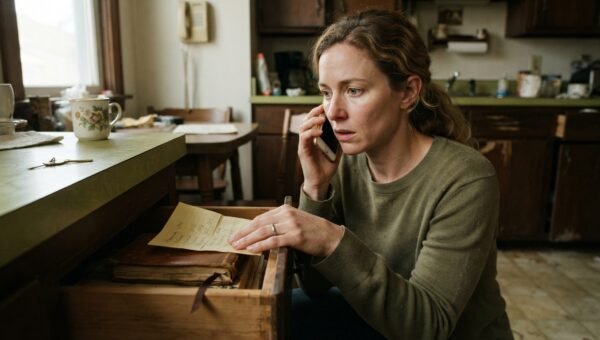
I called the city parking bureau before ten. The clerk who answered, a woman named Beverly, clicked her keyboard while I gave her my old account number.
“That annual renewal processed automatically at midnight, Mrs. Sullivan,” Beverly said. “The recurring billing was active on your account profile.”
“I sold that vehicle fourteen months ago,” I told her. “I turned in my dashboard placard to the drop box, and I canceled the registration when the title transferred.”
Beverly went quiet for a moment. More typing came through the phone line.
“Well, ma’am, according to our municipal database, the permit plate on file is marked active. An electronic renewal reminder was emailed thirty days ago, and when the payment cleared last night, a physical replacement hanging tag was dispatched by regular mail.”
“To where?” I asked. “My address is on Elm Street.”
“No,” Beverly said, reading off the screen. “The mailing address on this profile was updated through the resident online portal on September 4th. It went to an address on Birchwood Avenue.”
My chest tightened. Birchwood Avenue was the street where my brother, Greg, lived.
“That’s my brother’s house,” I said. “He doesn’t own a silver Civic. And my neighbor is currently driving that car with valid plates.”
“I can only tell you what is logged in the system,” Beverly said patiently. “The permit requires an active license plate verified through the state database. If you believe someone is using your permit without authorization, you need to file an appeal form and provide current proof of vehicle disposition.
But the permit was used this morning at seven-fifteen. Our automated entry cameras logged the car entering the reserved permit lane at the library deck.”
“Can you see the photo?” I asked.
“I can email you the infraction and entry review image from this morning’s gate log,” Beverly said.
I gave her my email address and waited by my computer with my coffee going cold on the desk. Three minutes later, a PDF arrived from the city revenue office.
The picture was crisp, taken under the bright overhead halogen lights of the lower gate arm. It was a silver Honda Civic. The small dent on the rear right fender from when I backed into my own trash can six years ago was right there.
Only Marcus wasn’t in the driver’s seat, and the license plate did not belong to Marcus.
It was a plate beginning with 7-K-Y, registered under a standard state series. I wrote the numbers down on the back of an envelope.
I walked out to my front porch and looked across the street at Marcus’s driveway. Marcus’s silver Honda was sitting right there by his mailbox. It had his plates on it: the custom county agricultural plate he bought after the title cleared in his name.
The car in the city garage was a clone. Same make, same model, same color, even the same dent.
I took the envelope into my car and drove down to the county clerk’s satellite office on Commerce Way. Because I had twenty years of clean employment
PART 2
I stood by the counter while the receipt printer next to Martha hummed.
“How could my mother register a car without an active driver’s license?” I asked.
“Under state law, an individual can be a titled owner of a vehicle without being a licensed operator,” Martha explained, turning her monitor just enough so I could see the registration screen. “They just have to show a state-issued non-driver identification card and provide proof of insurance. But look at the lien holder.”
There was a line beneath my mother’s name. It listed a local auto finance company, First Heritage Auto Credit, with a loan balance originating in April of this year.
“There is a loan on this car?”
“A five-year installment loan,” Martha said, pointing a finger at the screen. “And look down here under policy verification. The primary auto insurance policy lapsed sixty days after purchase. So First Heritage initiated a force-placed collateral protection policy. That means the lender buys expensive, mandatory insurance to protect their own investment and tacks the monthly premium right onto the owner’s loan statement.”
“Where is that being paid from?”
“It’s set up on automatic electronic withdrawal,” Martha said. “From a checking account at First National. An account ending in 4108.”
Account 4108 was my mother’s primary checking account. It was the account where her monthly Social Security check and my late father’s modest teamster pension were deposited every third day of the month.
I was my mother’s healthcare surrogate, but my brother, Greg, had been named her durable power of attorney two years ago when she sold her house to move into the assisted living facility. Greg had insisted on taking the financial responsibility. He had told me back then that because he was an accountant, it made more sense for him to track her facility bills, her pharmacy statements, and her monthly room allowance.
I looked at the registration document on Martha’s desk. There was one more detail printed near the bottom under the secondary insured driver section.
Secondary operator: Tyler Vance. Age: twenty-nine. Address: Birchwood Avenue.
Tyler was Greg’s stepson, the boy his wife Brenda had brought into their marriage twelve years ago. Tyler had drifted in and out of community college, worked odd jobs at tire shops, and spent most of his twenties living in the finished basement at Greg’s house.
I walked out of the clerk’s office, got into my car, and drove straight to St. Jude’s Assisted Living on the north side of town.
My mother was sitting in the sunny lounge near the craft room, working on a large-print crossword puzzle with a cup of chamomile tea beside her. She had a woolen cardigan pulled tight over her shoulders. When she saw me, her face brightened in that slow, sweet way that always made her look like she was sixty again.
“Helen, honey,” she said, setting her pen on the small table. “You weren’t scheduled to come until Thursday. Did they have another bingo night?”
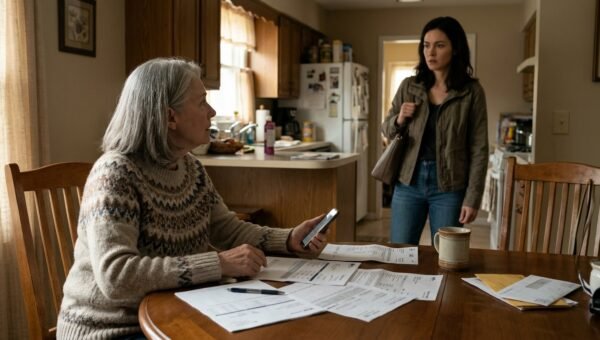
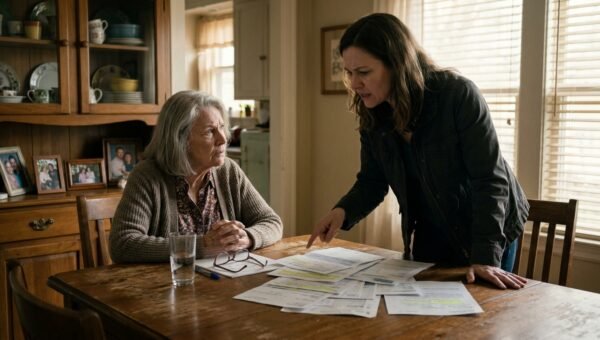
I pulled up a chair next to her, keeping my voice gentle. “Mom, did Greg bring you some papers to sign back in the spring? Maybe in April?”
She blinked, her hand resting against her chin as she thought. “Greg brings things every month, sweetie. You know how the facility is with their room charges and the physical therapy papers. He always has a clipboard with little yellow sticky notes showing where my signature goes. He tells me not to worry my head about the numbers.”
“Did he ever mention a car, Mom?”
“A car?” She let out a small, breathless laugh. “Helen, I haven’t driven since I clipped the hedge by the pharmacy in 2022. Why on earth would I need a car?”
I reached into my bag and pulled out the city parking photo. She looked at the image, squinting through her bifocals.
“Well, that looks like your old gray car,” she murmured. “Did you buy it back?”
“No, Mom,” I said softly, taking her thin, spotted hand in mine. “I didn’t.”
I kissed her forehead, told her I would see her for lunch on Thursday, and walked out to the parking lot. My hands were steady on the wheel as I turned onto Birchwood Avenue.
PART 3
Greg’s house was a tidy split-level with a wide concrete driveway. When I pulled up to the curb, the silver Honda Civic was parked right in front of the two-car garage.
It was an exact match for the car in the city photo. Same year, same trim, same silver paint. But when I walked up to the driver’s side and looked through the glass, I saw the city parking tag hanging from the rearview mirror. It had my old account barcode printed along the bottom edge.
The front door opened before I could knock. Greg stood behind the screen door in his socks and an old college sweatshirt, holding a mug of tea.
“Helen?” he said, pushing the door open an inch. “What are you doing here on a Tuesday?”
I held up the printed photo from the city parking bureau.
“The city drafted six hundred and forty dollars from my checking account at midnight, Greg,” I said, standing on the top step. “For a commuter permit on a vehicle that was registered to Mom six months ago.”
Greg’s mouth tightened. He looked down at the paper in my hand, then out toward the driveway where the silver Civic was parked under the shade of his birch tree. He let out a long, heavy breath and pushed the screen door the rest of the way open.
“Come inside, Helen,” he said. “Don’t stand out on the porch.”
“I am not coming inside,” I told him, staying right where I was. “I went to the county clerk this morning. Martha pulled the title. Tyler is listed as the operator, Mom is listed as the loan holder, and the force-placed insurance is being drafted out of her Social Security money. Tyler is driving a financed car using our mother’s fixed income, and you routed my old municipal parking permit to this house so he wouldn’t have to pay fifty dollars a week to park at his new job downtown.”
The door behind him creaked, and Tyler walked into the front hallway. He was wearing dark work trousers and carrying a canvas messenger bag, clearly getting ready to leave for an afternoon shift. When he saw me standing there with the city paperwork, he froze.
“Mom,” Tyler called back toward the kitchen, his voice nervous. “Aunt Helen is here.”
Brenda appeared from the hallway, wiping her hands on a dish towel. She looked at Greg, then at me, her posture instantly stiffening.
“Helen, you don’t understand the situation,” Greg said, stepping out onto the porch floorboards. “Tyler got hired as an administrative clerk at the county courthouse three months ago. It’s the first real, permanent job with benefits he’s ever had. But he needed reliable transportation, and his credit was completely destroyed from when he got sick back in 2021. He couldn’t qualify for a bicycle loan, let alone an auto note.”
“So you bought a car in Mom’s name?” I asked.
“It was a private-party sale through an estate in Greenville,” Greg said, his voice dropping into that quiet, reasonable tone he always used when he was explaining away an audit error. “The car was in great shape, identical to yours. I handled the paperwork using the power of attorney. Tyler was supposed to make the payments every month to Mom’s account to cover the loan.”
“And did he?”
Tyler looked down at his boots. Brenda stepped up beside Greg, crossing her arms defensively.
“Tyler had some unexpected medical bills in July, Helen,” Brenda said, her tone sharp. “He fell behind two months. It’s not a crime for family to help each other out. Your mother has plenty of money left from the house sale sitting in that CD.”
“Mom does not have plenty of money, Brenda!” I shouted, the restraint I had held all morning finally cracking. “Mom has thirty-two thousand dollars left in that reserve CD. The assisted living facility costs thirty-four hundred dollars a month. Her pension and Social Security barely cover twenty-eight hundred. That reserve is supposed to keep her in that room until she’s eighty-six!”
I turned on Greg. “The loan is seven hundred and twenty dollars a month because of the force-placed insurance, Greg. Martha showed me the drafts. You have pulled nearly four thousand dollars out of Mom’s daily account since May. She couldn’t even afford new orthopedic shoes last month because you told me her account was running close to the minimum balance requirement!”
Greg closed his eyes. His face went red, from his throat up to his receding hairline.
“I was going to pay it back,” Greg whispered. “I have an annual bonus coming from the firm in December. I was going to deposit the difference before the end-of-year tax statements generated.”
“And the parking permit?” I pointed at the windshield of the car. “How did that end up on my card?”
Greg couldn’t look at me. “When Tyler started at the courthouse, downtown parking was eighty dollars a month. I remembered you had that grandfathered municipal rate for the library lot from your water district days. I logged into your old city portal account, updated the plate number to the new Civic, and changed the mailing address to my house. I thought… I thought the city billed the permit annually to the old district subsidy. I didn’t know your personal debit card was still the primary backup on the auto-renew.”
“You stole my login, you used my account, and you gambled with Mom’s assisted living money so your stepson could have an easy ride to work,” I said.
Tyler took off his messenger bag and dropped it onto the hallway bench. He walked past Brenda, stepped through the screen door, and stood beside Greg on the porch.
“I didn’t know about Grandma’s insurance, Aunt Helen,” Tyler said. His voice was shaking, and his eyes were wide. “Greg told me he had an investment account that Grandma set aside for education and job training. He told me the monthly payments were just going into a family fund.”
“Tyler, be quiet,” Brenda snapped.
“No, Mom,” Tyler said, turning to look at his mother. “I’m twenty-nine years old. I’m not letting Grandma lose her apartment at St. Jude’s so I can drive a silver Honda to the courthouse.”
He reached into his pocket, pulled out the key fob, and held it out to me.
“Take the keys, Aunt Helen,” he said. “I’ll take the bus on Route 4. It stops right by the municipal center.”
I looked at Tyler’s outstretched hand, then looked straight at my brother.
“Greg,” I said, “we are going to the bank right now.”
ENDING
We didn’t go to court, and we didn’t file a police report. My mother would not have survived the shame of seeing her son’s name in a county record, and Tyler did not deserve to have his first steady job wrecked by his stepfather’s deceit.
We sat in the private office of the branch manager at First National on Tuesday afternoon. Greg sat with his checkbook open on the desk, writing out two certified cashier’s checks.
The first check was for $640, made out directly to me. I went straight to the city revenue office the following morning, paid the cancellation fee, had my debit card permanently wiped from the municipal portal, and returned the physical permit tag that Tyler handed over on the porch.
The second check Greg wrote was for $4,180, deposited directly back into my mother’s primary checking account to reimburse every penny of the loan payments and force-placed insurance premiums that had been drained over the previous six months.
By Friday afternoon, Mr. Vance, an independent elder law attorney in town, had finalized the revocation paperwork. Greg signed the legal surrender of his durable power of attorney without saying a word. All administrative and financial authority over our mother’s estate, her pension distributions, and her facility payments were transferred into a co-conservatorship managed by me and an independent fiduciary from the county trust board.
We sold the second silver Honda the following week. An auto wholesaler bought it for enough to pay off the First Heritage loan balance in full, releasing the lien and closing the account for good.
Tyler didn’t complain. He bought a monthly city transit pass, and I see him occasionally on Thursday mornings waiting by the shelter on Route 4 in his courthouse slacks, reading a paperback while he waits for the 7:40 bus. When he sees my car, he gives me a small, respectful wave from the bench, and I tap the horn.
Greg did not come to Thanksgiving dinner at the facility last year, and Brenda hasn’t answered any of my phone calls since November.
On Sunday afternoons, I sit with Mom in the quiet courtyard behind St. Jude’s. She likes to watch the birds around the concrete fountain while she eats the blueberry scones I bring from the bakery near my house. Her room account is fully funded, her winter heating bill is paid through the spring, and her little brown leather checkbook sits safely inside my locked desk drawer at home.
She reached over yesterday, patted the sleeve of my coat, and asked me why Greg hadn’t brought his clipboard by lately.
“He’s been busy with work, Mom,” I told her, pouring warm chamomile tea into her favorite floral mug. “Everything with the facility is taken care of. You don’t have to worry about signing anything ever again.”
She smiled, satisfied with the answer, and went back to listening to the water trickling over the stones in the garden.
records with the county water authority, I knew Martha, the woman behind the title verification window. I showed her the camera photo and the plate number.
“Martha, I need to know whose name is attached to this tag,” I said. “The city just drafted my card for six hundred and forty dollars because this vehicle is entering a municipal deck tied to my old account.”
Martha hesitated, looked at the photo, and pulled up the state motor vehicle portal. She typed in the 7-K-Y plate sequence, paused, and leaned closer to her screen.
“Helen,” Martha said, keeping her voice down so the other clerks wouldn’t hear. “Are you sure you want me to read this?”
“Whose name is it?”
“It’s registered to your mother, Eleanor,” Martha said. “Title issued six months ago. But Helen, your mother is eighty-two years old and living at St. Jude’s Assisted Living. Her license expired four years ago.”