Why did I keep waiting for Terence’s family to treat me like a person? I was standing in their drive in the rain with my suitcase in the mud when I asked myself that.
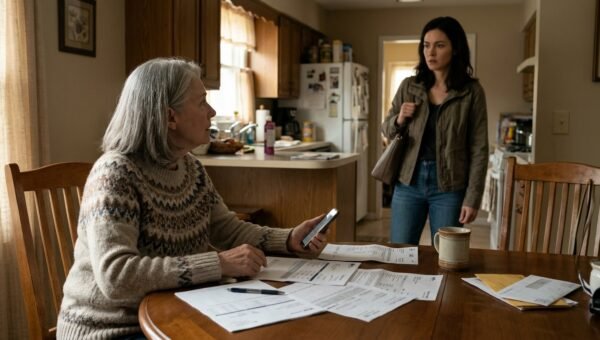
Terence had been dead less than a week. I still had the funeral home’s little folder in my purse, and I couldn’t remember where I’d put my car keys. His mother, Celeste, stood on the front steps in a cream coat, telling me I had no right to stay in the house.
“Terence is gone, so you’re entitled to nothing.”
She said it like she was correcting a bill.
My suitcase hit the driveway. The latch popped open, and two sweaters slid into a puddle. His sister, Mallory, held up her phone and kept filming. I remember hearing the little tap when she adjusted the screen. That part stuck with me.
I went down on one knee to pick up my wedding album. It had landed face down in the mud. The cover was wet, but the picture inside was still safe. I pressed it to my chest and said, “You’re right. I have nothing.”
I wasn’t being brave. I was tired, and I thought if I didn’t fight them that day, maybe they’d stop. I also knew more than they did. I just wasn’t ready to say it.
At the time, I thought staying quiet would let me see who they really were. That was my mistake. I already knew enough.
Terence and I had been married for nine years. He built a tech company from a rented office with a bad heater and later turned his earnings into investments. I knew he did well. I didn’t know the number until after he died.
His family was different. They cared about the right invitations, the right photos, the right people seeing them at the right table. Terence used to say, “They like the idea of family.” I’d tell him not to be so hard on them. I liked having a big family around, even when I knew I was doing most of the work to keep the peace.
Howard, Terence’s father, was the one everyone looked to. He was calm in public, careful with every word. Celeste could throw a fit, but Howard decided what happened after the fit.
I didn’t know he had quietly let it happen on the lawn.
Terence had made his will and trust plans years before he died.
He never laid out the whole thing for me. He told me he’d put his business interests somewhere “safe from the family’s hands.” I thought he meant one of his companies. I was wrong.
At the funeral, Howard put an arm around my shoulder for the cameras. His hand felt heavy. “We’ll take care of the details,” he said.
I believed him for about a day.
Then Celeste threw me out.
I rented a small apartment outside Bakersfield. The bedroom window stuck if I didn’t lift it with both hands. I cleaned the wedding album page by page with a damp cloth and a cotton swab. I know that sounds like a strange way to spend the first week after a funeral. It was something I could finish.
I kept the album on the kitchen table. I didn’t put it away.
Arthur Vance, Terence’s estate attorney, called me two weeks after the eviction.
He’d been handling Terence’s private trusts for years. I didn’t know him well, and I was suspicious of every person who said they were there to help.
“Terence named you as the sole beneficiary,” he told me.
I asked him how much.
He took a breath first. “The estate is valued at just over five hundred million dollars.”
I thought he’d made a mistake. He showed me the trust paperwork, then explained that the trust was irrevocable. The assets were separate from Terence’s family, and I was the only beneficiary.
I didn’t cry. I said, “Why didn’t he tell me?”
Arthur said Terence wanted me protected from pressure, including pressure from his family. He also said Terence had seen them spend money they didn’t have and borrow against things they didn’t own. He’d made the trust private because he knew they’d come asking.
I wish I could say I immediately called Celeste and told her she was wrong. I didn’t. I wanted to know if there was any love there that wasn’t attached to money. So I stayed quiet, and I let probate finish.
That was the part I told myself was fair. It wasn’t. I was testing grieving people who had already shown me what they thought of me. I wanted proof, even though I had it in the rain.
The next few months were plain and hard. I paid rent from my own savings and worked through the trust papers with Arthur. I kept to myself. Meanwhile, the family kept throwing dinners and posting pictures. In one photo, Celeste was smiling beside a flower wall. Mallory captioned it with something about “keeping Terence’s legacy alive.”
That line made me put my phone down.
In month five, Arthur called again. The family had been taking advances against companies and accounts that weren’t theirs to use. They said the money was for a charity gala and that the accounts belonged to Terence’s family foundation.
They didn’t.
The trust owned the assets. The foundation accounts were governed by the trust. The gala’s venue and main sponsorship were tied to that same structure.
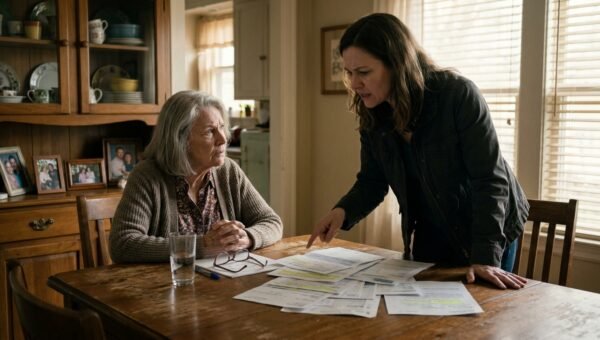
Arthur checked the records. Some signatures had been forged to access endowment money. He didn’t make a big speech about it. He put the documents in a folder and said, “This needs a formal response.”
I looked at the signatures. I knew Terence’s name. I’d watched him sign birthday cards and grocery lists for nine years. The signature on the request was close, but the T leaned the wrong way.
“Did Howard approve it?” I asked.
Arthur said the records showed Howard had authorized the requests.
That was the moment I stopped thinking the eviction was Celeste losing her temper. It had been a decision. They thought I was alone, broke, and easy to push aside. Howard had let them believe that, and he’d been using Terence’s name to keep their life going.
I could have sued them right away. Arthur told me I had grounds. I said no. I wanted the accounts frozen properly, the donations protected, and every paper checked twice. I didn’t want one mistake giving them a way to call me greedy.
I also didn’t want to be kind to them anymore. There’s a difference.
Six months after the funeral, the gala was held in a glass event hall downtown. I’d been listed on the board’s records as chair of the governing trust. The invitation came through the attorney’s office, not the family. I wore a plain black dress I already owned and carried the folder Arthur had prepared.
The room was full of people who knew the family’s public version of events. Celeste wore a necklace I’d seen in the family holiday photos. Mallory was standing near the bar, phone in hand. Howard was at the head table, greeting donors.
When he saw me, he stopped smiling.
Celeste came over first. “You shouldn’t be here.”
“I’m on the board’s list,” I said.
Mallory looked at the folder. “Is this some kind of stunt?”
“No.”
Howard stood up. He didn’t raise his voice. He didn’t need to. “We can talk privately.”
“I’ve done enough privately.”
I walked to the head table and handed him the termination notice. It ended the family stipend and revoked the gala sponsorship. Arthur had brought certified copies of the trust papers and the donor records for the board. He stood nearby, ready to explain the legal steps. I didn’t need him to speak for me.
Howard glanced at the first page. “You can’t do this.”
“I can. The trust owns the accounts.”
The room had gone quiet around us. I could hear a fork scrape a plate at the next table.
Then I said the one thing I had been holding back since that wet driveway.
“I told you six months ago I had nothing, Howard, because Terence left it all to the trust, and tonight, I closed your account.”
I’d meant to say it exactly that way. I didn’t, though. I said the word “nothing” too softly, and my voice caught on “account.” Still, everyone heard me.
Howard looked down at the papers. Celeste was staring at me like she had only just noticed the album wasn’t the only thing I’d managed to carry out of that house. Mallory lowered her phone. I later learned the video of the eviction had been saved and shared with several people from their circle. The board saw it along with the records. No one needed me to explain what they were looking at.
Arthur confirmed the forged signatures and the unauthorized advances. The board canceled the gala sponsorship, and the trust reassigned the remaining charitable funds to local programs Terence had supported. We took his name off the family’s vanity projects. The family lost access to the stipend and the accounts. They had to answer for the money they’d already used.
I didn’t feel good watching that happen. I felt done.
The next week, I signed the last papers separating me from the family’s accounts and arrangements. Arthur set up transparent oversight for the charitable work, so no one could use Terence’s name as cover again. I didn’t need to announce the size of the trust. The records made that clear.
The family’s social calendar got smaller. I heard Celeste had to sell the house. I didn’t ask for details. Mallory never sent an apology. Howard sent a short letter through his lawyer asking to discuss “future family matters.” I sent it back unanswered.
I still think about the lawn sometimes. I think about my own answer, “You’re right. I have nothing.” I was wrong about the money. I wasn’t wrong about what I had lost by wanting their respect.
The wedding album dried, though the cover never looked quite the same. I had one photo restored, the one of Terence laughing because the wind had blown my veil over my face. I keep it by the open window in my quiet home. Some mornings I make tea and sit beside it before I start the day.
The photo is clean now. The old mud is still on the album cover.