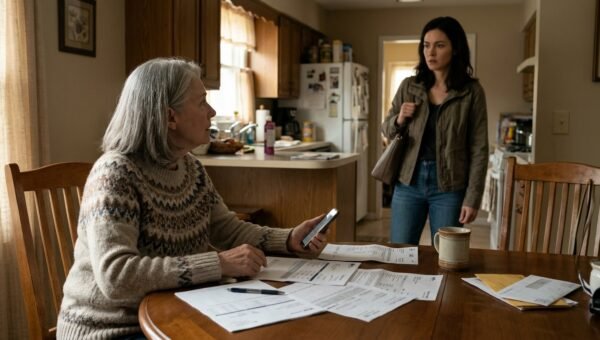
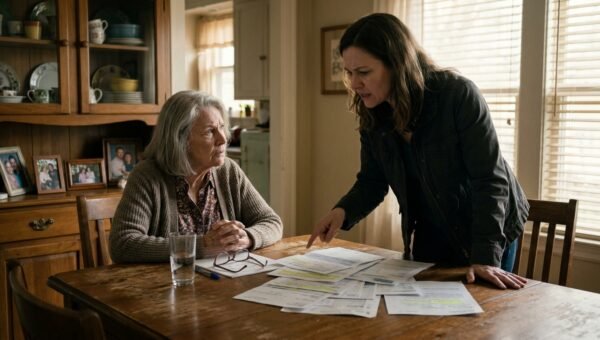
I set out 50 paper cups before the meeting because that was what we did for quarterly updates. I put the extra sleeves beside the coffee urn, then Victoria Vance walked in with champagne.
She’d called the meeting a company update. A minute later, she said I was fired.
I’d worked at Healthcore for 20 years. I had built the diagnostic engine that sat under its main product, and I knew exactly what was in the contract she waved at me.
I didn’t correct her in front of everybody. I took my folder and walked out while she raised her glass.
I thought staying calm would make the point for me. It didn’t. Not right away.
Victoria had been CEO for two weeks. Healthcore had just been bought by a private equity group, and a global company was preparing to buy Healthcore for $900 million. Victoria talked about the deal like it was already done. I’d heard her call it “the cleanest close we’ve ever had.”
I wasn’t invited to those deal meetings. I was still expected to make sure the engine worked.
That morning, I had checked the diagnostic logs before the meeting. A routine check. The same check I’d done most workdays for years. The numbers were fine, so I printed the short report and brought it with me. I didn’t know I’d need the contract more than the report.
I started at Healthcore in 2004, when it was a much smaller place. I was a systems engineer then. I spent years fixing bugs other people couldn’t reproduce and writing notes that I expected somebody might need five years later.
In 2011, the company wanted to build a product around an engine I’d made before Healthcore had put money into it. I almost signed the first draft they gave me. I was tired, and I didn’t want to be the one slowing down a project everybody else was excited about.
My wife, who was still alive then, asked me one plain question: “If they own it, what do you have?”
I took the contract home. I read it until the language stopped looking like a wall of words. Then I paid a patent lawyer to read it too. We got an addendum that listed the underlying patents as mine and gave Healthcore an exclusive, non-transferable license to use the engine.
The license mattered. Healthcore could build its product around my work. It could sell that product under the deal we’d agreed to. But the company couldn’t claim the patents were its property or hand my license to a new owner without following the contract.
I knew that. I’d kept the signed papers in a small home safe ever since. I also knew the company had treated the terms fairly for years. I had no reason to assume that would change.
Then Victoria took over. She didn’t ask me how the engine’s license worked. She asked me to sign a document saying all intellectual property related to Healthcore’s product belonged to Healthcore.
I sent it back unsigned.
Her assistant called the next day and said the paperwork was “standard.” I said I was sure it was, but I couldn’t sign something that contradicted my agreement. I thought that would be the end of it.
That was my mistake. I thought the work would speak for itself. I thought 20 years of fixing things made me hard to replace.
The meeting was in the larger conference room. I remember the cups because a little coffee had dried in a ring beside the urn, and I’d meant to wipe it up before people came in. I didn’t.
Victoria stood at the front with a printed copy of my employment agreement. Fifty employees were in the room. Some had worked beside me for years. Others were new enough that I knew their names mostly from email.
She said my refusal to sign had made it clear I was no longer aligned with the company. Then she held up the agreement as if the answer was right there.
“Your patents belong to Healthcare, Oliver. Read your contract.”
She’d said Healthcare, not Healthcore. I noticed that. I noticed the paper in her hand was the old main agreement, not the 2011 addendum. I noticed two engineers looking down at their cups.
What I didn’t notice, until later, was that I was still holding the little report I’d brought in. I folded it once and put it in my folder. I didn’t raise my voice. I didn’t tell her she was wrong.
I could have. I’d rehearsed versions of that conversation in my head for days. But if I argued in that room, I would’ve let her make the firing look like a dispute about my attitude. So I stood up, picked up my things, and left.
At the door I heard glass touch glass. I didn’t turn around.
I drove home and set the folder on the kitchen table. My hands were steady, which annoyed me. I wanted to feel something useful, like anger. Instead, I kept thinking about the people in that room and how quickly they’d learned that 20 years could be cleared off a calendar.
At 3:12, I called Marcus Thorne. Marcus had handled patent work for me for years. I’d kept him on retainer because it was cheaper than pretending a contract couldn’t become important again.
He answered on the second ring. I told him what Victoria had said, then read him the exact clause from the addendum.
“I’ve got the signed copy,” I said.
“Good,” Marcus said. “Don’t sign anything else.”
I went to the safe and took out the contract. The paper smelled faintly like the cedar blocks I’d put in there years ago. I know that’s a silly thing to remember, but I do. I scanned the signed addendum and sent it over.
Marcus called back after he’d checked it. Victoria’s public firing wasn’t the only problem. Healthcore had been preparing to bundle the engine and its license into the sale as though it owned the underlying rights. The contract barred that transfer. It also had a breach clause covering bad-faith termination and unauthorized transfer.
There was a formal 24-hour revocation process. Marcus had warned me years earlier to keep the clause in mind if anyone tried to sell the patents out from under me. I’d never expected to use it.
“What happens to the product?” I asked.
“The license ends,” he said. “The company can’t keep using the engine without your permission.”
The technical system had a separate license check. That wasn’t a trapdoor I’d added in secret. It was there to make sure the software was operating under a valid license and to stop unauthorized copies. If the legal permission ended, the license key would stop renewing. Existing patient records wouldn’t be erased, and there was a safe process for ongoing cases. But Healthcore couldn’t keep selling or running the product as if nothing had happened.
I wanted to negotiate. That was my first thought. I could ask for a fair agreement, get the deal moving again, maybe keep my job. Marcus reminded me that I’d just been fired in front of 50 people, and Healthcore was trying to transfer rights it didn’t own.
I told him to prepare the notice.
He did. At 3:00 p.m., Marcus served it through the official legal channel. The 24-hour clock started. The buyer’s lawyers received notice that the license could not be transferred and that Healthcore had a deadline to fix the breach.
That evening, I met Marcus at his office. We went over the contract line by line. I asked about the engineers. I asked whether the notice would shut off the system immediately. He said no. It would end the license at the stated time, with the technical lockout following the legal change.
Then he asked whether I wanted to hold the notice while Healthcore made an offer.
I said no. I was still mad enough to confuse the deal failing with justice. I told myself I was protecting my work. That was true, but it wasn’t the whole truth. I also wanted Victoria to have to face the room she’d used to humiliate me.
I didn’t tell the 50 employees what was coming. I could’ve called a few of the engineers. I knew they’d hear rumors anyway. I told myself that a legal notice was not my job to explain. It was a tidy excuse, and it left the people who had watched me walk out wondering whether the system they supported was about to stop.
The next day, I stayed home. I had the contract open beside my laptop and the engine’s status page on the screen. I wasn’t trying to break anything. I was watching for the license heartbeat and checking that the patient-care safeguards remained active.
At 10:46, a former colleague texted me that the buyer’s legal team had asked for a copy of the patent schedule. At 11:08, another message said Victoria had called the question “routine.” I didn’t answer either message. I kept checking the clock.
By 2:55, Marcus had confirmed the notice had been received and the deadline was standing. The acquisition team was in the boardroom for final signatures. I knew because a former colleague sent me one line: “They’re signing now.”
I sat at my kitchen table. The contract was open to the addendum. My laptop had the revocation confirmation page ready. There was a single button to confirm the action. I’d checked the account number twice, then checked it a third time.
At 2:59, I nearly called Marcus and asked him to hold it.
Not because the clause had changed. Not because I’d learned anything new. I pictured the employees in that room, and I thought about the people who depended on the product. I’d spent years telling teams to think through the effect of a change before pushing it live. I had done that work. The patient records were safe. The existing cases had a controlled path. Still, I knew the company would be in trouble.
At 3:00 p.m., I clicked.
The license status changed to revoked. A confirmation receipt appeared in the portal. Marcus received the legal confirmation at the same time. The engine stopped accepting Healthcore’s commercial license key.
I didn’t hear the boardroom. I saw it through the messages that came after.
At 3:02, my phone buzzed. A colleague said the buyer’s lead counsel had stopped the signing and asked why Healthcore had listed the engine as a transferable asset. Someone else said Victoria was asking for the patent schedule. She’d been handed the same document I had kept in my safe.
Then Marcus called.
He said the buyer’s legal team had walked out of the meeting. The deal couldn’t close without a valid right to the core technology, and Healthcore couldn’t provide one. Victoria tried to tell the board it was a misunderstanding, but the buyer already had the contract and the revocation notice.
By the time Marcus finished, I had 14 missed calls. I hadn’t answered any of them. I was looking at the confirmation receipt and thinking about that glass touching glass after I left.
Healthcore’s board suspended Victoria pending a review of the sale documents. The $900 million deal was over. I later heard that the company’s valuation dropped sharply and that the buyer withdrew its offer. Nobody needed to tell me that the boardroom had become a bad place to be.
Victoria called me once. I let it go to voicemail. The message was short. She said the company needed to talk about a way forward. She didn’t mention the meeting.
The employees did. Over the next few days, I got messages from people who had sat through my firing. Some apologized for staying quiet. Some were angry that they’d learned about the license from a legal notice instead of from me. I couldn’t tell them they were wrong.
I’d thought keeping quiet kept the problem between Victoria and me. It didn’t. It left the engineers and support staff holding the worry while the board and lawyers worked out who had failed to read what.
I called two of the engineers and told them the truth: the product’s license had ended, but the patient records were safe, and no one needed to make a sudden change to an active case. I should have said that sooner. I said it plainly, then stayed on the line while they asked practical questions.
The company came back through its board and lawyers. There wasn’t a dramatic apology. There was a proposed license, a request for a transition period, and a new set of terms. I said I would talk only through Marcus. I wanted a fair payment, clear ownership, and no transfer of my patents without my written permission.
I also wanted Healthcore to keep supporting existing users while it moved to a lawful arrangement. The people who used the product didn’t know Victoria had ignored an addendum. They just needed their work to keep working. I was not going to make them pay for her mistake.
The final deal took weeks. Healthcore got a limited license under terms I approved. It could keep serving existing customers while building a proper plan. I kept ownership of the patents. Marcus and I set up an independent company to hold the rights and license the engine on terms we could actually enforce.
I didn’t get my old job back. I didn’t ask for it.
The day after the board suspended Victoria, I opened the old contract again. The clause was still there, in plain black type, on the page I’d kept safe since 2011. For years, I’d treated it like a spare part nobody would need.
At 3:01 p.m. on the day I revoked the license, I closed my laptop in my sunlit living room. My phone started ringing before the screen went dark. The calls kept coming from the boardroom.