PART 1
I wasn’t going to say anything at the potluck. I planned to eat my green bean casserole, drop off Earl’s empty Pyrex dish, and leave before the cleanup committee started clearing tables.
Earl was at home in his recliner, yellow around the eyes and too weak to lace his own boots. His liver was failing. The transplant coordinator at Saint Thomas had given us the cold number back in the spring: $387,000 for the surgery, the hospital stay, and the first round of anti-rejection meds.
Our Medicare supplement covered a chunk, but not enough to get him on the active recipient list without an escrow guarantee. We had sold our tractor, our extra five acres of timber, and Earl’s 1978 Chevy pickup. We were still short.
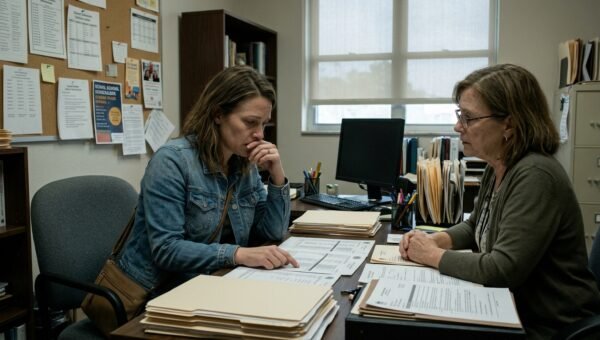
In April, I went to Pastor Williams in his study. We had attended Grace Fellowship for thirty-two years. Earl had helped pour the concrete footings for the education wing with his own hands. I sat across from the pastor’s mahogany desk, handed him our paperwork, and asked if the church’s benevolence fund could help us bridge the gap.
Pastor Williams had patted my hand, smiled softly, and told me the account was nearly dry. He said the winter heating bills for the sanctuary had eaten through their reserves, and that giving was down. He promised to put Earl on the Wednesday night prayer chain. That was all.
So on Sunday, I sat in the fellowship hall among two hundred and ten people.
The smells of fried chicken, warm yeast rolls, and sweet tea filled the room. The paper plates were piling up in the trash cans when Pastor Williams took the microphone beside the coffee urn to read the third-quarter financial report.
“The Lord has truly multiplied our loaves and fishes this year,” he announced, smoothing his tie. “I am proud to share that our benevolence fund assisted fourteen families in our community over the last nine months.”
The room applauded. Mrs. Arlene Clatterbuck clapped so hard her charm bracelet clattered against her plastic plate.
My hand went up before I could talk myself out of it.
“Pastor?” I called out.
The clatter of forks stopped. Several people turned in their metal folding chairs.
“Why wasn’t mine one of them?” I asked.
The smile on Pastor Williams’s face stiffened. He adjusted the microphone on its stand, producing a sharp squeal of feedback that made the toddlers at the front table jump.
“Helen,” he said, keeping his voice quiet and gentle, the way you speak to a confused child. “This isn’t the time or the setting for personal administrative questions.”
“When is?” I stood up. My knees popped. “Earl is on a waiting list right now. He needs $387,000 to get the transplant. You told me to my face in April that the fund was empty.”
“Our resources are distributed according to confidential committee guidelines,” he said smoothly. “We must protect the dignity of recipients, Helen. Let’s talk in my office on Tuesday.”
I didn’t sit down. Instead, I reached into my canvas church tote and pulled out a manila folder containing four folded sheets of paper. They were bank statements from the church’s benevolence checking account at First National Bank.
A dear friend who worked the back-office operations at the branch in town had pulled them for me two days earlier, after she overheard the church treasurer talking at the drive-thru window about balancing the charity ledger.
She knew Earl. She knew what he was going through. She had risked her job to slide those printouts into my purse.
“The fund wasn’t empty,” I said, my voice shaking only a little. “The benevolence account had $94,000 in outgoing payments this spring and summer.”
The room went dead silent. Nobody reached for another roll.
“All $94,000 went to one single vendor,” I continued, reading straight from the ledger lines. “A business called Bellissima Aesthetics over in Shelbyville.”
Pastor Williams gripped the podium with both hands. His knuckles showed white against the dark wood. Across the room, his wife, Brenda, dropped her napkin onto the floor.
PART 2
“Those records are private church property,” Pastor Williams said. The gentle preacher tone was gone. His voice came out flat, hard, and defensive. “I don’t know who gave you unauthorized documents, Helen, but discussing financial specifics during fellowship is completely inappropriate.”
“Is it?” I asked. “Bellissima Aesthetics is a cosmetic procedures clinic. They do lip fillers, chemical peels, and body sculpting. Is that where fourteen needy families went for help?”
A low murmur rolled through the long tables. Deacon Miller, who had sat on the finance committee for twenty years, stood up from his seat near the kitchen door. He was seventy-four, a retired dairy farmer who wore the same brown wool suit to church every Sunday of his life.
“What is she talking about, Pastor?” Deacon Miller asked. He looked around the room, bewildered. “We haven’t had a benevolence committee meeting since November. You told me you were handling the disbursements directly because of the winter hardship cases.”
“We will handle this with the deacons in an executive meeting,” Pastor Williams said, raising his voice over the rising chatter. “Helen is upset about Earl’s health, and we all understand that. We have deep compassion for her pain. But she is throwing around accusations she doesn’t understand.”
“I understand plain English,” I said. “And I know who owns that clinic.”
Brenda Williams pushed her chair back. The metal legs scraped loudly across the linoleum floor. She was forty-eight, twelve years younger than the pastor, and she always carried herself like the town’s first lady. She wore tailored pastel suits and maintained perfectly smooth, porcelain skin that never seemed to age.
“Helen, you need to stop,” Brenda said, stepping toward the center aisle. Her chin was held high, but her voice had a sharp edge. “You’re embarrassing yourself. You don’t know the first thing about medical ministry or what the church supports.”
“Your daughter Corinne owns Bellissima Aesthetics, Brenda,” I said, looking her dead in the eye. “She opened it two years ago in the strip mall behind the Shelbyville Kroger. It’s registered under Corinne Myers LLC with the Secretary of State. Earl helped your son-in-law haul gravel for her driveway when they moved here, remember?”
Someone at the choir table gasped. Mrs. Clatterbuck’s hand flew up to her mouth.
The statements in my hand were as clear as water. Between May 2nd and August 14th, five separate wire transfers had cleared the church’s First National account. Each transfer was marked as benevolence outreach, and each one landed directly in the commercial operating account for Bellissima Aesthetics.
Ninety-four thousand dollars. Money dropped into the offering plates fifty dollars and twenty dollars at a time by widow women, factory workers, and farmers who believed they were helping neighbors keep their lights on or buy insulin.
“Corinne was facing bankruptcy,” Brenda snapped, her composure cracking wide open before her husband could stop her. “Her lease was in default! She has two children, Helen! Would you have the pastor’s own grandchildren out on the street?”
“Brenda, be quiet,” Pastor Williams barked.
It was the first time in thirty-two years I had ever heard him raise his voice to his wife in public. The sound of it echoed off the drywall and hung in the fellowship hall.
PART 3
Nobody moved. Two women from the nursery department slowly led a group of children out the side door toward the playground, sensing the storm.
“It wasn’t a gift,” Pastor Williams said, trying desperately to pull the room back under control. He stepped away from the podium and walked down the center aisle, holding his hands out as if delivering a benediction. “It was an emergency bridge loan. Approved under pastoral discretion. The clinic was securing a small business loan to refinance their equipment, and the church was simply floating the collateral until the funds cleared. Every penny was scheduled to be returned with interest before our annual audit in December.”
“There is no pastoral discretion for ninety-four thousand dollars,” Deacon Miller said. He walked down the side aisle, his face red with quiet fury. “The church bylaws cap emergency pastoral spending at five hundred dollars. Anything over that requires three trustee signatures and a full board vote. Did you sign those checks alone, David?”
Pastor Williams didn’t answer. He looked at the floor.
“Did you?” Deacon Miller repeated.
“I acted in faith to protect family,” Pastor Williams said quietly. “I had every intention of replacing the funds next week.”
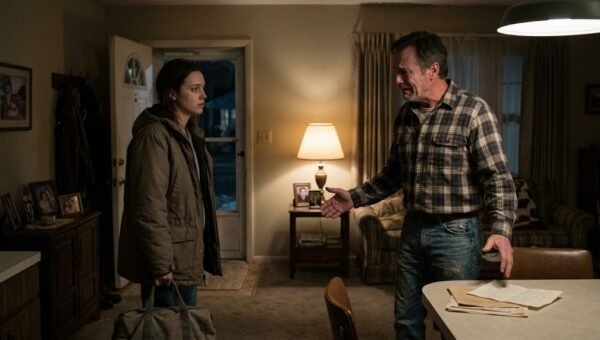
“Next week?” I stepped out from between the tables. “Earl doesn’t have next week, David. In June, when the doctors told us Earl’s score was dropping and we needed to show twenty thousand dollars in cash reserves just to keep his place on the Saint Thomas regional list, I came to your house. I brought a peach cobbler. I sat on your porch and cried so hard I couldn’t catch my breath.”
I felt the heat rising in my chest, but I kept my words even.
“You prayed over me,” I said. “You laid your hands on my head, and you told me that sometimes God’s answer is no, and that Earl and I needed to accept his sovereign will with grace. You looked me in the eye and said that, knowing you had wired twenty-two thousand dollars to Shelbyville the very day before.”
The silence in that room was absolute. Even Brenda looked away, unable to meet my gaze or anyone else’s.
“I didn’t steal anything,” Pastor Williams muttered, his voice hollow. “It was a loan. A family loan.”
“From God’s money,” Deacon Miller said. He reached over and took the four sheets of paper from my hand, scanning the account numbers and dates with narrowed eyes. He looked up at the pastor, his jaw set like stone. “You turn over your keys and your church credit card right now, David. We’re calling an emergency trustee meeting for five o’clock tonight. And First National is going to hear from our legal counsel before nine o’clock tomorrow morning.”
Brenda grabbed her designer purse from the table and walked out the rear door without looking back. Pastor Williams stood alone in the aisle between the rows of folding tables, the overhead fluorescent lights showing every line of exhaustion and shame on his face. He reached into his pocket, laid his silver key ring on the nearest tablecloth, and walked out after his wife.
ENDING
The trustees met that evening in the church library. By eight o’clock, they had placed Pastor Williams on indefinite unpaid suspension. By Tuesday morning, the county prosecutor’s office had been notified, and the bank froze the remaining balances across all church accounts pending a full forensic audit.
Corinne Myers didn’t wait for a sheriff’s deputy to show up at her clinic. Facing immediate scrutiny and criminal investigation for receiving misdirected non-profit funds, her business attorney brokered an emergency asset liquidation within ten days. Bellissima Aesthetics surrendered its leased medical equipment, and the first restitution check of $94,000 was delivered to the Grace Fellowship trustees through an escrow attorney by the end of October.
On the second Sunday of November, Deacon Miller drove his old truck up our gravel driveway.
Earl was sitting on the porch, wrapped in a heavy flannel quilt. His skin was still pale, and his breathing was shallow, but he smiled when Miller stepped out of the cab carrying an official bank envelope.
The congregation had held an emergency vote following the audit. The entire recovered $94,000, along with a supplemental emergency grant organized by fifteen families from the county who took up a private collection, was transferred into a medical trust established directly with the transplant center at Saint Thomas.
“This belongs to Earl,” Deacon Miller said, handing me the receipt of deposit. “It should have been there six months ago.”
Earl reached out a trembling hand and took Miller’s rough palm. Neither of them said much. Men of their generation rarely did when things cut that close to the bone.
Three weeks later, Saint Thomas called at four in the morning. A donor match had opened up in Nashville.
The surgery took nine hours. I spent those hours sitting in the surgical waiting room on the fourth floor, listening to the hum of the vending machines and watching the dawn come up over the highway.
Earl survived the procedure. He spent twelve days in intensive care and another month in the rehabilitation ward learning how to walk steady again without clutching the handrails. His color came back slowly, the healthy pink replacing the sick yellow under his nails and across his cheeks.
Grace Fellowship has a guest preacher now, a retired missionary from Bowling Green who drives up in a dented sedan and preaches out of a worn leather Bible. We don’t have a benevolence fund anymore; the trustees decided it was better to direct people straight to a regional charity board where every dime is tracked by independent auditors.
Yesterday morning, Earl walked down to the mailbox at the end of our lane without his cane. He brought back the electric bill, a farm supply catalog, and a postcard from Deacon Miller asking about our fall tomato crop.
I stood at the kitchen sink, washing Earl’s coffee cup with warm water and lemon soap, watching my husband lean against our fence post to watch the red-tail hawks circle above the timberline. We didn’t get an apology from David Williams, and we never asked for one. Having Earl standing out there in the morning sun, breathing easy in the cool air, was all the answer I ever needed.