PART 1
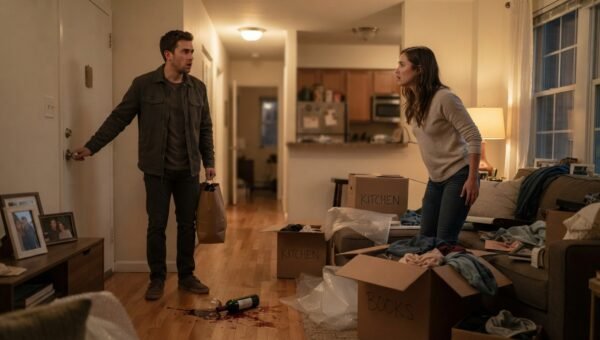
My brother refused to let me into Dad’s storage shed after the funeral. I had spent years being the person who kept the peace, so my first instinct was to swallow it again. I kept trying to stay calm while the relatives carried potato salad and paper plates into Dad’s kitchen. Greg stood by the back door with his arms crossed, blocking the gravel path toward the yard.
He told everyone the shed was full of old farming chemicals, rotting fertilizer, and black mold. He said it was completely unsafe and that he had promised Dad he would hire a professional crew to haul it all away.
Part of me wanted to pretend I had not noticed how fast he changed the subject every time someone asked about Dad’s woodworking tools. Once you ask the right question, you cannot always go back to the old version of your family. Greg looked me right in the face and said, “There’s nothing in there you need.”
I almost let it go. For four years, I was the one who drove forty miles every Tuesday and Friday to take Dad to his heart appointments, fill his pill organizers, and scrub his kitchen floors. Greg lived ten minutes down the county road, but he only showed up when his truck broke down or when he needed Dad to co-sign a bank note.
Whenever they argued, I smoothed it over. I told myself Greg was just stressed about his concrete business, and Dad was getting older and more stubborn.
Then, two days after the burial, I went to Dad’s house to collect his clothes for donation. On the kitchen counter, next to Dad’s coffee tin, Greg had left an opened envelope from the hardware store in town. Inside was a receipt for a heavy-duty combination padlock. The time stamp on the paper read 6:42 AM on the morning Dad died. Dad passed away at the county hospital at 8:15 that same morning. Greg had not been sitting by his bedside. He had been buying hardware.
I stopped arguing and checked for myself. I still had Dad’s original key ring on my purse strap. When Greg drove out of the driveway to run an errand in town, I walked down the path.
The heavy new padlock hung on the front double doors, shiny and thick.
But Dad had built that shed forty years ago, and he never relied on just one latch. Around the back, hidden behind an overgrown row of lilac bushes, was a narrow wooden service door Dad always used when the big doors swelled shut in the humid summer air. The old brass key slid into the lock with a familiar click.
I pushed the door open, bracing myself for the smell of pesticides. There were no chemicals. The air just smelled like dust and cedar shavings.
Inside the shed, every single shelf was completely bare. Dad’s rolling tool chests were gone. The vintage cast-iron table saw Dad spent twenty years restoring was gone. The copper pipe fittings and the lockbox he kept bolted to the wall were gone. The entire room had been stripped down to the concrete floor, except for one folding metal chair set right in the middle of the room.
On the seat of that chair sat Dad’s old gray cassette recorder, with a yellow sticky note pressed to the plastic.
The note had my name written on it in Dad’s shaky handwriting: “Ruth. Press play.”
PART 2
I picked up the recorder. The plastic was cool and grimy with sawdust. Dad had bought that little machine at a yard sale years ago to record bird calls from his back porch. My hands were shaking so hard I could barely press down on the black plastic button.
The tape hissed for three long seconds. Then Dad cleared his throat.
“Ruthie,” Dad’s voice came through the tiny speaker, thin and scratchy, but completely clear. “If you are hearing this, Greg put his own lock on the front just like he warned me he would. I am sitting out here on Tuesday night. It is May tenth.”
May tenth was three weeks before Dad went into the hospital for the last time.
“Greg came by this afternoon with papers,” Dad said on the tape. He stopped to take a slow, rattling breath. “He told me the house was going to end up taken by the county for medical bills unless I signed the deed over to him right now. He said you did not care about this land and that you were too busy with your own family to deal with it. I told him no. I told him everything gets split down the middle between the two of you, the way your mother and I wrote it in ninety-eight.”
Dad paused. In the background of the recording, I could hear the hum of the old refrigerator in the kitchen through the open shed door, and the sound of a dog barking down the road.
“He got loud, Ruthie,” Dad continued, his voice dropping lower. “He told me I was losing my mind. He said if I did not sign, he would start taking what he was owed anyway. He backed his trailer up to the shed three nights ago while I was asleep and took the tools. He took the Lincoln welder. He took the silver dollars your grandfather left in the lockbox. When I came out here and caught him loading the last crate, he told me nobody would ever believe an old man with heart failure. He said if I told you, he would tell the probate judge I was incompetent.”
My stomach turned over. I thought about all the times over the last month when Dad seemed quiet and distracted during our weekly lunches. He had kept his hands folded in his lap, staring out the window at the garden, and when I asked him if anything was wrong, he just patted my arm and said he was tired. He had not been tired. He had been terrified of his own son.
“I could not fight him,” Dad said softly. “My chest hurts too much these days. But I am not crazy, and I am not blind. Greg thinks he cleaned this place out. But he forgot that a man who worked forty years as a carpenter keeps his real records where nobody thinks to look.”
The tape clicked off. Dad had stopped recording.
I turned the recorder over. Taped to the battery compartment on the bottom was an old brass key, much smaller than the one that opened the shed door. It was a safe deposit key from the Farmers and Merchants Bank on Main Street. Under the key was another scrap of lined notebook paper. It had an account number and one sentence: “Box 114. Under both our names.”
PART 3
I did not wait for Greg to return from town. I locked the side service door, walked straight to my car, and drove to the bank.
The woman behind the counter, Mrs. Gable, had gone to high school with my older sister. When I handed her the key and Dad’s death certificate, she did not ask a dozen questions. She walked me into the small private viewing room in the back, set the long metal box on the table, and closed the door behind her.
Inside the box was Dad’s original blue folder from the attorney’s office. On top was Dad’s last will, dated six years ago, dividing the property, the house, and all savings equally between Greg and me.
Underneath the will was a small pocket spiral notebook. Dad had written down every item Greg had hauled out of the shed, along with the serial numbers he had kept in his desk for forty years. Next to each tool, Dad had written the approximate value: the cabinet saw, $2,400; the planers and jointers, $3,800; the Lincoln welder, $1,500; the silver coins, $6,200. The list totaled a little over $28,000.
At the bottom of the list, Dad had clipped an appraisal Greg had gotten on the house two months earlier, along with a quitclaim deed Greg had drafted online, waiting for Dad’s signature. Dad had written in red pen across the front: “Refused to sign. May 10.”
Along with the papers was a cashier’s check made out to Dad for $40,000. It was the payout from an old life insurance policy Dad had cashed out when he first got sick, meant to pay off the remaining balance on his property taxes and small debts so the house would be completely clear for us. Greg had told me at the funeral home that Dad had died with less than eight hundred dollars in his checking account.
When I drove back to Dad’s house, Greg’s truck was parked in the gravel drive. He was standing on the porch with a clipboard, talking to a local real estate agent I recognized from church.
“We are just getting an early estimate on the acreage,” Greg called out as I got out of the car. He had that smooth, easy smile he always used when he wanted me to agree with him. “No point letting the grass grow while the estate settles.”
I walked up the porch steps. I did not raise my voice, and I did not cry.
“The estate is already settled in the safe deposit box,” I said.
Greg’s smile stayed fixed for a second, then tightened around the edges. “Dad didn’t have a box at the bank. I checked his desk.”
“He had one with my name on the signature card,” I said. I pulled the cassette recorder out of my pocket and set it down on the porch railing right between us. “And he left a message in the shed. On the folding chair.”
Greg stared at the recorder. The color drained out of his cheeks so fast he looked sick. He glanced over his shoulder at the real estate agent, who was suddenly looking down at her shoes.
“Ruth,” Greg said, stepping closer and lowering his voice. “Dad was confused at the end. You know how he got after his strokes. He imagined things.”
“He didn’t imagine the serial numbers on your trailer,” I said. “He wrote down every tool you loaded, Greg. And he wrote down the date you threatened him.”
Greg grabbed my arm, not hard, but tight enough to stop me. “We can handle this as a family. We don’t need lawyers taking half of what’s left. Dad wanted me to have the shop equipment anyway. He told me that years ago.”
I pulled my arm back. For fifty years, I had smoothed over his debts, made excuses to our mother, and covered his lies so dinner would stay peaceful. Every time I had swallowed my anger, Greg had taken it as permission to take a little bit more.
“You have forty-eight hours to return every tool on that list to the shed,” I told him. “And if you touch one board on this house before probate opens, I am taking this tape and Dad’s ledger straight to the sheriff’s office.”
ENDING
Greg did not bring everything back himself. He was too proud to look me in the eye.
Instead, two of his workers from the concrete company backed a flatbed up Dad’s driveway the following evening. They unloaded the heavy green table saw, the drill press, and four wooden crates of hand tools. The silver coins were gone, but the attorney I hired deducted their exact value directly from Greg’s half of the final estate account.
When probate closed seven months later, the house was sold to a young couple who wanted to raise sheep on the pasture. The $40,000 cashier’s check paid off Dad’s remaining hospital expenses, and the rest of the proceeds were divided by the court.
Greg sent me one text message the day the deed transferred, telling me that I had torn our family apart over old junk. I did not text him back. I blocked his number that evening.
I kept only three things from that property. I took Mom’s recipe box from the kitchen, Dad’s small wooden block plane that he had carved his initials into, and the little gray cassette recorder.
Sometimes, when I am working in my own garden on a quiet afternoon, I think about that empty shed. I spent my whole life believing that being the peacekeeper was a virtue. I thought keeping the family together was worth any amount of silence.
Dad knew better. In the end, he did not leave me that tape to start a fight. He left it to give me permission to finally stop hiding from the truth.