PART 1
My brother told me Dad’s old farm truck had been scrapped after the engine failed.
It was a 1996 two-tone Ford with rusted rocker panels and a cracked vinyl bench seat. Dad bought it used the year I turned fifteen, and that was the vehicle where I learned how to work a clutch without rolling backward down Miller Hill. When Dad passed away in October, the truck was one of the few things left sitting by the barn.
I asked Wayne if I could buy it from him for $2,500. That was fair money for an old farm pickup with peeling clear coat, and I wanted to keep it on the road in memory of Dad. Wayne shook his head, looked down at his boots, and said the motor threw a rod two weeks after the funeral. He told me he called a salvage hauler out of Joplin who gave him $300 for scrap metal.
I told myself not to make too much of it. Family estates get messy, and I didn’t want one bad moment to become a family war. If the truck was gone, it was gone.
Then six months later, a toll violation notice arrived in Dad’s forwarded mail.
Dad had named me executor of his small estate, so all his lingering mail came directly to my kitchen table. The envelope was from the regional turnpike authority.
Inside was a bill for $14.50, plus a $25 late fee. The notice listed the exact license plate number from Dad’s truck, stamped along with a date from three weeks ago on the Creek Turnpike outside Tulsa.
I called Wayne that evening while I was cooking dinner.
“The DMV must’ve made a mistake,” he said right away. He didn’t even pause. “You know how state computers are. Somebody probably reused Dad’s old sequence on a commercial tag, or the toll camera misread the numbers. Just throw it in the trash, Brenda. It’s a phantom charge.”
He sounded completely sure of himself. But when Wayne gets defensive, his voice drops low and flat, the same way it did when we were kids and he broke Dad’s socket wrench.
I didn’t throw the paper away. I kept coming back to the date, the time stamp of 2:14 in the afternoon, and the plate number I had watched Dad register every spring for twenty years.
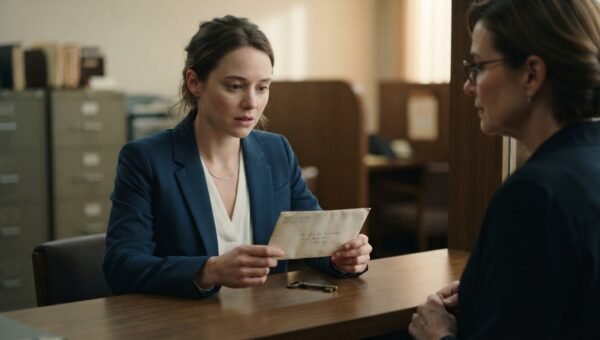
The next morning, I waited until my husband left for his shift at the water plant. I drove forty minutes into town to the regional toll customer service office on 11th Street. I carried the paper in my purse, folded into quarters.
The counter clerk was an older woman with silver glasses and a name tag that read Evelyn. I showed her the paper and explained that my father had passed away months ago, and that the vehicle listed on the bill had supposedly been crushed in a salvage yard before winter.
Evelyn typed the citation number into her keyboard. The keys clicked loudly in the quiet room.
“Our system takes high-resolution overhead photos at every gantry,” Evelyn said, adjusting her glasses. “Give it just a second to pull from the central server.”
She turned the monitor on its swivel base so we could both look.
The photo was sharp and clear under bright midday sun. It showed the green and white tailgate, the dented rear bumper Dad backed into a fence post back in 2012, and the exact license plate Wayne said was destroyed.
But the front gantry camera had captured the cab through the windshield just as clearly.
The person behind the wheel was not a stranger who bought recycled tags.
It was Wayne’s twenty-three-year-old son, Tyler. He was wearing Dad’s faded red feed-store ball cap, resting his left arm out the open window, laughing with a young woman in the passenger seat.
PART 2
I looked at the screen for a long time.
The dent in the corner of the bumper was right where Dad had backed into the cedar corner post behind the hay shed. In the bed of the truck, tied down with Dad’s yellow ratchet straps, sat two brand-new dirt bikes.
“Do you know the driver, ma’am?” Evelyn asked gently.
“Yes,” I said. “That is my nephew.”
“The account is still active in your father’s name,” she told me. “Whoever is operating the vehicle never transferred the registration. If the toll isn’t settled, it goes to collections under the estate.”
“How much is owed right now?”
She checked another tab. “Just this one notice for $39.50, but there are three pending crossings from this past weekend that haven’t billed out yet. Another $18.00.”
I paid the balance with my debit card, took the printed receipt, and asked for an official printout of the citation with the vehicle image. Evelyn stamped it with the district seal and slid it across the counter.
I sat in my car in the parking lot with the engine idling. My hands were steady on the steering wheel, but my chest felt tight and heavy.
Wayne had stood in Dad’s gravel driveway in November, looked me dead in the eye, and told me the engine was cracked and useless. He watched me cry because I couldn’t save the truck I learned to drive in, and he patted my shoulder and told me it was just iron and rubber. All along, he had simply rolled it into his pole barn, kept Dad’s plates on it, and handed the keys to his boy.
Tyler had wrecked two used sedans before he turned twenty-two. Wayne had paid off his debts twice, always making excuses for him. Dad had refused to bail Tyler out the last time, and that had caused a bitter fight between Dad and Wayne that lasted until the month Dad took sick.
I didn’t call Wayne from the toll office. I knew if I called, he would claim Tyler just borrowed it from the scrap man, or spin some lie that fell apart the second you touched it.
Instead, I drove home and pulled Dad’s metal file box from the closet shelf.
As executor, I had Dad’s spare keys, his tax records, and the estate binder the probate attorney had prepared. Wayne had signed the estate inventory three months ago under oath, swearing there were no remaining personal vehicles of value. He had listed zero dollars for personal property after we split Dad’s small savings account down the middle.
Inside the folder for the farm equipment, I found what I was looking for: the original blue Oklahoma title to the 1996 Ford.
Wayne had never asked me for the title. He had assumed that because the truck was old and rural tags didn’t get checked often out on the county back roads, nobody would ever look twice. He had Tyler driving an unregistered, uninsured vehicle titled to a dead man, running turnpikes on Dad’s ghost account.
I called Wayne at six that evening.
“Are you home?” I asked.
“Just finished supper,” he said. “Why? What’s going on?”
“I’m coming over. We need to settle Dad’s paperwork.”
“Brenda, the estate is closed out. We did that in February.”
“I’ll be there in twenty minutes, Wayne.”
PART 3
Wayne’s house sits on five acres off Route 16, with a three-bay metal shop behind the house.
When I pulled up the driveway, the double shop doors were rolled shut. Wayne was standing on his porch in his work shirt, holding a mug of black coffee, watching my headlights cut across the gravel.
I walked up the porch steps and didn’t wait for him to invite me inside. I handed him the toll receipt and the color printout from the turnpike office.
Wayne looked down at the paper. The porch light caught the image of Tyler sitting behind Dad’s wheel, smiling under Dad’s cap.
Wayne didn’t speak for nearly a minute. The only sound was the wind through the pines at the edge of his fence line.
“Tyler needed a way to get to his job at the pipeline yard,” Wayne said finally. His voice was quiet, but there was no apology in it. “His car blew a head gasket in October. He didn’t have five hundred dollars to his name.”
“You told me the motor blew,” I said. “You told me you sold Dad’s truck for scrap.”
“If I told you the truth, you would’ve demanded to buy it, Brenda. You had the cash saved up, and Tyler had nothing. He’s Dad’s only grandson. Dad would’ve wanted his grandson to have a set of wheels to earn a living.”
“Dad told Tyler to his face that he wasn’t giving him another dime until he learned how to take care of what he had,” I said. “And Dad left the estate to both of us, Wayne. Not just to you. You lied to me so you wouldn’t have to face me.”
“It’s an old farm truck,” Wayne snapped, his face hardening. “You’re acting like I stole a brand-new Cadillac. It’s twenty-eight years old with rust on the panels! Why are you turning this into a federal case?”
“Because you looked at me in Dad’s yard and lied while I was grieving,” I said. “And because you put your son in a truck that has no insurance, no valid registration, and a title that belongs to an open estate. If Tyler hits a school bus tomorrow, the liability comes back on Dad’s estate and my name as executor. You risked my financial neck because you were too cowardly to be honest.”
Wayne stared at the floorboards of the porch.
“Where is it?” I asked.
“In the shop,” he muttered.
“Open the doors.”
He set his mug down on the railing and walked down the steps without looking at me. I followed him across the gravel to the shop. He unlocked the side latch and hauled the heavy overhead door upward.
The truck was parked between his tractor and a stack of hay bales. Tyler had washed it, but the red paint on the front fender was still oxidized, and Dad’s wooden gun rack was still mounted behind the back window. The keys were dangling from the ignition.
I walked over to the driver’s side, opened the door, and pulled the keys out.
“What are you doing?” Wayne asked, stepping forward.
“I’m taking the keys,” I said. “Tomorrow morning at eight o’clock, I’m going to the county tag agency with Dad’s original title and the letters of administration. I am titling this truck in my name, and I am putting my own insurance policy on it.”
“Tyler needs to go to work at six tomorrow morning,” Wayne said, his voice rising. “You’re stranding the boy.”
“Then you can drive him in your own truck,” I said. “Or you can buy him a car with your own money instead of Dad’s. If this truck moves off this property tonight, I am calling the sheriff and reporting an unauthorized vehicle on Dad’s estate. Do not test me on this, Wayne.”
ENDING
I didn’t sleep much that night. I sat in my kitchen with a cup of tea, looking at the spare key Wayne had handed over without another word before I drove away.
The next morning, I stood in line at the tag agency as soon as the doors opened. I presented Dad’s death certificate, the court letters naming me executor, and the title. I paid the transfer fees, the back registration penalties Wayne had ducked, and walked out with a fresh set of plates in my hand.
By ten o’clock, my husband and I drove back to Wayne’s shop with a trailer hitch.
Wayne wasn’t there. His wife, Cindy, stood near the kitchen window with the blinds cracked, but she didn’t come outside to talk. Tyler wasn’t around either. I took the old plates off the bumper, screwed the new ones into place, and checked the oil before I turned the key.
The starter whined twice, and then the old engine caught with that familiar, low rumble I had listened to since I was fifteen years old.
The cab smelled of cedar sawdust, old vinyl, and Dad’s pipe tobacco. On the sun visor, tucked into the elastic band, Tyler had left Dad’s red ball cap. I took it down, brushed the dust off the brim, and set it on the passenger seat next to me.
I drove the truck back down Route 16 myself, taking the long way past the old farmstead. The steering had a little play in it, just like it always did, but the clutch caught clean and true.
Wayne sent a text two days later asking if we could work something out, maybe split the value if I let Tyler buy it over time on monthly payments. I didn’t reply. Some conversations are finished the moment you realize how easily someone could look you in the face and give away your memories to save themselves a few hundred dollars.
The truck sits in my driveway now, parked under the shade of the big elm tree. Every time I turn the key to run down to the feed store, I think about the truth coming out on a $14 toll notice, and I know Dad’s old Ford is finally where it belongs.