PART 1
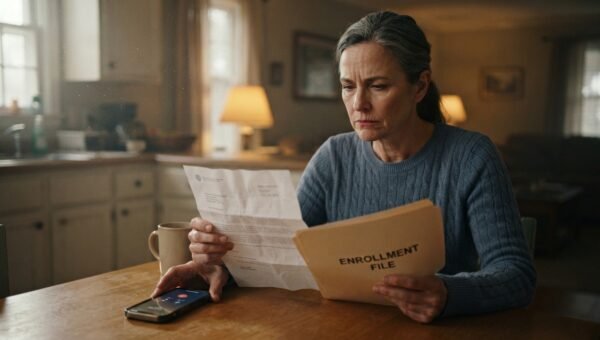
The shelter lobby smelled like bleach, wet gravel, and cold metal. I had a brand-new badge from my regional supervisor job clipped to my lapel, and my phone had buzzed three times in my coat pocket while I waited at the counter. My apartment complex had sent me a written cure-or-quit notice the Monday prior: two hundred dollars a day for keeping an unauthorized dog over twenty-five pounds, retroactive to the first of the month.
Buster sat heavily on the gray linoleum by my left shoe. He was ten years old, thick-chested, with white fur frosted all around his muzzle and eyes clouded by cataracts. When my brother, Jesse, died of a sudden pulmonary embolism eight months back, nobody else in our family stepped up. Our mother had been in assisted living in Altoona since 2021, and our older sister, Clara, made it plain she had enough on her plate with two teenagers and a mortgage. So Buster came home with me.
For eight months, I took him out before dawn and after dark, keeping him hidden behind the heavy living room blinds. But you cannot hide a seventy-pound golden retriever when a new management company takes over and conducts quarterly fire inspections.
“Just standard intake,” the shelter intake worker said without looking up from her terminal. Her name tag read Donna. “You sign line four, verify you are relinquishing all legal claims, and pay the fifty-dollar surrender fee.”
I slid my credit card across the laminate counter. Fifty dollars. It felt small and greasy.
Buster did not whine. He didn’t pull against the frayed nylon leash. When I let go of the handle, he took two slow steps toward me, lifted his gray chin, and pressed his damp nose hard against the center of my palm. Then he opened his jaw and dropped his favorite ratty canvas chew toy right onto my boots. It was a sun-faded green duck with its squeaker dead and its seams torn open, mended three different times with white household thread.
“Take his toy,” Donna said, clicking her pen. “Personal belongings get tossed during intake anyway. We have sanitized blankets in back.”
I picked up the damp duck, shoved it into the pocket of my coat, turned around, and walked out to my car. I sat in the driver’s seat for twenty minutes with the engine idling, watching my windshield fog up, telling myself that someone with a fenced yard in the country would adopt an older, quiet dog.
Two weeks later, on a rainy Thursday, my phone rang while I was sitting in my corporate office reviewing district mileage reports.
“Mr. Vance? This is Donna from the county shelter,” the voice said. “I’m calling regarding intake number 4082. Buster. I wanted to let you know he passed in his sleep early this morning. The vet checked him at seven. Heart gave out quietly. We just need to know if you want private cremation through our third-party provider for one hundred and twenty dollars, or standard county disposal.”
“Standard,” I said, barely hearing my own voice. “Standard is fine.”
I hung up, closed my office door, and sat there until the cleaning crew knocked on the glass at six.
When I got back to my apartment that night, the living room felt dead. The corner where his worn plaid bed used to lie was empty, the baseboard behind it gray with dog hair I hadn’t vacuumed.
On the bottom shelf of my hall coat rack, sitting next to my work umbrella, was that ragged green canvas duck.
A wave of sour heat rose in my throat. I grabbed the toy, walked to the kitchen, stepped on the trash can pedal, and jammed it down on top of empty coffee cans and plastic wrap. The dry canvas caught on the jagged lid of a soup tin. The seam ripped straight down the belly, dumping dry gray stuffing across my kitchen floor.
Along with the stuffing, something heavy hit the tile with a sharp metallic clink.
I bent down. Lying against the linoleum was a small, brass, rusted padlock key. Wrapped around the stem of the key with a piece of faded blue painter’s tape was a folded slip of yellow legal paper.
I peeled the tape off with my fingernail. It was Jesse’s tight, left-handed handwriting, written in ballpoint ink:
“David—If he gave you this, it means they finally caught up, or I didn’t make it to forty. If Buster is with you, you kept your word. The key fits the steel lockbox bolted under the workbench in the back shed at Mom’s old house on Elm Street. Clara told everyone the house was cleaned out after Mom moved to Altoona. It wasn’t. Check the red toolbox behind the furnace before she signs the final deed transfer next month. Look at the 2019 deposit slips.”
PART 2
I stood over my kitchen trash can with the yellow slip of paper between my fingers for five full minutes.
My brother Jesse had always been the quiet one in the family. He worked twelve-hour shifts at the rail yard in McKees Rocks, lived alone in an eighty-foot single-wide trailer on four rented acres, and rarely asked anyone for anything. When he collapsed in his kitchen on a Tuesday evening in February, Clara had taken charge of his paperwork before the funeral home even had his body. She told me Jesse had died with less than twelve hundred dollars in his checking account, five thousand dollars in credit card debt from auto parts, and back rent owed on his lot.
“There’s nothing to settle, David,” Clara had told me over cold coffee at the diner down the road from the funeral home. “I paid his lot rent out of my own pocket so the landlord wouldn’t auction his tools. You take the dog, I’ll handle the paperwork.”
I had believed her. Clara was the organized one. She was an office manager for a regional logistics firm, drove a leased Buick, and carried a leather binder with tabs for every family occasion. When our mother had her second stroke in 2021 and moved to the nursing home in Altoona, Clara became her power of attorney. Clara handled the sale of Mom’s furniture, the Medicare forms, and the real estate listing on our childhood house on Elm Street.
The house on Elm Street had been sitting empty for nearly three years, stuck in what Clara called “probate limbo” because of Medicaid estate recovery liens. Just three weeks ago, Clara had texted our family group chat saying the county had cleared the title, and she was closing the sale to a local private developer on the fifteenth of next month for eighty-four thousand dollars.
I looked down at the brass key. It was an old Master Lock key, its grooves worn smooth and stained with dark garage grease.
Jesse hadn’t lost his mind before he died. He had kept this key hidden inside Buster’s toy because he knew Buster went everywhere with him. Jesse used to bring Buster to Elm Street every Saturday morning when Mom was still living there, letting the dog run the fenced back garden while he repaired Mom’s porch railings and checked the oil burner.
The next morning, I took my first personal day from my new job. I drove two hours north, off the interstate, down through the river towns, until I pulled onto the cracked asphalt of Elm Street.
Mom’s house sat near the end of the cul-de-sac. The yard was waist-high in crabgrass and wild mustard. A faded real estate sign leaned sideways near the driveway, its flyer box empty. Clara had put a combination padlock on the front door latch, but the detached garage and shed out back were only secured by an old wooden turn-button on the side door.
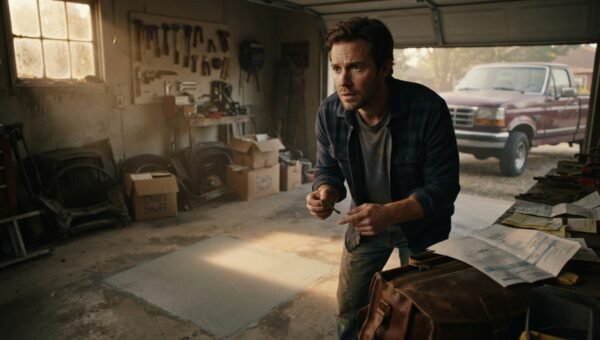
I walked through the wet weeds to the back shed. The air inside smelled of dry potting soil, motor oil, and rotten cedar shingles. Jesse’s old wooden workbench, built out of stacked railroad ties and plywood, was pushed against the rear wall beneath a grime-streaked window.
I crouched down on my knees in the dirt.
Bolted straight into the underside of the heavy bench was a flat steel mounting plate holding a small gray fireproof lockbox. The padlock through its hasp was an old Master Lock No. 3.
My hands shook as I lined up the rusted key from Buster’s duck. I pushed it into the cylinder. It caught, stuck for half a second on grit, and then turned with a dry, stiff click.
I lowered the metal lid.
Inside lay three blue deposit receipt booklets from First Commonwealth Bank, a folded white certified mail receipt dated October 14, 2019, and a six-page typewritten document stamped by the county recorder’s office.
I sat back on the dirt floor of the shed and opened the bank receipts first.
Between June 2018 and August 2019, regular monthly transfers of $1,850 had been deposited into a special trust checking account under our mother’s name. But on September 3, 2019, one lump-sum withdrawal had cleared the account completely: $86,400.
Attached to that withdrawal slip was a copy of a cashier’s check made out to Clara’s personal checking account, signed by Clara as power of attorney.
Beneath the slips was the county document. It was not a lien notice from Medicaid. It was a recorded private mortgage agreement. In 2018, before Mom’s stroke, Jesse had taken out a second mortgage on his own trailer and given Mom $86,400 in cash to pay off the reverse mortgage our father had taken on Elm Street before he died, saving the family home from foreclosure. In exchange, Mom had signed a notarized quitclaim deed transferring fifty percent of the Elm Street house to Jesse upon her death, ensuring Jesse would always have a debt-free roof over his head.
Jesse had filed the deed with the county himself.
Clara had withdrawn the $86,400 from Mom’s account the week after Mom went into the nursing home, claiming on the ledger it was for “pre-paid long-term care reserves.” But there was a carbon copy of a letter folded behind the deed. It was from the Altoona nursing home billing office, dated November 2019, addressed to Jesse:
“Dear Mr. Vance: We have received your inquiry regarding your mother’s account. Please be advised that Mrs. Vance’s care is currently covered entirely through her state Medicaid allowance and survivor pension benefits. No private reserve payment of $86,400 has ever been credited to this account.”
Jesse had spent the last two years of his life working eighty hours a week at the rail yard, paying off the debt he took on to save Mom’s house, while Clara sat on the cash and prepared to sell the property out from under him.
PART 3
I drove straight from Elm Street to Clara’s two-story colonial in Cranberry Township.
Her Buick was parked in the concrete drive. The sprinkler was ticking quietly across her manicured lawn. When I walked up the porch steps, I didn’t ring the bell. I knocked twice, hard, on the leaded-glass door.
Clara opened it wearing her business slacks and an apron, holding a cordless house phone. When she saw my face, she lowered the phone.
“David? What are you doing here on a Friday? Is something wrong with Mom?”
“Mom is fine,” I said. “We need to talk about Jesse.”
She let out a short, tired breath and stepped back, holding the door open. “David, I told you, Jesse’s estate is closed. I took care of the legal fees. If this is about his storage locker, I already told the manager to clear it.”
I didn’t sit down on her beige living room sofa. I walked straight over to her kitchen island, set the gray steel box down on the polished granite, and dumped the blue bank receipts and the county quitclaim deed onto the counter.
Clara stopped in the doorway. Her eyes dropped to the steel box, then to the worn brass key sitting beside it.
“Where did you get that?” she asked. Her voice was flat, but her left hand tightened around the back of a barstool.
“Buster had it,” I said. “He had it in his duck. The duck you told me to throw out when I packed Jesse’s trailer.”
“Jesse was paranoid at the end,” Clara said immediately, not looking at the papers. “He was working third shift, he wasn’t sleeping, and he thought everyone was trying to steal from him. You know how he got when he drank.”
“Jesse didn’t drink for five years before he died, Clara,” I said. “And these aren’t paranoias. This is a cashier’s check for $86,400 made out to your personal account on September 3, 2019. The Altoona facility never saw a dime of it. You used Jesse’s loan money to pay off your own home equity line when Greg lost his contracting business.”
Clara’s face hardened. She didn’t cry. She didn’t shout. She walked over to the counter, pulled out a drawer, took out a pair of reading glasses, and put them on.
“You don’t understand how much work Mom was,” she said, looking down at the papers without touching them. “You were living two hours away in an apartment, focused on your career. I was driving to Altoona every other weekend. I was cleaning out her gutters. I managed her medications for two years before the home took her. That money was family money. Mom wanted me to have security.”
“Mom had dementia, Clara. Jesse broke his back on the night shift paying off the bank note for that house, and you told him the property was going to the state so you could sell it for eighty-four thousand dollars to a builder and keep every cent.”
“Jesse had no dependents,” she said, her voice rising slightly. “He had a trailer and a dog. What was he going to do with a four-bedroom house on Elm Street? Let it rot? I have two kids going to Penn State next fall.”
“He was going to live there,” I said. “It was his home.”
We stood in that quiet kitchen while the grandfather clock in her foyer ticked.
“What do you want, David?” she asked quietly. “The sale closes in three weeks. If you try to hold this up in probate, the legal fees will eat up whatever is left. Nobody wins.”
“You aren’t selling the house,” I said. “The quitclaim deed names Jesse as fifty-percent owner. Jesse’s estate passes to his legal heirs. Since he didn’t have a will, his share belongs to you, me, and Mom’s care trust.”
“You’re going to drag our family through court over an old house in a dying mill town?”
“No,” I said. “You’re going to wire $43,200 back into Mom’s restricted care account by Monday morning. That covers Jesse’s half of the cash you took. And you’re going to sign the deed over to me as administrator. If you don’t, I take these bank receipts and the certified letter to the county district attorney’s elder fraud division by noon.”
Clara looked at the papers for a long time. She took off her glasses, folded them, and set them on the granite.
“You always took his side,” she said.
“He never lied to me,” I said.
ENDING
Clara signed the transfer papers at an attorney’s office in downtown Pittsburgh the following Thursday.
She didn’t speak to me in the waiting room. She came with her husband, signed the four documents where the notary flagged them with yellow stickies, and left before the copies were even stapled. The $43,200 was deposited into the state-monitored trust for Mom’s ongoing care, ensuring Mom’s private room at the facility would be funded without interruption for the rest of her life.
The sale to the developer was cancelled.
The following Saturday, I drove back out to Elm Street. I brought a lawnmower in the back of my small SUV and cut down the high grass in the front yard. I swept the dead leaves off the front porch where Jesse had replaced the cedar railings back in 2018, his clean white wood screws still bright against the weathered gray boards.
I walked into the county shelter on my way home that afternoon.
Donna was at the desk, typing on the same keyboard. When I walked up to the counter, she recognized me immediately. Her shoulders stiffened, probably expecting another complaint or an argument about the surrender fee.
“Mr. Vance,” she said cautiously. “Can I help you?”
“I want to sponsor the adoption fees for all the senior dogs you have in back,” I said.
I took out my company card and paid for four older dogs whose kennel cards had been marked for over six months: an eleven-year-old hound mix, two black lab mixes, and an arthritic shepherd.
Donna looked at the receipt printing out, then looked up at me. “Are you sure about this?”
“I’m sure,” I said.
I drove back to my quiet apartment. On my kitchen counter, sitting next to my car keys, was the small, rusted brass key from the shed.
I didn’t throw it out. I put it on my main key ring, right next to the fob for my car and the key to Elm Street. Every time I pull my keys out of my pocket now, the brass hits my knuckles first, cold and heavy, reminding me of the price of looking away, and the brother who trusted an old dog to keep his last secret safe.