PART 1
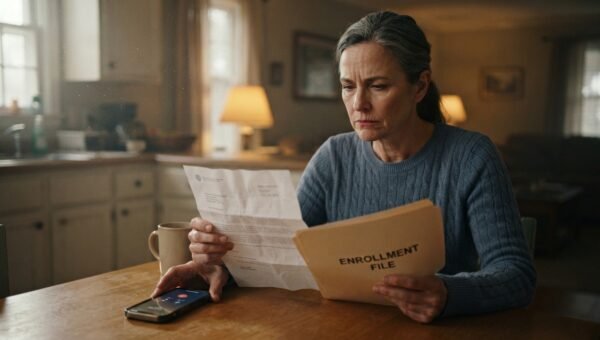
My daughter-in-law, Brenda, began meeting the mail truck down by the driveway early in July. We live on four acres off Route 9, and the box sits out on a wooden post near the culvert. For twelve years after my husband Frank died, walking down that gravel path every day around two o’clock was my routine. It gave me fresh air, and it kept my knees moving. But when Brenda and my son David moved in with me after David lost his warehouse route, Brenda took it upon herself to be the homemaker.
She told me she was trying to save my legs in the summer heat. She said ninety percent of what arrived was circulars, supermarket coupons, and credit card solicitations, and she just wanted to keep the kitchen counter tidy.
I thought she was being thoughtful. At sixty-eight, you learn not to argue when younger people want to help, even if you feel a little shoved aside. If the counter stayed clear, I figured it was a small price to pay.
Then, on a Tuesday afternoon around three, the kitchen landline rang. It was Mr. Henderson from our local branch post office in town. I have known Bob Henderson since our kids played Little League together at Miller Field.
“Martha,” he said, clearing his throat. “I’m looking at a change of address form that hit my desk from the regional sorting hub yesterday. Did you put in a permanent forwarding request to an address out in Reno, Nevada?”
The room went completely quiet around me except for the refrigerator hum. I leaned against the counter near the spice rack. “No, Bob. Why in the world would I move to Nevada? I’ve lived in this house since 1984.”
“Well, that’s what made me pull it,” Bob said. “It came through electronic filing first, but the paper confirmation arrived here this morning with your name on it. The address is a private commercial box on South Virginia Street. You better come down here and see it before I flag the fraud division.”
I did not wait for David to get home from his afternoon shift at the hardware store. I took my keys off the wooden hook by the back door, got into my Buick, and drove straight into town.
Bob took me into his back office behind the parcel scale. He laid a white card on the blotter. The signature at the bottom read Martha Albright, written in blue ballpoint.
It had my slanted M, but the letters were shaky and stiff, the way a person writes when they are tracing over a pencil line held up against a window. Right beneath it was the printed witness verification line required for disputed accounts. The handwriting there was unmistakable. It had the round, looping letters with little open circles over the letter i that Brenda used on every birthday tag and grocery list in our kitchen.
“I’m freezing the whole thing right now,” Bob said, his face stern. “Nothing leaves this branch for Nevada.”
I sat in my car in the post office parking lot for twenty minutes before my hands stopped trembling enough to turn the ignition key.
When I pulled back up our driveway, Brenda’s grey sedan was gone. She usually went to pick up a few odds and ends before dinner. I walked through the side door, past the kitchen, and straight down the hall to the utility room.
The yellow wicker laundry basket sat on the floor beside the washing machine. It was half-full of clean towels Brenda had folded that morning.
I lifted the basket. Tucked right beneath the white plastic rim against the baseboard were three unopened envelopes.
The first was a formal white envelope from the county court clerk, stamped in red ink. The second bore the return address of an insurance carrier I had never heard of out of Chicago. The third was a heavy manila envelope addressed to Frank. Stamped across the center, right over his name, were two words in bold black letters: FINAL NOTICE.
My fingers shook so badly I tore the corner of the manila envelope trying to pry the adhesive loose. Inside was a delinquent property tax and home equity default statement totaling $42,600, with a scheduled sheriff’s auction date set for the third week of November. Frank had been in his grave for six years, and our home had been fully paid off since our thirty-fifth anniversary.
PART 2
The date on the first warning inside that envelope went back fourteen months. According to the court summons, a second mortgage had been taken against my house for $42,600 through an online private lender in June of the previous year.
I sat down on the wooden bench in the utility room with the papers spread across my lap. Frank had never taken a loan without me sitting beside him at the First National Bank on Main Street. We had burned our original thirty-year mortgage note in our backyard fire pit with our children watching. There was no loan on this house.
I opened the second envelope, the one from the insurance carrier. It was a lapse notice on a term policy written against my own name, listing Brenda Albright as the primary beneficiary. The third letter, from the clerk of courts, was a legal service notification stating that personal service had failed twice because the resident told the server that Martha Albright was residing in an assisted living center out of state.
A heavy thump came from the back door. The latch clicked, and Brenda walked into the kitchen carrying a brown paper grocery bag.
“Martha?” she called out, setting the bag down on the laminate table. “Are you back? I picked up some chicken breasts for tonight.”
I picked up the three open envelopes. I did not fold them. I walked down the hall and stood by the threshold between the kitchen and the dining room.
Brenda turned around with a carton of eggs in her hand. Her eyes went straight down to the yellow paper in my grip. She did not ask what was in my hands. She set the eggs on the counter very carefully, without letting the cardboard container make a sound.
“David doesn’t know about this, does he?” I said.
Brenda looked at the sink, then at the floor by the refrigerator. Her voice came out small and tight. “David was going to lose his truck, Martha. He couldn’t make the payments after the distributor let everybody go. We had credit cards from his tools that were about to go to collections.”
“You put a mortgage on my house,” I said. “You forged Frank’s name on an old line of credit from twenty years ago, and then you forged my signature at the post office so the default notices wouldn’t show up here.”
“It was an open line Frank had with the farm credit union years ago that was never closed properly,” she whispered, looking up at me now with red eyes. “The paperwork came in the mail right after we moved in. The lender said because the account was dormant, all it needed was a renewal authorization. I was going to pay it back before anyone noticed. David was supposed to get that regional supervisor job by spring. He didn’t know anything about it. I handled all the bills.”
“And the change of address to Nevada?”
“A company online said you could rent a mail drop to stop local service of court papers,” Brenda said. Her voice started to shake. “They said it buys four or five months while they verify residency. I just needed four more months until David’s sign-on bonus cleared. That’s all. I was going to bring the payments current before the sale date. I was trying to save us.”
“You were trying to save yourself,” I said, “and you almost put me on the street.”
Before she could answer, we heard the rumble of David’s truck coming up the gravel drive.
PART 3
David came through the screen door with his lunch cooler under his arm, whistling a country tune from his truck radio. He kicked his work boots off against the baseboard the way he has since he was ten years old.
“Smells like dinner’s late, girls,” he said, tossing his keys on the counter.
Then he looked at Brenda, whose face was blotched red, and over at me holding the sheriff’s sale packet.
“What’s going on?” he asked, his smile dropping.
I did not scream. I did not throw the papers at him. I laid the court summons, the loan renewal sheet, and the forged change of address form flat on the kitchen table between his lunch cooler and the grocery bag.
“Read the amount on page three,” I said.
David pulled out a chair and sat down. He read in silence. For five minutes, the only sound in the kitchen was the ticking of the battery-operated wall clock above the stove. Brenda stood pressed back against the counter, her arms crossed tight against her stomach, crying without making a sound.
“Forty-two thousand?” David’s voice cracked. He looked up at his wife. “Brenda, what is this? Where did this money come from? You told me you took out a personal consolidation loan with your credit union to cover my truck.”
“They turned me down,” she sobbed. “We were three days away from the repo man coming down the driveway, David! Your mother has this big house and no debt. I thought I could make the six-hundred-dollar monthly payments out of my part-time bookkeeping work, but the interest rate was sixteen percent. The payment jumped to eleven hundred in April. I couldn’t keep up.”
“You used my father’s name,” David said. His face had gone gray. He looked down at the signature line where someone had copied Frank’s heavy script onto an old dormant equity renewal. “You signed Dad’s name on a fraudulent loan to save my pickup truck?”
“I was trying to keep our family together,” she cried.
“No,” I told her plainly. “You were stealing the roof over our heads.”
The next morning at eight, David walked Brenda down to the county sheriff’s department on Courthouse Square. I did not go with them. Instead, I drove down to the First National Bank and sat down with our family attorney, Arthur Vance, who had handled Frank’s estate.
Arthur looked over the paper trail. Because the loan had been originated through an unregulated online lender using a dormant equity account and forged signatures of both a deceased homeowner and myself, we had grounds for immediate fraud affidavits. But it required filing formal police reports naming Brenda directly, which David signed without hesitation.
The private mailbox in Reno was flagged and closed by the postal inspectors that afternoon. By the end of the week, the lender was forced to halt the foreclosure proceedings pending the criminal investigation.
ENDING
David moved his belongings into the spare bedroom in the basement that weekend. Brenda went to stay with her sister across the county line in Shelbyville.
The legal process moved at an ordinary, painful crawl. Over the next six months, the fraudulent lien was formally stripped from my deed by court order after the handwriting analysis confirmed the forgery. Brenda accepted a diversion agreement that required her to pay back the twelve thousand dollars she had drawn in cash, along with three hundred hours of community service and five years of probation. David took a second night shift at the lumber yard to pay off his own vehicle debts properly, dollar by dollar, without shortcuts.
Brenda never came back into my kitchen. David still lives downstairs, paying me three hundred dollars a month in rent and keeping the grass cut, though we don’t talk much about what happened that summer. Some things, once broken, leave a crack you can never quite smooth over with polite conversation.
Every day around two o’clock, I put on my walking shoes. I walk down the gravel path, four acres out to the road, and pull down the metal latch on our mailbox myself. The hinges squeak a little in the afternoon quiet.
I sort through every envelope standing right there on the shoulder of Route 9: the grocery circulars, the electric bill, the letters from friends, and the junk. I look at each one, carry them back to the house in my own hands, and set them down on a clean counter.