PART 1
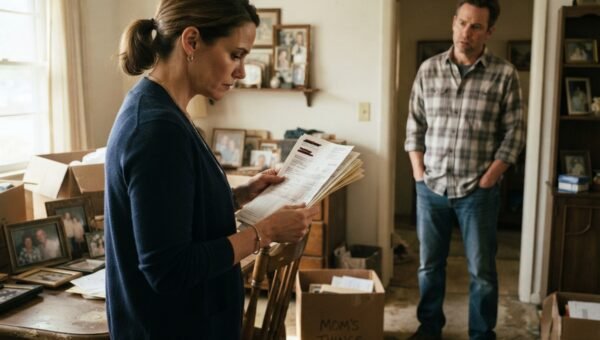
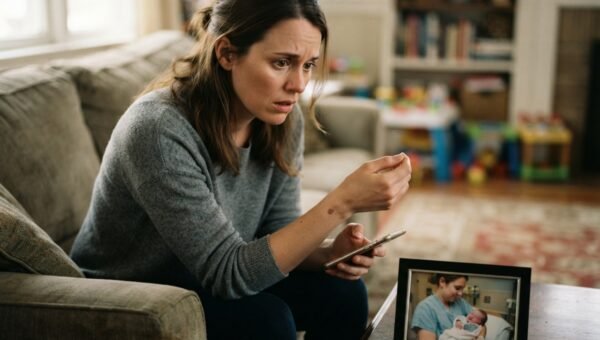
I stared at the screen on Saturday morning until my eyes stung. The balance on Chloe’s account was four dollars and twelve cents. On Friday afternoon, it held $17,600. That was fourteen years of medical billing overtime, birthday checks from her grandmother, and every extra twenty-dollar bill I could scrape together since she was in kindergarten.
She was nineteen, living at home, and taking classes at the county community college.
She had full access to the account because I wanted her to feel like an adult.
When she walked into the kitchen at noon carrying a laundry basket, I set my phone flat on the table. I asked her where the money went.
She stopped in front of the dryer. Her face went completely still. She told me she could not talk about it yet.
That was when I lost my temper. I told her she had thrown fourteen years of my sweat into a furnace. I brought up Derek, the boy she had been seeing for five months who drove a truck with two mismatched tires and never seemed to have a shift at the warehouse. I told her she was a fool if she let a boy sweet-talk her into draining her future before she even turned twenty.
Chloe dropped the basket. Socks spilled across the linoleum. She looked at me with tears cutting through her makeup, told me I never trusted her, and walked out the back door.
Her car started up five seconds later, and she backed down the driveway so fast her tires threw gravel against the fence.
Saturday night was quiet. Sunday was worse. Her bed stayed made, and she sent all my calls straight to voicemail.
By Monday morning, my anger had turned into a dull, heavy ache in the center of my ribs. I had to leave for the billing office at seven. When I unlocked my sedan in the driveway, I noticed a white business envelope tucked flat beneath the driver-side windshield wiper.
My name was written across the front in Chloe’s hurried ballpoint handwriting.
Inside was a folded piece of yellow carbon paper and a short note torn from a spiral notebook.
The note had only two sentences: “I’m sorry I lied. I knew you’d say no.”
The yellow slip was an itemized invoice from Oak Ridge Veterinary Emergency Hospital, forty miles south in the valley.
It showed emergency surgery, three units of canine plasma, four nights of intensive care boarding, and a paid balance of $17,600.
My thoughts jumped straight to Barnaby. Barnaby was our twelve-year-old lab mix. Three weeks earlier, he had slipped through a storm-damaged slat in the backyard fence while I was at work. I spent two solid weeks driving the back roads, hanging laminated signs on stop signs, and calling animal control every morning at eight. Nothing ever turned up. Eventually, I took his food dish off the back porch and washed it, figuring he had crawled into the brush somewhere to die the way old dogs do.
I thought Chloe had found him. I thought she had found him broken on the side of a road, rushed him to an emergency clinic, and spent every penny she owned to keep him alive.
Then I looked at the top line of the invoice.
The patient name was Bear. The breed was hound mix. The owner listed was a man named Marcus Vance.
I did not know any Marcus Vance. Nobody in our family or neighborhood had that name.
I sat in my cold car with the engine idling and dialed the hospital number printed on the receipt. When the receptionist answered, I read off the invoice number with my hand shaking against the steering wheel. I asked if my daughter had brought our dog Barnaby into their clinic over the weekend.
The woman on the line paused. Paper rustled on her desk.
“Ma’am,” she said quietly, “your daughter didn’t spend that money on your dog.”
Then she told me who Marcus Vance was, and what had actually happened on the creek road on Friday afternoon.
PART 2
The receptionist’s name was Brenda. She had worked at Oak Ridge for eleven years, and her voice was very calm, the way medical people sound when they are used to dealing with panic.
She told me Marcus Vance was a sixty-eight-year-old retired road grader for the county. He lived by himself in an old trailer off the creek bottom, near the old timber boundary where our town turns into rough hollows.
On Friday afternoon around three o’clock, Marcus was walking his hound, Bear, along the drainage canal behind the old lumber yard. That was nearly four miles from our house. Bear stopped near an overgrown concrete culvert that had half-collapsed during the spring flooding. The dog started whining, digging at the wet dirt, and barking until Marcus climbed down into the mud to look.
Barnaby was inside the pipe.
He had been stuck down in that dark concrete pipe for days, wedged between two fallen slabs of wet rock with no way to turn around. He was dehydrated, covered in ticks, and too weak to bark.
Marcus told the clinic that while he was on his knees trying to heave the first slab of concrete off Barnaby’s hind legs, two stray dogs or coyotes came out of the briar patch along the ditch. They went straight for the opening of the pipe.
Bear did not run. Bear threw himself between those animals and the hole where Marcus and Barnaby were trapped.
By the time Marcus got Barnaby pulled free and beat the brush with an iron tire iron, Bear was torn to ribbons. His chest was punctured, his shoulder was broken, and his belly was ripped wide open.
Marcus loaded both dogs into the bed of his old pickup and drove straight to Oak Ridge.
When they carried Barnaby through the clinic doors, the technician checked his neck. His collar was caked in mud, but the old county rabies tag was still hanging by a split ring. The staff wiped the metal clean, pulled up our account in the county database, and found Chloe’s cell phone number listed as the secondary emergency contact.
They called her at four o’clock on Friday.
Chloe got to the hospital thirty minutes later. She walked in and found Barnaby alive on a blanket in an exam room, hooked to an IV bag, dirty but mostly unharmed except for dehydration and a cracked toenail.
Right across the hall, through the glass of the trauma room, a surgeon was talking to Marcus Vance.
Brenda told me what happened next because she was standing right at the reception counter.
Marcus Vance was sitting on the plastic bench in mud-stained overalls, holding his trucker hat in his lap. The veterinarian told him Bear had massive internal bleeding, a collapsed lung, and multiple fractures. The surgery and four days in the hyperbaric oxygen unit would cost between sixteen and eighteen thousand dollars.
Marcus did not have eighteen thousand dollars. His only income was a monthly pension check of nine hundred and twenty dollars from the county road department.
He sat on that bench with tears running into his gray beard and asked the doctor for the euthanasia release form. He told the staff he had raised Bear from a six-week-old pup, but he could not pay money he did not have. He signed the first line of the paper, set the pen down, and asked if he could stay in the room until Bear stopped breathing.
Chloe had been standing by the door holding Barnaby’s muddy collar in her hands.
She walked up to the desk, pulled her blue debit card out of her jacket, and told the receptionist to charge the entire estimate to her account.
PART 3
I did not go to work that morning. I turned the car around, backed out into the street, and drove the forty miles south toward the valley.
The rain had started coming down in thin, gray sheets. My wipers dragged back and forth across the glass, making a dry squeaking sound every time they crossed the center.
I kept thinking about the kitchen table on Saturday afternoon. I remembered the exact tone of my voice when I asked her who she gave the money to. I remembered telling her that she was reckless, that she had no idea what a dollar cost, and that she had let some boy rob her blind.
She had not defended herself. She had stood there with her chin shaking, knowing that if she told me the truth, my very first sentence would have been: “You cannot spend your college fund on an old man’s dog.”
She knew me. That was the part that made my throat close up until I had to roll the window down to get cold air on my face. She knew me down to the bone. If she had called me from that clinic on Friday afternoon, I would have told her that it was a terrible tragedy, but Bear was not our responsibility. I would have told her that seventeen thousand dollars was four years of tuition and books. I would have told her to bring Barnaby home and leave the rest alone.
She had lied because she wanted to save the dog before I could stop her.
I pulled into the gravel parking lot of Oak Ridge Veterinary Hospital just before ten.
The lobby smelled like floor cleaner and wet dog. In the far corner of the waiting room, near a low table stacked with hunting magazines, Marcus Vance was sitting in an orange vinyl chair. He was wearing clean jeans that were too short for him and a green work jacket with frayed cuffs.
Chloe was sitting in the chair next to him. She had a gray fleece blanket pulled over her shoulders and an empty paper cup between her palms. Her hair was pulled back in a messy knot, and she looked smaller than nineteen.
Barnaby was lying flat on the linoleum between their feet, wearing a blue medical vest, his tail thumping once against the floor when the door chime rang.
Chloe looked up. When she saw me standing by the umbrella stand, her shoulders came up toward her ears. She set the paper cup on the floor, stood up slowly, and pulled the blanket tight around her chest like a shield.
“The money cleared this morning,” she said. Her voice was flat and rough from lack of sleep. “You can’t reverse it. I asked the bank on Monday. It’s done, Mom.”
I did not say anything about the bank.
I walked across the room, stopped in front of her, and pulled her arms down until the blanket fell away. Then I pulled her against my shoulder.
She did not hug me back at first. Her body stayed stiff and guarded, waiting for the lecture, waiting for the numbers. Then she let out a long, ragged breath against my neck, and her hands gripped the back of my winter coat so hard I could feel her knuckles through the wool.
“He saved him, Mom,” she whispered into my collar. “Barnaby was down in that pipe in the dark. Bear fought them off. The man was going to put him down right on the table while I was holding Barnaby. I couldn’t let him do that. I just couldn’t.”
“I know,” I said. “I know, baby.”
Marcus Vance stood up from his chair. He moved slowly, his knees making a dry cracking sound. He took his hat off with both hands and stood there looking at the floor between us.
“Ma’am,” he said, clearing his throat until his voice worked. “I didn’t know that was her school money until Sunday night. She told the girls at the desk it was an emergency fund. If I’d known she took that from her own future, I wouldn’t have let her swipe that card. I’ve got four acres of timber off the creek. It ain’t worth much, but I can deed the bottom piece over to you. It’s got good walnut on it. A mill might give you ten or twelve for the timber.”
“Put your hat on, Mr. Vance,” I said. My voice was surprisingly steady. “Nobody is taking your land.”
ENDING
Bear came through the surgery. The doctor said he had twenty-two internal stitches and a steel pin through his left hip, but hounds are stubborn animals, and his lungs had cleared by Tuesday afternoon.
We stayed at the hospital until noon, until the technician let Marcus and Chloe go back into the recovery ward to sit by Bear’s kennel for fifteen minutes. Barnaby walked out to my car on his own four legs, moving slow and stiff, but his nose was up in the cold wind the whole way across the lot.
We did not talk about the money on the drive home. We talked about how to keep Barnaby from scratching at his bandages, and whether we needed to buy a ramp so he wouldn’t have to jump into the back seat.
The seventeen thousand six hundred dollars is gone. That fact did not change when the sun came up, and it will not change next semester when the tuition bill comes due from the community college.
We sat down at the kitchen table on Wednesday night with a clean legal pad and a calculator.
Chloe is not going to school full-time in the spring. She picked up twenty-five hours a week at the veterinary hospital working the front desk and cleaning the recovery kennels, which Brenda helped arrange after seeing how she handled the dogs. She is taking two evening classes instead of four. It will take her three extra semesters to finish her associate degree, maybe four.
Marcus Vance walks up our driveway every other Sunday morning.
He drives his old truck into town, parks near our mailbox, and walks Bear on a short nylon lead. Bear has a long, shaved patch along his ribcage where the hair is growing back gray and rough, and he walks with a slight hitch on his left side, but he pulls hard on the lead whenever he sees Barnaby waiting on our front porch.
Marcus brings a five-gallon bucket of fresh eggs from his neighbor’s coop, or a sack of cleaned squash from his garden patch, and he sets it on the bottom step before he sits down to talk for half an hour.
Yesterday, I was putting clean sheets on Chloe’s bed when I saw the little blue bank passbook sitting on her nightstand. I opened it to the last printed line. Four dollars and twelve cents.
For fourteen years, I thought that account was the proof that I was a good mother. I thought being a good mother meant protecting a girl from the hard edges of the world, keeping the numbers stacked high enough that nothing could ever hurt her.
I put the passbook back on the wood next to her lamp.
The money was gone, but the girl sitting downstairs on the rug, sharing a piece of toast with two old dogs, had turned out exactly the way a mother prays her child will turn out when nobody is watching.