PART 1
My brother Kevin sold Dad’s 1994 Econoline van for three hundred dollars the week after the memorial service. He told me the transmission was shot, the frame was rusted through, and it wasn’t worth the driveway space it was taking up.
“It’s just scrap metal, Sarah,” he said, handing me a hundred and fifty dollars in crumpled twenties at Dad’s kitchen table. “Nobody wants an old rust bucket.
Be glad I got a scrapper to tow it away for free.”
Dad had driven that van for twenty-five years. He ran a small diner on River Road until his knees gave out, but people in town remembered him for something else. During the spring flood of 1998, when the river broke through the south levy and turned three neighborhoods into dirty lakes, Dad loaded that van with hot soup, dry blankets, and jugs of clean tap water twice every single day. He spent two weeks driving through axle-deep water, pulling up to community shelters and church basements, refusing to take a dime from anyone.
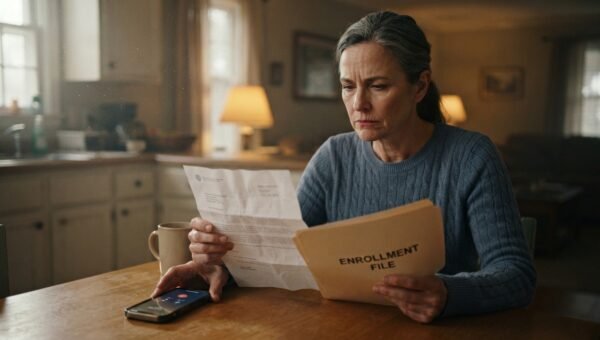
I took the cash Kevin gave me because I was tired, grieving, and had no reason to doubt my younger brother. Dad didn’t leave much behind. His house had a second mortgage, the diner had been sold years ago to cover medical bills, and all Kevin and I had left was the task of boxing up his work shirts and old tools.
Four days later, my phone rang while I was folding laundry. The caller identified himself as Martin Miller, an independent auto repair mechanic who ran a salvage bay on the north side of the county.
“Is this Sarah Vance?” he asked. His voice sounded careful, like a man choosing every word before letting it out.
“Yes, it is,” I said.
“Did your father own a faded blue Ford van with a dent on the rear passenger door?”
“He did,” I answered, sitting down on the edge of my bed. “My brother sold it to an auto scrapper on Monday.”
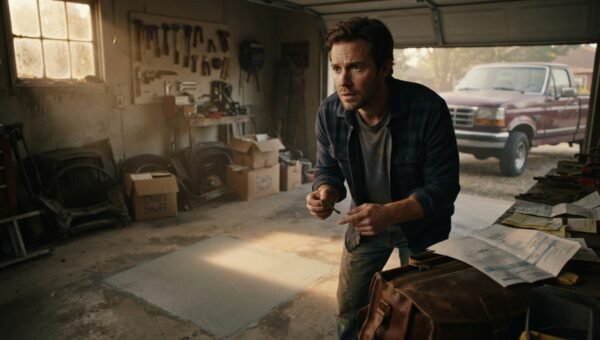
“Well, the scrapper dropped it here to part out the engine block,” Martin said. “I got underneath it this morning to drop the fuel tank, and something didn’t sit right with the rear cargo bed. The floor height was off by almost four inches compared to the outer sill. I pulled back the old rubber matting and found a sheet of bolted plywood.
Underneath that, there’s a false steel floor built right over the frame rails.”
A cold stillness settled in my chest. “A false floor?”
“Yes, ma’am,” Martin said. “And the moment I saw it, I recognized the license plate. My family lived on Elm Street back in ’98. Your father pulled up to our porch in this very van when the water was up to our front steps. He gave my mother three gallons of milk and a pot of beef stew.”
“That was him,” I whispered.
“Dozens of people wrote messages directly onto the steel framing under there,” Martin continued, his tone softening. “Names, dates, little prayers from the families he helped during the flood. But that’s not why I called you directly instead of your brother. Taped right behind the spare tire well, under that false panel, there’s an oilcloth packet. And inside it, there’s a sealed envelope with your name written on the front in marker.”
“My name?”
“Just yours,” Martin said. “I haven’t opened it. I don’t touch personal papers. If you want to come down to the shop, it’s sitting right where your father left it.”
I grabbed my car keys without even hanging up the coat I was holding. The drive across town took twenty minutes. When I pulled into Martin’s gravel lot, I saw Dad’s blue van up on jack stands near the back bay. But parked right next to the open bay door was Kevin’s silver pickup.
Kevin was standing near the lift, his hands stuffed deep into his jacket pockets. He was arguing with Martin, his face flushed red under the harsh shop lights.
“I have the title receipt,” Kevin was saying loudly. “I made the sale. That means anything inside the body is legally mine to collect. Name your price to void the scrap ticket. I’ll give you three thousand dollars cash right now to hook it back up to a trailer and let me take it.”
Ten times what he claimed he had sold it for.
I stepped through the bay door, the smell of grease and wet iron hitting the air. “Three thousand dollars, Kevin? You told me it was useless scrap.”
Kevin turned around fast. For a split second, he tried to smile, but the expression died on his face before it reached his eyes.
“Sarah,” he said, lowering his voice. “I didn’t know you were coming. I was just talking to Martin here. I realized… look, I felt bad about letting Dad’s old rig go to a crusher. Sentiment got the better of me. I wanted to buy it back and keep it in the barn.”
“You took three hundred dollars for it four days ago,” I said, walking closer. “You never once looked at this van with sentiment in your life. You told me it smelled like sour milk and grease.”
“People change their minds,” Kevin snapped, stepping between me and the open side door of the van. “It’s family history. Let me handle the buyback. You don’t need to be dealing with dirty junk right now.”
Martin didn’t say a word to Kevin. He walked past him, reached into the van’s side cargo door, and lifted the hinged plywood sheet. The steel panel beneath it was propped up with a heavy socket wrench.
“There is one more name under this panel, Miss Vance,” Martin said quietly, looking directly past Kevin to meet my eyes. “And it isn’t yours.”
PART 2
Kevin moved to block the van door, but Martin stood his ground. Martin was sixty if he was a day, with thick, grease-stained knuckles and shoulders built from thirty years of turning wrenches. He didn’t raise his voice or push Kevin, but he didn’t budge either.
“Step back, son,” Martin said evenly. “The title you signed over on Monday was a salvage release. Once that paperwork cleared county intake, the vehicle became shop property until dismantled. If there are personal effects left inside, they go to the person whose name is written on them. That’s policy.”
“She doesn’t even know what’s in there!” Kevin said, his voice jumping an octave. He looked at me, his eyes wide and agitated. “Sarah, listen to me. Don’t do this here. Let me pay Martin, we’ll haul the van to my place, and we can look through everything together. Just you and me. Like brother and sister.”
“Why did you offer three thousand dollars, Kevin?” I asked. My voice was steady, but my hands were shaking inside my coat pockets. “You don’t have three thousand dollars to throw away on an old memory. You borrowed five hundred from me two months ago to pay your electric bill.”
Kevin looked away toward the gravel lot. “I got an advance from work. That’s all.”
“Let me see the compartment, Martin,” I said.
Martin turned on a yellow work light hung from an overhead reel and pointed the beam down into the dark opening between the frame rails.
I leaned over the rusty sill. The floor of the van wasn’t just a cargo bay. It was a time capsule.
Directly onto the gray primer of the lower floorboards, people had used grease pencils, black markers, and scratches from nails to leave their marks.
*Thank you, Joe Vance. The Miller Family, June 1998.*
*God bless you, Joe. The Millers on 4th.*
*Sarah & Kevin, your dad saved our baby’s crib.*
There were dozens of them. Dates, initials, short scribbles from frightened people who had stood in the rain twenty-six years ago while my father handed them dry clothes and warm food. Seeing his handwriting on the small wooden bracing brought a sudden ache into my throat. Dad never bragged about any of it. When the local paper tried to interview him that summer, he had turned them down and said he just had four good tires and extra soup.
Then Martin pointed the light toward the left wheel well.
Written in thick black grease marker, right above a heavy brass combination padlock securing a metal lockbox, was a name and a date from three years ago:
*Kevin Vance. Paid in full? No.*
Beside the lockbox lay the yellow oilcloth envelope Martin had mentioned. My name was written across it in Dad’s shaky, aging hand: *For Sarah.*
Kevin stared down at the floor, his jaw tight. “Dad was losing his mind at the end, Sarah. You know how paranoid he got after the stroke. He started hiding things, making up debts that didn’t exist.”
“He was clear enough to maintain this van until six months ago,” I said.
I reached down into the compartment. The yellow oilcloth felt cold and slick under my fingers. It wasn’t sealed with tape; it was folded shut and tied with a piece of butcher’s twine. I untied it carefully while Kevin stood watching every move of my fingers like a hawk waiting for a rabbit to break cover.
Inside the cloth was a single folded letter on plain yellow legal pad paper, dated November 14, 2023. That was four months after Dad suffered his mild stroke, when Kevin suddenly volunteered to take over Dad’s utility accounts and trips to the pharmacy.
I unfolded the paper. Dad’s handwriting was jagged, the letters slanting downward, but the words were unmistakable:
*Sarah,*
*If you are reading this, Martin probably called you. I told him years back that if this van ever ended up in his yard, to make sure you got this.*
*Your brother took the emergency fund from the diner sale. He told me the bank made an error on the transfer, but I went to the branch manager in town with my old passbook. Kevin transferred forty-two thousand dollars into his personal checking account using the power of attorney paper he had me sign at the hospital.*
*He promised he would pay it back within six months. He said he had an investment in town. When I asked him for the records last winter, he told me the money was gone and that if I told you, you would put me in a state home.*
*I kept the original bank receipts and the transfer record inside the lockbox under this floor. The combination is your birthday: 0418. The rest of the emergency fund—the part he didn’t find—is in the credit union box.*
*I am sorry I was too ashamed to tell you to your face. I didn’t want you to hate your brother.*
*Love, Dad.*
I looked up from the page.
Kevin was watching me, his eyes darting between the letter and the open door behind him. The grease-light hummed above us.
“Where is the forty-two thousand dollars, Kevin?” I asked.
PART 3
Kevin didn’t answer right away. He swallowed, looking around the salvage bay as if he were trying to find an exit that didn’t involve walking past me.
“Dad didn’t know what he was talking about,” Kevin said, his voice dropping into a defensive rasp. “He was eighty-one years old, Sarah. He gave me that money to start the contracting business. It wasn’t a secret. He gave it to me.”
“He gave you forty-two thousand dollars while he was living on frozen dinners and skipping his blood pressure pills to save sixty bucks a month?” I asked. The anger in my chest was cold and sharp. “The diner sale was supposed to pay for his in-home aide so he didn’t have to go into assisted living. You told me the sale only netted twelve thousand after taxes and closing fees. You gave me six thousand and kept six thousand. That’s what you told me at the kitchen table last Christmas.”
“I was going to pay it back,” he said, taking a half-step toward me. “The framing business went under when the lumber prices spiked. I lost the deposit on the truck. I was in a hole, Sarah! What was I supposed to do, go to jail? Dad said he would help me!”
“He didn’t help you,” I said, pointing down at the metal box. “He was terrified of you. You threatened to put him in a nursing home if he told me.”
“I never said that!”
“He wrote it down, Kevin. Right here.”
I knelt by the side door of the van and turned the three dials on the brass lock: 0-4-1-8.
The latch clicked open with a dull snap.
Inside the metal box were three items: Dad’s original blue leather passbook from First Community Bank, two printed wire transfer authorizations bearing Kevin’s signature alongside Dad’s shaky, barely legible initials, and a small, faded spiral notebook.
I opened the notebook. On every page, Dad had kept a log in pencil.
*March 12: Kevin took $15,000. Said it was for equipment.*
*April 4: Kevin took $27,000. Said he needed to cover payroll.*
*October 19: Asked Kevin about the balance. He yelled at me. Told me Sarah wouldn’t want to take care of me if she knew how broke I was.*
The dates and figures lined up dollar for dollar with the bank statements. Kevin had drained the account over the course of three weeks while Dad was still recovering from his stroke in our spare room.
“You knew this was here,” I said, looking up at him from the van floor. “That’s why you sold the van for scrap instead of putting it on the marketplace or letting me keep it. You thought if a crusher flattened it, nobody would ever look under the floor.”
“I didn’t know the papers were in the van,” Kevin admitted, his voice barely a whisper now. His shoulders slumped, the cocky bravado completely gone. “I thought Dad kept them in the old safe in his closet. When we cleaned out the house and the safe was empty, I thought he’d burned them. Then on Monday, I remembered him working out by the rear bumper last fall. He spent two days out there with a drill and a welder. I figured it out yesterday morning, but the scrapper had already hauled it off.”
“So you came here to buy it back before Martin took a torch to it,” I said.
“If the bank records get turned over to the county probate clerk, they’ll audit the estate,” Kevin said. His eyes were red-rimmed now, full of a strange mixture of panic and self-pity. “Sarah, please. I have two kids in middle school. If the court rules that I took that money under undue influence, they can put a lien on my house. They can garnish my wages.”
“You let Dad spend his last year thinking he was a burden,” I told him. “He apologized to me three days before he died for leaving us with the second mortgage. He cried in his hospital bed because he thought he was leaving a mess behind.”
Martin stepped over to the workbench, picked up a clean rag, and wiped his hands. He looked at Kevin, then at me.
“Miss Vance,” Martin said gently. “The personal items are yours. If you want me to keep the van intact here until you figure out what you’re doing with the probate court, I’ll push it into Bay 4 and lock the roll-up door. No scrap fee, no storage charge. For Joe.”
Kevin looked at me, waiting for me to soften, waiting for the older sister who had bailed him out of bad checks in his twenties and covered his insurance when he lost his first job.
“Put it in Bay 4, Martin,” I said. “Thank you.”
“Sarah, please,” Kevin said, reaching for my arm.
I pulled away from him and gathered the box, the passbook, and Dad’s letter against my chest.
“Get in your truck, Kevin,” I said. “Do not come by Dad’s house tonight. Do not call me until you have an attorney’s name.”
ENDING
I didn’t file criminal charges against my brother.
I sat in an estate attorney’s office two weeks later with Dad’s notebook, the wire transfer slips, and the letter from the van spread out on a mahogany desk. The lawyer told me that pursuing elder financial abuse through the district attorney would likely result in a lengthy court process, heavy legal fees, and possibly probation, but very little cash recovery since Kevin’s assets were already tied up in debts.
Instead, we used the evidence from the van to draft a formal settlement agreement before probate closed.
Kevin signed over his entire half of the equity in Dad’s house to me. It wasn’t forty-two thousand dollars in cash; after paying off the remaining second mortgage, the house was worth about thirty-five thousand in clear value. But it meant Kevin walked away with nothing from the estate, and I had the legal right to sell the property without his signature or consent.
He signed the papers in silence at the clerk’s office, handed his copy to his lawyer, and walked down the marble steps without looking back at me. We haven’t spoken since that afternoon.
I sold Dad’s house three months later to a young couple expecting their first child. With the proceeds, I paid off the lingering medical bills and covered the modest headstone Dad wanted beside Mom’s plot at Oak Ridge.
As for the van, Martin and I made an agreement.
He didn’t crush it. He spent his weekend hours over the winter replacing the blown brake lines, patching the rusty floorboards around the edges, and tuning the old carbureted engine until it ran smooth and quiet again. He refused to let me pay for the parts.
“Your dad kept my family fed for a week when nobody else could reach us,” Martin told me when I stopped by the shop in the spring. “This old iron has too many names on it to become soup cans.”
In May, on the twenty-seventh anniversary of the ’98 flood, Martin drove the van to the community park by the river where the town holds its annual emergency service memorial. He had cleaned the steel cargo bay, varnished the plywood subfloor, and installed two battery-powered strip lights along the frame rails so people could see the names underneath.
I stood there for nearly an hour watching elderly neighbors and their grown children lean over the rear bumper, pointing out their own handwriting from twenty-six years ago.
Before I left, Martin handed me a small piece of chalk.
I climbed up onto the rear bumper, leaned over the steel rail next to Dad’s old tool well, and wrote my own line beneath the others, right next to the dent where the high water had banged against the door:
*Sarah Vance. He gave everything he had.*
I didn’t write anything about the money or the forty-two thousand dollars Kevin stole. That wasn’t what Dad built the van for, and it wasn’t how he deserved to be remembered. When I walked back to my car, the afternoon sun was reflecting off the faded blue paint, and for the first time since the funeral, the house on River Road felt like it was finally at peace.