PART 1
The silence of the house at three in the morning was heavier than any snowfall outside. There was no rustle of wrapping paper, no murmur of late-night television from the living room, and certainly no warmth. I sat up in my guest bed upstairs, pulling my flannel robe tight against the sudden chill of the hallway. The radiator in the corridor had stopped hissing hours ago. When I pushed my bedroom door open, the absence of sound pressed against my ears like cotton.
Usually, Christmas Eve in our house was a frantic symphony of chaos. My mother, Evelyn, would be bustling about the kitchen at dawn, complaining about the cost of prime rib while demanding everyone stay out of her way. My stepfather, Richard, would be nursing a Scotch by the gas fireplace, grumbling about utility bills and holiday traffic. My younger half-sister, Chloe, and her husband, Marcus, would occupy the couch with their phones glued to their palms, scrolling through luxury travel feeds. But tonight, the air smelled stale, devoid of pine needles or roasting cloves.
I walked down the dark staircase, my bare feet padding softly against the hardwood. The living room was pitch black, save for the faint green glow of the microwave clock in the kitchen. The Christmas tree stood in the corner, its lights unplugged. That was my first real jolt of unease. Evelyn never let those lights go off before midnight on Christmas Eve. She claimed it bad-lucked the holiday.
I reached the kitchen island and flipped on the overhead light, squinting against the glare. The ceramic fruit bowl was empty. The coffee maker was cold. And propped right against the stainless steel sugar canister was a heavy cream-colored envelope with my name written in my mother’s sharp, sloping cursive.
My hands didn’t shake as I picked it up. My heart didn’t race with sudden panic. For weeks, a cold, hard knot had been forming in my stomach, and tonight, it simply tightened into something solid. I slid my finger under the flap and pulled out a single sheet of matching stationery.
“We decided an early departure was best,” Evelyn had written. “The chalet in Aspen booked up faster than expected, and frankly, your recent attitude and constant questioning of our household expenses would have ruined the atmosphere for everyone. We left the heat low to save on gas.
There’s half a loaf of soda bread in the pantry. Don’t wait up for New Year’s. We’ll discuss your living arrangements when we return in January.”
They didn’t forget me. They didn’t miscalculate the headcount in the minivan. They chose to exclude me. They left me behind in a freezing house on Christmas Eve because I had started asking questions about where the money was going.
I set the note down on the counter and looked toward the hallway closet. Inside, hidden behind three bulky winter coats and a box of old board games, was a heavy metal lockbox. It didn’t belong to Evelyn or Richard. It belonged to me. Or rather, it contained the undeniable proof of what they had been doing to my future for the last three years.
My grandmother, Clara, had left me a modest college trust when she passed away during my sophomore year of high school.
It wasn’t millions, but it was enough to cover my tuition at state university without debt, with a small cushion to help me transition into adulthood. Richard had insisted on acting as the custodian of the account since I was a minor, claiming he knew how to invest it safely to beat inflation. I trusted him. Everyone in the family trusted Richard; he wore tailored suits, spoke with absolute authority on stocks and bonds, and carried himself like a man who owned the world.
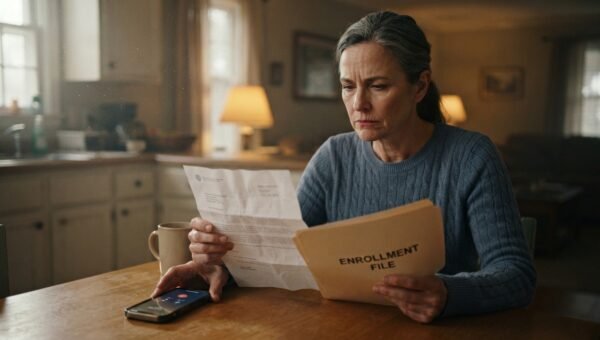
Until two months ago, when a statement arrived in the mail addressed to my old bedroom instead of Richard’s office. A clerical error by the bank.
I didn’t cry when I read the note on the kitchen counter. I didn’t feel the sting of rejection that Evelyn had clearly intended to inflict. Instead, a cold, sharp clarity washed over me. They thought they had left me behind as a punishment. They had no idea that by walking out that door together, they had handed me the exact window of opportunity I needed.
PART 2
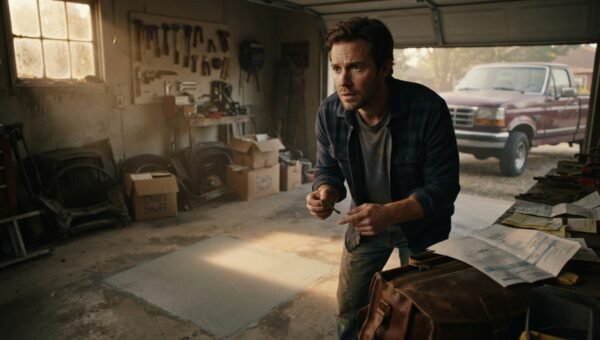
I carried the metal lockbox up to the kitchen table and sat down under the harsh overhead light. I didn’t need a key anymore; Richard had left his office drawer unlocked three days ago when he rushed out to take a business call, and I had managed to press a spare key into a scrap of modeling clay I bought at the craft store. It took three tries with a small locksmith’s pick I ordered online, but the latch finally clicked open with a dry, metallic snap.
Inside lay the documents I had been quietly collecting, photocopying, and organizing over the past sixty days.
There was the original bank ledger from my grandmother’s estate, showing the initial deposit of sixty-five thousand dollars. There were the quarterly statements from the last three years, which I had secretly pulled from the mail before Richard could intercept them. And most damning of all, there were the wire transfer receipts bearing Richard’s signature, moving lump sums of ten thousand, fifteen thousand, and twenty thousand dollars from my trust account directly into a joint personal checking account held by Richard and Evelyn.
The total remaining balance in my college fund wasn’t thirty thousand dollars, as Richard had casually mentioned over dinner last month. It was four hundred and twelve dollars and sixteen cents.
They hadn’t invested it. They had spent it. They spent it on Chloe’s designer handbags, on Marcus’s failed cryptocurrency ventures, on the luxury kitchen remodel that added a professional-grade espresso machine to our pantry, and now, on a week-long stay at an exclusive ski chalet in Aspen where rentals cost more than my entire year of textbooks.
I reached for my phone. My hands were steady as I unlocked the screen and opened the notes app. There, neatly itemized, were the dates, the amounts, the routing numbers, and the corresponding credit card statements that proved Richard had used my inheritance as his personal slush fund. I had already consulted with a legal aid attorney in town three weeks ago during my lunch break from my bookstore job. Mr. Henderson had looked over the photocopies, adjusted his glasses, and told me something that changed my perspective entirely.
“As the custodian of a minor’s trust, moving those funds for personal use without a court order or documented beneficiary emergency isn’t just a breach of fiduciary duty,” Henderson had said quietly. “Depending on the sums and the intent, it crosses straight into grand larceny and financial exploitation of a vulnerable dependent. Especially since you turned eighteen four months ago and they never initiated the formal transfer of control.”
They had stalled on transferring control. Every time I asked about the paperwork, Richard waved his hand dismissively and told me the legal fees were too high right now or that the market was volatile. They were buying time. And tonight, while they were driving through the mountain passes toward Colorado, blissfully confident that I was sitting at home freezing and weeping over a soda bread crust, my time had come.
PART 3
I packed the original documents into a sturdy leather portfolio, zipped my winter coat, and walked out to my old sedan parked in the driveway. The engine coughed twice in the freezing air before catching, its heater blowing lukewarm sighs against the windshield.
I didn’t drive to the police station immediately. Instead, I drove downtown to the main branch of First National Bank. I knew from my research that the bank’s regional compliance office maintained an automated night depository box, and more importantly, I had a scheduled appointment at eight o’clock this morning with the senior vice president of retail banking, a woman named Mrs. Gable, whose signature was on several of the suspicious internal transfer authorizations.
I spent the remaining hours parked in the brightly lit lot of an all-night diner three blocks away, sipping black coffee and reviewing every page of the audit trail I had built. By seven-thirty, I drove over to the bank and parked right by the glass revolving doors.
Mrs. Gable looked shocked when she saw me sitting in the lobby right at opening time, holding a thick leather portfolio. She remembered me from when my grandmother brought me in to set up the account as a child. When I placed the ledger, the wire receipts, and the bank’s own internal compliance logs on her mahogany desk, the color slowly drained from her face.
“Richard assured us you signed off on the liquidity realignment for family real estate investments,” Mrs. Gable whispered, her fingers trembling slightly as she turned the pages of unauthorized withdrawals.
“I was a minor when the first transfers occurred,” I said, my voice completely level. “And I have never signed a single document authorizing the liquidation of this trust for personal travel or living expenses. Furthermore, I turned eighteen four months ago, and your institution failed to notify me of my direct sole ownership rights or execute the mandatory account transition.”
Mrs. Gable didn’t argue. She didn’t try to protect Richard. Banks hate liability far more than they love wealthy clients. By nine o’clock, the bank’s legal department was involved. By noon, a freeze was placed not just on my depleted trust account, but on Richard and Evelyn’s joint checking and savings accounts pending an immediate internal fraud investigation.
And because Richard had used funds traceable directly from my trust to secure the deposit on their Aspen luxury rental and their ski gear rentals, the bank’s fraud investigators flagged those pending credit card charges as fraudulent encumbrances of misappropriated third-party assets.
ENDING
Five days later, the holiday festivities in Aspen were long over, and reality had caught up with them in the most public way possible.
It was late afternoon on December twenty-ninth when I heard the crunch of tires on the gravel driveway. The front door flew open with a violent slam, and Richard strode into the hallway, his face purple with fury, his designer ski jacket unzipped. Evelyn rushed in right behind him, her hair windblown, gasping for breath, while Chloe and Marcus trailed behind carrying expensive luggage that looked suddenly very heavy.
“What in God’s name did you do?!” Richard roared, slamming his briefcase down on the entryway table. “Our cards were declined at the resort desk! We were humiliated in front of our friends! The bank says our accounts are locked under a criminal fraud review!”
I was sitting at the kitchen island, sipping a cup of chamomile tea, reading a paperback novel. I didn’t jump. I didn’t cower. I simply lowered my book and looked at them.
“You left the heat low,” I said calmly. “It made the house very quiet.”
Evelyn marched into the kitchen, her eyes wild with panic. “Don’t play games with us! Fix this right now! Call whoever you called at the bank and tell them it was a family misunderstanding!”
“I can’t fix it,” I replied, my voice steady and cold. “The state investigator from the financial crimes division handles that now. Turns out, stealing forty thousand dollars from a minor’s trust to pay for ski trips and luxury kitchen appliances isn’t a family misunderstanding. It’s a felony.”
Richard stopped dead in his tracks. The bluster drained out of him in a single second, leaving him looking like an old, tired man whose tailored suit suddenly didn’t fit right. He stared at me, really looked at me for the first time in years, seeing not the quiet stepdaughter they could dismiss and lock out of sight, but the person holding the legal key to their entire existence.
He took a slow step forward, his mouth opening and closing as if he wanted to shout, but no sound came out.
Finally, leaning against the doorframe for support, my father whispered, “How… how did you find out?”
“You left the mail in the box, Richard,” I said, standing up from the chair and closing my book. “And you forgot that I learned how to read more than just what you wanted me to see.”
I picked up my portfolio from the counter, walked past them without looking back, and left them standing in the freezing hallway they had tried to lock me out of forever.