PART 1
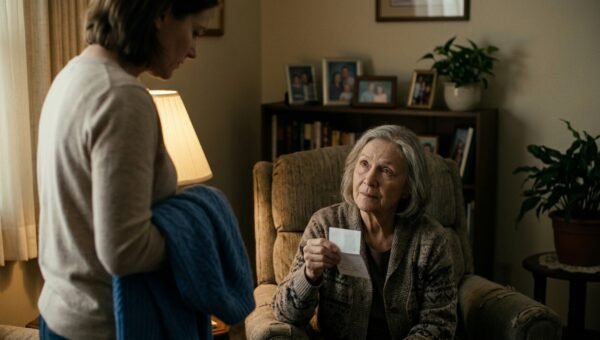
Sunday evenings used to mean something in this house. For twenty-six years, ever since Arthur was a little boy with scuffed knees and a gap-toothed grin, eight o’clock meant the telephone would ring. When he moved three thousand miles away to take that warehouse job in Ohio, he kept the habit up for a while. Every Sunday at eight on the dot, his voice would fill my quiet kitchen while I washed up my supper dishes.
He would tell me about the weather out east, how hard it was to find decent coffee, and how he was saving up for a house of his own.
Then the calls started getting shorter. Five minutes became two. Two minutes became a quick text message that eventually stopped coming altogether. When I called him, it went straight to voicemail. When I asked our relatives if they had heard from him, they looked at me with that tired, pitying expression families reserve for older women who cannot let go. My sister Clara told me over the phone that I was being smothering. She said Arthur was a grown man trying to make his way in a new city and that my constant checking in was pushing him away. She told me to leave him alone and let him breathe.
I tried. For six long months, I sat in my kitchen on Sunday nights and stared at the silent phone.
I told myself Clara was right. I told myself that no news was good news and that a twenty-eight-year-old man did not need his mother calling him like a schoolboy. I swallowed my worry and kept my hands busy with my garden and my crosswords.
The silence broke on a Tuesday morning in late October. The mail carrier dropped off a heavy manila envelope with postage that looked like it had been slapped on in a hurry. When I looked at the return address in the top left corner, my chest tightened. It was not from Arthur. It was from the industrial supply company where he worked in Ohio.
My hands shook as I slit the top open with a butter knife. I had not lived at my previous address in over five years, but somehow my old mailing address was still the one they had on file in his personnel folder.
Inside was not a formal letter or a human resources form. It was a single sheet of lined legal paper, folded twice, with handwriting I would know anywhere. It was Arthur’s messy, rushed scrawl, but the note itself was not written by him. It was a brief message from someone else, penned in the margin around his handwriting.
The note from his shift supervisor, a man who signed his name as Frank Miller, read simply: “Please come to the warehouse before Friday. We found your son’s locker cleared out, but this was left behind for you.”
I did not pack a bag. I did not call Clara back to tell her I was right. I drove straight to the bank, withdrew every bit of liquid cash I dared spare for an emergency, and booked the earliest bus I could find heading east. By Thursday afternoon, I was standing outside a sprawling, corrugated metal warehouse on the outskirts of an industrial park in Ohio, watching the cold autumn wind kick up gray dust across the gravel parking lot.
PART 2
The warehouse smelled of stale coffee, machine oil, and damp concrete. Frank Miller was a heavy-set man in his fifties with tired eyes and a grease-stained clipboard pressed against his chest. He met me at the side entrance, keeping his voice low as he guided me past rows of high metal shelving stacked with cardboard boxes and heavy machinery parts.
“He was a quiet kid,” Frank told me, his boots clicking hard against the floor. “Always kept to himself. Showed up on time, did his shifts, didn’t cause trouble. But about three weeks ago, things started shifting. He started staying late after everyone else left. Said he was organizing inventory. Then last week, he just didn’t show up for his Monday shift. His apartment landlord called us because rent bounced. We checked his locker and found his gear abandoned.”
Frank led me toward a row of battered gray lockers near the loading dock. One of them had its padlock cut clean off, the metal shrapnel sitting neatly on the shelf inside.
“The company wants to sweep this under the rug,” Frank said, stopping in front of the open locker and handing me a thick manila folder. “They think he skipped town on some bad business. But he left strict instructions. He told me that if anyone ever came looking for him, I was not to call the police right away. He said I had to wait for you, and I had to make sure you found what was locked inside the bottom compartment.”
I looked into the locker. The bottom shelf was locked with a heavy brass padlock that required a key. Frank reached into his pocket and produced a small, rusted iron key on a frayed piece of twine, handing it to me. I slipped it into the padlock and turned it. The mechanism clicked open with a dry, metallic snap.
Inside the dark recess of the locker sat three items. The first was a heavy canvas bag containing Arthur’s favorite set of precision torque wrenches, tools he had bragged about buying with his first paycheck. The second was a framed photograph of our old family home in Missouri, the house we sold after his father passed away. But it was the third item that made the breath catch in my throat.
It was a stack of three returned personal checks, bound together with a rubber band. Each check was made out in Arthur’s neat handwriting to an unfamiliar name: Marcus Vance. And written across the front of each check, stamped in bright red ink by the bank, were the words: INSUFFICIENT FUNDS.
I pulled the checks out and looked closer. The dates were from the past four months. The amounts were staggering—thousands of dollars at a time. This was not money for groceries or rent. This was money that could ruin a person.
“Do you know who Marcus Vance is?” I asked Frank, my voice barely audible over the hum of a forklift in the distance.
“Never heard of him,” Frank said, shaking his head. “None of us at the plant know him. But Arthur was getting mail here under that name for a couple of weeks before he vanished. Whatever trouble he got into, it started long before he moved out here.”
PART 3
The bus ride home took twenty-two hours. My bones felt hollow, and my mind raced through every conversation I had with Arthur over the past year. I remembered the way his voice sounded tense during our brief phone calls, how he always seemed to be rushing off the line, how he brushed off my questions about how he was settling in. He wasn’t building a new life. He was running from something, and he had dragged someone else’s shadow right along with him.
When I finally unlocked my front door on Friday evening, the house was freezing. The pilot light on the stove must have flickered out in the draft. I dropped my canvas bag by the entryway and walked straight into the kitchen to put the kettle on.
I reached automatically for the small wooden corkboard hanging beside the pantry door, where I pinned grocery lists, dentist appointment reminders, and spare keys. I needed the spare key to the back shed to check on the frost damage to my potted ferns.
My fingers brushed against empty cork.
I stopped. I stared at the board. Four distinct pushpins formed a small square in the center of the dark wood, but the object that had hung there for twenty years was gone.
It was a small, ornate brass key with a distinctive clover-shaped head. My grandfather had given it to me when I was a little girl, telling me it unlocked the old cedar trunk in his attic. When he passed, I brought it home and hung it on the kitchen wall as a good-luck charm. It had stayed in that exact spot through every season, through three different coats of paint on the kitchen walls, and through every visit Arthur had ever made to this house.
Arthur had visited me for four days back in May, right before the phone calls started tapering off. He had stayed in the guest room. He had stood in this exact kitchen, drinking coffee out of my favorite blue mug, laughing at some old memory.
He was the only person besides me who had been inside this house in months.
I walked slowly over to the old mahogany sideboard in the dining room. Sitting in the bottom drawer, tucked underneath a stack of heavy linen tablecloths, was the cedar trunk my grandfather had built with his own hands. For years, it had held old photo albums, baby clothes, and my husband’s service medals.
I dropped to my knees on the hardwood floor, my joints aching with a cold fatigue. I pulled the heavy trunk out into the middle of the room. There was a brass keyhole on the front, old-fashioned and stubborn.
I did not have the clover-headed key anymore. But I knew exactly where it was. It was sitting in Arthur’s locker in Ohio, or worse, in the pocket of the man named Marcus Vance.
ENDING
I sat on the floor of my dining room for a long time as the autumn light faded from the windows, listening to the old refrigerator hum in the kitchen. The silence of the house felt entirely different now. It wasn’t the lonely silence of an ignored mother waiting for a Sunday phone call. It was the heavy, watchful silence of a trap that had already been sprung.
I reached for the landline phone on the small table beside the door. My fingers did not shake anymore. The hesitation I had felt when Clara told me to leave him alone, the fear of being labeled a meddling, overbearing mother, evaporated completely.
I did not dial Arthur’s number. I dialed the local police station and asked to speak to a detective.
When the officer came on the line, I didn’t tell him about my hurt feelings or the missed Sunday calls. I told him about the warehouse in Ohio, the returned checks with a stranger’s name, the missing heirloom key, and the heavy cedar trunk sitting in my dining room that my son had spent years trying to figure out how to open.
“Ma’am,” the detective said, his voice steady and professional through the receiver. “What is inside that trunk?”
I looked down at the dark wood, remembering the heavy lock and the papers my husband had tucked away before he passed away—papers concerning the old family land and the trust that Arthur had always believed would one day clear his name or secure his future.
“I don’t know yet,” I told the detective, standing up and reaching for my coat. “But I think my son used my whole life as collateral to find out, and I intend to find out why before someone comes looking for me.”