PART 1
I am fifty-eight years old, and for thirty of those years, my older brother Tom and my younger sister Valerie treated me like part of the living room furniture. They were the ones who went places. Tom moved out to Denver to run commercial real estate ventures, and Valerie married an orthodontist in Dallas and spent her summers on boats. Whenever our family gathered for Thanksgiving, they talked about airline points, portfolio yields, and kitchen remodels.
When they asked me what I had been up to, my answers were always about the community college library where I worked behind the circulation desk, or the tomatoes I had planted along the back fence of the small duplex I rent two miles from our mother’s place.
They listened with that polite, glazed look people get when a child tells them a long story about a moth. To them, I was just Helen. The quiet one. The one who stayed behind in the county where we were born. The homebody.
When Mama started falling in the spring of three years ago, neither Denver nor Dallas cleared their calendars. Valerie called once a week from her car while running errands, asking if we had looked into assisted living facilities yet. Tom sent links to senior care agencies and offered to split the monthly fees three ways, knowing full well my library salary barely covered my own rent and groceries.
Neither of them offered to move back, take a leave of absence, or sit in the emergency room waiting chairs at two in the morning. So I did it. I cut my library hours to part-time, took out a personal loan to cover the gap in my paycheck, and moved into Mama’s back bedroom.
For sixteen months, I crushed Mama’s blood pressure pills into applesauce. I learned how to change sheets with a frail eighty-two-year-old woman still lying in the bed so she would not get chilled. I cleaned up after her accidents without making a face, wiped the sweat off her forehead when the fever spiked, and listened to her tell the same stories about her childhood in northern Pennsylvania until I knew every name by heart.
Tom and Valerie flew in during the final week of January, when hospice told us Mama had less than forty-eight hours left.
They sat by her bed in their wool coats, crying softly and holding her cold hands. Two days after she passed, we sat in a paneled conference room in downtown Mercer with Mr. Henderson, the attorney who had handled Daddy’s estate twenty years earlier.
The will was straightforward, signed six years before Mama ever fell ill. Daddy had owned four commercial lots out near the bypass, which had been sold off years ago to fund their retirement, leaving Mama with the three-bedroom brick ranch home on two acres and a money market account. Under the terms of the will, Tom got the house, free and clear, valued by the county at three hundred and ten thousand dollars. Valerie received the remaining cash balances and certificates of deposit, which came to roughly one hundred and ninety thousand dollars.
Then Mr. Henderson cleared his throat and adjusted his reading glasses.
“To my daughter, Helen Campbell,” he read, “I leave the vintage woven wicker picnic basket stored in the hall linen closet, along with its contents and personal effects.”
There was complete silence in the office. Tom stared down at his leather shoes, shifting uncomfortably.
Valerie let out a small, breathless chuckle that she quickly disguised behind a cough. She turned her head toward me, her diamond earrings catching the overhead fluorescent light.
“Well,” Valerie said, her voice dripping with that familiar, sweet condescension. “The homebody gets the picnic basket. Not like you’ll ever use it, Helen, but at least it will look rustic in your little entryway.”
I did not say a word. I did not cry in front of them. Tom drove back to the house that afternoon to meet with an appraiser, and Valerie took an Uber to the airport with Mama’s good pearl necklace already tucked safely inside her designer handbag.
I took my two suitcases from the back bedroom, lifted that dusty wicker hamper out of the dark hall closet, and loaded it into the back of my twelve-year-old station wagon.
When I brought it into my small duplex, I set it on the small wooden chest near my front door. I could not bring myself to touch it. Every time I walked past it on my way to work or the kitchen, a faint scent drifted up from the woven reeds. It smelled like dry sweetgrass, lemon oil, and the faint, sweet vinegar of Mama’s summer potato salad. It was the same hamper Daddy had bought at a church bazaar when I was eight. We had carried it to Lake Arthur every Fourth of July, sitting on a red-and-white checked blanket while Daddy skipped stones across the water and Mama handed out wrapped ham sandwiches.
The hamper sat on that chest through the spring thaw, through the long summer, and into the late autumn. Nearly eleven months passed.
Tom listed Mama’s house in July, sold it within three weeks to a young couple from Pittsburgh, and wired Valerie her share of some estate reimbursement they had worked out between them. Neither of them called to ask how I was doing with my rent, or whether I had managed to catch up on the credit card debt I took on while buying Mama’s groceries and wound care supplies.
In early December, cold drafts began leaking through my front door. I decided to clean the hall, rearrange the coats, and pack away the summer clutter. I looked at the wicker basket. The woven latch was stiff from age.
“Time to see what you left me, Mama,” I whispered aloud in the quiet apartment.
I lifted the leather loop off the brass peg and opened the double-hinged lid. Inside were four cracked Melamine plates, three faded plastic tumblers, and a set of stainless steel forks with yellowed acrylic handles. Underneath the plates sat the faded red cotton liner Mama had sewn by hand decades ago to keep bread crumbs from falling through the weave.
I reached in to pull the cloth liner out so I could wash it in the sink. When I lifted the fabric, my fingers felt something stiff and completely unyielding resting flat against the wicker base. It was not the bottom of the hamper.
I pulled the liner entirely free. Tucked beneath it, perfectly fitted to the rectangular floor of the basket, lay a heavy, sealed manila envelope wrapped inside two thick plastic freezer bags to protect it from moisture.
Written on the front in Mama’s shaky, unmistakable pencil script was one sentence:
*For Helen, who never left my side.*
PART 2
I carried the sealed package over to my kitchen table, my hands shaking so hard I could barely pull the zipper open on the freezer bag.
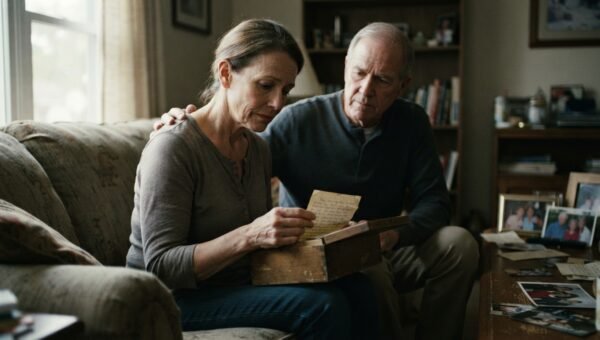
Inside the manila envelope was a handwritten letter folded around a stiff blue cardstock folder. The letter was dated October 14, just three months before Mama died. That was right around the time Tom had called to say he could not make it for Thanksgiving because of a golf tournament in Scottsdale, and Valerie had texted me saying her daughter’s travel soccer schedule was simply too hectic.
The letter was written in Mama’s frail, slanted cursive:
*My sweet Helen,*
*I know what the old will says. Your father and I wrote that document thirty years ago, when Tom was just starting out in business and Valerie was young, and we thought everybody was going to share everything like good Christian children. But getting old shows you people as they really are, not as you hoped they would be.*
*Your brother has called three times in two years, and every call was to ask if I had updated the deed to the house. Your sister talks to me like I am a chore she forgot to cross off her list. But you, my darling girl, you gave up your days, your quiet life, and your own comfort to sit by an old woman and wash her feet. You never asked me for a dime.*
*Six months ago, while you were at the library on a Tuesday, I had our neighbor Mrs. Gable drive me down to the First National Bank in Butler. I could not bring myself to start a war by changing the family will while I was still lying here helpless. Tom would have hired a lawyer and made your life a living hell before the dirt was even settled over my grave. So I took care of this the quiet way.*
*Under this letter is an account statement and the original signed transfer paperwork for a separate trust account I opened in your name alone. Your father bought thirty shares of an industrial supply company back in 1974 that split four times over the decades. I never touched it. I never told Tom or Valerie about it because your father always said it was our final safety net. It is yours now. Every single cent of it. Do not feel guilty. Do not give them a penny. You earned every breath of peace this gives you.*
*All my love,*
*Mama*
I set the letter down, my heart pounding so loudly I could hear it in my ears. I opened the blue cardstock folder.
Inside was an official custodial transfer document from First National Bank, along with an account statement. The balance on the statement, dated six weeks before her passing, was $442,118.50.
Below the number was an official bank signature card designating me as the sole surviving beneficiary under a Payable on Death transfer, completely outside of probate.
I sat alone at my kitchen table for nearly two hours without turning on the lights. The afternoon sun faded over the tops of the bare maple trees outside, casting long shadows across my linoleum floor.
I thought about all the times Tom had casually called me a homebody at family dinners, laughing while he poured another glass of wine. I thought about Valerie looking at my practical shoes and my second-hand coats with that pitying little smirk. And then I remembered Mama’s frail hands squeezing my wrist in the middle of the night, whispering, “Thank you, Helen. Thank you for staying.”
PART 3
The following Monday morning, I took a personal day from the library and drove down to the First National Bank branch in Butler.
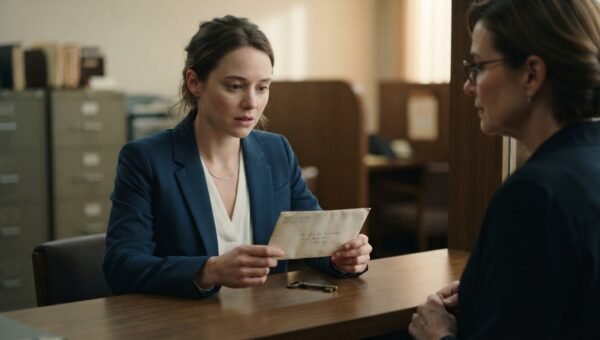
The branch manager, an older man named Mr. Douglas who had known my parents for thirty years, greeted me warmly. He took the blue folder, Mama’s death certificate, and my driver’s license back into his office. Twenty minutes later, he walked back out with a single printed receipt and handed it across his desk.
“Your mother was very clear about how she wanted this handled, Helen,” Mr. Douglas told me gently. “She sat right where you are sitting now, and she made sure every signature and beneficiary designation was ironclad. The funds have officially cleared probate review. They belong entirely to you.”
I transferred the money into a conservative, interest-bearing account at another institution across town, keeping only what I needed to pay off my car loan and the credit card debt I had accumulated during Mama’s care. For the first time in my adult life, the tightness in my chest when I checked the monthly bills completely vanished.
I did not call Tom. I did not text Valerie. I simply went back to work, put in my hours, and breathed easier.
Six months went by. It was late July when my phone rang on a Saturday afternoon. The caller ID showed Valerie’s name. She had not called me since February, when she texted to ask if I had found Mama’s silver punch bowl in the attic.
“Helen?” Valerie’s voice sounded breathless, high-pitched, and furious. “Have you spoken to Tom today?”
“No, Valerie,” I said calmly, leaning against my kitchen counter. “I haven’t spoken to Tom since the funeral.”
“Well, he just got an audit notice from the state Department of Revenue regarding Mama’s estate taxes,” she snapped. “They’re auditing the final estate filings because of a closing report from the Department of Banking. Tom called the county probate office, and they told him Mama had an auxiliary investment account that bypassed probate entirely under a POD transfer. To you. For over four hundred thousand dollars.”
I remained completely silent.
“Helen! Answer me!” Valerie’s voice turned shrill. “Is that true? Did Mama have half a million dollars that she kept hidden from us?”
“Mama didn’t keep it hidden from the bank,” I replied evenly.
“That money belongs to the estate!” Valerie shouted. “Tom and I already spoke to an estate attorney this morning. The will clearly states that liquid savings were supposed to be divided or left to family. You were only left personal effects! You manipulated her while she was sick. You dragged her to the bank when she was not in her right mind!”
“Mama went to the bank in June, eight months before she died,” I said, keeping my voice as steady as stone. “Her doctor evaluated her cognitive health that same week. She went with Mrs. Gable, not me. I didn’t even know the account existed until seven months ago.”
“Well, you know now!” Valerie yelled. “Tom wants to hold a family meeting. He says if you do the right thing and split that money three ways, we won’t have to file a petition to invalidate the transfer for undue influence. It’s only fair, Helen. Tom got three hundred thousand from the house, but he had to pay closing costs and staging fees. I got less than two hundred thousand after final medical expenses. You getting more than both of us combined is ridiculous. You don’t even have a mortgage!”
“Valerie,” I said softly.
“What?” she barked.
“Do you remember what you told me in Mr. Henderson’s office when he read the will?”
There was a sudden, sharp pause on the other end of the line.
“What does that have to do with anything?” she muttered.
“You smiled at me and said, ‘The homebody gets the picnic basket. Not like you’ll ever use it.'”
“Oh, Helen, for heaven’s sake, that was a joke—”
“It wasn’t a joke,” I said. “You thought Mama left me junk because you thought that was all I was worth. But Mama knew exactly where she put that paperwork. She put it at the very bottom of the only thing she knew you and Tom wouldn’t bother fighting over.”
ENDING
Tom called twenty minutes after Valerie hung up. When I did not answer, he sent a long, blistering text message demanding my lawyer’s contact information and warning me that litigation would wipe out half the account in legal fees.
I did not panic. I simply hired Mr. Henderson, the same family lawyer who had read Mama’s will.
Two weeks later, Mr. Henderson sent a formal response to the attorney Tom had retained in Pittsburgh. The letter included a copy of Mama’s signed handwritten note, the independent affidavit from Mrs. Gable confirming Mama’s clear mind and voluntary request to be driven to the bank, and the physician’s cognitive assessment on file from that same month.
Mr. Henderson’s letter concluded with a very clear, professional warning: under Pennsylvania law, a beneficiary designation on a bank account is a non-probate contract that supersedes a general will. Any bad-faith claim of undue influence without medical proof would result in a motion for attorney’s fees against the estate challengers directly.
We never heard from Tom’s lawyer again.
Tom sent one last text in September, saying I had torn the family apart over money and that I shouldn’t bother showing up for Thanksgiving or Christmas. I read the message once, deleted the thread, and blocked his number. Valerie blocked me on social media a week later.
Losing my siblings hurt for a few weeks, but the truth is, I had lost them decades ago. They were never my family; they were just relatives who only recognized my existence when they needed someone to change Mama’s bedsheets or sit in an emergency room while they lived their comfortable lives.
In October of that year, I finally put my notice in at the library. I loved my patrons, but my knees were stiff from years of standing on concrete floors, and I wanted to see the world beyond our county line.
I bought a small, sturdy two-bedroom cottage with a big porch out near Lake Arthur, just fifteen minutes from where Daddy used to skip stones. I paid for it in cash.
The old wicker hamper sits on a low wooden bench right by my front door. It is cleaned up now, the straps conditioned and the brass latches polished until they shine.
Every Sunday when the weather is fine, I pack that basket with fresh bread, roasted chicken, a jar of iced tea, and Mama’s potato salad. Then I walk down the dirt path to the shore, spread out my red-and-white blanket under the shade of the willow trees, and eat my lunch by the water.
Valerie was wrong about one thing.
The homebody uses the picnic basket every single week.