PART 1
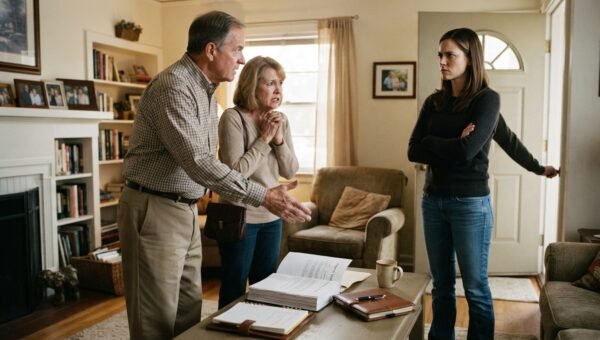
The argument started in my living room over a cream-colored planning binder that cost more than my first set of tires.
My daughter, Lauren, had it spread out on my coffee table, surrounded by glossy clippings of private villas in Cabo San Lucas. She looked across at me with an eager, entitled shine in her eyes, waiting for me to write a check for twenty-five thousand dollars. She called it a seed deposit.
She said modern weddings were an investment in memories, and since her brother had finished state college without student loans, it was only fair that I gave her an equal amount of cash to start her married life.
When I looked down at my hands and told her no, her face changed instantly.
She did not ask what my finances looked like. She did not ask about my property taxes or my modest pension from twenty-eight years as an administrative clerk for the county road commission. She stood up, slammed her heavy binder shut, and accused me of always favoring her older brother, Mark. She told me I had always held her back, that I was miserly, and that I was punishing her for wanting a beautiful life.
What Lauren conveniently erased from her memory was the two-year hole she had dug herself into right after she had my eight-year-old granddaughter, Chloe.
Back then, when Chloe’s biological father vanished, Lauren was drowning. I did not write one massive, showy check. Instead, I quietly paid her six-hundred-dollar car payment directly to the credit union for fourteen straight months. I paid her auto insurance. I wrote checks directly to the licensed daycare facility every Monday morning so she would not lose her spot while working part-time retail. It came out to nearly twenty-four thousand dollars out of my savings.
I never brought that up. I never handed her an itemized tally or waved it in her face during Sunday dinners. My late husband always taught me that real parental help stops feeling like help the second you keep score. You do it because your child is in trouble, and then you quietly put your head down and hope they find solid ground.
Lauren interpreted my silence as empty pockets and cold indifference.
Over the next five months, she cut me out. The weekly Sunday dinners stopped completely.
If I called to ask if I could take Chloe to the county library or buy her new school sneakers, Lauren sent clipped text messages claiming they were busy with wedding vendor appointments. Lauren’s fiancé, Derek, a fast-talking car salesman who wore three-piece suits to backyard cookouts, stopped looking me in the eye when I dropped off birthday gifts on their front porch.
Worse, Chloe started pulling away. When I managed to see her at her youth soccer games, she would hug me quickly, look over her shoulder at her mother, and whisper that she was sorry Grandma was too cheap to come to Mexico. Hearing that word come out of an eight-year-old child’s mouth felt like a dull blade twisting in my ribs. Lauren had taught her that word to punish me.
I swallowed the hurt. I figured that once the wedding passed and the Cabo fantasies died down, reality would settle in, and Lauren would come around. I was prepared to wait her out.
Then came a rainy Tuesday afternoon in early October.
My cell phone rang while I was sitting at my kitchen table sorting through grocery coupons. The caller ID showed the main office of Chloe’s elementary school. My stomach dropped immediately. I answered, expecting a nurse telling me Chloe had a playground scrape or a fever.
Instead, I heard Chloe’s small, trembling voice. She was sobbing so hard she could barely catch her breath.
She told me she was standing at the end of the cafeteria lunch line with a plastic tray, and the cafeteria monitor had just taken her hot meal away and replaced it with a cold slice of American cheese on white bread. The register had flagged her account. It was sixty-two dollars in the red, and school policy cut off hot lunches after a fifty-dollar negative balance.
“Grandma, please,” she cried into the office phone. “Mom told me she refilled it, but the lady took my tray. Everyone was staring at me. Mom isn’t answering her phone. Can you please come get me?”
“I am on my way right now, baby,” I told her, grabbing my car keys from the hook by the door. “Do not be embarrassed. Grandma is coming.”
I drove across town with my hands shaking on the steering wheel. How does an account for an eight-year-old girl go unpaid for weeks when her mother is posting photos of custom calligraphy invitations on social media?
When I walked into the school office, Chloe was sitting on a plastic chair in the corner, clutching her backpack to her chest. Her eyes were red and puffy, her cheeks streaked with dried tears. I knelt down, wrapped her in a tight hug, and told her everything was fine.
I took out my debit card and walked straight to the administrative window. I told the school secretary, a pleasant woman named Mrs. Gable whom I had known for years, that I wanted to clear Chloe’s balance immediately and put an extra two hundred dollars into her lunch fund.
Mrs. Gable typed on her computer, nodded, and ran my card. But as the receipt printed out, she frowned at the screen.
“Helen, let me check the contact sheet while you are here,” Mrs. Gable said quietly, leaning closer to the glass partition. “We tried calling Lauren three times today, but her cell phone number went straight to a disconnected message. Derek’s number rang through to voicemail, but the mailbox hasn’t been set up.”
“Disconnected?” I asked. “Her phone was working two days ago.”
“And your name isn’t listed here as an emergency contact anymore,” Mrs. Gable added, turning the monitor slightly. “Lauren came in about three weeks ago and updated Chloe’s enrollment file. She removed you, changed the home address, and changed the primary billing address.”
My heart pounded against my ribs. “What is the new address, Martha?”
Mrs. Gable hesitated. Technically, school records are private, but she had lived three doors down from my family for twenty years. She knew I had walked Chloe to kindergarten every single morning. She looked at Chloe, then looked back at me, and gently slid a printed slip of paper across the counter.
“She listed a business box on Route 4,” Mrs. Gable whispered. “Unit 118 at Northside Safe Storage.”
A storage facility. Lauren had registered our local elementary school with a self-storage facility address.
I took Chloe out for a hot meal at the diner down the road, bought her a milkshake, and listened to her chatter until the sadness washed out of her eyes. I took her home to my house, set her up on the living room rug with her coloring books, and called my son Mark to come sit with her for an hour. I told him there was an errand I had to run, but I kept my voice level so neither of them would suspect the cold panic settling into my chest.
As soon as Mark pulled into my driveway, I got into my sedan and headed north toward Route 4.
The rain was coming down in heavy sheets by the time I pulled into the gravel drive of Northside Safe Storage. It was an older facility, surrounded by rusted chain-link fencing with an automated yellow gate that stood permanently stuck open. Rows of low, corrugated metal buildings stretched out under flickering security lights.
I drove slowly down the first lane, looking at the faded numbers painted above each roll-up garage door.
I turned down the third row, and my headlights hit the back of a familiar gray crossover parked crookedly on the asphalt. It was Lauren’s car. The rear bumper had the small peeling sticker from Chloe’s gymnastics team that I had helped put on two summers ago.
She was parked directly in front of Unit 118.
The metal roll-up door was propped open about a foot and a half from the wet concrete, held up by an empty plastic milk crate. A single harsh work light was glowing from somewhere deep inside the dark bay.
I shut off my engine, killed my headlights, and stepped out into the damp October chill.
I walked toward the opening, my flat shoes making no sound against the wet pavement. I intended to bend down, call Lauren’s name, and demand to know why her phone was dead and why her eight-year-old daughter was crying over a sixty-dollar lunch tab.
But before I could speak, Derek’s sharp voice cut through the silence of the alley.
“Stop panicking, Lauren,” he snapped from inside the unit. “The wedding deposit is paid. Once the jeweler cuts the check for your mother’s pieces tomorrow, we have five grand to clear the credit cards and keep the apartment landlord off our backs until November.”
I froze in my tracks, the cold rain soaking straight through the shoulders of my sweater.
PART 2
I stood frozen in the rain, my breath catching in my throat as Derek’s words settled into my mind.
“The jeweler isn’t paying full appraisal value, Derek,” Lauren’s voice came back, thin and trembling. “You told me he’d give us at least eight thousand. Now you’re saying five? That was my grandmother’s platinum ring. If my mother finds out it’s not in the safety deposit box, she will never speak to me again.”
“Your mother thinks you’re just busy,” Derek answered, his tone dismissive and cold. “She doesn’t know anything. She thinks we’re in Cabo planning tasting menus. By the time she ever checks that bank vault, we’ll have made the money back on my commission run in the spring. Now help me lift this footlocker. If the eviction notice on the apartment door goes to court on Friday, the sheriff will padlock the building, and everything left in that living room is gone.”
Every drop of warmth drained from my body.
They were not planning an extravagant destination wedding. They were being evicted. They had been drowning in debt, lying about their lives, and living out of cardboard boxes shoved into a ten-by-twenty storage locker while my granddaughter went hungry at school. And to keep the facade going, Derek had convinced my daughter to steal family jewelry.
The platinum ring Lauren mentioned was my mother’s vintage bridal set. It had been sitting in the local branch of our credit union in a safety deposit box that Lauren and I had shared joint access to since my husband passed away. I had put Lauren’s name on that box eight years ago so she could access emergency papers if anything ever happened to me. I had trusted her completely.
I did not scream. I did not kick the roll-up door open or make a dramatic scene. Twenty-eight years of handling angry county taxpayers had taught me that when someone is caught in a criminal corner, confrontation makes them run or destroy the evidence.
I pulled my cell phone from my coat pocket. Standing in the shadows beside the open roll-up door, I held the phone down near the gap, hit the voice memo recorder, and held it steady for two full minutes. Derek talked about the pawn broker on 8th Street. He mentioned the specific jewelry shop downtown that was holding the vintage rings on a twenty-four-hour hold before liquidating them. Lauren sobbed, complaining that they had no money left for groceries or Chloe’s school supplies because Derek had maxed out four store cards on designer suits and rental deposits.
When Derek finished detailing the exact pawn ticket numbers, I stopped the recording and saved the file.
Then, I took two quiet steps back, stepped in front of the opening, and clicked my car keys until my headlights flared against the corrugated steel wall.
“Lauren,” I said, my voice cutting through the damp air like an axe.
A metallic crash echoed inside the unit as someone dropped a heavy tool. The milk crate was kicked aside, and the roll-up door rattled violently upward on its tracks.
Derek stood there in work boots and an expensive dress shirt with the sleeves rolled up, sweat glistening on his forehead. Behind him, Lauren looked like a ghost. She was sitting on a folded card table, surrounded by plastic trash bags filled with Chloe’s winter coats and stuffed animals. Her hair was greasy, pulled back into a messy knot, and her face was blotchy and pale.
“Mom?” Lauren gasped, her voice cracking. “What are you… how did you find us?”
Derek immediately stepped in front of her, puffing out his chest and trying to flash the charming, rehearsed smile he used on car lots. “Helen! Look, it’s not what it looks like. We’re just organizing some off-season storage before the wedding season kicks in. Lauren’s been under a lot of stress—”
“Shut your mouth, Derek,” I said softly.
He stopped mid-sentence. I had never raised my voice to that man in the three years they had been dating, but the ice in my tone pinned him to the spot.
I looked straight at my daughter. “Chloe was pulled out of the lunch line today because her account was sixty-two dollars short. Her food was taken away while her classmates watched. Your phone is disconnected. Her school records have this storage locker listed as her home address. And you are standing in a garage, talking about selling your grandmother’s wedding ring to pay an apartment landlord you’ve been dodging for three months.”
Lauren covered her face with both hands and sank down onto the folding chair, letting out a ragged, broken sob.
“It wasn’t my idea,” she wept into her hands. “Mom, please. We were going to pay it back. Derek said we just needed a bridge loan until his dealership bonuses cleared. We got three months behind on rent. The landlord posted a physical lockout notice yesterday morning. We had to move our clothes and Chloe’s things here before the locks were changed.”
“A bridge loan?” I looked at Derek. “You took an eight-year-old child’s bed and winter clothes and threw them into an unheated garage so you could keep pretending to your friends that you were flying fifty people to Mexico?”
“The wedding was going to establish connections,” Derek stammered, his bravado completely crumbling into panic. “I have clients coming. If people found out I was getting evicted, I’d lose my position at the dealership. We were going to get the jewelry out of hock next month. The dealer gave us a sixty-day grace period on the pawn receipt.”
“You have twenty minutes to give me that pawn slip and the keys to the safe deposit box,” I told him. “And you will carry every single box that belongs to Chloe into the trunk of my car right now.”
PART 3
Derek tried to argue for about ten seconds, waving his hands and muttering about legal ownership and joint bank accounts.
I held up my phone and pressed play.
His own voice echoed through the metal storage corridor, clear as a bell, admitting that he had pressured Lauren into taking items from a vault she did not legally own, specifying the downtown jeweler, and describing the exact scheme to liquidate the family heirlooms before Friday’s court date.
“In Michigan, grand larceny involving vintage jewelry over five thousand dollars is a felony,” I told him, looking him right in the eye. “And neglect involving an eight-year-old child left without a legal address or food funds goes straight to Child Protective Services. I will drive to the precinct on Maple Street right now, Derek. Or you can hand me the slip, load my car, and pack your own bags.”
Derek’s face went pasty white. He reached into his leather coat hanging on a metal hook, pulled out a folded yellow carbon slip from a downtown loan shop, and dropped it into my palm. Next came the small brass safety deposit box key.
It took fifteen minutes in the pouring rain to load Chloe’s mattress, her clothing bins, her school backpack, and her favorite stuffed toys into the back of my station wagon. Lauren helped silently, her hands trembling so violently she could barely lift the handles of the plastic tubs. She wouldn’t look at me. Derek stood against the corrugated wall with his arms crossed, watching his manufactured life disintegrate into a pile of wet cardboard.
When the car was packed, I looked at Lauren.
“Get in the passenger seat,” I said.
“What about Derek?” she whispered.
“Derek has his own car and his own problems,” I said. “You have an eight-year-old daughter sitting at my house who thinks her mother doesn’t love her enough to buy her lunch. Get in the car, Lauren.”
She didn’t argue. She climbed into the passenger side and pulled her knees up to her chest, crying silently into her sleeve as we pulled away from Northside Safe Storage, leaving Derek standing under the flickering yellow security bulb alone.
The drive back across town was completely silent.
When we walked through my back door, the smell of vegetable soup filled the kitchen. My son Mark was sitting at the kitchen table, patiently helping Chloe with her second-grade spelling list.
When Chloe saw her mother walk in, wet and disheveled, she didn’t jump up with joy. She shrank back slightly against Mark’s chair, her small shoulders tense. That was the most painful part of the entire night—seeing a little girl look at her own mother with caution instead of comfort.
Mark looked at me, saw the grim set of my jaw, and immediately stood up. “Come on, Chloe bug. Let’s go see the new puppy Mark’s neighbor brought home. We’ll be back in an hour.”
Mark took Chloe out through the front door, closing it softly behind them.
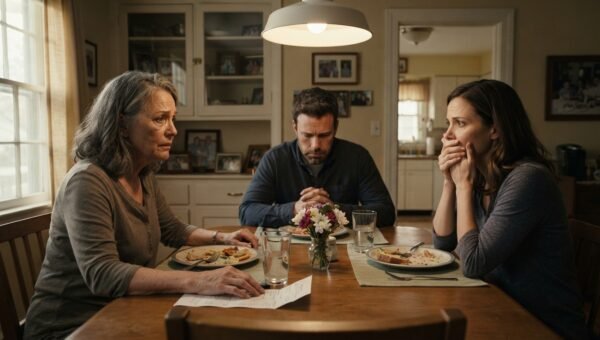
The second the door clicked shut, Lauren collapsed onto the linoleum floor, burying her head against the wooden cabinets.
“I ruined everything, Mom,” she sobbed. “I ruined everything. Derek kept telling me that if we looked successful, the money would follow. He said nobody buys cars from a loser. When you told me no about the twenty-five thousand, he told me you were just holding back money that belonged to me anyway. He convinced me that taking the rings was just borrowing from my own future inheritance. I haven’t slept in three weeks. The landlord was pounding on the door every morning at six.”
I didn’t rush to hold her. I didn’t tell her it was okay, because it wasn’t okay. A mother’s love does not mean shielding a thirty-year-old woman from the wreckage she built with her own hands.
“You let your daughter sit in a school cafeteria and have her food taken away,” I said, sitting down heavily on a wooden dining chair. “You told an innocent child that I was cheap because I wouldn’t fund a fantasy. You were willing to let her sleep on a floor so Derek could wear three-thousand-dollar suits.”
“I know,” she cried, gasping for air. “I’m so sorry. I’m so sorry, Mom.”
“Sorry doesn’t pay the credit union, Lauren. And it doesn’t fix Chloe’s heart.”
I laid the yellow pawn slip on the table between us. First thing the following morning, I went to the credit union, took nine thousand two hundred dollars out of my remaining retirement reserves, and drove straight to the downtown jeweler to redeem my mother’s platinum bridal set before it was melted down or sold. I changed the locks on my home, removed Lauren’s name from every shared account, and had my attorney file an emergency petition for temporary legal custody of Chloe.
ENDING
The consequences were swift, quiet, and necessary.
Derek broke their engagement three days later via text message, packing whatever clothes he had in the storage unit and skipping town before the apartment complex could serve him with the formal civil judgment for back rent. The dealership let him go by the end of the month when two other personal loans came back garnished against his commissions.
Lauren didn’t have the luxury of running away.
I did not write another check to clear her name. I paid off the storage unit back fees so Chloe’s personal belongings wouldn’t be auctioned off, and then I closed the account. For the rest of the debt—the five maxed-out credit cards, the broken apartment lease, and the unpaid utility bills—Lauren had to face the reality herself.
She moved into my spare bedroom, but it was not a free ride. We sat down with a certified credit counselor. Lauren had to take a full-time shift managing stock at an inventory warehouse forty miles away—hard, unglamorous physical work that started at five in the morning. Half of every paycheck she earned went directly into an escrow account overseen by a debt management program to pay back the collectors and repay the nine thousand dollars I had used to rescue my mother’s jewelry.
For the first six months, Lauren was angry. She moved through my house like a ghost, exhausted, her hands rough from warehouse pallets, doing dishes in silence.
I let her feel the weight of it. If I had softened the blow, she never would have learned how heavy real life actually is. Help only works when it requires the person being helped to stand on their own feet.
Chloe stayed with me. We established a strict, peaceful routine. Every morning, I made her breakfast at the kitchen table, packed her lunchbox with fresh fruit and turkey sandwiches, and walked her to the corner bus stop. Her lunch account at the school never went into the red again; I set up an automated twenty-dollar weekly draft from my checking account, and Mrs. Gable made sure my cell phone remained the primary emergency contact on Chloe’s permanent record.
Slowly, the tension in our home began to soften.
One Sunday evening in late spring, about seven months after that rainy night at the storage lockers, Lauren came home from her shift. Her boots were muddy, and her face was lined with genuine fatigue, but the frantic, desperate look in her eyes was finally gone.
Chloe was sitting at the kitchen table finishing a third-grade science project on native birds. Lauren walked over, kissed the top of Chloe’s head, and laid an envelope down in front of me.
Inside was a cashier’s check for four hundred dollars, along with a printed receipt from her debt consolidator showing that her oldest credit card had finally been paid to a zero balance.
“That leaves seven thousand left on the jewelry, Mom,” Lauren said quietly, sitting down on the chair across from me. Her voice wasn’t defensive anymore. It was humble, grounded, and clear.
Chloe looked up from her coloring markers, reached across the table, and took Lauren’s rough hand.
“Grandma,” Chloe said with a small smile, “can Mom come with us to the diner on Tuesday?”
I looked at my daughter. For the first time in years, she wasn’t looking past me toward Cabo or looking around for an easy shortcut. She looked right at her daughter, her eyes filling with honest, grateful tears.
“Only if your mother orders the cheap soup,” I said gently.
Lauren let out a wet, genuine laugh, squeezed Chloe’s fingers tightly, and nodded. “The cheap soup sounds wonderful, Mom. It really does.”