PART 1
My parents sold their house, handed my sister an eight-hundred-and-sixty-thousand-dollar home, and then came for mine.
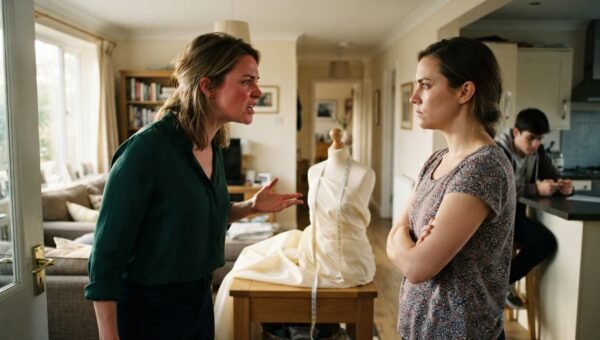
Not metaphorically. Not in the passive-aggressive family way where people hint and guilt and circle around your boundaries until you feel rude for having any. I mean they drove to my house on a Tuesday afternoon, walked in like they already owned the place, and told me I needed to do what they called the right thing and sign my deed over to them.
My mother set her purse on my kitchen island. My father stood by the sliding glass door with his hands tucked into the pockets of his windbreaker, looking out at my backyard like he was inspecting the lawn care.
“We gave Andrea the big house on Crestview,” my mother said, smoothing her slacks. “She has the kids, and Kevin’s business needs a proper address. You know how hard they have had it.”
“I know how hard they have had it,” I said. “Kevin hasn’t kept a job in four years.”
“That is unkind, Nora,” my father snapped without turning around. “He is trying.”
“He bought a twenty-thousand-dollar boat last summer,” I said.
My mother waved her hand as if shooing a fly away from potato salad. “The point is, we poured the equity from the Elm Street house into buying Crestview outright for them. Every penny. Andrea needed the fresh start.
But that leaves your father and me without our own place, and we are not going into an apartment at our age.”
I stood holding the wooden spoon from the pot of soup I had been stirring on the stove. I looked from my mother to my father. For a second, I thought there had to be a second sentence coming, something about a short-term stay or renting a guest room while they looked for a townhouse.
“So what does that have to do with my house?” I asked.
“You don’t need three bedrooms,” my father said, turning around finally. His eyes were hard, the same way they looked when I was fourteen and had the nerve to question my curfew. “You have been alone here since Mark passed. It makes no sense for one woman to sit on a paid-off lot while your family is scattered. We will take over this place.
You can take the small basement suite at Andrea’s, or you can find a modest one-bedroom down by the medical center.”
“My house is paid off because Mark and I worked double shifts for sixteen years,” I told him. My voice was steady, but my stomach had turned cold. “Mark died six years ago, Dad. He died after working eighty hours a week so we could clear the mortgage before his cancer took him. This is my home.”
“Family shares,” my mother said gently, in that sweet voice she always used right before she took something that belonged to someone else. “We brought you into this world, Nora. We sacrificed for you.”
“You cosigned a car loan for me in 1994, and I paid every note myself,” I said. “You didn’t put a dime into this house. Not the down payment, not the roof replacement, not the property taxes.”
“I am not going to debate you in your own kitchen,” my father barked, stepping toward me.
He had a beige manila folder under his arm. He pulled it out and slapped it onto the granite counter. “Here is the quitclaim deed. We had Frank Miller draft it yesterday. You sign, we take it to the county clerk on Friday, and you have until the end of next month to pack your personal things.”
I looked at the folder. The county title form was visible right through the open flap. They had actually paid a lawyer to draw up the papers before they even knocked on my door.
“No,” I said.
My father blinked. “What did you say?”
“I said no. Get out of my house.”
He did not argue. He did not raise his voice. He took one step forward and slapped me across the face.
The crack of his palm against my cheek echoed against the cabinets. My glasses flew off my face and skittered across the tile floor.
PART 2
The sting on my left cheek burned like hot grease, but I did not drop to the floor, and I did not cry.
I leaned down, picked up my glasses, and set them back on my nose. The frame was slightly bent above the left hinge.
“You hit me,” I said.
“You spoke to your father like he was a dog,” my mother whispered, her face pale, though she stayed seated right on my counter stool. She did not look at him. She looked at the floor between my shoes.
“Get out,” I said. My voice was lower this time, so quiet that neither of them moved at first. “If you are not out of my driveway in two minutes, I will call 911, and I will tell the dispatcher that Harold Vance just assaulted me in my kitchen. And then I will hand the officer the quitclaim deed you brought to extort my property.”
My father scoffed, but his hand was shaking at his side. He had spent forty years running a regional supply warehouse where people jumped when he cleared his throat. He had never once had someone call his bluff without flinching.
“You wouldn’t dare,” he muttered.
I pulled my phone out of my cardigan pocket and pressed three numbers on the keypad. I turned the screen toward him. My finger hovered over the green button.
“Try me, Harold,” I said.
He grabbed the folder off the counter. He took my mother by the elbow, pulling her up so quickly her purse slid off the stool and hit the floor with a dull thud. She scrambled to pick it up, never once meeting my eyes, and scurried behind him toward the front door.
When the deadbolt clicked shut behind them, my hands finally began to shake.
I did not sit down to feel sorry for myself. I walked straight to my front porch and checked the small camera doorbell Mark had installed above the brass knocker. It had captured their arrival, their raised voices on the threshold, and three minutes later, their hasty retreat. Then I went to the kitchen and checked the small indoor camera I kept on the bookshelf to monitor my rescue beagle while I worked at the clinic.
The entire exchange was there. The folder on the counter. The word no. The slap.
I drove down to the local police precinct that same afternoon. I did not want my seventy-two-year-old father in a county jail cell overnight, but I knew my family. If you do not draw a legal line in concrete with people like them, they treat your hesitation as an invitation to push harder.
I filed an informational incident report for domestic assault, submitted the video on a flash drive, and had an attorney send a formal trespass notice by certified mail to both my parents and my sister Andrea. The letter stated clearly that if any of them stepped onto my parcel of land again, they would be arrested for criminal trespass.
The silence that followed was heavy and total.
For three months, my phone went dead. My cousins stopped inviting me to Sunday dinners. Andrea posted three separate Facebook updates about how money tears ungrateful people apart, accompanied by bible verses about honoring your mother and father. Relatives who had known me for fifty years suddenly found it inconvenient to return my text messages.
I tended my garden. I worked my shifts at the outpatient clinic. I paid my insurance and my water bill.
Then, on a rainy Thursday evening ninety-one days later, my phone lit up with a number I had not seen in months. It was Andrea’s husband, Kevin.
PART 3
I answered on the fourth ring.
“Nora?” Kevin sounded out of breath, like he was calling from a windy parking lot. “Nora, you need to come over to Crestview right now. They are in trouble.”
I leaned against my kitchen counter, looking at the spot where my father had stood with his beige folder.
“I know,” I calmly replied.
“You know?” Kevin’s voice cracked. “How could you know? The sheriff’s deputy was just here serving notice. Andrea is locked in the bathroom crying, and your dad is having chest pains in the driveway!”
“I know because I read the county tax rolls two months ago, Kevin,” I said. “And I know how public property records work in this state.”
The silence on the line was sudden and complete.
When my parents bought that Crestview home for eight hundred and sixty thousand dollars, they did not buy it for cash. They could not have. The Elm Street house they sold only cleared four hundred and ten thousand dollars after their outstanding equity line and closing fees were paid.
My parents had not bought the house outright. They had put four hundred and ten thousand dollars down, and they had taken out a four-hundred-and-fifty-thousand-dollar mortgage to cover the balance. But because my father was retired on a fixed pension and my mother had no income, the bank would not approve them alone.
So my father had put the Crestview house solely in Andrea and Kevin’s names, while my parents signed on as personal guarantors on the note, using their remaining retirement accounts as collateral.
They thought they were being clever. They thought Andrea would make the payments, or that they could bully me into signing over my home, sell my property for three hundred and fifty thousand dollars, and wipe out the mortgage on Crestview so all four of them could live in luxury together.
That was why they came for my house. It was never about family unity. It was about covering a four-hundred-and-fifty-thousand-dollar deficit they could not afford, all to give Andrea a mansion she had not earned.
“Kevin,” I said evenly. “Why did the sheriff come?”
Kevin swallowed hard. “Andrea took out a secondary loan against the house six weeks ago. Two hundred thousand. She told me it was to start an online boutique, but… she put it into some overseas crypto platform a guy from her gym told her about. It’s gone, Nora. Every cent. The bank called the balloon payment on the primary note because of the fraudulent second lien. The house is going to auction in thirty days.”
“And Dad?” I asked.
“The bank froze their guarantor accounts this morning,” Kevin admitted, his voice dropping to a whisper. “Your parents don’t have a house on Elm Street. They don’t have Crestview. And their pension checks are being garnished starting next month. They have nowhere to go.”
“Then I suggest you unlock the bathroom door and figure it out with your wife,” I said.
“Nora, please,” Kevin pleaded. “They are your parents. You have three bedrooms. You don’t even use the upstairs. If you just let them take the back room—”
“Three months ago, my father hit me across the face in my own kitchen because I would not give him my deed,” I told him. “And my mother watched him do it and told me I was ungrateful. Do not call this number again, Kevin.”
I hung up the phone.
ENDING
I did not go to Crestview that night, and I did not attend the foreclosure auction on the courthouse steps three weeks later.
A local developer bought the Crestview house for seven hundred and twenty thousand dollars. After the bank satisfied the primary note and the secondary lien holder took what was left, there was nothing remaining for anyone.
Andrea and Kevin moved into a rented two-bedroom duplex on the south side of town, twenty miles away. Kevin took a job driving a delivery van for a commercial bakery, and Andrea took a position as a receptionist at a dental office.
My parents had to apply for subsidized senior housing through the county. They were placed in an eight-hundred-square-foot unit in a brick complex near the bypass. My mother called me once from an unknown number to ask if I had any spare living room furniture.
I did not yell at her. I did not bring up the deed or the slap or the money.
“I don’t have anything extra, Mom,” I said quietly.
“We have to sleep on twin mattresses, Nora,” she said, her voice thin and dry. “After everything your father worked for.”
“Mark worked for this house,” I said. “And he never raised a hand to me in twenty-eight years.”
She stayed quiet for a long second, then the line went dead. She has not called since.
Yesterday morning, I took my coffee out onto the back patio. The sun was coming up through the maples Mark planted during our first spring here, casting long, clean shadows across the grass. The yard was quiet. The deed to the house was upstairs in my safe, where it had been for twenty years, filed neatly alongside Mark’s wedding band and our original mortgage payoff receipt.
I took a slow sip of coffee, listened to the birds in the garden, and let the morning stay peaceful.