PART 1
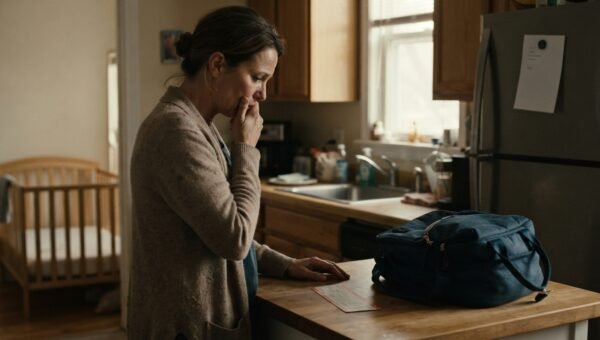
The oak box had sat on my mother’s counter for forty-two years before it came to mine. It was scarred at the corners, the brass latch had lost its shine back in the seventies, and if you lifted the lid, it smelled faintly of dried vanilla beans, almond extract, and old paper. After my knee replacement in late October, when the physical therapist told me I could not manage the fourteen stairs up to my second-floor flat in town, my son Mark insisted I stay at his place in Elm Creek for four weeks.
“Just until you can carry your own laundry basket, Mom,” he had told me, loading my overnight bags and my cane into his crossover.
I took two small suitcases, my prescription bottles, and that recipe box. Cooking was how I grounded myself, and my mother, Evelyn, had written nearly two hundred cards by hand. Every single card had grease marks, butter smudges, and little notes scrawled along the edges. Notes like “Henry loved double cinnamon” or “Bake five minutes less if the wind is out of the north.” My husband, Henry, passed away nine years ago, and my mother had been gone for fifteen. That wooden box was not decor. It was the only room in my mind where they were both still sitting at the table.
Mark married Chloe fourteen months ago. Chloe was thirty-one, very neat, and worked remotely in digital marketing. Her kitchen looked like a showroom floor: white quartz counters, hidden cabinet pulls, not a single toaster or sponge left in sight.
When I set my mother’s battered wooden box on the corner shelf next to her polished brass knife block, Chloe did not say anything out loud. She just pressed her lips together and adjusted the salt cellar three inches to the left.
On a Tuesday morning during my third week there, Mark drove me to the outpatient clinic for physical therapy. The session was brutal. The therapist worked my scar tissue hard, bending the joint until my eyes watered, and by the time Mark helped me back up the front steps around noon, my entire right leg was throbbing.
I leaned my cane against the wall, took off my coat, and walked into the kitchen to fill a glass with tap water.
The corner shelf was completely bare.
I thought maybe Chloe had wiped the counters and moved it to the pantry. I opened the tall double doors, checking between the labeled clear acrylic bins of quinoa and organic rolled oats.
It wasn’t there. I checked the sideboard in the dining area. Nothing.
Chloe was sitting at the island, typing rapidly on her laptop with large noise-canceling headphones over her ears. She slid them down around her neck when she noticed me standing by the sink.
“Chloe, honey,” I said, catching my breath against the ache in my knee. “Did you move my mother’s recipe box? I was going to pull the yeast roll card for dinner.”
She blinked, totally unbothered, and tapped her trackpad. “Oh. I did a whole recycling run while you were at therapy, Ellen. Those old magazines under the coffee table were piling up, and that wooden container was shedding dry wood shavings all over the quartz. It really didn’t match the clean aesthetic we’re trying to keep in here, and honestly, the grease on those cards looked like a fire hazard. I tossed the whole batch into the township recycling bins down on route four.”
The blood rushed into my ears so hard I couldn’t hear the hum of the refrigerator.
“You threw it in the trash?” My voice sounded cracked, thin. “Chloe, that belonged to my mother. Those were seventy years of family recipes. Written in her own hand.”
Mark walked in from the garage carrying the mail, shaking rain off his jacket. “Whoa, what’s going on?”
“Your wife threw away Grandma Evelyn’s recipe box,” I said, turning to him. My hands were shaking so hard I had to grip the edge of the sink. “She took it off the counter and tossed it into the municipal recycling.”
Mark looked at Chloe, then down at the floor, uncomfortable. He stepped between us and put a hand on my shoulder. “Mom, come on. It was an accident. Chloe didn’t know it meant that much to you. It’s just paper and old wood. Look, I’ll go on Amazon right now and buy you a brand-new handmade cedar recipe box with fresh index cards. We can sit down this weekend and type up everything you remember.”
“Type up what I remember?” The grief hit me like a slap. “Mark, your grandmother wrote those cards. Her actual hands touched them. You cannot buy that on Amazon.”
“Mom, don’t make a scene,” he muttered, glancing nervously toward Chloe, who had already put her headphones back over her ears and resumed typing. “Chloe was just tidying up. She has high standards for the house. Don’t blow this out of proportion.”
He wasn’t going to do anything. He was terrified of upsetting his wife, even if it meant stepping right over his own mother’s heart.
I didn’t answer him. I grabbed my cane, hobbled to the coat rack, pulled my coat back on, and took my car keys off the hallway hook.
“Where are you going?” Mark called out from the kitchen doorway. “You’re not supposed to drive yet! Your doctor said four weeks minimum!”
“I am going to get my mother back,” I said, and closed the front door behind me.
PART 2
The rain was turning into sleet by the time my sedan pulled into the Elm Creek Municipal Transfer and Recycling Center on Route 4. My knee throbbed with every press of the brake pedal, a dull, fiery pulse that made my stomach turn, but I could not stop.
The facility was vast, gray, and smelled of wet corrugated cardboard and diesel fumes. Large green roll-off dumpsters sat in a row beneath a corrugated tin awning. In the gravel lot, an attendant in a bright yellow rain slicker and thick mud-caked rubber boots was maneuvering a hand truck loaded with crushed plastic pallets.
I put the car in park, grabbed my cane, and stepped out into the freezing drizzle.
“Ma’am! You can’t be out here on foot!” the attendant shouted over the drone of a nearby sorting conveyor. His name tag read Dale. He was a stocky man in his fifties, with gray stubble and tired, kind eyes behind wire spectacles. “Public drop-off is strictly drive-through, lane two only.”
“Please,” I said, hobbling toward him through the puddles, leaning my entire weight on the rubber tip of my cane. “My daughter-in-law dropped off recycling about an hour and a half ago. Brown paper bags, old magazines. She threw out an antique oak recipe box by mistake. It belonged to my late mother. Has the mixed-paper compactor run yet?”
Dale looked at my cane, then at my face, which was wet with rain and cold tears. He let out a long breath that puffed white in the chill. “Compactor runs every Tuesday at two o’clock. It’s one-fifteen now. Which bin did she dump in?”
“I don’t know,” I admitted. “She just said the township bins.”
Dale wiped sleet from his glasses with the back of his canvas glove. “Stay under this awning, ma’am. Don’t slip on that wet concrete. Let me check the mixed-paper hopper.”
He pulled a pair of heavy work gloves from his pocket, walked over to the open bay of Bin 4, and hoisted himself up on the steel ladder. For forty-five minutes, Dale climbed through bags and boxes, pulling down stacks of bundled newspapers, glossy sales circulars, and soggy cardboard. Every few minutes he would holler down, “Anything that looks like varnished oak?”
“No,” I called back, shivering until my teeth clicked. “About eight inches long, four inches high. Brass clasp.”
At one-forty, a flatbed truck backed into the adjacent bay with a loud hydraulic hiss. Dale dropped down from the ladder, breathing hard, his yellow coat smeared with gray road dust.
“I’m sorry, ma’am,” he said quietly, shaking his head. “Someone tossed a whole pallet of crushed industrial fiberboard right on top of the mid-morning pile. If it was in there, the box itself probably got splintered under that weight. We can’t dig any deeper without a safety harness, and the compactor crew is already clocking in.”
A hollow, crushing weight settled in my chest. My mother’s pie crust technique, her blackberry preserves recipe, the yeast rolls she made every single Thanksgiving of my childhood—gone into a machine that crushed garbage into pulp.
“I understand,” I whispered, holding onto the wet steel railing of the walkway. “Thank you for looking, Dale. Truly.”
Dale turned to kick a stray cardboard box aside, then stopped. He bent down near the base of the hopper ramp where an overflowing brown paper sack had split its seam on the concrete curb. A damp, flattened cereal box had slid out, stuck to the muddy edge of the curb.
Plastered to the wax-coated back of that cereal box was a single, three-by-five index card, soaked along the lower edge but still intact.
“Wait a second,” Dale said. He peeled the paper off carefully, using his bare fingertips so he wouldn’t tear it. He walked over to me and held it under the halogen security lamp.
The front of the card was written in my mother’s familiar, elegant cursive: *Spiced Apple Chutney – 1968.*
I pressed my hand to my mouth. It was only one card out of two hundred, but seeing her looped *L* and the careful way she crossed her *T* broke the dam inside me.
“That’s her writing,” I choked out. “That’s my mother.”
“Take a look at the back, ma’am,” Dale said softly. “Looks like somebody used it for a notepad.”
I turned the card over in my shaking fingers. On the blank back, written in dark blue fountain pen ink that had bled slightly in the damp air, were three lines in my mother’s unmistakable hand:
*114 North Orchard Lane, Unit 4B. The key is in the tin under the stone planter.*
*For Ellen only, after I’m gone.*
PART 3
I sat in my car with the heater blasting against my numb knees, staring down at the three lines of ink.
My mother died in 2011. Before she passed, she lived in a small assisted living apartment in Millfield, eighteen miles south of Elm Creek. My brother David and I had spent three weeks clearing out that apartment after her funeral. We went through every dresser drawer, every filing cabinet, every bank statement. She left a modest life insurance policy split evenly between us, her furniture went to charity, and I took her oak recipe box, her sewing basket, and her wedding china.
She had never once mentioned North Orchard Lane.
I knew the street name. Orchard Lane was an older, quiet neighborhood tucked behind the historic river district in Millfield, full of brick four-family flats built right after the Second World War. My mother had grown up near that district, but to my knowledge, she had not lived there since she married my father in 1954.
Why would she write *For Ellen only*? Why hide it on the back of an apple chutney card instead of putting it in her legal will?
I didn’t drive back to Mark and Chloe’s house. I drove directly south onto the county highway toward Millfield. My phone buzzed on the passenger seat three times—Mark calling—then buzzed again with a text: *Mom, where are you? Dinner is at six. Chloe made Moroccan stew. Please come back.*
I left the phone face-down on the console and kept driving.
By three-fifteen, the sleet had stopped, leaving the pavement slick and black under a leaden sky. I found 114 North Orchard Lane easily. It was a sturdy, two-story red-brick apartment building with a wide front porch and four mailboxes beside a heavy oak front door. A concrete ramp ran up the side of the porch, which made it possible for me to climb up without twisting my surgical knee.
Unit 4B was on the ground floor, at the far end of a narrow central hallway that smelled of lemon polish and radiator steam. Outside the door, sitting on a low iron plant stand, was a heavy terracotta pot holding dead, winter-browned ferns.
I set my cane against the doorframe, bent down with a wince, and felt around the base of the terracotta pot.
My fingers brushed against cold metal.
Tucked into a hollow depression beneath the bottom rim was an old circular Sucrets lozenge tin, sealed tight with black electrical tape. My hands were trembling as I pulled the tape loose. Inside lay a single brass Yale door key and a small, folded slip of paper.
The paper was dated September 14, 2010—seven months before my mother died.
*Ellen,* the note read. *Your father loved your brother David, but David has always looked for the easiest way through life, and Mark is turning out just the same. A woman must have one door she can lock from the inside that no man can take from her or bargain away to keep peace with someone else. I bought this little flat in 1982 with money my aunt Clara left me. The deed is held in a private trust in your name at Miller & Cole Attorneys in Millfield. I have paid the property taxes and the building maintenance fee out of a separate savings balance through 2035. I never told your father because he would have mortgaged it to fund David’s failed dry-cleaning business. I never told you because you were married to Henry, and you were happy. But the world changes, Ellen. If you ever find yourself with nowhere that feels like yours, unlock this door. Love, Mama.*
The key slid into the brass lock on Unit 4B with a smooth, solid click.
I pushed the door open.
The apartment was small, spotless, and completely silent. A broad bay window looked out over a quiet courtyard filled with dormant hydrangea bushes. The floors were warm honey-colored maple. In the center of the living room sat a small floral armchair, a wooden coffee table, and a green shaded reading lamp. On the side table, next to a clean porcelain teacup, was a framed black-and-white photograph of my mother and me when I was seven years old, standing on the boardwalk in Atlantic City, eating saltwater taffy.
A building management company had clearly kept the place dusted and heated for fifteen years, paid through the trust she had set up with her lawyer.
My mother had not left me a hidden fortune or a pile of jewelry. She had left me a sanctuary. A roof over my head that no one could sell, no one could remodel to fit a trend, and no one could tell me I was cluttering.
My phone rang again in my pocket. It was Mark.
I answered it.
“Mom! Where are you?” His voice was high, frantic, and annoyed. “It’s almost four-thirty! Chloe had to shift her entire dinner schedule because you took off in the car! You’re recovering from major surgery, for God’s sake. Do you realize how selfish this is?”
“Mark,” I said, my voice completely level. “Listen to me very carefully.”
“Mom, just tell me where you are so I can come get you.”
“No,” I said. “I am not coming back to your house. I want you to go into the guest bedroom, pack my two suitcases, put my prescription bottles in the side pouch, and leave them on your front porch. I will have a courier service pick them up by six o’clock.”
There was a stunned pause on the other end of the line. Then he sputtered, “What are you talking about? Where are you going to stay? Your apartment in town has stairs you can’t climb! You can’t afford a hotel for two weeks!”
“I am in my mother’s home,” I told him. “And for the first time in three weeks, I am standing in a room where I don’t have to apologize for existing.”
ENDING
I hung up before he could respond.
I called a local transport service to retrieve my bags from Mark’s porch, giving specific instructions not to engage in conversation, simply to pick up the luggage and bring it to Orchard Lane. Then I called Miller & Cole Attorneys. The senior partner who drew up the paperwork had retired years ago, but the firm still held the trust file for Evelyn Miller. The young paralegal who answered confirmed that the deeds, the tax escrow accounts, and the maintenance prepayments were active, fully funded through 2035, and legally registered solely to Ellen Miller Vance.
By seven that evening, my bags were sitting on the maple floor of Unit 4B.
I did not eat Moroccan stew that night. I walked down the street with my cane to the corner grocer, bought a loaf of sourdough, a block of sharp cheddar, and a tin of tomato soup. I heated the soup in a small saucepan that was already waiting in the clean cupboards, and I ate at the little table by the window, watching the streetlights flicker on along Orchard Lane.
Mark drove down the next morning. He stood on the front porch of the building, ringing the buzzer until I buzzed him inside the foyer. He looked exhausted, defensive, and deeply confused.
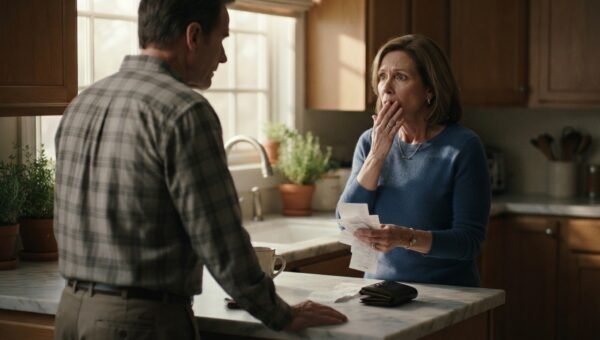
“Mom, this is insane,” he said, standing in the doorway of Unit 4B, taking in the maple floors and the floral armchair. “How long have you had this place? Why didn’t you tell me? Chloe feels awful. She says you’re punishing her over an honest mistake with an old box.”
“It wasn’t an honest mistake, Mark,” I said, remaining seated in the armchair with my leg elevated on an ottoman. “Chloe knew exactly what that box was. She didn’t throw it out because she thought it was garbage. She threw it out because she couldn’t tolerate anything in her space that she didn’t choose or control. And you allowed it because keeping her comfortable is easier than standing up for your mother.”
“That’s not fair,” he argued, his face flushing red. “I offered to replace it!”
“You cannot replace seventy years of a family’s history with a click on a website, son,” I said. “And the fact that you still think you can is why I am staying right here.”
He looked around the room, realization finally creeping into his eyes that he had no leverage. He couldn’t threaten to withhold help with my groceries. He couldn’t tell me what I was allowed to keep on the counter. This ground was entirely mine.
“So what now?” he asked, his shoulders slumping. “You’re just going to cut us off?”
“I’m going to finish healing my knee,” I told him calmly. “I’m going to put my town flat on the market in the spring, because I don’t need those fourteen stairs anymore. And when you and Chloe decide to treat me like a person instead of an inconvenient houseguest, you can call me. But you will call first. You don’t have a key to this door.”
He stood there for another minute, waiting for me to soften, waiting for the mother who always smoothed things over to smile and say it was fine.
I didn’t say another word. I picked up my mother’s index card from the table and smoothed the dry paper under my thumb.
Eventually, Mark turned around, walked down the hall, and pulled the heavy outer door shut behind him.
The apartment was quiet again. I stood up, walked into the small kitchen, and taped that single *Spiced Apple Chutney* card to the white tile right above the stove. The edges were still slightly stained with ditch water and brown cardboard dust. It didn’t match the pristine white backsplash. It didn’t look like something from a catalog.
It looked like my mother. And it was right where it belonged.