PART 1
The text arrived on a Tuesday morning in April, two days after opening day.
“Hi Carol,” my daughter-in-law Brenda wrote. “We love having family support, but your presence at the games makes me really uncomfortable. We’d prefer if you didn’t attend Liam’s Little League games this spring. Thanks for understanding.”
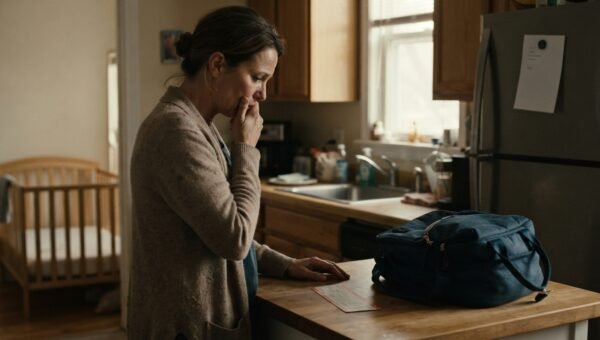
I sat at my kitchen table in North Ridgeville with my mug of black coffee and read the words three times.
Liam was eight years old. He had played tee-ball for two seasons, and I had sat on the bleachers with a fold-out lawn chair, a thermos, and a bag of orange slices for the team. I had never yelled at an umpire. I had never corrected the coaches. I had never criticized Brenda’s parenting, and I had never sat close enough to her to crowd her space. When she wanted to talk, I listened. When she kept to herself on her phone, I gave her room.
When I called my son, David, on his lunch break at the water plant, he sounded exhausted before I even finished my sentence.
“Mom, just let it go,” David told me. “Brenda is under a lot of stress with the new branch opening. If she feels watched, she gets anxious. You know how she gets. Just respect the boundary for now so I don’t have to hear about it all weekend.”
“David, I’m his grandmother,” I said. “I bought him his first glove for his fifth birthday. I don’t even talk during his at-bats except to cheer.”
“Please,” he said, and his voice was tight. “Just don’t make this a fight. For me.”
I swallowed the hurt because I loved my son, and I loved my grandson more than my own pride. If keeping the peace in David’s marriage meant staying away from the field behind the middle school, I would do it.
So for five weeks, I watched Liam’s season through a screen. Other mothers from our church and neighborhood had boys on the same team, the River Rats. They posted photos on Facebook every Saturday. In one picture, Liam stood on second base with his helmet slightly crooked. In another, the boys huddled by the dugout drinking blue sports drinks. In almost every shot of the parents near the fence, Brenda was standing by the third-base line, wearing dark sunglasses, holding an iced coffee, leaning against the chain link.
I printed two of the photos at the drugstore and taped them to the refrigerator. That was how I was allowed to be a grandmother that spring.
Then came the second Friday in May.
It was a quarter past five in the afternoon, cold and drizzly for Ohio in May. My phone rang with an unfamiliar local number.
“Is this Carol Miller?” a man asked.
“Yes, it is.”
“Mrs. Miller, this is Ben Vance. I’m coaching Liam’s baseball team. Practice ended at four-thirty. We were scheduled to have a team dinner at the pizza place, but it was canceled because of the rain. His mom isn’t here, and neither is his dad. I’ve called both numbers on his registration form four times with no answer. His emergency card lists you as the secondary contact. Can you pick him up?”
“I’ll be there in ten minutes,” I said.
I grabbed my raincoat and my keys off the counter. The park was only two miles from my house.
When I pulled into the gravel lot by field number three, the bleachers were empty, the concession stand was shuttered with plywood, and only one dark gray pickup truck remained parked by the maintenance shed.
Liam was sitting on the wooden bench inside the home dugout. His ball cap was pulled low, his cleats were speckled with wet red clay, and his little leather glove sat in his lap.
A tall man in a navy windbreaker was leaning against the dugout post with a clipboard under his arm. As I walked down the gravel path, the gravel crunching under my sneakers, the man pushed his ball cap up with one thumb and looked over at me.
He stopped moving. The pen in his hand hovered above the clipboard.
“Mrs. Miller?” he said. His voice was lower than it had been on the phone, rougher.
“Yes. Thank you for staying with him,” I said, keeping my eyes on Liam. “David and Brenda usually have their phones on them. I don’t know what happened.”
“Mom went to get her nails done in Westlake,” Liam spoke up, standing up from the bench. He wiped his nose on his sleeve. “She told me practice was two hours today. She said she’d be back by five-thirty.”
I checked my dashboard clock when we got into my sedan. It was five-twenty-six. The drizzle had turned into a steady, hard rain that slapped against the windshield.
“Put your seatbelt on, sweetie,” I said, turning the heater on so his wet socks could dry. “We’ll wait right here until she pulls in, or I can drive you straight home.”
Liam didn’t put his seatbelt on right away. He clicked the buckle in his hand over and over, staring down at his knees.
“Grandma?” he said quietly.
“Yes, honey?”
“Mom doesn’t want you at games because she thinks you’ll notice Coach Ben.”
I paused with the gearshift in park. The heater fan hummed between us. “Notice what, Liam?”
“I don’t know,” he muttered. “She told Aunt Sarah on the phone that you have eyes like a hawk and you’d recognize him from before. She said if you showed up, you’d ruin everything.”
Liam reached into his canvas equipment bag on the floorboard and pulled out a slick, laminated eight-by-ten team photo from picture day two weeks earlier. He flipped it toward me on the console.
His small finger tapped the back row, on the far left.
Standing next to the assistant coach was Ben Vance. Without the ball cap pulled down over his brow, under the clear stadium lights of the photo shoot, his face was unmistakably clear.
The man had gray at his temples now, and heavy creases around his mouth, but I had known that face thirty-two years ago, long before David was ever born, and long before Brenda had ever entered our lives.
PART 2
The man in the photo was Benjamin Vance. In 1991, his last name had been Vance, and he had lived in an old duplex three streets down from my parents’ house in Elyria.
He was the older brother of my first husband, Gary.
Gary died in a tractor accident on the county fairgrounds in the summer of 1992, fourteen months after we were married. I was twenty-two years old, widowed before I even had a chance to figure out who I was. Ben had handled Gary’s estate, or what little there was of it: a nine-year-old Chevrolet truck, four thousand dollars in a savings account, and a twelve-thousand-dollar term life insurance policy Gary took out through the county garage where he worked.
Ben had walked into my kitchen two weeks after the funeral with a cardboard box of Gary’s tools, a manila envelope, and a set of papers from the probate court.
“Sign these, Carol,” Ben had told me then. “The state will take half of it in taxes and administrative fees if you try to file it alone. Gary owed me six thousand dollars for the down payment on the truck. I’ll take care of the funeral home bill, settle the debts, and give you what’s left over.”
I was twenty-two. My mother was sick with emphysema, my father had been gone ten years, and I was so numb with grief I could barely remember to turn off the stove. I signed where he pointed.
Three months later, Ben Vance cleared out the duplex, took the insurance payout, closed Gary’s bank accounts, and vanished from Lorain County entirely. When the funeral home sent me a past-due notice for $4,200 eight months later, the probate court clerk showed me the signed waiver I had given Ben. He had named himself administrator, cashed the insurance check, paid off his own personal truck loan, and left the county. I spent five years paying off Gary’s headstone and funeral expenses thirty dollars a week from my wages at the dry cleaner.
I met my second husband, Robert, three years later. Robert gave me David, built me a life, gave me thirty good years, and passed away quietly in his sleep in 2020.
I had never spoken Ben’s name to David because Gary was a shadow from a girlhood that ended in heartbreak, and Ben was a thief who belonged to a dead past.
“Grandma?” Liam said from the passenger seat. “Do you know him?”
“I used to,” I said. My voice was steady, but my fingers were cold where they gripped the steering wheel. “A long time ago, Liam.”
Headlights swept across the rain-slick windshield. A white crossover SUV pulled into the lot, tires throwing gravel as it skidded to a stop next to the empty dugout. Brenda got out, holding a yellow umbrella, her phone pressed to her ear. She was wearing her beige trench coat, looking around the empty field with sharp, annoyed movements.
“There’s your mom,” I said.
Liam grabbed his bag. “Are you going to tell her?”
“You just go on to your mom,” I told him gently. “Don’t say anything to worry her tonight. I’ll handle it.”
I watched Liam run through the rain to the white SUV. Brenda caught him by the arm, jerked the car door open, and looked across the lot toward my sedan. Through the wash of the windshield wipers, our eyes met across thirty yards of wet gravel.
She didn’t wave. She didn’t mouth thank you. Her face went rigid, and she shoved Liam into the backseat, slammed the door, and backed out of the space so fast her tires spun on the mud before she tore out toward the main road.
When I got home, I didn’t take off my raincoat right away. I went down into the basement with a flashlight and pulled out the green metal footlocker where I kept old papers from my twenties.
The documents were at the very bottom, in a faded accordion folder tied with string.
There was the certified death certificate for Gary Vance, dated July 14, 1992. There was the receipt book from Hempel Funeral Home in Amherst, showing forty-eight separate cash-and-money-order payments signed by me between 1993 and 1997. And there was the carbon copy of the probate release, signed by Benjamin Vance as estate administrator, showing his Social Security number, his date of birth, and his signature in the same slanting, heavy blue ink I had seen on Liam’s coach registration form.
At seven o’clock, my son David called.
“Brenda told me you were at the park,” he said. His voice was sharp, but under the anger, he sounded cornered. “Mom, what were you doing there? I told you she wanted space. Why can’t you just follow one simple rule?”
“David,” I said quietly, “did Brenda tell you why I was at the park?”
“She said you showed up to watch practice after she told you not to.”
“Coach Vance called my landline at five-fifteen,” I said. “He called because practice ended at four-thirty, the field was flooded, the park was locked, and Liam was sitting alone in the cold for forty-five minutes. Neither you nor Brenda answered your phones. I was the only person listed on his emergency card who picked up.”
There was a dead silence on the line. David didn’t speak for five full seconds.
“She told me she was five minutes late because of traffic,” David said, and his voice dropped an octave.
“She was an hour late,” I said. “And that is between you and your wife. But I need to ask you something, David, and I need you to answer me honestly. How did Benjamin Vance become Liam’s coach?”
“He’s Brenda’s uncle,” David said.
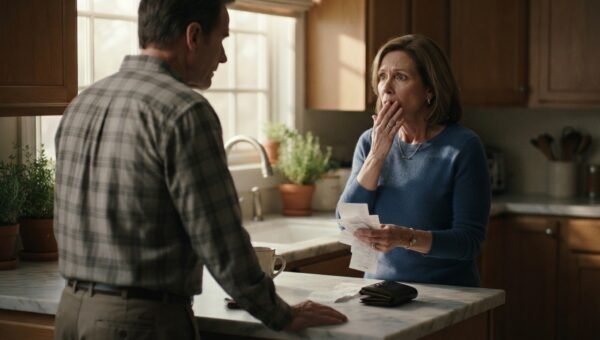
The kitchen went very quiet. The only sound was the refrigerator compressor kicking on in the corner.
“Her uncle,” I repeated.
“Her mother’s younger half-brother,” David said, sounding defensive now. “He moved back to Ohio two years ago from Tennessee. He’s been helping her family with some legal stuff on her grandmother’s property. He volunteered to coach the team because he doesn’t have kids of his own. Why? What does that have to do with anything?”
“David,” I said, “come over to the house. Right now. Do not bring Brenda. Just come.”
PART 3
David arrived twenty minutes later. He didn’t even take his jacket off. He stood in the doorway of my kitchen with his keys in his hand, his hair damp from the rain, looking at me like I was causing trouble for the sake of causing trouble.
“Mom, Brenda is beside herself,” he said. “She thinks you’re trying to spy on her parenting. She’s talking about pulling Liam off the team entirely if you’re going to keep showing up.”
I didn’t answer him with words. I pointed to the kitchen table.
Spread out under the overhead light were the papers from 1992: Gary’s death certificate, the funeral home ledger showing the $4,200 balance I had paid alone, the probate documents, and Liam’s laminated team photo.
Beside them, I had placed a photocopy of my marriage certificate to Gary Vance from thirty-four years ago.
David looked down at the table. He frowned, picked up the funeral receipt, and read my name written in the receipt space. Then he looked at Gary’s death certificate.
“Who is Gary Vance?” David asked.
“Gary was my first husband,” I said. “I was twenty-one when I married him. He died in an accident when I was twenty-two, five years before I met your father.”
David’s eyes moved slowly to the team photo. His gaze dropped to the man standing in the back row, then over to the name on the probate release: *Benjamin Vance, Administrator.*
“Brenda’s uncle,” David whispered.
“Not just her uncle,” I said. “He was Gary’s brother. He took Gary’s twelve-thousand-dollar life insurance check, signed an agreement to pay Gary’s debts, took the cash from our accounts, and left the state overnight. He left a twenty-two-year-old widow to pay for his brother’s casket with five years of dry-cleaning wages.”
David sat down on the edge of the wooden chair. The defensive hardness in his shoulders completely collapsed.
“She knew,” David said. His voice was barely a breath. “Brenda knew.”
“Brenda told Liam this afternoon that she didn’t want me at the games because I would notice Coach Ben,” I told him. “She told her sister Sarah on the phone that I had eyes like a hawk and I would ruin everything. She banned me from my grandson’s childhood to keep her uncle comfortable.”
David rubbed both hands over his face, pressing his palms into his eyes. “Last Christmas,” he said, staring at the floorboards between his boots. “Ben was at her mother’s house for dinner. We were talking about family names, and I mentioned Dad’s side, and then I mentioned your maiden name. Ben stopped talking. He left before dessert.”
“Did Brenda know what he did?” I asked.
“Ben told her mother some version of it two years ago when he came back to Ohio,” David said. “He told them he had a messy falling-out with his dead brother’s wife over money, and that you were vindictive. Brenda knew his name was Vance. She knew you had lived in Elyria back then. When Ben offered to coach Liam’s team, she realized who he was. She told me she didn’t want you around the games because you were ‘overbearing’ and made her nervous. She lied to my face, Mom.”
“She didn’t just lie to you, David,” I said. “She left your eight-year-old son sitting in a cold dugout in the rain for an hour because she was trying to avoid running into me.”
David didn’t say another word. He gathered his truck keys off the table, looked at the papers one more time, and walked out into the rain.
I didn’t sleep that night. At eight the following morning, I drove over to the park.
The sun was out, drying the gravel, and the maintenance director was unlocking the equipment shed. Ben Vance was standing by the batting cage, dragging a rake across the damp dirt around home plate.
I walked through the open gate of the fence and stopped ten feet away.
He heard my shoes on the dirt and turned around. When he saw me standing there in the morning light, without an eight-year-old boy between us, he slowly lowered the rake to the ground.
“Carol,” he said. He didn’t look angry. He looked old, tired, and cornered.
“Thirty-two years, Ben,” I said.
“I was young,” he said, looking down at his boots. “I had debts of my own. I made a bad choice after Gary died.”
“You let a twenty-two-year-old girl pay for your brother’s burial,” I said. “And then you let your niece ban me from my grandson’s life so you wouldn’t have to look me in the eye on Saturday mornings.”
“I told Brenda not to make a fuss about it,” Ben muttered. “I told her I’d step down as coach if it was going to be a problem. She was the one who insisted on keeping you away. She didn’t want her family looking bad.”
“You’re stepping down today,” I told him. “If you’re still on this field by Monday, I will bring these probate records, the police reports from 1993, and the unpaid civil judgments to the league board and the school district. You stole from an estate, Ben. The statute of limitations on the theft might be gone, but the background check for youth coaches asks about fraud and estate disputes. Do you want them looking into Tennessee?”
Ben looked at me for a long moment. He didn’t argue. He didn’t raise his voice. He took off his navy league cap, tossed it onto the bench in the dugout, picked up his gym bag from the grass, and walked toward his pickup truck without looking back once.
ENDING
David called me on Sunday night.
He sounded quiet, the way he used to sound when he was a boy and had done something he couldn’t undo.
He told me he and Brenda had stayed up until three in the morning arguing. Brenda had admitted everything. She had known since February that Ben was my former brother-in-law. When Ben realized I might show up to the games, he told Brenda that seeing me would cause an ugly scene. Instead of telling David the truth, Brenda chose the easiest way out: she cut me out of the season and made me look like an intrusive, overbearing nuisance to her husband.
“She apologized, Mom,” David said, though his voice didn’t carry any joy. “She said she was ashamed of her family’s past and she panicked. She didn’t want our marriage dragged into something that happened thirty years ago.”
“David,” I said, “she dragged our family into it the minute she used my grandson as a shield.”
Brenda sent me a handwritten note on Tuesday. It was three sentences long on gray stationary. She said she was sorry for misjudging the situation and that she was wrong to tell me not to come to the games. It was not a warm letter, and it did not heal the fracture between us. You cannot undo five weeks of deliberate exile with three sentences on fancy paper.
I did not invite her to lunch, and I did not pretend that everything was fine. Trust, once broken down to the gravel, has to be rebuilt one shovel at a time, if it gets rebuilt at all.
On the following Saturday, the sun was bright and sixty-five degrees.
The assistant coach took over the team. Ben Vance had resigned on Monday morning, citing personal reasons, and his truck was nowhere near the gravel lot.
I took my green fold-out lawn chair out of the trunk of my sedan, walked down the grass path behind third base, and set it up fifteen feet behind the dugout, right where the gravel met the clover.
David was there, standing by the fence with his hands in his pockets. When he saw me, he walked over, leaned down, and kissed the crown of my head without saying a word. Brenda sat two rows back on the bleachers with the other mothers, her dark sunglasses on, quiet and still.
In the bottom of the fourth inning, Liam came up to bat with runners on first and second.
He took two balls outside, fouled one off toward the parking lot, and then cracked a line drive right between the shortstop and third base. The red clay flew from his heels as he rounded first and slid into second, his helmet flying off into the dirt.
The umpire yelled, “Safe!”
Liam stood up, brushed the red dust from his gray baseball pants, and looked straight over the fence at the fold-out chair in the clover.
He grinned, showing the gap where his front tooth was still growing in, and pointed his batting glove right at me.
I didn’t look at Brenda, and I didn’t look around the bleachers. I just stood up, clapped my hands until my palms stung in the cool May air, and cheered for my grandson.