PART 1
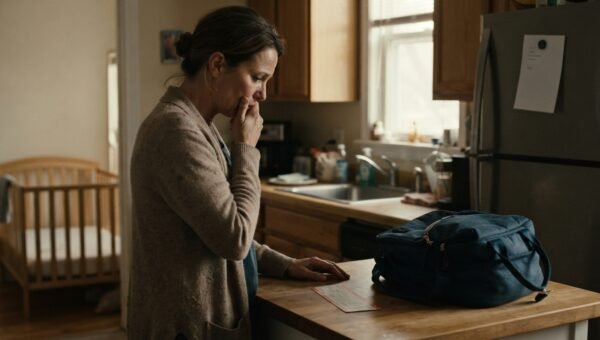
My son’s wife threw away the wooden recipe box my late mother left me because it did not match her new kitchen.
I was sixty-two, recovering from a total knee replacement, and staying in their guest room for four weeks while my physical therapy got underway. My son, Mark, had insisted on it. He told me it made no sense to sit alone in my house thirty miles away when his wife, Brianna, worked from home and could help keep an eye on things.
I did not want to be a burden, so I kept all my belongings packed tight in two suitcases, except for my medications, my heating pad, and that small pine box.
The box had been on my mother’s counter for forty-five years. It had rounded brass hinges, a worn front latch, and a small knot in the wood right near the corner. When my mother died fourteen months ago, my sister and I did not fight over furniture or silver. I asked for the recipe box, and that was that. Inside were about two hundred index cards. Some were yellowed and soft at the edges. Some had butter stains or grease marks from 1978. Almost all of them carried my mother’s slanted, left-handed handwriting in blue ballpoint ink.
I had placed the box on an open wooden shelf in the hallway outside my bedroom, right above the linen basket. It sat out of the way, completely harmless.
On a Thursday morning, the transport van picked me up at nine for my knee therapy. When I hobbled back through the front door at eleven-thirty, leaning hard on my aluminum cane, the shelf was bare. In place of the box stood a white ceramic bowl filled with dried moss balls.
I walked into the kitchen, where Brianna was leaning over the island with her laptop open and a cup of matcha tea in her hand.
“Brianna,” I said, catching my breath against the pain in my joint. “Did you move my mother’s box into my room?”
She did not even look up from her screen right away. She clicked twice on her mouse, typed something, and then gave me a quick, tight smile.
“Oh, Ellen, I did a quick sweep while you were gone,” she said, her voice light and casual. “Recycling came today. There was a whole stack of outdated magazines by the console, and that old wooden crate on the shelf had grease on the lid.
It just didn’t go with the hallway palette at all. I tossed the magazines and put that out with the bins.”
I stood there by the counter. My knee throbbed, but the rest of me went completely still.
“You threw it in the trash?” I asked. My voice sounded thin to my own ears.
“In the big blue recycling cart,” she corrected, as if that made a difference. “I really want to keep the house clutter-free while we have company. It looked like junk, Ellen. Honestly, everything is online now anyway. You can find any casserole recipe on Pinterest in five seconds.”
“Those cards belonged to my mother,” I said. “Her handwriting was on them. She passed away last year.”
Brianna sighed, a short, impatient sound through her nose. “I didn’t inspect every single scrap of paper. Mark will be home at five. We can talk about it then.”
I turned around, hobbled out the side door into the garage, and lifted the lid of the municipal blue bin.
It was empty. The city truck had already come down the lane while I was on the stationary bike at the clinic.
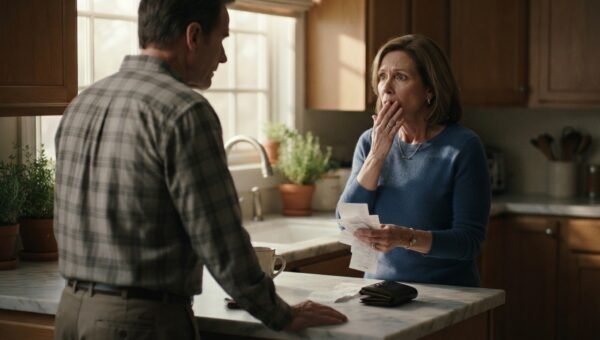
When Mark walked in the door after work, I met him in the hallway. I told him what happened. I kept my voice steady because I did not want to cause a fight between a husband and wife, but my hands were trembling against the handle of my cane.
Mark listened, rubbed the back of his neck, and looked over at Brianna, who was standing in the kitchen doorway with her arms crossed.
“Mom, it was an accident,” Mark said, his voice dropping into that tired, placating tone he used whenever tension came up. “Brianna was just trying to tidy up. She didn’t realize what was inside. Tell you what, I’ll take you to the craft store this weekend, or we can go on Amazon tonight. I’ll buy you a brand-new box. A really nice bamboo one.”
He looked at me with an easy, dismissive smile, completely convinced that a twenty-dollar container solved the entire issue. He did not understand. He did not care to understand. To him, it was a wooden box with some paper in it. To Brianna, it was an ugly object that ruined the look of her hall.
Neither of them offered to help me figure out where the truck had gone.
I did not wait for Mark to finish his dinner. I went into the bedroom, sat on the edge of the mattress, and pulled out my phone. I looked up the municipal waste and recycling transfer station for our district. The main county center was six miles south, out on an industrial access road past the rail yard. The automated recording said the drop-off and sorting bays closed at six-thirty.
It was five-forty.
My right knee was swollen to the size of a grapefruit, and my doctor had told me not to drive long distances yet. But my car was parked in their driveway, and I had my keys in my purse. I walked past the living room where the television was already playing, stepped out the front door, and got behind the wheel.
The transfer station was a massive concrete yard lined with chain-link fences and gray corrugated metal buildings. A row of heavy green dumpsters sat under a wide corrugated roof, and dust hung thick in the warm afternoon air.
A young man in a high-visibility yellow vest and heavy leather work gloves was standing near the weigh scale with a clipboard. His nametag said Hector.
“Ma’am, the public drop-off closed ten minutes ago,” he called out as I swung my stiff leg out of the driver’s side and leaned heavily on my cane.
“Please,” I said, walking toward him across the rough asphalt. “The recycling truck for the Northwood subdivision came through around ten this morning. My son’s house. An old wooden recipe box was put in the bin by mistake. It was my mother’s.”
Hector looked at my cane, then down at my swollen knee, and then at my face. He exhaled slowly, adjusting his hard hat.
“Northwood,” he said quietly. “That was truck fourteen. It dumped into bay three about an hour ago. We don’t sort Northwood until tomorrow morning, but the pile is already pushed back. If it went through the compactor on the truck, ma’am, I have to be honest with you. Wood usually splinters.”
“I just need to look,” I told him. “Even for five minutes.”
Hector shook his head, but he did not tell me no. He walked into the small guard shack, came out with a pair of cloth utility gloves and a paper dust mask, and handed them to me.
“Stay right beside me,” he said. “Do not step behind any loader.”
For nearly forty-five minutes, Hector helped me sort through three large, split-open clear bags and a loose mound of flattened cardboard under the bay lights. My knee burned with a deep, grinding ache every time I bent down. The dust coated the back of my throat. We found broken egg cartons, plastic milk jugs, shredded junk mail, and damp newspapers.
We never found the wooden box. The compactor had likely shattered it into kindling that was buried ten feet deep in the main mound.
Around six-forty, Hector pulled open a heavy brown paper yard bag that had ripped down the side. A flattened cereal carton fell out, gray and dusty.
Stuck to the waxy underside of the cardboard flap, held there by a smear of dried kitchen grease, was a single, three-by-five lined index card.
The corners were torn, and the blue ink on the front was faded. It was my mother’s recipe for boiled raisin cake, dated October 1984.
My breath hitched in my chest. I gently peeled the paper away from the cereal box.
When I turned the card over in my hand, there was no recipe on the back. Written across the lines, in dark blue ink pressed hard into the paper, was a street address in a town forty miles east, followed by a single sentence in my mother’s unmistakable hand:
“For Ellen only, after I’m gone.”
PART 2
I stood under the humming yellow work lights of the transfer station with that grease-stained card pinched between my fingers.
Hector stepped over, taking off his work gloves. “That yours?”
“It’s my mother’s handwriting,” I said.
He looked at my face, gave a quiet nod, and did not ask another question. He helped me walk back across the gravel yard to my sedan, held my car door open while I swung my swollen knee inside, and told me to get home safe.
I sat in the driver’s seat with the engine idling and turned on the overhead dome light.
The card had my mother’s recipe for boiled raisin cake on the front, complete with her note at the bottom: “Boil raisins in 1 cup water first, don’t let water boil away.” But on the back, written in thick, deliberate strokes, was an address: 418 North Elm Street, Miller’s Creek. Beneath it were those six words: “For Ellen only, after I’m gone.”
Miller’s Creek was an old railroad town forty miles east of where I grew up. My grandfather had worked at the rail yard there when my mother was a girl, but our family had not had any connection to that town in thirty years. My mother had never mentioned Miller’s Creek during her final illness. She had spent the last five years of her life living in a small patio home fifteen minutes from me, and I had handled her doctors, her grocery runs, and her utility bills.
My older sister, Clara, had moved to Arizona twelve years ago. When Mama got sick, Clara flew in twice, cried at the hospital, and told me she could not bear to see our mother frail. I was the one who sat in the room when the hospice nurse gave us the timeline. I was the one who went through her bank accounts, paid the final burial costs from her small savings, and closed her accounts.
Or so I thought.
When I drove back into Mark and Brianna’s driveway, it was nearly seven-thirty. The house was quiet. A scented candle was burning on the entryway table, smelling heavily of vanilla and cinnamon, masking the dust that still clung to my slacks.
Brianna was sitting on the sofa watching a home renovation show. When she saw me limp through the door, her eyes dropped to my dirty sneakers and the gray smudges on my sleeves.
“You went to the dump?” she asked, her voice carrying a mix of disbelief and annoyance. “Mark, your mother actually went to the dump.”
Mark came out of the kitchen with a glass of water. His face was flushed with embarrassment. “Mom, come on. Look at your clothes. What if you fell out there? Your surgeon specifically said no excessive walking for two more weeks.”
“I found this,” I said, holding out the single card.
Mark looked at it, but he did not take it from my hand. He barely glanced at the paper. “A recipe card? Mom, you drove out to a waste facility with a bad knee for one piece of paper?”
“It has an address on the back,” I said. “In Mama’s handwriting. Written to me.”
Brianna let out a short, quiet laugh from the sofa. “Ellen, your mother was eighty-one. People get confused at that age. She probably jotted down a yard sale address from twenty years ago. You’re making a huge deal out of this because you’re upset about the box.”
“She wasn’t confused when she wrote this,” I said. “This ink isn’t twenty years old.”
“Can we just drop it?” Mark asked, walking between us with his hands raised. “Mom, take a shower and get off that leg. Please. We’re trying to have a peaceful evening.”
I looked at my son. I saw the impatience in his eyes. He did not want a problem in his clean, quiet house. He wanted everything to look smooth, just like Brianna did.
I went into the guest room, shut the door, and locked it.
I took a warm washcloth and carefully cleaned the gray grime off the edges of the card, making sure not to wet the ink. Then I pulled out my tablet and looked up 418 North Elm Street, Miller’s Creek.
The property did not show up as a house.
It was a commercial parcel. The satellite image showed a low brick building with a flat gravel roof, a green canvas awning over the front door, and a paved parking lot bordered by mature oaks. A small sign near the entrance read: “First Heritage Bank & Trust.”
Below that, a recent news article from the county ledger showed that First Heritage had been bought out by a regional state bank six years ago, but the Miller’s Creek branch had kept its physical safety deposit vault intact for existing customers.
My mother had banked with County First in our hometown for thirty years. Her checking account had $4,200 in it when she passed, which went straight to funeral expenses. Her small insurance policy of $10,000 had been split equally between Clara and Mark, as she had requested years ago. I had taken the recipe box and her wedding band.
Why would my mother have an address for a branch bank in Miller’s Creek written on the back of an index card?
I opened my phone and looked at my calendar. Friday was my rest day from therapy.
The next morning, I waited until Mark left for his office at eight. Brianna was upstairs in her home office with her headset on, running a morning conference call. I packed my two suitcases, loaded them into my trunk, and left the guest room key on the hall table beside the bowl of dried moss.
I did not leave a note.
I stopped at a drive-through for a black coffee, swallowed two pain pills for my knee, and pointed my car east toward the state highway.
The drive to Miller’s Creek took forty-five minutes. The road wound through old farmland and pine stands before entering the town’s small brick downtown. The bank sat on the corner of Elm and Second Street, just as the satellite image had shown.
Inside, the branch was quiet. Brass railings and dark wood trim remained from its earlier days.
A middle-aged woman named Mrs. Gable sat behind a low wooden desk near the teller line. I sat down across from her, rested my cane against the desk, and laid the index card on her blotter alongside my driver’s license, my mother’s death certificate, and the court documents showing I was the personal representative of her estate.
Mrs. Gable picked up the card, adjusted her glasses, and looked at the address. Then she looked at the name on the death certificate: Margaret Ruth Vance.
She did not say a word for nearly two minutes while her fingers moved across her keyboard.
“Mrs. Vance was an original box holder,” Mrs. Gable said quietly, turning her screen slightly. “The box was opened in August of 1991. The rental fee was paid twenty years in advance, and then renewed in 2011 for another fifteen.”
“Did she leave instructions?” I asked.
“She registered the box under her name, but twelve years ago she added a secondary authorized signature. Yours, Ellen.” Mrs. Gable looked at me over the rims of her frames. “She left a sealed instruction envelope with the branch manager that was to be opened only upon presentation of her death certificate by you.”
Mrs. Gable stood up, took a brass key from her desk drawer, and walked me down a short carpeted ramp into a reinforced vault behind the teller counter.
The air inside the vault was cool and smelled of steel and paper.
She located box 114, inserted her master key, and then asked for the key my mother had left me.
“I don’t have a key,” I said. “All I had was that recipe card.”
Mrs. Gable paused. She reached into the file folder she had carried from her desk and pulled out a small manila envelope with my mother’s signature across the flap. Inside was a single brass key.
“She kept the duplicate on file here,” Mrs. Gable said. “She paid the maintenance holding fee so you wouldn’t need to bring one.”
She turned the lock. The heavy steel door swung out, revealing a long metal box.
“You can take it into the private room on the left,” she said, stepping back to give me room.
I carried the box to the small oak table in the viewing room, pulled the chair out slowly, and sat down.
My hands shook as I lifted the lid.
Inside was a thin, blue velvet jeweler’s box, a manila folder thick with documents, and a handwritten letter addressed to me in my mother’s blue ink.
PART 3
The letter was dated three months before my mother entered hospice.
“My dearest Ellen,” it began.
“If you are reading this, you found the card. I knew you would be the only one who cared enough to go through those recipes. Clara never liked to cook, and Mark always expected dinner to appear on the table without knowing how it got there. You were always the one in the kitchen with me, scraping the bowl and asking how much salt went into the dough.”
I wiped my face with the sleeve of my cardigan and read on.
“Thirty-two years ago, when your grandfather passed away, he left me eighty acres of timberland out by Miller’s Creek. He told me to keep it out of the family chatter until the time was right. Your father had a good heart, but he was always chasing business schemes that never panned out, and I knew if he knew about that land, it would have been mortgaged and gone before the trees were grown. In 2010, the state highway authority bought forty acres for the new bypass, and a timber company bought the rest. After taxes, there was $148,000.”
My breath caught.
“I didn’t tell Clara because Clara married a man who spends money before he earns it, and she has asked me for handouts every year since 1998. I didn’t give it to Mark because Mark has always had a way of letting the people around him pay his debts while he pretends everything is fine. You were the one who took off work to take me to radiation. You paid my heating bill two winters in a row when your father’s pension fell short, and you never once asked me to pay you back.”
I laid the letter down and opened the folder beneath it.
Inside was a certified certificate of deposit receipt, rollover statements, and a municipal bond portfolio managed through the bank’s trust department. Over thirteen years of modest interest, the balance had grown to $186,400.
Attached to the top was a transfer-on-death beneficiary deed and a trust designation naming me as the sole owner upon presentation of the death certificate.
Beside the documents was the blue velvet box. I flipped the latch. Resting on the faded satin was a platinum ring set with three small, brilliant diamonds. It was my grandmother’s engagement ring, the one my mother always wore on special occasions, the one we all assumed had been lost when my parents sold their farmhouse in 2004.
Under the ring was a final folded note:
“This belonged to my mother. It belongs to you now. Mark will tell you he deserves a share because he is my grandson. Clara will tell you it isn’t fair because she is the oldest. But fairness isn’t dividing things equally among people who never showed up. Fairness is honoring the one who stayed.”
I sat in that quiet bank room for half an hour. I did not cry loudly. I just sat there holding that small brass key and the index card with the grease stain on the front.
When I walked back out to Mrs. Gable’s desk, I signed the transfer authorizations. I did not move the money into my checking account right away. I instructed the trust officer to initiate the estate transfer into an individual trust account under my name alone at my personal credit union in my hometown.
By the time I walked out to my car, my phone had three missed calls from Mark and one text message from Brianna.
The text read: “Mark says you left your key. Did you leave without saying anything? The physical therapist called to confirm your Monday session.”
I called Mark back.
He answered on the second ring. “Mom? Where are you? Brianna went downstairs and said your bags were gone. You shouldn’t be driving around with your knee.”
“I’m in Miller’s Creek, Mark,” I said.
A pause on the line. “Miller’s Creek? What are you doing out there?”
“I followed the address on the recipe card.”
He let out an irritated sigh. “Mom, please don’t tell me you drove forty miles over an old piece of paper. This is getting completely out of hand. You need to come back here, rest your leg, and let us take care of you.”
“Your wife threw away my mother’s things because they were greasy and didn’t fit the look of your house,” I said, keeping my voice level and cold. “If I had listened to you, that card would be at the bottom of a landfill right now.”
“It was an accident, Mom! Why do you keep punishing Brianna for an honest mistake?”
“It wasn’t an accident, Mark. It was carelessness. You both treat anything that isn’t shiny or brand-new like it has no value. But that one card led to a safety deposit box your grandmother set up for me thirty years ago.”
Silence hit the line. It lasted for five seconds.
“A safety deposit box?” Mark’s tone changed instantly. The impatience dropped away, replaced by an alert, cautious sharpness. “What was in it?”
“My inheritance,” I said.
“What do you mean, your inheritance? Grandma didn’t have anything left. We split the ten thousand from the policy. What are you talking about?”
“She had land she sold years ago,” I told him. “And she left it to me. Every single dollar.”
“Wait a minute,” Mark said, his voice rising. “How much money?”
“Enough to ensure I never have to sleep in your guest room again,” I said.
“Mom, wait. Don’t do something crazy. We’re family. If Grandma hid assets from the estate, that needs to be divided properly. Clara has rights. I’m her grandson. Brianna and I have that balloon mortgage coming due in November. You can’t just keep something that belongs to the family.”
“It doesn’t belong to the family, Mark,” I said. “It belongs to the daughter who showed up.”
I hung up the phone.
ENDING
I did not go back to their house.
I drove straight to my own home, unlocked my front door, and sat down on my sofa. My living room was dusty, and the air was stale from being shut up for three weeks, but the furniture was mine, the walls were mine, and nobody was measuring whether my things matched a color palette.
Mark drove over that evening at eight o’clock.
He knocked on my front door for ten minutes. When I opened it, he looked tired, his tie loose around his collar, his eyes rimmed with red.
“Mom,” he said, stepping into the entryway. “Brianna feels awful. She didn’t sleep all afternoon. She really didn’t know what was in that box.”
“She didn’t care what was in it, Mark,” I said, sitting in the armchair with my leg elevated on an ottoman. “That’s the difference. An accident is knocking something off a table. Throwing away another person’s property because you don’t like looking at it is disrespect.”
He stood in my living room, shifting his weight from foot to foot. “She wants to apologize. And we really need to talk about the trust. Clara called me twenty minutes ago. She was furious. She said if there was hidden money, the will wasn’t probated correctly.”
“The will was probated completely according to the law,” I said calmly. “The land was sold twelve years before your grandmother died. The proceeds were placed in a private trust with a transfer-on-death deed. It bypassed probate because that is how the law works when an owner designates a sole beneficiary. Your sister and your wife can hire any lawyer they want. They will get the exact same answer.”
Mark stared at me. For the first time in his life, he saw that I was not going to smooth things over to keep him comfortable.
“We were counting on some help with the house, Mom,” he muttered, looking down at his shoes. “The contractor went over budget on the kitchen remodel, and our loan rate jumped two points.”
“You spent twelve thousand dollars on marble countertops and threw away your grandmother’s memory to match them,” I said. “You can pay your own contractor.”
He stood there for another minute, waiting for me to soften. I did not. Finally, he turned around and walked out the door, pulling it shut behind him.
The next three months were quiet.
Clara sent two angry text messages calling me selfish, and then she stopped calling altogether when an estate attorney in Miller’s Creek confirmed to her that the trust was airtight and unassailable. Brianna sent a formal text apologizing for “the misunderstanding regarding the kitchen items,” but I did not reply.
Mark calls once a month now. He asks about my knee, tells me about his work, and keeps the conversation polite and careful. He knows the boundary is there now, solid as concrete. He does not ask for money.
My knee healed. By the following spring, I was walking two miles every morning without a cane.
I took twenty thousand dollars from the trust and replaced my old roof, put new insulation in my attic, and paid off the remaining four years of my car loan. The rest stays invested, providing a steady monthly income that means I will never have to ask my son or anyone else for a place to stay when I grow old.
The index card sits in a small silver frame on the counter in my kitchen, right beside the stove.
The grease stain has faded slightly into the paper, but my mother’s handwriting is still clear and sharp. On cold Sunday mornings, when the house is quiet and the coffee is brewing, I pull out my mixing bowl, take down the raisins from the pantry, and bake that cake.