2:42 in the afternoon is a very specific time to get an email.
Most days, my phone sits quiet while I am tending to my tomato plants or folding laundry from the line. But on Thursdays, right around the time the kettle is starting to whistle for my second cup of tea, the screen lights up. It is always the same automated message from Oak Creek High. Attendance alert. Tyler missed seventh period. Again.
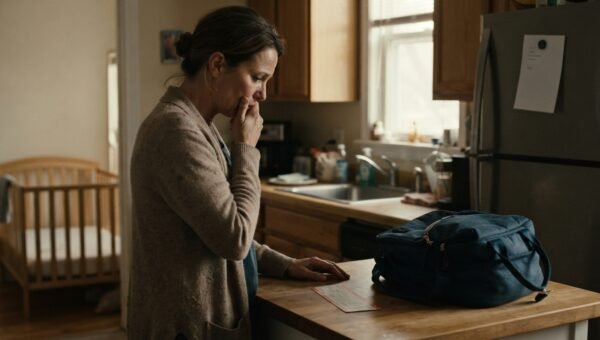
My daughter Elena was fit to be tied about it. She came over last Tuesday evening, her keys jangling in her hand like a warning bell, waving a printed copy of the latest notification. She dropped it right on my kitchen table next to the bowl of hard candies.
“He is sixteen, Mother, and he is throwing his future away,” Elena said, pacing back and forth across my linoleum floor. Her boots left little traces of dry mud near the refrigerator. “His algebra grade slipped five points last month, and now this. Every single Thursday. It is like clockwork. I am grounding him until graduation. No car, no phone, no weekend shifts at the hardware store.”
I looked at the paper, then up at Elena. She was breathing hard, her jaw tight in that familiar way she got whenever life felt like it was slipping past her control. She worked thirty-eight hours a week at the county tax office, balanced her checkbook to the penny, and raised Tyler alone after her husband walked out seven years ago.
She had every right to be stressed. But something about the pattern bothered me. Kids who skip school usually hang out behind the bleachers with a vape or go sit in a burger joint down by the interstate. They do not do it with military precision. They do not time their absences down to the exact minute every single week.
“Have you asked him where he goes?” I asked, wiping my hands on my dish towel.
“He mumbles something about the library or studying with a lab partner,” Elena said, throwing her hands up. “Then he comes home at five o’clock smelling like laundry detergent and old paper. I am sick of the excuses. Tomorrow is Thursday. When he gets off that bus, we are having it out.”
She left in a hurry, her car tires spitting gravel down the drive. I stood by the window and watched her taillights fade into the dusk.
I did not agree with her plan to ground him for the semester, not yet anyway. I had raised Elena, and I knew how stubborn she could be when she locked onto an idea. But I also knew Tyler. He was a good boy. Quiet, maybe a little too serious for sixteen, but he helped me carry my groceries up the front steps without being asked, and he never complained when I needed help with the storm windows in November.
The next day started like any other. The sun came up grey and heavy over the rooftops, promising rain that didn’t show up until noon. I kept busy with my chores, but my eyes kept drifting to the kitchen clock.
1:50 PM.
2:15 PM.
2:22 PM.
At 2:25, the yellow city bus rolled down our street with a heavy diesel rumble and squeaked to a stop by the mailbox. I watched through the sheer curtains of my front window.
Tyler stepped off the bottom step, his canvas backpack slung over one shoulder. He was wearing his blue hoodie with the sleeves pushed up to his elbows. He looked around once, checking the street, and then did something that made me drop my dish sponge into the sink.
Instead of turning toward our driveway, he crossed the asphalt. He walked right up the cracked concrete path of the house across the street.
Number 414. That house had been empty for months, or so I thought. An old man named Mr. Harris lived there alone, but he rarely came out anymore. I hadn’t seen him since the town put up new speed limit signs last autumn. The place looked dark and neglected from the outside, the front bushes overgrown and the porch light burnt out.
Yet Tyler walked right up to the front door, pulled a silver key from his coat pocket, and let himself inside.
I stood frozen for three seconds. Then the phone in my pocket buzzed against my leg. 2:42 PM. Attendance alert for Tyler Vance. Class missed.
I did not wait for the kettle to finish. I didn’t even grab my cardigan, even though the wind was picking up off the fields. I just walked out my front screen door, stepped across the quiet two-lane road, and marched straight up to Number 414.
The front door was pulled shut but not latched all the way. I could hear the faint murmur of a television playing some daytime game show from inside the dark hallway. I didn’t knock. I just pushed the door open with my fingertips.
The smell hit me first. It wasn’t the smell of teenagers or trouble. It smelled like chicken broth, bleach, and old linoleum.
“Tyler?” I called out, my voice sounding a little too loud in the narrow hallway.
A door down the hall clicked open, and my grandson stepped out carrying a plastic basin of grey water and a rolled-up white towel. When he saw me standing in the entryway, the color drained right out of his face. He dropped the towel on the floor.
“Grandma,” he whispered, his eyes wide. “What are you doing here?”
Before I could answer, a raspy voice called out from the back bedroom. “Tyler? Did you forget the gauze, son?”
I pushed past my grandson, ignoring the way he tried to block the doorway with his arm. I walked into the small, dim bedroom at the back of the house. The curtains were drawn tight against the afternoon sun. Sitting in a faded green armchair was Mr. Arthur Harris, wrapped in a plaid wool blanket despite the indoor heat. His left trouser leg was cut away at the knee, and the bandage wrapped around his shin was stained a dark, worrisome red.
Mr. Harris blinked up at me, his eyes milky behind thick glasses. “Who’s that? Elena?”
“No,” I said softly, stepping closer. I looked at the tray on the side table, which held a bowl of half-eaten soup, a spoon, and a small tube of antibiotic cream. “It’s Clara. Tyler’s grandmother.”
The old man tried to shift in his seat, wincing as his bad leg moved. “Ah. Well. I suppose the secret’s out of the bag now.”
I turned back to look at Tyler. He was standing in the doorway, his shoulders hunched like he was waiting for a blow to land. He looked so young standing there in the dim light, holding a bucket of dirty water.
“You’ve been skipping school for this?” I asked, my voice dropping an octave. “Weeks of it, Tyler? Your mother thinks you’re falling behind. She’s ready to lock you in your room until summer.”
“I had to,” Tyler said, his voice cracking just a little. He didn’t look down. He looked right at me. “His daughter lives in Seattle. She called the clinic three weeks ago crying because he fell and couldn’t get to the door. The visiting nurse only comes on Tuesdays, Grandma. If someone doesn’t check on him on Thursdays, his dressing gets infected. The doctor said so.”
Mr. Harris let out a long, shaky sigh and leaned his head back against the cushion of the chair. “He’s a good boy, Clara. He cleans up after me. He brings groceries from the market. I told him he shouldn’t risk his school record, but he wouldn’t listen to an old man.”
I looked at the bandages, then at the neat stack of medical supplies on the dresser, and finally back at my grandson. All my anger evaporated, replaced by a strange, heavy lump in my chest. He had been carrying this entirely on his own. No complaints, no bragging, just showing up every week to take care of a neighbor who had nobody else.
“Why didn’t you tell your mother?” I asked gently. “Elena would have helped. Once she knew the situation, she would have brought over meals.”
Tyler looked down at his sneakers. He stared at the scuff marks on the rubber toe. “No, she wouldn’t have.”
“Of course she would,” I insisted. “Your mother has a big heart underneath all that paperwork.”
Mr. Harris cleared his throat, a dry, rattling sound. He pointed a thin, trembling finger toward the hallway. “There’s one reason he didn’t want his mother to know.”
I waited, the silence in the room stretching out until all we could hear was the hum of the refrigerator in the kitchen.
“My son is Richard Harris,” the old man said quietly.
The name hit the small room like a cold draft. Richard Harris. My breath hitched in my throat as thirty-year-old memories rushed back all at once. The summer of 1994. Elena crying at the kitchen table until her eyes were swollen shut. A boy with a silver Mustang and a slick smile who broke her heart so badly she refused to go to her own senior prom. He had left town two days after graduation without a word, leaving Elena to face the whispers alone before she eventually met Tyler’s father. The bad blood between our families had run deep for decades, a silent, bitter wall that nobody ever talked about.
“Richard?” I whispered.
“My boy,” Mr. Harris nodded, his chin trembling. “He and Elena had that awful business in high school. When Tyler found out my last name from the mailbox on his first day helping me, he knew. He knew if his mother found out whose house he was walking into every Thursday, the old war would start all over again. He didn’t want to drag up her pain.”
I looked at Tyler. He was standing there quietly, bearing the weight of an old family feud he didn’t even start, just because he saw an old man who needed help. My eyes stung, and I had to blink hard to keep the tears back. We had spent thirty years nursing grudges while this boy across the street was showing us what real grace looked like.
“Go wash your hands in the kitchen, Tyler,” I said softly.
He hesitated, looking between me and the old man. “Are you going to tell her?”
“I’m going to tell her,” I said. “But we’re going to tell her together.”
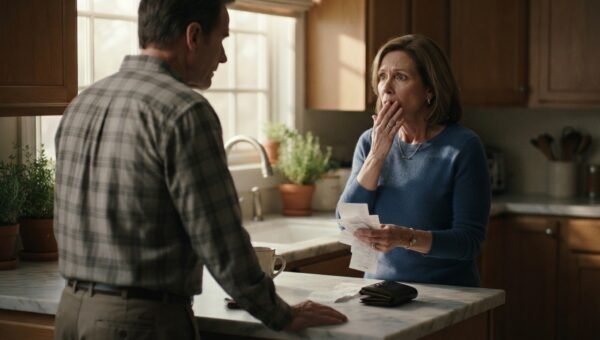
It took two hours of talking, pacing, and some very hard truths around my kitchen table that evening before Elena finally stopped crying. When I told her the whole story, about the bandages, the empty house, the groceries, and whose father was sitting in that chair, the color left her face just like it had left Tyler’s earlier that afternoon. She sat at the table with her hands clasped around a mug of cold tea, staring at the wood grain for a long time without saying a word.
“Richard’s father?” she whispered eventually, her voice barely audible. “You’ve been going into Richard’s father’s house every week?”
“He’s eighty-seven, El,” I told her, sitting down across from her. “And he can’t walk to the bathroom on his own. Whatever happened between you and Richard thirty years ago, that old man didn’t do it.”
Elena didn’t yell. She didn’t threaten to ground anyone. Instead, she covered her face with her hands, and for the first time in years, I saw the tight, defensive armor she wore every day crack right down the middle.
The change didn’t happen overnight, but families are funny that way. Once the secret was out in the open, the heavy air in our street seemed to lift.
By the following week, Elena had called Mr. Harris’s out-of-state daughter and set up a proper home-health schedule, taking the burden off Tyler’s shoulders so he wouldn’t have to miss a single minute of class. But Tyler still goes over there on Saturdays. Not to skip school, and not in secret anymore. He walks across the street openly, carrying a paper bag from the bakery with a couple of lemon tarts inside.
Yesterday afternoon, I was standing on my front porch watching the sunlight hit the maple trees. Tyler came walking down Mr. Harris’s front path, wiping his hands on a rag and laughing at something the old man had shouted from the doorway. He looked up, saw me watching, and gave a cheerful wave.
I waved back, feeling a quiet pride settle deep in my bones.