PART 1
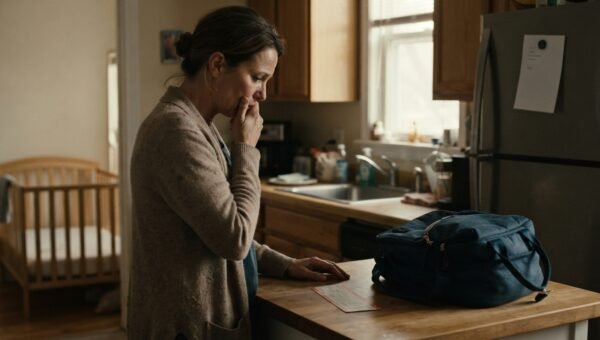
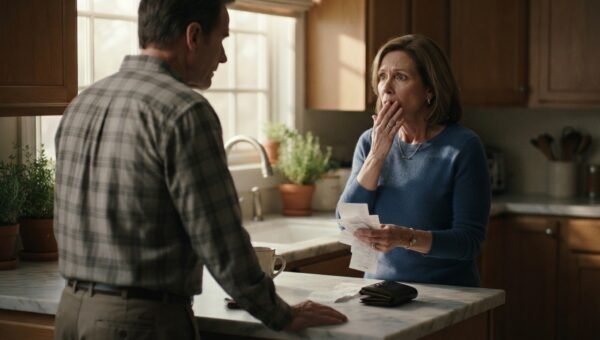
The call came on a Tuesday afternoon while I was standing at the kitchen counter folding dish towels.
The woman on the other end introduced herself as Brenda from patient financial services at St. Jude Memorial Hospital, three towns over. She asked if she was speaking with Martha Louise Higgins. I told her yes. Then she asked me to verify the last four digits of my Social Security number and my date of birth, October 14, 1961.
I gave them to her without thinking much of it, assuming it was a mix-up with my annual mammogram or a routine lab bill from my primary care clinic.
Instead, Brenda cleared her throat and told me there was an outstanding balance of $14,300 for an emergency surgical procedure completed the previous night. She said my Medicare Advantage plan had kicked back part of the inpatient claim for an out-of-network facility authorization, and they needed an updated secondary insurance card.
My hand froze around the cotton towel. I had not set foot in St. Jude Memorial in over seven years, not since my late husband passed away in their pulmonary unit. I had been sitting right in my own living room all night watching television with my cat.
“Ma’am, there is a terrible mistake,” I said, my chest tightening. “I have not been admitted to any hospital. I am standing in my kitchen right now. I have never authorized an operation.”
Brenda went quiet for a moment. I could hear the rhythmic clatter of her keyboard over the line.
“Mrs. Higgins, the patient was admitted through the emergency room at nine o’clock yesterday evening with acute facial trauma and a fractured jaw,” Brenda said, her voice dropping into that careful, rehearsed tone hospital workers use when something is wrong. “She had your physical insurance card, your state driver’s license number, and your full Social Security number on the intake paperwork. She also listed your daughter, Chloe Higgins, as her emergency contact and next of kin. Chloe signed the financial responsibility forms as the guarantor on file.”
The blood rushed out of my face so fast that the room tilted.
Chloe was my only child. She was twenty-eight years old, living twenty minutes down the road in a small apartment, working at an optical shop, and struggling to stay on top of her car payments.
We talked every Sunday, and she had just been at my house three days ago for dinner. She had not mentioned any emergency. She had not mentioned St. Jude Memorial.
“That cannot be right,” I whispered. “Chloe is my daughter, but I am standing right here.”
“I am looking at the intake scan right now,” Brenda said firmly. “Chloe Higgins signed at 9:42 PM. If this is an identity theft situation, Mrs. Higgins, you need to file a formal dispute with our risk management department and call the police immediately. Because otherwise, this balance is going to collections under your name within thirty days.”
I hung up with my heart pounding in my ears. My hands were shaking so hard I dropped my reading glasses onto the linoleum.
I hit Chloe’s speed dial immediately. It rang four times, clicked, and went to voicemail. I called again right away. On the third ring, she finally picked up.
Her voice sounded strained, breathless, and muffled, like she was holding the phone under her collar.
“Mom? I am kind of busy right now, can I call you later?”
“Chloe, where are you?” I demanded, not bothering to soften my tone. “I just got a phone call from St. Jude Memorial Hospital billing. They claim someone checked into their surgical unit using my name, my insurance card, and my Social Security number. And Brenda in billing told me you signed the intake papers as the guarantor last night.”
There was total, dead silence on the line. For five long seconds, all I could hear was the faint sound of an intercom paging a doctor in the background.
“Chloe? Answer me.”
“Mom, please,” Chloe whispered suddenly, and I could hear genuine panic tearing through her throat. “Do not call the police. Please, whatever you do, do not file a fraud report right now. Just wait until morning. Let me come over tomorrow morning and explain everything to you. I swear I will explain it all, but please do not report it tonight.”
“Wait until morning? Chloe, that is felony fraud!” My voice rose, cracking in the quiet kitchen. “Someone is lying in a hospital bed pretending to be me, racking up fourteen thousand dollars in medical bills on my credit, and you put your signature on it! Who is in that bed?”
“I cannot talk right now, Mom. Please just trust me. Do not go to the police tonight.”
The call clicked off.
I stared at the screen of my phone. She had hung up on me. My sensible, cautious daughter, who had never so much as skipped a speeding ticket, had just pleaded with me to cover up a federal crime.
I grabbed my purse, my car keys, and my actual driver’s license from my wallet. I did not wait for morning. I walked out to my sedan, backed out of the driveway, and drove straight to St. Jude Memorial Hospital.
The hospital lobby was quiet and smelled of floor wax and industrial antiseptic. I bypassed the main information desk and walked straight to the fifth-floor nurses’ station, reading the signs until I saw the surgical recovery wing.
A nurse in green scrubs with a badge that read Sarah looked up from a computer terminal behind the desk.
“Can I help you, ma’am?”
“My name is Martha Louise Higgins,” I said clearly, pulling my blue plastic Medicare card and my driver’s license from my wallet and setting them flat on the counter. “Someone was admitted here last night using my name, my card, and my number. I want to see the patient who claims to be me.”
Sarah looked down at my license, then looked up at my face. Her eyes went wide, and her eyebrows pulled together in confusion. She tapped her screen, pulled up a record, and looked back at my card.
“Room 512,” Sarah said quietly, getting up from her chair. “Follow me.”
We walked down the long, dim hallway. Outside room 512, Sarah paused, pushed the heavy door open an inch, and gestured for me to go inside.
The room was dark, lit only by the green glow of a cardiac monitor and the amber streetlights filtering through the blinds. On the bed lay a woman, her head propped up on two pillows. Thick white bandages covered the entire lower half of her face, wrapping around her jaw and across her cheeks, leaving only her eyes, forehead, and a mess of dark brown hair exposed. She was asleep, breathing through her nose with a soft, rattling wheeze.
My eyes swept across the room. On the vinyl visitor’s armchair beside the bed lay a familiar plum-colored wool coat with two missing horn buttons down the front.
It was Chloe’s winter coat.
Before I could process what I was looking at, the mattress shifted. The woman on the bed stirred, let out a tiny moan of pain, and slowly opened her eyes. They were dark brown, glazed with painkillers, but they locked onto me in the gloom.
She did not look frightened. She looked relieved.
Her thin, trembling arm rose from beneath the white thermal blanket, reaching out into the cold air toward me. Her fingers curled, desperately grasping for mine.
I stood there frozen, unable to pull away as her cold, calloused fingers caught the cuff of my sweater.
“You came,” she whispered through the swollen, bandaged opening of her mouth, her voice muffled and wet. “Chloe said you would. You promised not to let them send me back.”
The door swung fully open behind me. The overhead fluorescent lights flicked on with a sharp hum.
Nurse Sarah walked in holding a clipboard, followed by a middle-aged security guard. Sarah looked down at the chart in her hands, then looked up between my face and the woman in the bed.
“According to the intake file we received from the ambulance crew, this patient has the exact same legal name and the exact same birth date as the card you just handed me,” Sarah said, her voice completely deadpan and suspicious. “October 14, 1961. So before I call the administrator, one of you needs to tell me which Martha Higgins has been living under a stolen identity.”
PART 2
The room felt entirely airless. I pulled my hand back from the bed as if the woman’s fingers had burned me.
“I have had this name for sixty-three years,” I said to the nurse, my voice shaking with indignation. “I was born at Mercer Memorial across the state line. I have paid taxes in this county since 1983. I have no idea who this person is, but she is not Martha Higgins, and she has no right to my insurance.”
The woman on the bed closed her eyes tightly. A single tear squeezed out of the corner of her eye, soaking into the edge of the gauze wrapping her cheek. She didn’t argue. She just turned her face toward the wall, pulling the rough hospital blanket up to her chin.
Before the nurse could answer, the door swung open again, and Chloe stepped into the room carrying two paper coffee cups from the cafeteria downstairs. When her eyes landed on me, the cups slipped through her fingers, splashing dark liquid across the shiny linoleum floor.
“Mom,” she gasped, backing up until her shoulder hit the door frame. “You weren’t supposed to come here.”
“Chloe, what have you done?” I asked, stepping toward her. “The hospital is threatening to call the police. There is a woman in this bed using my Social Security number, wearing your coat’s scent in this room, and telling me I promised not to let someone send her back. Who is she?”
Chloe looked terrified. Her gaze darted from me to Nurse Sarah, and then to the security guard standing in the doorway.
“Nurse Sarah, please,” Chloe pleaded, her voice trembling. “Give us ten minutes. Just ten minutes in the family consult room down the hall. I will show you everything. I have her real identification in my purse. I swear on my life my mother didn’t do this.”
Sarah exchanged a look with the guard. “Ten minutes, Miss Higgins. Then I have to file the incident report with administration. Hospital policy on billing fraud is absolute.”
Chloe grabbed my arm and pulled me down the corridor into a small, sterile consultation room with four vinyl chairs and a box of tissues on a low table. She shut the door, leaned her back against it, and burst into tears.
“Mom, sit down. Please.”
“I am not sitting down until you tell me why my retirement and my clean record are on the line for a stranger,” I said, my chest aching. “Did you steal my Medicare card out of my wallet when you were over for dinner on Sunday?”
“Yes,” Chloe sobbed, burying her face in her hands. “Yes, I took it out of your purse while you were in the kitchen cutting the roast. And I took the old tax form you keep in the desk drawer with your Social Security number.”
The betrayal hit me like a physical blow. My stomach turned completely over. Chloe had always been gentle, almost painfully timid as a child. She had never stolen a dollar from my counter.
“Why, Chloe? For a total stranger?”
“She is not a stranger to me, Mom,” Chloe said, wiping her face with the sleeve of her cardigan. She opened her shoulder bag and pulled out an expired, dog-eared state ID card from Pennsylvania. She handed it to me.
The photograph showed the woman from the bed, younger and uninjured, with dark hair pulled back in a clip. But the name printed across the plastic was not Martha Higgins.
It read: Martha Jean Higgins. Born October 14, 1961.
I stared at the plastic card in utter disbelief. The birth date was identical to mine, down to the exact day. The last name was the same. The first name was the same. Only the middle name was different.
“Who is this?” I whispered, my mind racing through family trees, distant cousins, forgotten relatives. My late husband, David, had only one brother, and David’s brother had died without children thirty years ago.
“She is Dad’s first wife,” Chloe said quietly.
The small room seemed to spin. I stared at my daughter, waiting for her to tell me it was a sick joke, but her eyes were red and dead serious.
“Your father was never married before me,” I said, my voice rising defensively. “We were married for thirty-four years. I knew his entire life. We met when he was twenty-four at the state water board.”
“He was married, Mom,” Chloe said, reaching into her purse again and pulling out a folded piece of paper that was worn thin along the creases. It was a certified copy of a marriage certificate from a rural county court in southern Ohio, dated June 1980. David Higgins and Martha Jean Miller.
“Dad never legally divorced her,” Chloe whispered. “He walked out on her in 1982 when her medical debts from a factory injury started piling up, changed towns, and met you. He used a fake birth year on your marriage application so the county records wouldn’t cross-match. He left her with nothing, and she never came after him because she was terrified of his temper.”
I stared at the paper, feeling the foundation of my entire adult life crumble beneath my feet. David had been a quiet, stubborn man, sometimes harsh, but I had loved him. I had buried him. And now, seven years after his funeral, his past had arrived in a hospital bed with a broken jaw.
“Where did you find her?” I managed to ask, my voice barely audible.
“She found me,” Chloe said. “Three weeks ago. She tracked me down through my social media. She had been living in a women’s shelter in Columbus, working under the table at a laundromat. Her ex-boyfriend beat her half to death on Sunday night in an alley behind her building. She called me from a gas station pay phone, bleeding, with her jaw shattered. She had no money, no current insurance, and no hospital in Ohio would take her without a deposit or Medicaid, which she lost two years ago when she missed an annual renewal.”
Chloe dropped to her knees in front of my chair, grabbing my cold hands.
“She had nowhere to go, Mom. She took a bus here because she thought David was still alive and might finally help her. When she got off the bus at the depot, she collapsed. I picked her up. She was choking on her own blood. The emergency room triage nurse asked for her insurance. Martha was semi-conscious and couldn’t speak, but she had the same name and the exact same birth date as you. Dad gave her that name. He took everything from her forty years ago, and I panicked. I had your card in my purse. I handed it over because I thought they would let her die in the waiting room if I didn’t.”
PART 3
I sat in that plastic chair, staring down at my daughter’s tear-streaked face.
The anger that had propelled me into the hospital was suddenly completely tangled with horror. David had committed bigamy. My thirty-four-year marriage had been legally void from the day we said our vows in that little brick chapel in 1983. The house I lived in, the widow’s pension I collected from the county water authority, the memories on my mantle—all of it rested on a deliberate, cruel lie David had buried before Chloe was even born.
And now, the woman he had abandoned was lying in room 512, her face reconstructed with titanium plates, while a $14,300 bill bore my name and insurance record.
“Chloe,” I said, pulling my hands free from hers. “You committed insurance fraud. You cannot fix a forty-year-old sin by committing a federal crime against your own mother.”
“I know,” Chloe wept. “I know, Mom. But what was I supposed to do? Let her suffocate in my car? The surgeon said her airway was collapsing from the swelling. She needed emergency maxillofacial surgery tonight. If I had told them she had no coverage, they would have stabilized her and transferred her to the county charity ward sixty miles away. The paramedic said she wouldn’t have survived the transport.”
“And what was your plan for tomorrow?” I demanded. “When the hospital billed the remainder? When Medicare discovered two claims filed under the same number in different cities? When the collections agency put a lien on my house?”
Chloe had no answer. She just bowed her head, weeping silently into the carpet. She was twenty-eight years old, but in that moment, she looked like the frightened teenager she had once been, trying to clean up a mess far too big for her hands.
I stood up, walked to the small window overlooking the wet asphalt of the parking lot, and forced myself to breathe.
If I called the police right now, Chloe would be arrested. She had forged my signature on the intake forms. She had knowingly presented stolen insurance credentials. A felony record would destroy her career, strip her of her optician’s license, and leave her with an insurmountable criminal debt.
If I did nothing, Medicare would inevitably flag the discrepancy during their post-payment audit. The hospital billing department had already noticed the authorization issue. Once an investigator compared the patient’s medical history—her broken jaw, her dental records, her blood type—against my lifetime health records, the fraud would unravel in an afternoon.
There was only one way through this, and it required facing the woman in room 512.
“Get up, Chloe,” I said, wiping my own eyes with the back of my hand. “Wash your face. We are going back into that room.”
When we re-entered room 512, Martha Jean was awake. The harsh overhead lights showed the true extent of her injuries. Her skin was mottled purple and yellow from her temple to her collarbone. A clear drainage tube ran from beneath her bandaged jaw into a small bulb pinned to her gown. Her eyes widened with shame and fear as we walked in.
I pulled the vinyl chair up right beside the bed and sat down.
“Your name is Martha Jean Miller,” I said, keeping my voice low and steady.
She gave a tiny, painful nod. The monitor beside her beeped a fraction faster.
“David left you in 1982,” I continued. “And he married me in 1983. He never told me about you. Not once. In thirty-four years, he never spoke your name.”
Martha Jean’s lips parted slightly beneath the white gauze. “He told me… he was going to Texas for pipeline work,” she whispered, the words slurred and thick around the surgical splint in her mouth. “He took our savings account. Four thousand dollars. He left me with two months of back rent and the hospital bill from my hand surgery at the box plant. I lost the apartment. I spent two years living out of my sister’s basement.”
I looked down at her hands resting on the blanket. The knuckles of her right hand were crooked, scarred by an old industrial press injury that had clearly healed poorly decades ago.
“Why didn’t you go to the police back then?” I asked.
“David said… if I ever looked for him, he would tell the state I stole the money,” she whispered, tears slipping freely down her temples now. “I was twenty-one, Martha. I was scared to death. I didn’t know he married someone else until three weeks ago, when I found an old obituary online from your local newspaper. I saw his picture. And then I saw Chloe’s name listed as his surviving daughter.”
She reached out again, but this time she didn’t grab my sweater. Her trembling hand hovered in the empty space between us, trembling with shame.
“I didn’t ask Chloe to steal your card,” Martha Jean said, her breathing shallow. “I was passing out in the car. I couldn’t breathe. When I woke up from surgery this morning and saw the hospital wristband with your Medicare number on it, I knew what she did. I told her to run. I told her to let them arrest me.”
The door opened behind us. Nurse Sarah stepped back into the room, accompanied by a tall man in a dark suit wearing a hospital administration badge that identified him as Mr. Vance, Director of Risk Management.
“Mrs. Higgins,” Mr. Vance said, looking at me with a practiced, neutral expression. “Nurse Sarah notified me of the identification discrepancy. We have an unverified patient receiving high-tier surgical care under a flagged Medicare Advantage policy. We need to clear this up immediately, or we are required by state protocol to notify the township police department.”
Chloe stepped forward, her voice breaking. “Sir, it was me. My mother had nothing to do with—”
“Be quiet, Chloe,” I commanded, standing up to my full height.
I looked at Mr. Vance. Then I looked at the fragile, broken woman in the bed who had carried David’s original cruelty for forty years while I had lived in comfortable ignorance.
“There has been a serious clerical error during intake,” I said clearly, looking Mr. Vance directly in the eye. “My daughter panicked in the emergency room due to the patient’s critical condition and handed the triage nurse the wrong card from her purse. This patient is Martha Jean Higgins. She is my late husband’s first wife. I am Martha Louise Higgins. We are going to correct the registration right now.”
Mr. Vance frowned, looking between my driver’s license on the bedside table and the woman in the bed. “Mrs. Higgins, if this patient is uninsured, the surgical fee, operating room time, and inpatient stay total over thirty-eight thousand dollars before adjustments. The hospital cannot simply absorb that without an emergency charity application or an established guarantor.”
“Then we will establish the guarantor,” I said. “Bring me the financial hardship paperwork for the hospital’s indigent care foundation. And bring me the promissory note for the remaining balance. I will sign as the secondary guarantor myself.”
Chloe gasped, grabbing my arm. “Mom, no! You cannot take on forty thousand dollars of debt! You live on a fixed income!”
“I am not taking on forty thousand dollars, Chloe,” I said coldly, turning to look at my daughter. “The hospital has a federally mandated charity sliding scale for homeless and low-income patients, which Martha Jean clearly qualifies for. And for whatever balance remains after the charity adjustment, you and I are going to pay it. You will work extra shifts at the optical shop, and I will take the money from the savings account your father left me.”
I turned back to Mr. Vance. “Get the legal affidavits. We are fixing the identity records tonight, properly and legally, before one more dollar is billed to Medicare.”
ENDING
It took four hours in the hospital administration office to untangle the paperwork.
Because we came forward before St. Jude Memorial submitted the final electronic billing batch to Medicare, Mr. Vance agreed to void the fraudulent claim under my insurance policy without filing an external criminal complaint, provided that Martha Jean’s true identity was documented and the emergency intake was corrected.
St. Jude’s charity care committee reviewed Martha Jean’s verified income status—which was effectively zero—and applied an eighty-percent write-off under their community benefit fund. The remaining balance for the surgical plates, anesthesia, and two days of recovery came to $7,640.
I wrote a cashier’s check for half that amount from the money market account David had left behind when he died. Chloe signed a binding two-year payment agreement with the hospital billing office for the other half, committing three hundred and eighteen dollars a month from her own paycheck. She did not complain once.
Two days later, Martha Jean was discharged from the surgical ward. She had no home to return to in Columbus, no family willing to take her in, and her jaw was wired shut for six weeks.
I did not let her go to a shelter.
I drove her to my house. I made up the spare bedroom down the hall—the room that used to be David’s home office, where he had kept his locked file cabinets and his secrets. I spent the next month pureeing vegetable soups, crushing her pain medications into applesauce, and taking her to her weekly follow-up visits with the oral surgeon.
At first, we barely spoke. The silence between us was heavy with the ghost of the man who had wronged us both in entirely different ways. But by the third week, as the swelling in her face subsided and she was able to speak without agonizing pain, the stories began to come out.
We sat at my kitchen table in the evenings, drinking tea. She told me about the young David Higgins she had known—the impulsive, reckless boy who had spent his rent money on race tracks and vanished in the middle of the night when life became difficult. I told her about the older David Higgins—the quiet, rigid man who had spent thirty years terrified of anyone looking too closely at his past, keeping his finances locked away, living with the constant dread of being exposed.
David had spent his whole life running away from his debts, leaving two women with the same name to carry the wreckage he left behind.
Six months after the surgery, the hospital balance was paid in full. Martha Jean’s jaw healed straight, leaving only a faint white scar beneath the contour of her chin. With the help of a local legal aid clinic that I paid for, we finally sorted out her paperwork. Because David’s marriage to me had been technically invalid, Martha Jean was legally his surviving widow under state law.
I could have fought it in probate court. I could have hired a lawyer to defend my claim to his remaining pension. Instead, we sat down together with an attorney and signed a mutual settlement agreement, dividing the modest monthly survivor benefit equally between the two of us.
Chloe still comes over every Sunday for dinner. She works her shifts, pays her bills, and looks me in the eye again, having learned the bitter difference between saving someone and destroying yourself to do it.
Martha Jean lives three miles away now, in a small senior apartment complex near the public library. We walk together every Tuesday morning around the reservoir park.
Sometimes, when we check in at the front desk of the clinic for our routine blood pressure screenings, the receptionist looks at our matching last names and our identical birth dates on the chart and asks if we are sisters.
I always look over at Martha Jean, smile a little, and tell them that it is complicated, but we share the same family history.