PART 1
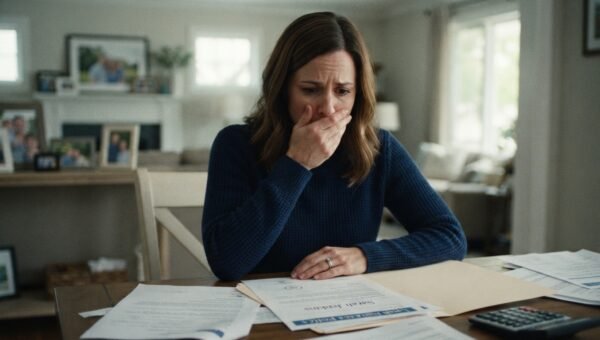
My daughter Paige and I have run a food truck at summer markets for six years, and last Monday she asked me to sign the temperature log from the weekend. By then, three people who ate our chicken wraps had called the county with stomach trouble.
She set the clipboard beside the coffee maker in our rented kitchen. Every box was filled in: cooler temperatures, delivery times, initials. The numbers were neat enough to look printed.
“Just confirm these are yours,” she said.
I picked up the pen but didn’t write. I had worked the truck on Saturday. I knew our cooler had lost power during the afternoon rush. The digital thermometer had gone blank, and Paige had run to a nearby store for bags of ice. I remembered stacking the ice around the chicken while customers waited at the window.
“I didn’t take these readings,” I said.
“You checked the cooler before opening.”
“I checked it at seven in the morning. These go through six.”
Paige pressed her palms against the counter. Her hair was still damp from the shower, and she had the pale, tight look she got when she was doing mental math. The truck payment was due in four days. So was payroll for our two weekend helpers.
“If we report that the food got warm, the county can suspend our permit,” she said. “I’m not saying anyone got sick from us. I’m saying the log has to be complete.”
“It has to be true.”
For a moment, she looked more hurt than angry. “I’ve kept this business alive.
Dad left us a truck with a bad transmission and a kitchen that barely met code. I’m the one who got the permit renewed. I can’t lose everything over a dead battery.”
I understood why she was frightened. I also knew the county investigator had asked for the original logs, not copies. I told Paige I wouldn’t sign, then drove to the truck lot to find the temperature probe we used before we bought the digital one.
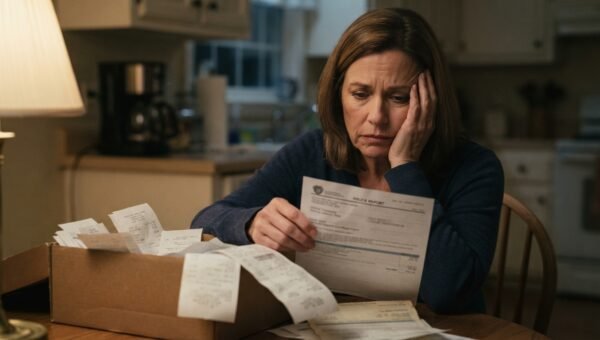
The old probe was still in a drawer with rubber bands and spare receipts. Beside it sat the receipt from the store where Paige had bought the ice. It was timed at 2:18 p.m. The cooler’s power cord had come loose from the generator that day; I had watched her push it back into place after the rush slowed down. We hadn’t thrown anything away. We’d packed the chicken tight in ice and kept serving.
I could still hear myself telling her it was probably fine. I had wanted the line moving, too.
I checked the clip on the clipboard. Someone had added a fresh page over the original log. At the bottom, a corner of the old sheet showed through, with the first half of a number written in blue ink. I lifted the new page carefully. The original entry for 2 p.m. was “52.” Someone had crossed it out and written “38” above it. The replacement page showed 38 in every afternoon box.
My stomach tightened. I took pictures, front and back, and called the county. I told the investigator that the cooler had lost power, that we had continued serving, and that the log had been altered. I gave him the receipt time and said I was willing to bring the clipboard in.
Paige came through the kitchen door while I was still on the phone. She heard enough to know what I’d done.
When I hung up, she didn’t shout. She just looked at the clipboard in my hands.
“I changed the numbers,” she said. “I was going to fix it after we got through the weekend.”
“Fix it how?”
“I thought the food stayed cold enough. I thought nobody would get sick.” Her voice dropped. “You were standing there, Mom. You told me we could keep going.”
She was right. I had made the same choice she had, except I had not put false numbers on paper. I told her that didn’t make the log honest, and it didn’t make my part disappear.
The county investigator arrived an hour later. He photographed the clipboard and took the original sheet in an evidence sleeve. Before he left, he said the illness reports were still being reviewed and that the county would contact every customer who had bought chicken from us that day.
Paige sat on the floor by the cooler, arms wrapped around her knees. I wanted to sit beside her. Instead, I called our two helpers and told them the truck might be closed for a while. I wouldn’t let them find out from a canceled schedule.
The next morning, the investigator called again. He had found a second temperature record in the county’s market file, submitted before our replacement page was made. It was a photo taken by the market manager during a routine inspection.
He asked me to look at the handwritten note visible beside the 52-degree reading and tell him who had written it.
PART 2
The investigator, an older man named Carl Davis, asked me to come down to the county health office on Second Street. I told Paige to stay at the commissary, but she grabbed her jacket and followed me out to the parking lot.
“I’m coming with you,” she said. “If they’re taking our license, they’re taking it from both of us.”
We drove in silence. The county office smelled like floor wax and old paper. Carl Davis met us in a small conference room that had two folding tables pushed together. On the table was a manila folder, our metal clipboard, and a color printout of an image taken from a cell phone.
Carl laid the printout between Paige and me.
“The market manager, Greg Nelson, does an hourly walk-through of every food vendor,” Carl said. “At two-thirty on Saturday, he checked your window display and snapped a quick picture of your clip station to verify you had a sanitizer bucket out. Your clipboard was hanging right next to it.”
He tapped a ballpoint pen on the photo. The picture was clear. It showed the top edge of our prep counter, the red sanitizer bucket, and the clipboard hanging from a magnetic hook on the stainless-steel hood. You could clearly see the original log sheet before the new page was placed over it.
Beside the row for 2:00 p.m., right where “52” was written in dark blue ink, there was a handwritten note in the margin.
It said: “Cord kicked out. Temp rising. Don’t toss.”
Underneath those six words were initials: “E.M.”
My initials. Evelyn Miller.
A heavy, sick feeling dropped into my chest. Paige didn’t look at me, but her fingers gripped the edge of the laminate table until her knuckles went white.
“Mrs. Miller,” Carl said quietly. “Is that your handwriting?”
I looked at the slant of the letters. The M had the same wide, flat loop I’ve made since grade school. But I hadn’t written it. I remembered the rush. I remembered wiping grease off the flat top. I remembered Paige kneeling by the generator outlet, cursing under her breath, and then running across the asphalt to the corner gas station for two ten-pound bags of ice.
“I didn’t write that note,” I said.
“Those are your initials,” Carl pointed out. “And the customer who was hospitalized yesterday morning with salmonella bought a chicken wrap at two-forty-five.”
The room seemed to shrink. “Hospitalized?” Paige whispered.
“A sixty-eight-year-old woman,” Carl said. “She’s on IV fluids at St. Jude. Her daughter filed the formal complaint yesterday at noon. We’re running cultures now, but the timeline puts the meal right in the window when your cooler was at fifty-two degrees.”
Carl leaned back in his chair. “Falsifying a log after an outbreak is a misdemeanor under state health code, and if there’s evidence of intentional endangerment, it can go to the county prosecutor. If you wrote this note instructing the staff not to toss warm poultry, Mrs. Miller, your name goes on the citation.”
I looked across the table at my daughter. Her face was gray. She wasn’t looking at Carl; she was looking down at the printout, her lower lip trembling.
“Paige,” I said gently. “Look at me.”
She wouldn’t. She kept her eyes glued to the paper.
I knew my daughter’s handwriting. When she was twelve, she used to forge my name on her reading logs so she wouldn’t lose her recess privileges. She was good at it. She knew how to mimic the flat loop of my M.
“Carl,” I said, keeping my voice steady. “Can you give us five minutes in the hallway?”
Carl looked between the two of us for a long moment, then nodded. He picked up his pen and stepped outside, leaving the folder open on the table.
PART 3
The door clicked shut, and the silence in the room was suffocating.
“You put my initials on it,” I said.
Paige broke. She pressed her face into her hands, her shoulders shaking, but she didn’t make a sound. When she finally looked up, her eyes were bloodshot and wet.
“I didn’t mean to hurt anyone, Mom,” she whispered. Her voice was cracked, raw. “When the plug came out, I panicked. The line was twelve people deep. We had three hundred dollars worth of diced chicken in that prep rail. If we threw it out, we couldn’t serve the afternoon crowd, and we needed twelve hundred dollars by Friday or the bank was going to repossess the truck.”
“So you wrote my initials?”
“I wrote the note to remind myself to check it again after the ice went in,” she sobbed. “I wrote your initials because you’re the certified food safety manager on the permit. I thought if Greg Nelson looked at the board while I was running for ice, he’d see your initials and keep walking. I didn’t think anyone would get sick. I swore the ice brought it right back down.”
“It was at fifty-two degrees, Paige. Chicken can’t sit at fifty-two degrees in eighty-degree summer heat.”
“I know! I know that now!” She grabbed my wrist across the table. Her hand was cold and clammy. “Mom, if they charge me with falsifying a state record, I’ll never get another vendor permit. I can’t work in food service again. Everything I’ve spent six years building is gone.”
She didn’t ask me to take the blame, but the plea was hanging right between us. I was sixty-one. My house was paid off. I had a small pension from twenty-four years of teaching middle school. If the citation was written in my name, my reputation in town would take a bruising, the permit would be revoked, and the business would fold, but my life wouldn’t be destroyed.
For about ten seconds, the mother in me wanted to take the pen, sign whatever Carl Davis brought back in, and tell him I wrote the note. I wanted to protect my child from the terrible consequences of her own panic.
Then I thought about the woman lying in a bed at St. Jude with an IV in her arm because she trusted a sandwich we handed her through a sliding window.
I pulled my wrist out of Paige’s grip.
“No,” I said.
“Mom, please.”
“I’m not lying for you, Paige. And I’m not letting you hide behind my name.”
“They’ll shut us down!”
“Then they shut us down,” I said. “We served bad food. I stood there and watched you pack ice around it instead of shutting the window and throwing it in the trash. I am just as guilty of keeping that line open as you are. But I will not sign a lie, and I will not let you forge my name to save a truck.”
Paige stared at me, her chest heaving. The desperation in her face slowly hardened into something smaller, colder, and utterly defeated.
I walked to the conference room door and opened it. Carl Davis was leaning against the concrete wall outside, checking his phone.
“Carl,” I said. “Come back in.”
He walked in, pulled the door closed, and sat back down.
“The handwriting on that margin note is Paige’s,” I told him. “She wrote my initials because I’m the certified manager. She replaced the log sheet on Monday morning because she was terrified of losing the permit. But I want it on the record that I was working the window on Saturday. I knew the cooler had lost power, and I allowed her to put ice on the chicken instead of throwing it out. If there is a fine for operating an unsafe kitchen, write my name on it, too.”
Paige slumped forward, burying her head on the table. She didn’t dispute a single word.
Carl looked at both of us for a long time. He took a fresh legal pad from his briefcase.
“All right,” he said. “Here is what happens next.”
ENDING
The county health department issued an emergency suspension of our retail food establishment permit that afternoon. Two days later, after the St. Jude lab confirmed the salmonella strain matched the sample Carl took from our cooler gaskets, the county revoked our license entirely.
Because Paige cooperated and gave a full, sworn statement admitting she had altered the log, the county prosecutor decided against filing criminal fraud charges. Instead, the department levied a $3,500 civil administrative penalty against the business.
The woman from St. Jude spent four days in the hospital before returning home. Her insurance company filed a subrogation claim against our commercial liability policy, which covered her medical bills. Our insurer promptly dropped our coverage.
Without a permit and without insurance, the food truck was dead.
We sold the truck three weeks later to a catering company two counties over. After paying off the remaining bank balance and the county fine, there was less than nine hundred dollars left from six years of work. Paige used her half to pay her personal car insurance.
She didn’t speak to me for almost two months. When she finally came over to my house in late September, she brought a cardboard box containing the spare pans, the aprons, and the metal clipboards from the commissary kitchen.
She set the box by my front door. We sat on the back porch with two mugs of black coffee, watching the leaves begin to turn on the maples along the fence line.
“I hated you that day in the office,” Paige said quietly. She didn’t look at me; she looked out at the yard.
“I know you did,” I said.
“I thought you were supposed to protect me.”
“I was protecting you,” I told her. “If I took that fall, you would have spent the rest of your life knowing you ruined me to save yourself. You wouldn’t have been able to look at me, and you wouldn’t have been able to look in a mirror.”
She took a slow sip from her mug. Her shoulders weren’t tight like they used to be when the truck payments were hanging over our heads. She looked tired, but she looked like herself again.
Last week, she started an entry-level job as an assistant kitchen manager for a retirement community downtown. They did a background check, and she had to disclose the administrative revocation. She told the hiring director the exact truth about what happened on Saturday afternoon at the summer market, and what happened on Monday with the log. They hired her anyway, but they put her on a six-month probation and made it clear she wouldn’t be managing food safety logs until she completed a new state certification on her own dime.
Yesterday morning, she texted me a picture of her new uniform nametag.
Underneath the photo, she wrote: “First shift done. The cooler was thirty-seven degrees all day.”
I didn’t text back any big speech. I just sent back a heart, walked into the kitchen, and put the coffee pot on.