Why did I wait until the waiter set down our anniversary check to tell Nora I had a daughter?
I’ve asked myself that more than once since the dinner. Not because I thought the timing was good. It wasn’t. I think I wanted to make the confession feel like something I had chosen, instead of something a phone call had forced out of me.
It was our 25th anniversary. Nora picked Olive Garden, same booth she usually asked for, and I paid $78 for dinner.
She ordered chicken alfredo. I got soup and salad, though I barely touched it. The breadsticks had that warm, faintly sweet smell, and one left a little grease on my thumb. I remember that. I don’t remember what the waiter’s name was.
The call came two nights before. I was in the garage, trying to find a receipt for a water heater part, when an unfamiliar number showed up. The woman said her name was Paula. I knew her voice before she said mine.
“I need to talk about Ana,” she said.
Paula and I had been together for four months in 2011. I ended it. That’s how I used to put it, like ending the affair was the same thing as repairing what I’d already broken. I hadn’t seen Paula since. I didn’t know she’d had a child until that call.
Ana was 12. Paula said she needed surgery and the cost not covered by insurance was $47,000.
She said Ana looked like me. She said there was a birthmark behind her left ear, the same one I have.
I put my hand behind my ear before I could stop myself.
“Can you send me a picture?” I asked.
Paula sent one while we were still on the phone. I stared at it in the garage. The girl had my brow and the same small brown mark tucked behind her left ear. It wasn’t proof of anything by itself, but I already knew what it meant. I told Paula I needed time. Then I sat in my truck with the picture open on my phone until the screen went dark.
I was afraid of what I owed that girl. I was also afraid of what Nora would say. Both things were true, and I spent the next day acting as if I could solve the first one without facing the second.
At the restaurant, Nora was talking about our daughter, Lena, and whether she’d found a new apartment. She stirred her drink with the straw and said Lena had called about a leaky kitchen sink. I said I’d look at it on Saturday. That was the kind of talk we had. Bills, errands, family. We’d gotten good at keeping a conversation moving without asking anything that might slow it down.
The waiter brought the check and set it near my elbow. I looked at Nora’s plate. She’d left half the pasta. I told myself I should say it before the waiter came back. Then he walked past our booth, and I waited again.
Finally I said, “I need to tell you something.”
Nora put her breadstick down. It landed on the little side plate with a soft tap.
“In 2011, I had an affair. Four months. I ended it.”
She looked at me without blinking. I’d planned to say more, but the words I’d practiced in the car didn’t come out in the right order.
I told her Paula had called. I told her about Ana, the surgery, the $47,000, and the birthmark. I said I hadn’t known about the girl before that week. I said I wanted to help, though I didn’t know what that meant yet.
Nora stayed quiet. I watched her hands. She folded the paper napkin once, then flattened it.
“Why now?” she asked.
I had no good answer. I said I didn’t want to hide it from her. That sounded better than the truth, which was that Paula had put a child and a number in front of me, and suddenly I couldn’t keep pretending the past was settled.
Nora picked up her purse.
“I knew about her. Since 2012.”
For a second I thought she meant she knew about the affair. I said, “You knew about Paula?”
“I knew about the affair,” she said.
I asked how. She didn’t answer right away. She pushed her chair back from the table, and the legs scraped the floor. That sound was small, but I still hear it when I think about that booth.
I told her I’d never had any reason to think she knew. That was a stupid thing to say, and I knew it as soon as it came out. I had built my whole account around what I thought she did and didn’t know. I’d just admitted that I’d lied to her for 15 years, then felt offended that she had kept a secret too.
She looked down at me. Her voice stayed even.
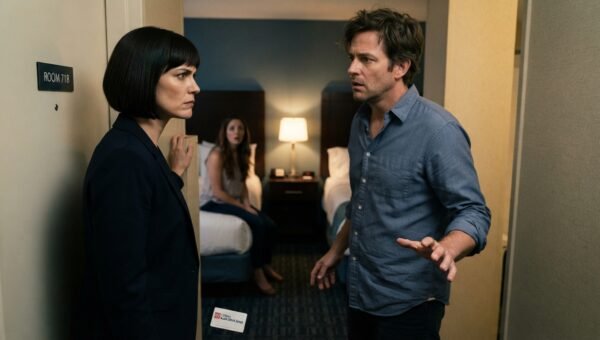
“I never said anything because in 2011, while you were with her, I was at the same hotel. Different floor. With your coworker.”
I stopped hearing the restaurant for a moment. I knew the hotel she meant. I’d stayed there twice that fall for a work training outside Amarillo. One trip had been with Paula. I had been careful about the dates, or thought I had. Nora had gone to a conference in town that same week. At least, that’s what she told me then.
I asked her which coworker.
She said his first name. I won’t put it here. He’d been on my crew, the kind of guy who borrowed my socket set and brought it back a week late. I’d met his wife at a holiday party. I remember thinking she was nice. I remember how we all sat around one table and passed the rolls like ordinary people.
Nora said it had happened once. She said she wasn’t proud of it. She didn’t tell me because she’d already seen enough to know I was seeing Paula. She found out in 2012, she said, and decided not to ask me for an explanation she didn’t want to hear.
I asked why she stayed.
She looked at the check instead of me. “I was trying to make a life work.”
I wanted to say I’d been trying too. That we had raised Lena, paid the mortgage, gone to birthdays, bought groceries. We’d taken turns driving her to school when she was little. We’d sat in waiting rooms and held each other’s coats. Those things had happened. They weren’t fake just because neither of us had been honest.
But there was no way to use them as a defense. I’d been measuring our marriage by the parts that were easy to see. Nora had been measuring it by what I had done when she wasn’t there.
The thing is, I had thought my confession would put us in a room where I had to answer for myself. Instead, I learned Nora had been in that room alone for years. She’d known about Paula, and she had kept it to herself. I couldn’t tell if that was patience, punishment, or just the way she got through the days without blowing up the family. Maybe all three. She said she’d watched me come home, wash up, and sit down to dinner like nothing had happened. I did not remember those dinners. I remembered the hotel, the calls with Paula, and how I’d told myself I would end it before it got worse. I did not remember Nora looking at me across our own table and knowing. That was the part I couldn’t set aside. She had carried the knowledge through Lena’s school years, through our parents getting older, through all the small plans we made because a marriage is full of plans no one thinks to question. I kept wanting to ask why she hadn’t left in 2012, but every version of that question made it sound like I was asking her to comfort me. So I stopped asking it.
The waiter came by and asked if we wanted boxes. Nora said no. I said nothing. He looked at the untouched pasta, then at me, and took the plates away.
I asked Nora if she had ever planned to tell me. She said she didn’t know. Then she reached for her purse again, slower this time, as if she had forgotten she was holding it. I asked whether she was leaving me right then. She said she was going to Lena’s. She’d already called her before dinner, she said, though I don’t know when. That hurt too, but not in a way I had any right to complain about.
I asked if she still loved me.
She closed her purse. “I don’t know what I feel about you anymore.”
That was the first time her voice changed. Not much. Just enough that I could hear she was tired.
I asked if the man was still in her life. She said no. I asked if she had loved him. She said she wouldn’t answer that at a restaurant. I started to ask another question, then saw her face and stopped. I had asked for honesty and wanted it to arrive in a form I could handle. That wasn’t the same thing as wanting the truth.
Nora stood and put her purse over her shoulder. I said her name. She paused but didn’t turn back.
“I’m sorry,” I said.
“I know,” she said.
Then she walked toward the front. I didn’t follow her. I could have. I didn’t.
The check was still on the table. Seventy-eight dollars. I put my card beside it and sat there while the waiter cleared the neighboring table. The chicken alfredo had gone cold. There was a little sauce dried along the rim of Nora’s plate, and one breadstick had been left where she’d set it down.
I paid and drove home alone. Nora stayed at Lena’s. The next morning she texted that she wanted to separate. We spoke with a lawyer the following week. There was no shouting over the house or the accounts. We agreed to keep things simple while the papers were started. Twenty-five years did not make either of us the better person in the room.
Paula sent the hospital estimate and the doctor’s details. I spoke to a lawyer about establishing paternity and what financial help would actually mean. I haven’t met Ana yet. I won’t pretend sending money is the same as being her father, and I won’t use Nora’s choice to leave as a reason to avoid doing what I owe that girl.
Nora and I have not made up. We have not decided every last thing about the house, either. We do speak when we need to. Her voice is calm. Mine is usually too careful. I still catch myself trying to explain the years in a way that makes them add up to something good. I don’t know if I can do that without lying again.
The card was beside the $78 receipt, and Nora’s chicken alfredo sat cold in the empty booth.