The grit from the first flagstone was already under my thumbnail when I heard my sister laugh in the kitchen. I’d arrived at my parents’ house at 7:05 that morning to help Dad move the stones, and I still had my work gloves on. Elizabeth was talking about overwater villas in the Maldives. Then Mom said, “The full hundred thousand went through yesterday.”
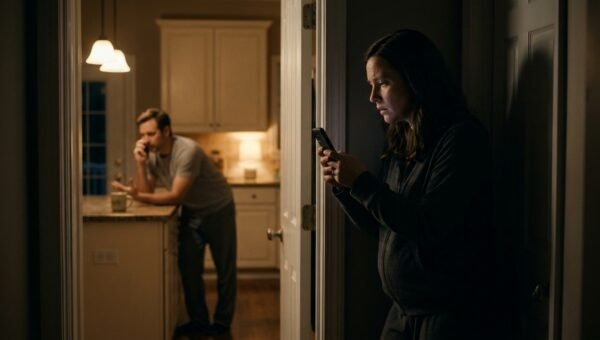
I stopped in the hallway. I wasn’t trying to listen, exactly. I just couldn’t make myself walk in yet.
Dad said, “It’s what a honeymoon should be.” Elizabeth asked if he meant it, and he said, “Of course. You’ve always deserved the world.”
Then she mentioned my wedding. She called it “that little backyard thing,” but her voice sounded more curious than mean. Dad answered before Mom could. “He’s a man. He should manage alone.”
I’d heard versions of that line my whole life. I didn’t know why it landed differently that morning. Maybe because I was standing there in old work pants, there to lift rocks for him, while my parents celebrated giving Elizabeth more money than I’d ever seen in one place.
I stepped into the kitchen. Mom’s hand went to a magazine on the counter, too fast to seem casual. The corner of a bank receipt showed underneath it. Beside the receipt was an old spiral ledger I’d seen her use for household bills. I didn’t know yet what was written in it.
“I thought you were outside,” Mom said.
“I heard the wire amount.”
The kitchen got quiet. Elizabeth had her phone in her hand, open to a picture of a villa with a little pool over the water. Dad didn’t look embarrassed. He looked annoyed that I’d brought the conversation into the room.
Mom tried to smile. “It’s a gift. We’ve been saving.”
“For the Maldives?”
“It’s their honeymoon,” Dad said.
The sandwich sat by the sink, still wrapped in clear plastic. Mom had bought those for me before when I came over to work. I’d always thanked her. That morning, it looked like a strange little payment for the hours I was expected to give away.
I’m 51 now, and I work maintenance at a hospital outside town. I’ve spent years fixing things people don’t notice until they stop working. A broken latch, a leak under a sink, a door that won’t shut.
I don’t mind being useful. I do mind when people act like useful is all I’m worth.
My parents, Arthur and Eleanor, always said money was tight. They had a small pension and Social Security, and Mom talked about grocery prices like every trip was a problem to solve. I believed them. I wasn’t rich, but I could spare a little, so I set up a $325 monthly transfer to help with “living expenses.” I started it nine years ago after Dad said the water heater was going and they were short that month.
It was supposed to be temporary. It wasn’t.
I’d also spent a lot of Saturdays at their house. I mowed, patched the back steps, replaced a section of roof after a storm, and helped Dad haul lumber. When he hurt his shoulder, I did the heavier work without asking for anything. I’m not proud of how much I liked hearing, “I don’t know what we’d do without you.” It made me feel needed. That’s on me.
Elizabeth’s life looked different. She was younger by four years and had always been the one Mom bragged about at church or when relatives came by. Her job was in medical sales, and she liked nice hotels and nice clothes. My parents acted like every big thing in her life was something the family had to celebrate properly.
When she got engaged, they hosted a dinner. I remember Dad asking me to bring folding chairs from the garage. He also asked if I could help cover the catering deposit until the next pension check. I sent $600. I didn’t ask for it back. I told myself weddings were expensive and family helped.
My wedding had cost less than the engagement dinner. Dana and I got married in our backyard, with a rented tent, grocery-store flowers, and my cousin playing guitar. My parents came. They left before we cut the cake because Dad said he had an early morning. I remember Mom telling me, “You two don’t need a fuss.”
I’d tried to take that as approval. It was easier.
That morning in the kitchen, I looked at the bank receipt again. Mom kept part of her hand over it, like the magazine could still hide what I’d already heard. “You said you were barely getting by,” I told her.
“We are careful,” she said.
“You told me you needed my help with bills.”
Dad made a small sound through his nose. “We did need help.”
I nodded toward the paper. “Then what’s this?”
Mom put her palm down on the magazine. “It’s family money.”
“Mine was family money too.”
I said it calmly. I was surprised by that. My voice sounded like I was asking someone at work to check a supply order.
Elizabeth lowered her phone. “I didn’t know he was sending you money.”
Dad looked at her. “You don’t need to know every detail.”
That should have been enough. It wasn’t, because I noticed the ledger beside the receipt. Mom had used that same ledger when she called me about the water heater. She’d written my name on the front in blue pen. I picked it up and opened it.
The pages had dates, amounts, and notes in Mom’s small handwriting. My transfers were listed every month. Some were marked “house,” some “emergency,” and some just had my name. On a page near the back, there were several deposits into a savings account, then a note about the wire. The account number matched the one on the receipt.
I read it twice. My monthly “emergency help” had been going into the same reserve they used for Elizabeth’s honeymoon. Not all the money came from me, and I can’t say my checks paid for every dollar of that trip. But my help had been counted as savings, not used for the bills I thought I was helping them cover.
Mom reached for the ledger. “That’s private.”
I held it in place. “You told me the furnace needed help.”
“It did,” she said. “At the time.”
“You told me the property tax was late.”
“We were managing.”
“By putting my money away?”
Dad stood up. His chair scraped the floor. “Don’t start making yourself a victim.”
I looked at him. “I’m asking where my checks went.”
“You have a good job. You don’t have kids. You can handle yourself.”
I glanced at the receipt. “So you gave her a hundred thousand dollars because she deserves the world, and I should be glad I can handle myself?”
Dad shrugged, like the difference was obvious. “Elizabeth’s starting a marriage. She’ll have a life to build.”
“I have a marriage.”
He looked at me then, but only briefly. “You’ve got your own place. You’ve always been fine.”
That was the part that hurt, though I wouldn’t have said it that way in the kitchen. I had worked through college. Dana and I paid for our wedding ourselves. I’d kept showing up whenever they called because I thought being independent meant not making trouble for anyone. I guess they’d taken that to mean I needed nothing.
Mom said, “We never asked you to do all that.”
I almost laughed. Not because it was funny. Because she’d called me at 6:30 in the morning to ask me to move the stones that were still sitting in the driveway.
“You called me today,” I said. “You said Dad couldn’t lift them.”
“He shouldn’t,” she said.
“And I’m supposed to.”
Dad folded his arms. “You’re strong. You’re our son.”
There it was. Not a thank-you. Not even a request. Just the job description.
I closed the ledger and set it down beside the wire receipt. “I’m not moving the stones.”
Dad’s eyebrows lifted. “Don’t be childish.”
“I’m not doing the yard. I’m not fixing anything. And I’m stopping the monthly transfer.”
Mom looked down at the sandwich. “We bought you lunch.”
“I don’t want it.”
My gloves were still on my hands. I pulled them off and laid them on the kitchen island beside the unopened sandwich. Then I put my house key down next to them. My parents had a copy for emergencies, and I’d never thought twice about giving it to them. I didn’t want that arrangement anymore.
Dad said, “You’ll regret this when we actually need you.”
“I’ve been here when you needed me.”
“Then don’t make a show of it now.”
“I’m not.”
I picked up my phone and canceled the recurring transfer before I left the kitchen. I didn’t do it to punish them. I did it because I could no longer call it help when I knew what they were doing with it.
Mom said my name once. Not loudly. I can still hear how tired she sounded. For one second, I wanted to put the key back in my pocket and say we’d talk later. That’s my old habit. Smooth it over, go outside, lift the stones, let the next call come.
But the stones were still in the driveway, and nobody had touched them.
Elizabeth didn’t say anything. Her phone screen had gone dark. Dad kept his arms folded. I walked out through the side door and passed the pile of jagged flagstones in the morning sun. I didn’t look back until I reached my car.
A few days later, Mom texted to ask if I was really stopping the help. I told her yes. Dad called twice and left one message about the yard. I didn’t call back. They hired a contractor the next week. I know because Mom sent me the invoice, as if I might change my mind once I saw the price.
Dana and I are still in touch with them, but we don’t go over every weekend. I don’t fix things unless I choose to, and I don’t send money. I can love them and still not be their backup plan. I wish I’d understood that before the ledger had my name in it month after month.
That morning, I drove away with the garden stones untouched. My gloves were on the island beside the sandwich, and my parents’ key was there too.