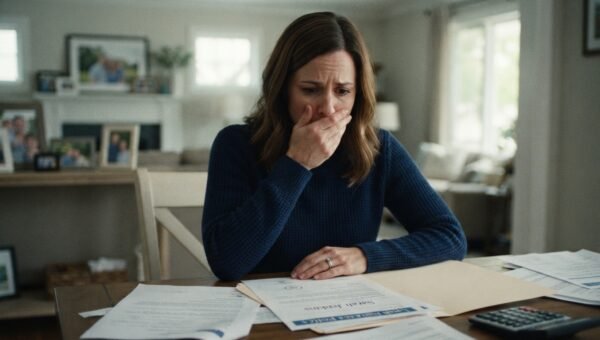
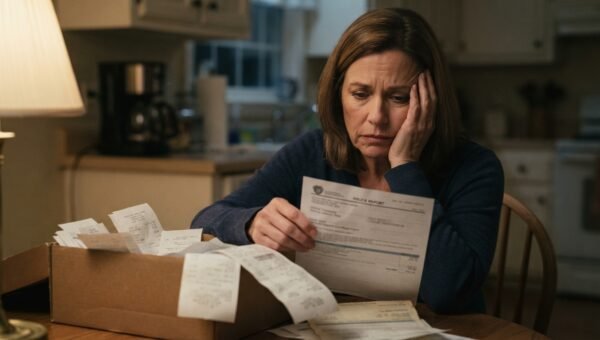
Why was my father on my porch with two police officers over $8,400? I still ask myself that, though I know what he claimed: my house belonged to him.
The text that started it came a few weeks after my wedding. I was at the kitchen counter, still wearing my ring, when my phone buzzed. Dad wrote, “We need to ad $8,400 you brother’s wedding.”
That was the whole message. No hello. No mention of the wedding he’d skipped.
My husband, Luis, was at the sink rinsing a coffee mug. I read it twice, then showed him. He dried his hands and waited. Luis is good at that. I used to mistake waiting for agreement.
I sent Dad one dollar through the payment app. The note said, “Best wishes.” Then I told Luis to change every lock in the house.
I was sure that was the cleanest way to draw a line. It wasn’t. I thought a small, almost polite answer would make Dad see how ridiculous he sounded. Instead, it gave him something new to push against.
I’d spent most of my life trying to be the easy daughter. The one who helped without asking why, and forgave before anybody had to apologize. I grew up in a Nebraska railroad town where people still asked after your parents at church. That made it easy for me to keep saving Dad a seat in my life, even when he hadn’t earned one.
My brother Brett was the one our family planned around. Dad called it “looking after your own.” When Brett needed help with a car, Dad found money. When I needed help, Dad found a reason I should handle it myself. I didn’t like that, but I learned to call it normal.
I bought my house before I met Luis. Dad came with me to the closing because he’d helped me understand the paperwork. That’s how I described it for years. I was proud to own a place, and he liked saying he’d helped me get there.
The title papers were confusing. Dad pointed to a few pages and said the family trust language was “just there in case something happened.” He’d helped me with the down payment, too, though I paid him back. I signed where he marked. I was 29 and grateful, and I didn’t ask a lawyer to explain each page. I should have.
When Luis and I married, the house became our home together. We made a small change to the deed so both our names were on it. Dad didn’t like that. He said the house had started as a family arrangement. I thought he was being sentimental, and I told him it was just paperwork.
He said, “Don’t make this into a thing.”
So I didn’t. That’s the part I keep coming back to. I let his confidence stand in for proof.
Our wedding was small, at the church where I’d gone since I was a kid. We paid for it ourselves. Dad, Brett, and the rest of my family said they’d come. The morning of, I kept checking the front steps whenever someone opened the side door.
I remember a little icing stuck to the side of my ring. I wiped at it with my thumb while I waited for the ceremony to begin. Nobody from my family came. Nobody called. Nobody sent a message.
I walked down the aisle anyway. Luis held my hand so tightly that the seam of his jacket left a mark on my finger. Afterward, I smiled for pictures. I thanked people for coming. I told myself Dad might have had a reason.
I even sent a message the next day: “I wish you’d been there.” Dad didn’t answer. Brett sent nothing. A few days later, I stopped checking my phone so often, which is not the same as being over it.
Then came Dad’s request for $8,400. Luis read the text again and said, “You don’t owe him that.”
I knew that. Still, I sent the dollar. It felt like a tiny way to get the last word without raising my voice. When Luis asked if I wanted to talk to a lawyer, I said the locks were enough.
We called a locksmith. He came that afternoon and replaced the front and back locks. I stood in the entryway while he worked, holding a mug I’d forgotten to drink from. When he handed Luis the new keys, I felt calmer. I thought the problem had a clear edge now.
Then came the pounding.
Luis had just put the old keys in a bowl when I heard someone at the door. I looked through the small glass pane and saw Dad on the porch. Two uniformed officers stood behind him.
I opened the door but kept the chain on. Dad looked past me into the hall, as if the house were still his to inspect.
“Tell them I have a right to be here,” he said.
One officer asked Dad to explain the issue. Dad held up a folder. He said the house was tied to the family trust, and that he was there to check on the property. He also said he’d been worried about me.
It was a strange thing to hear from a man who hadn’t sent one message after my wedding. But he said it with the confidence of somebody expecting the room to arrange itself around him.
“I’m her father,” he told the officers. “This is a family matter.”
The officer nearest the door asked me if I felt safe. I said yes, but I wanted Dad to leave. Dad made a little sound through his nose, like I was being difficult on purpose.
“He can’t just change the locks,” Dad said. “I have paperwork.”
Luis went to the hall closet and brought out our binder. We kept the current deed there with the other house documents. He handed it to me, and I passed it through the open part of the doorway.
The officer read it. Then he checked the name on the page against the address and looked at Dad’s folder. Dad kept talking while the officer read, saying the old arrangement gave him a say and the trust had been part of the purchase.
“Sir, this deed lists the owners,” the officer said. “You’re not one of them.”
Dad said the old papers proved otherwise. The officer told him it looked like a civil matter, not a reason to enter the house. If Dad had a claim, he could take it up through a lawyer. He couldn’t come in.
There it was. The old paperwork Dad had waved around for years did not give him ownership or access. The current deed had both Luis and me on it. The officers weren’t there to help Dad take my home. They were there because he’d told them a story that sounded serious enough to make them come.
He’d said he was doing a wellness check. He’d also claimed he was acting for the family trust. Neither claim gave him the right to cross my threshold.
Dad’s voice got louder. “After everything I did for you, this is how you treat family?”
I looked at the folder in his hand. The same kind of pages he’d once told me not to worry about. For a second, I was back at that closing table, nodding because Dad knew more about it than I did.
Then I looked at the deed again. My name. Luis’s name. Not Dad’s.
The officer told him to leave. Dad turned toward the steps but stopped to say he’d cut me out of the family and I’d regret this. I had heard some version of that threat whenever I didn’t do what he wanted.
I said, “You already did that when you stayed away from my wedding.”
That was the only thing I said.
He didn’t answer. He walked down the steps with the folder tucked under his arm. The officers stayed until he was off the property, then reminded me I could call again if he came back. I thanked them. My voice sounded steadier than I felt.
After the door shut, Luis locked it. The new key turned with a small click. I stood there holding the deed in both hands, still trying to fit the two versions of my father into one person.
The next day, I called a real estate attorney. I took every paper I had, including the old trust documents. I learned Dad had once been listed as a co-signer on part of the financing, but the loan had been paid off and that arrangement was over. The trust language he kept bringing up did not give him ownership. The current deed was clear.
The attorney helped us put the old records in order and confirmed there were no open claims or family rights attached to the house. I asked twice, because I wanted the answer to stay the same. It did.
I also asked what I should do about Dad’s calls. The attorney said the property issue was settled, but I could keep a record of any further contact. So I did. I blocked Dad after one more message demanding that I call him. I blocked Brett after he texted asking when the $8,400 would arrive.
I asked Brett why nobody came to my wedding. He took most of a day to answer. Then he wrote, “Dad said we should save the money for mine. He thought you’d still help.”
I read it on the couch with Luis beside me. Brett didn’t say he was sorry. He didn’t say he’d wanted to come. He treated it like a simple plan that had gone wrong because I’d finally stopped paying.
That was the answer. Dad had decided our wedding was the one the family could skip. He expected me to keep acting like family when Brett needed money, even after nobody had shown up for me.
I didn’t send the $8,400. I didn’t send another dollar. Luis and I closed the old joint account I’d kept with Dad from years before and removed his name from the last emergency contact form where it still appeared. I also changed the phone number linked to the home security account.
Those were boring calls. I made them anyway.
I can’t say I felt light after that. I felt angry, and sad, and embarrassed that the police had seen me standing behind my own door while my father explained my home to them. I also felt relieved when the attorney said there was nothing left for Dad to claim.
Dad didn’t come back. Brett and I haven’t spoken since. The house is still ours, and the locks still work. I don’t spend much time imagining what I might say if they called. I’ve said enough.
For a while, I kept the one-dollar transfer in my payment history. Later, I printed the receipt and put the bill I’d set aside beside it under glass. I know that sounds odd. I wanted one small thing in the house to remind me how cheap Dad thought my place in the family should be.
The new brass key goes in the porcelain dish by the door. The framed dollar sits beside it.