PART 1
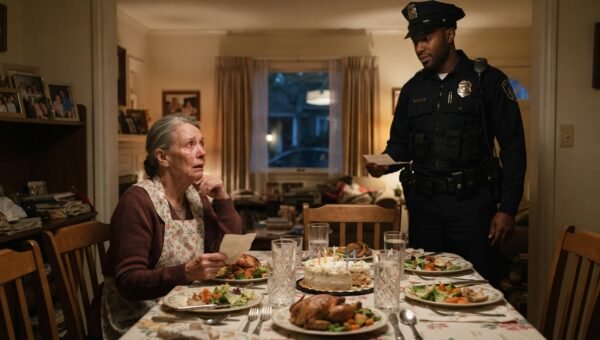
Fifty thousand dollars. That was what my sister Vada swore she needed by Friday afternoon or the bank was going to take her house.
She was sitting on the edge of my kitchen stool when she said it, wiping her eyes with a paper napkin until the paper shredded into little grey pills across my counter. She told me Ray had lost his route work two months back and they had hid it from everyone.
She said the foreclosure notice came by certified mail on Monday, and if they couldn’t wire the reinstatement balance by three o’clock on November twelfth, the sheriff was putting the lockbox on their front door.
We had shared a tiny upstairs bedroom with twin iron cots for eighteen years back in Shelbyville. We wore each other’s coats, traded hand-me-down boots, and stayed awake through winter nights listening to our father cough through the floorboards. You do not let your sister go homeless when you have the means to stop it.
My late husband Arthur had left me with a small life insurance payout and our paid-off house on Elm Street. That money in the credit union was supposed to be my safety net for when my knees finally gave out and I could no longer work part-time bookkeeping for the grain elevator. But looking at Vada shivering in her wool jacket, I could not imagine sitting comfortably on a bank balance while my sister packed her life into cardboard boxes.
“I can wire it directly from First National,” I told her.
Vada grabbed both my wrists. Her hands were ice cold. “I swear on Mother’s grave, Martha. Every red cent comes back to you the minute Ray settles his union dispute. We just need the bank off our necks.”
I drove to the bank at one o’clock, signed the wire authorization, and paid the twenty-five-dollar transfer fee myself. The receipt showed fifty thousand dollars leaving my savings account and landing in Vada and Ray’s joint account twenty minutes later. When I called her from the parking lot to confirm it went through, she cried so hard she could barely choke out a thank you.
Then the silence started.
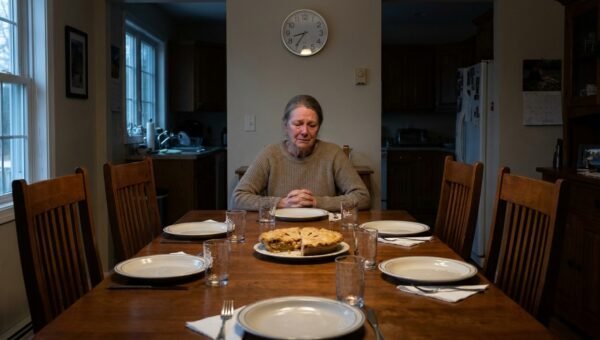
For the first few weeks, I told myself they were just embarrassed. When people borrow money from family, shame makes them pull away. Thanksgiving passed with a short text message from Vada saying Ray had the flu so they couldn’t host dinner.
Christmas was a generic store-bought card with ten dollars tucked inside for my grandson.
January came and went without a single phone call. Whenever I dialed her house, the line rang until the voicemail picked up, and her cellular phone went straight to a full inbox. By the end of February, four whole months had crawled by since that wire left my account. I had convinced myself that their pride was simply broken, and I resolved to let them breathe until spring.
Then the phone rang on a Tuesday morning while I was raking wet leaves off my gravel drive.
“Is this the residence of Vada Miller?” a man asked. His voice was brisk, the kind of professional cheerfulness you hear from people trying to collect on a bill.
“This is her sister,” I said, holding the cordless phone against my ear with a work glove. “Vada doesn’t live here.”
“Well, she listed this landline as an alternate contact on the purchase file,” he said. “This is Darren from Buckeye RV and Marine down in Chillicothe.
We’ve got the title paperwork ready for the 2024 Keystone Cougar, but we need Mrs. Miller to settle the remaining balance on the delivery prep and warranty package. It’s eighteen hundred dollars, on top of the sixty-eight thousand dollar contract she signed back in December.”
I stopped raking. The metal tines of the rake rested against the stones.
“A sixty-eight thousand dollar camper?” I asked.
“A fifth-wheel, yes ma’am,” Darren said, rustling papers on his end. “She put twenty thousand down in cash the first week of December, and the unit was delivered right after New Year’s. She told us to call this number if her cell acted up.”
I stood in my yard for a full hour after that call ended. The rake stayed in the grass. The air was forty degrees, but I didn’t feel the chill through my sweater. I kept thinking about the paper napkin shredding on my counter, the tears on her knuckles, and the promise she had made on our mother’s grave.
By noon, I was parked in Vada’s gravel driveway out on State Route 4.
I didn’t even have to walk up to the house to know Darren hadn’t lied. Sitting right on the poured concrete pad beside their garage was a gleaming white fifth-wheel camper the size of a city bus, complete with tinted privacy glass and chrome wheels.
I walked up the porch steps and knocked until the storm door rattled in its frame.
When Vada opened the inside door, she was holding a mug of coffee. Her hair was curled, and she was wearing a brand-new quilted vest. For half a second, her face froze, but then she smoothed it over with a practiced smile.
“Martha,” she said, not opening the glass door all the way. “What are you doing all the way out here?”
“I got a call from Buckeye RV this morning,” I said plainly. “They wanted eighteen hundred dollars to finish up the paperwork on your sixty-eight thousand dollar camper.”
Vada didn’t blink. She took a slow sip of her coffee and looked past my shoulder toward the road. “That’s between me and the dealership. Ray needed something for his back. We’re planning to spend some time down in Alabama before the humid weather hits.”
“Where is my money, Vada?” I asked. My voice wasn’t loud, but my throat felt tight. “You told me the bank was taking your house. You swore you needed fifty thousand dollars by three o’clock or you’d be on the street.”
Vada let out a long, heavy sigh, like an exhausted parent dealing with an unreasonable child.
“That money was a gift, Martha,” she said, leaning against the door jamb. “You’re an older widow with no mortgage and plenty of savings Arthur left you. You gave it to your only sister because you wanted to help your family. Now you’re out here making a scene on my porch because you regret being generous. You want to claim it was a loan? You go right ahead and prove otherwise.”
PART 2
She shut the heavy oak door before I could answer. The latch clicked into place with a dull thud, and through the frosted sidelight, I saw her silhouette turn and walk back toward her kitchen.
I did not bang on the glass. I did not scream at the house. I walked down the wooden steps, got back into my Buick, and sat with both hands gripped on the steering wheel until the trembling in my fingers stopped.
Fifty thousand dollars was more than two-thirds of what Arthur had left behind to keep me secure in my old age. It was the roof fund, the heating oil money, the buffer between me and having to sell our home to live in an assisted facility when my health failed. And my own sister had taken it, lied about a foreclosure that never existed, and used it as a down payment and spending cushion for a luxury road trailer.
When I got back to Elm Street, I pulled Arthur’s old metal filing box from the top shelf of the hallway closet.
I laid the bank receipt on the kitchen table. It showed the date: November 12. It showed the transfer amount: $50,000.00. It showed the routing number and the recipient account belonging to Vada and Ray Miller. But Vada was right about one terrible thing: the wire slip itself did not say the word “loan.” Banks do not care why money moves; they only care that the account holder authorized the transfer.
I sat down at the kitchen desk and pulled out my cellular phone.
I didn’t call her. I knew Vada wouldn’t answer, and even if she did, spoken words evaporate the second they leave the room. Instead, I sent her a clear text message.
“Vada, the $50,000 I wired you on November 12 was to stop the foreclosure you told me about. It was not a gift. You promised to return it when Ray settled his work dispute. We need to set up a repayment schedule immediately.”
An hour later, my phone buzzed on the formica counter.
“Stop harassing me, Martha,” her text read. “You gave me that money because you felt guilty about getting everything from Arthur while Ray and I struggled. There is no contract. There is no note. If you take this to people, you’re just going to look foolish. Leave us alone.”
I read those words three times. She had thought this through. She believed that because we had not sat down with a formal attorney and drafted a promissory note, the law treated her hands as clean. She believed shame and embarrassment would keep me quiet, just like it kept our family quiet about our father’s debts forty years ago.
The next morning, I took my folder of papers down to the county municipal building.
The small-claims division sat on the second floor of the old brick courthouse, right past the metal detectors and the probate records office. The clerk behind the glass was a woman named Evelyn who used to sing in the Methodist choir with my cousin. She looked over my wire receipt and pressed her lips together.
“Martha, the limit for regular small claims in this municipal jurisdiction is six thousand dollars,” Evelyn told me quietly. “If you’re trying to recover fifty thousand, that’s county common pleas court. You’d need a formal civil complaint, an attorney on retainer, and usually a few thousand dollars just to get the pleadings filed and served.”
“And if I don’t have a signed promissory note?” I asked.
Evelyn gave me a sympathetic, tired look. “Attorneys want five thousand dollars upfront just to look at an oral contract between siblings. And if she claims it was an unconditional inter-vivos gift, a judge has to weigh her word against yours unless you have contemporaneous proof of an agreement.”
Contemporaneous proof. That was the legal term Evelyn used. Proof made at the exact same time the money changed hands.
I walked back down the courthouse steps into the grey March mist. I had the wire receipt, and I had the dealership confirmation that she had bought the camper three weeks after taking my money. But Darren at Buckeye RV wasn’t my witness for what happened in my kitchen. To an outsider, it looked like a bitter woman regretting a generous gift after seeing her sister enjoy something nice.
I drove home and walked into my spare bedroom.
The room held Arthur’s old ham radio equipment, three plastic totes of winter quilts, and a small wooden secretary desk that our mother had owned before she passed away in 2011. When Mother died, Vada took the good china and the silver-plated tea set, and I took the secretary desk and Mother’s old recipe tins.
Sitting in the bottom drawer of that desk was a red plastic accordion folder labeled “Family & Household.”
Vada had forgotten that she hadn’t just cried in my kitchen on November twelfth. She had arrived at my house that morning in a panic, waving a piece of paper she claimed was the final notice from the mortgage servicer. She had left it sitting on my telephone stand when we rushed out to the bank.
I opened the red folder and pulled out the yellow envelope I had slipped that paper into four months ago.
It wasn’t a bank notice at all.
When I unfolded it under the kitchen lamp, I saw what it actually was: a printed computer estimate from Buckeye RV and Marine, dated November 8. It had a handwritten breakdown of the total purchase price: $68,400. And right below the total, scribbled in Vada’s unmistakable left-handed cursive, were three bullet points:
– Down payment required: $20,000
– Pay off Ray’s truck lien: $24,500
– Reserve for travel: $5,500
– Total needed from Martha: $50,000
Underneath the total, in that same blue ballpoint ink, she had written: “Tell her foreclosure on the house. She won’t let us lose the house.”
PART 3
Vada had planned the entire story four days before she ever sat on my stool and cried into my paper napkins.
She had worked out the math down to the exact dollar: twenty thousand for the camper deposit, twenty-four thousand five hundred to clear the lien on Ray’s truck so they could haul the fifth-wheel legally, and five thousand five hundred left over for their trip south. She had used my sisterly loyalty as an unsecured loan to finance an early retirement fantasy.
I didn’t call her. I didn’t text her.
Instead, I called an attorney named Thomas Vance whose office was right across the square from the courthouse. He had handled Arthur’s probate years ago, and he was known around the county for being thorough and unshakeable.
I sat in his office twenty minutes later with the wire receipt, the screenshot of Vada’s text message claiming the money was a guilt gift, and the handwritten budget sheet from the dealership estimate.
Mr. Vance put on his reading glasses and looked at the blue ink on that yellowing paper. He turned it over, checked the date stamp from Buckeye RV at the top, and then looked up at me.
“Martha,” he said, “a gift requires donative intent. That means you have to intend to give the money freely, without condition or deceit. When someone uses a false statement of present material fact to induce another person to surrender money, the law does not call that a gift. The law calls that fraudulent inducement.”
“Can she claim I wrote those notes?” I asked.
“Not when the paper itself is an equipment quote from the dealership made out to Vada Miller four days prior to your wire transfer,” Mr. Vance said. “And not when her own handwriting can be matched against every county record she’s ever signed. Furthermore, her text to you admitted receiving the fifty thousand dollars while falsely asserting your motive.”
He took off his glasses and set them on the desk.
“We aren’t going to file a full civil lawsuit yet,” he said. “A formal suit costs money and takes eighteen months. We are going to send an immediate formal demand for civil theft and fraudulent inducement, with a copy of this exhibit attached. We will give her five business days to return the funds or execute a legally binding confession of judgment and voluntary lien against their real property and the vehicle.”
He drafted the letter that afternoon. It laid out the facts with zero emotion: the date of the quote, the calculation in her hand, the wire transfer on November 12, the purchase of the Keystone Cougar on December 4, and the complete absence of any pending foreclosure on her parcel in the county recorder’s office.
Mr. Vance had the county sheriff’s deputy hand-deliver the demand packet to Vada’s front door the following morning at ten o’clock.
By eleven-fifteen, my phone was ringing.
I let it ring three times before I picked it up.
“Martha, how could you do this?” Vada was sobbing, but it wasn’t the quiet crying she had done in my kitchen. Her voice was sharp, high-pitched, and trembling with fury. “You sent a deputy to my house! The neighbors saw the cruiser in the drive! Are you trying to ruin us?”
“I’m not trying to ruin you, Vada,” I said calmly. “I’m trying to get back the money you stole from me.”
“I didn’t steal it!” she shouted into the receiver. “We were drowning, Martha! Ray’s back was giving out, and we had nothing to look forward to. You had that money just sitting there doing nothing! You have Arthur’s pension! You don’t need it the way we needed it!”
“You told me you were losing your house,” I said. “You looked me in the eye and swore on our mother’s grave that you would be homeless by Friday.”
There was a long silence on the line. The only sound was her shallow breathing.
“Ray says we can’t get all the cash back,” she whispered, her voice suddenly flat. “The dealership won’t take the camper back for full price. They’ll only give us wholesale trade-in, and we already spent five thousand on the road gear and the truck hitch.”
“Then you and Ray need to talk to your bank about taking out a real mortgage on your house,” I said. “Because Mr. Vance is filing the complaint in common pleas court on Tuesday morning. And if it goes to court, that handwritten note and the dealership quote will be public record in the county paper.”
ENDING
That final sentence broke whatever fight she had left.
In a small county like ours, reputation is the only thing that keeps you afloat at the grocery store, the church social, and the hardware shop