PART 1
The envelope on the kitchen table held three items: a spare house key, a laminated list of watering instructions for the ferns on the back porch, and an envelope containing forty dollars for emergency groceries.
My mother had written my name across the front in her neat cursive, underlined twice. Underneath, she wrote: “Be a good girl while we are in Rome. We will bring you back a lovely scarf.”
Two hours before that, my father carried my younger sister Chloe’s matching hard-shell luggage down the hallway. He had loaded their bags into the trunk of his Buick while my mother fussed over Chloe’s passport. Chloe was twenty-four, two years younger than me. When I asked my father at breakfast why there was only room for three tickets when we had talked about an Italian vacation as a family for five years, he had not even put down his coffee cup.
“Tickets were nearly twelve hundred dollars apiece, Laura,” he said. His voice was completely flat, the way he spoke when he balanced the checkbook at the kitchen counter. “Money doesn’t grow on trees. Chloe just finished her credential, and she needed the break. We can only afford one daughter this time. You understand how things are.”
My mother chimed in from the stove without turning around. “You have your shift at the dental clinic anyway, honey.
Someone needs to stay here with the dog, get the mail, and keep an eye on the pipes. It makes practical sense.”
It always made practical sense when I was the one left behind.
When Chloe graduated high school, they threw a catered barbecue in the backyard with sixty guests. When I graduated from state college with honors, my father bought a sheet cake from the grocery store and went to bed at eight because his back hurt. When Chloe wanted to move back home after college to figure out her passions, my parents turned the upstairs guest room into her private studio. When I moved back home two years ago to help my mother recover from hip replacement surgery, they charged me four hundred dollars a month in rent and called it room and board.
I didn’t argue that morning. I didn’t cry, and I didn’t raise my voice.
I took the morning off work to see them off because my mother insisted family should always say goodbye at the door. Chloe gave me a quick, one-armed hug while checking her phone. “Don’t touch my plants in the sunroom, okay? They get fussy if anyone else waters them.”
Then the front door clicked shut. The cab pulled out of the driveway, its tires crunching over the gravel.
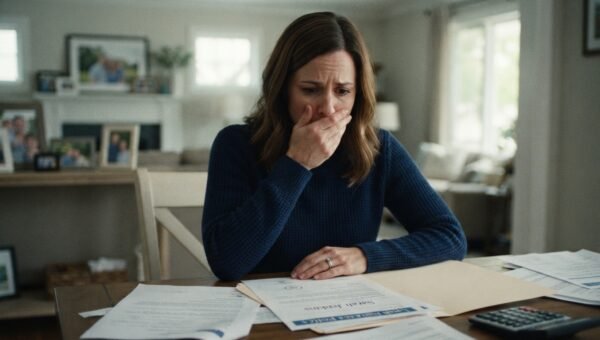
I stood in the front hall for a long time. The house felt huge and quiet, smelling of my father’s aftershave and Chloe’s vanilla body spray. On the kitchen island, right next to the forty-dollar emergency envelope, was the stack of mail that had arrived the day before.
On top of the pile was the Visa bill.
I didn’t mean to snoop, but the envelope was already torn open. My father had left it faceup beside his reading glasses. Right there on the itemized statement were three round-trip international flights to Rome: $1,180 each.
Right beneath them was a deposit of $3,500 to a luxury tour company in Florence, charged to the card on the twelfth of the month.
I looked at the date. The twelfth was the exact day my father had asked me for $2,800 to cover what he called emergency foundation repairs on the west side of the house. He had sat across from me in that very kitchen, rubbing his forehead, telling me that if I didn’t pitch in my savings, the house would lose value and we would all suffer. I had transferred the money directly from my savings account to his checking account before noon that day.
He hadn’t spent that money on concrete or steel jacks. He had paid for Chloe’s private vineyard tour in Tuscany.
PART 2
I walked down the basement stairs and flipped on the bare bulb.
The basement smelled of old cardboard, cedar shavings, and damp earth. I walked over to the west wall, where my father claimed the contractor had injected structural foam and installed steel brackets. The cinder blocks were completely bare, coated only in the faded gray waterproof paint my father had rolled on seven years ago. There was no fresh mortar. There was no bill from a foundation company. There was only dust and cobwebs.
I went back upstairs to my bedroom and pulled my metal filing box from the closet shelf.
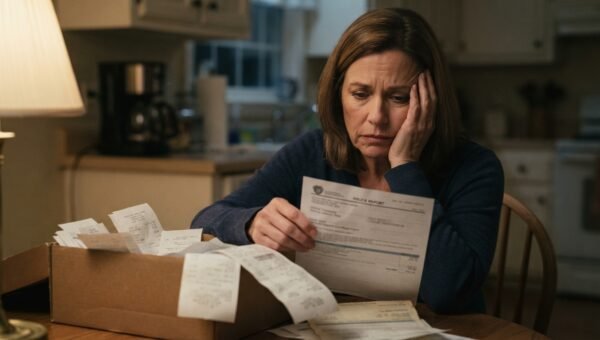
For four years, ever since I took the job as an office manager at the clinic, I had kept every single major receipt. It wasn’t because I was vindictive. It was because my father had taught me never to throw away proof of purchase in case an appliance malfunctioned or a warranty needed service. He was meticulous about paper trails, but he had forgotten that I was his daughter.
I sat on my bed and started laying the folders out in rows across the quilt.
In 2024, when the old refrigerator died in the middle of July, my parents didn’t have the cash on hand. I put $1,850 on my Best Buy card for the French-door stainless-steel unit in the kitchen. In October of that same year, the living room sectional was threadbare and sagging. My mother complained constantly about her back, so I spent $2,200 at a local furniture outlet for the six-piece modular sofa, paying cash from my bonus.
The sixty-five-inch television mounted above the mantel? Bought by me for $650 during Black Friday. The high-efficiency washer and dryer set in the mudroom? My receipt: $1,420, paid in full, under my name and phone number. The dining room table and six solid oak chairs where we ate Sunday dinners? Purchased from an estate sale with my personal check for $900.
Even the microwave on the counter, the cast-iron cookware on the stove, and the air purifier in the master bedroom had my name printed clearly on the invoices.
Over four years, I had furnished their entire lives. I had replaced broken things, upgraded worn-out rooms, and paid for the comfort they took for granted every single day. They lived in an attractive, functional home because I had quietly funded it while they put their disposable income into Chloe’s car payments, Chloe’s club soccer, and Chloe’s European trips.
I looked down at the $40 on the kitchen table. Forty dollars for two weeks.
I picked up my phone and called my friend Marcus, who owned a small moving and hauling service in town. He answered on the third ring.
“Marcus,” I said, my voice steady and clear. “Are you free this weekend?”
“Saturday afternoon I’m open,” he said. “What do you need?”
“I need a twenty-foot truck, two strong guys, and three hours,” I told him. “I’m moving out.”
By Friday afternoon, I had signed a lease on a two-bedroom garden apartment three miles across town, near the medical district. The rent was steep, but with the money I wouldn’t be handing over to my father every month for imaginary house repairs, I could easily afford it.
Saturday morning at eight, Marcus backed his white box truck up to the front walkway.
PART 3
We worked systematically.
I didn’t take a single item that didn’t belong to me. My mother’s antique hutch stayed. My father’s recliner, worn smooth at the armrests, stayed in the corner by the front window. Chloe’s clutter remained untouched in her upstairs room.
Everything else came with me.
Marcus and his brother carried the modular sectional out through the double front doors. They unhooked the washer and dryer, turning off the water valves tightly and taping the hoses neatly to the backs of the drums. In the kitchen, we wheeled out the stainless-steel refrigerator, sliding my father’s old backup fridge from the garage into its place. It was a yellowing 1998 Whirlpool that hummed loudly and barely kept milk cold, but it had come with the house thirty years ago, so it was legally theirs.
We took down the television from the mantel, leaving only the black metal bracket bolted into the drywall. We packed the microwave, the toaster oven, the good pots and pans, the oak dining table, and every lamp I had bought to replace the dim brass fixtures from the eighties.
By two o’clock on Sunday afternoon, my bedroom was completely bare. There was nothing left on the hardwood floor except a faint square of dust where my rug had rested.
Before I locked the front door for the last time, I walked into the kitchen.
The kitchen looked like a vacant rental unit. The old yellow fridge rattled in the corner. The countertops were bare laminate. The living room had only my father’s solitary brown recliner sitting in an empty expanse of wood, facing a blank wall with exposed drywall anchors.
I took the forty-dollar grocery envelope and set it on the kitchen counter. Beside it, I placed the house key. And beside the key, I placed a neat, manila folder containing photocopies of every single receipt, totaling $9,820, along with a bank printout showing the $2,800 transfer for the foundation repair that never happened.
On the front of the folder, I wrote one note on a piece of lined paper:
“I took what I paid for. The yellow fridge works if you don’t pack the freezer too tight. You can use the $2,800 foundation money to buy a new sofa.”
I walked out, pulled the heavy oak door shut behind me, and drove to my new apartment.
The following Sunday evening at six, my phone buzzed on the coffee table in my new living room.
The two weeks were over. The flight from Rome had landed at JFK at four, which meant they had just walked through the front door in New Jersey.
My phone rang once, stopped, and then started ringing continuously. First my mother. Then my father. Then Chloe.
I let it ring until it went to voicemail.
My father’s message was breathless, confused, and furious. “Laura? Where are you? Where is the furniture? What happened to the television? Did someone break in? Call me right now!”
Ten minutes later, my mother called. Her voice wasn’t furious anymore. It was shrill and panicky. “Laura, please answer your phone. The house is completely gutted. We can’t find the washer. The groceries Chloe brought home are spoiling because the old garage fridge isn’t cold. Why would you do this to your family? Over a vacation?”
I picked up the phone on Chloe’s call.
“Laura?” Chloe snapped the second the line connected. “Dad is having a fit, and Mom is crying on the floor. Where is my espresso maker? Did you steal my espresso maker?”
“Check the cabinet under the sink, Chloe,” I said calmly. “It’s right where you left it. I didn’t touch anything of yours.”
“Well, where are you?” she yelled. “The living room is empty! Where are we supposed to sit?”
“You have your memories of Florence,” I told her, and hung up.
ENDING
Two days later, my father showed up at my clinic during my lunch break.
He looked older than he had two weeks earlier. His skin had a slight tan from the Mediterranean sun, but his shoulders were hunched, and he carried a cheap vinyl briefcase under his arm. He stood by the glass reception window until I walked out into the lobby.
We walked across the street to a small diner and sat in a vinyl booth near the back.
He didn’t order food. He just ordered black coffee, his hands wrapped around the thick ceramic mug. For several minutes, neither of us said anything. The diner was busy with the lunch crowd, forks clattering against porcelain, the smell of fried onions in the air.
“Your mother hasn’t slept in two nights,” he said finally. He kept his eyes fixed on his coffee. “She had to buy folding chairs from Walmart so we had somewhere to eat dinner.”
“Walmart chairs work fine,” I said. “I sat on the broken wooden one in the kitchen for three years.”
He pulled out the manila folder I had left on the counter. The edges were worn, as if he had read through the receipts several times.
“I didn’t realize how much of that stuff you paid for,” he muttered. “I thought you were just picking things up as gifts. Family helps family, Laura. We gave you a roof over your head.”
“You charged me four hundred dollars a month for a bedroom I shared with Chloe when we were kids,” I replied. “And you took twenty-eight hundred dollars from my savings account by telling me the house was falling apart. That wasn’t a gift, Dad. That was a lie.”
He looked away, his jaw tightening. “Chloe needed that trip. She was stressed out. Her career hasn’t taken off the way yours has. You always had your feet on the ground. We didn’t think you’d mind.”
“You didn’t care if I minded,” I said. “You just thought I’d stay there and take care of the house while you gave her the world.”
He slid the folder across the table toward me. Inside was an official cashier’s check from his credit union for $2,800.
“Take it,” he said, his voice quiet, almost defeated. “Pay back what you took from your savings. Just bring the furniture back, Laura. Let’s act like civilized people. Your mother wants you to come to Sunday dinner.”
I picked up the check. I checked the amount, the date, and my name printed on the payee line. Then I folded it carefully and slipped it into my purse.
“Thank you for returning the money, Dad,” I said, sliding out of the booth.
He looked up at me, waiting for me to say when Marcus would bring the truck back.
“Tell Mom I won’t be there for Sunday dinner,” I said. “My apartment is all set up, and I have a lot of unpacking left to do.”
I paid for his coffee at the register on my way out.
When I got home that evening, the late afternoon sun was coming through the large front windows of my new living room. The modular sectional fit perfectly against the far wall. The television was mounted securely, and the kitchen smelled of fresh coffee brewing on my own counter.
My mother sent me a text at eight o’clock that night. It was a photo of a small blue silk scarf, folded neatly on top of a plain wooden folding table.
“We brought this back from Rome for you,” the text read. “Whenever you want to come pick it up.”
I looked at the picture for a moment, then set my phone face down on the arm of my sofa and turned on the television. I didn’t reply, and for the first time in my life, I didn’t feel like I owed anyone an apology for being comfortable in my own home.