PART 1
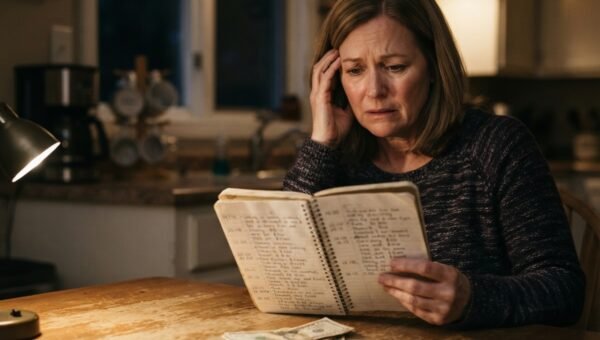
My husband started insisting I take sleeping pills before bed because my insomnia was “ruining both of us.”
He set the little plastic tumbler of water on my nightstand every evening at nine thirty. He told me that my restlessness kept him awake, that he was exhausted at work, and that two blue gel capsules were a small price to pay for peace in the house.
I did not raise my voice. I had learned a long time ago that arguing too early only gives people time to change their story.
I kept trying to stay calm. The pills were supposed to be standard over-the-counter sleep aids, the kind you buy at any grocery store for eight dollars. But whenever I took them, they left me groggy well past breakfast. My limbs felt heavy until ten in the morning, and my head felt full of dry cotton. I kept doing little chores and normal things because normal felt safer than admitting something was off. I washed the breakfast dishes, folded the towels, and weeded the flowerbeds by the front porch.
“You need to trust me,” Mark said when I told him on a Tuesday morning that the pills made me feel drugged instead of rested. “You have always been sensitive to nighttime medicine, Ellen. Just give it a week to level out.”
Two days later, I was sorting the paper recycling in the garage when I noticed a small white paper bag shoved behind an empty windshield wiper fluid jug.
It was a prescription pharmacy sack from the grocery store two towns over, not the clinic near our house. Stamped across the front receipt was my last name, but my first name was spelled “Helen.”
I put the bag in my pocket and waited until Mark left for his shift at the supply yard.
Inside the upstairs medicine cabinet, the over-the-counter bottle sat beside my toothbrush. I unscrewed the cap and tipped three pills into my palm. The blue gel capsules Mark had bought last month were smooth and slightly translucent. These were solid, oblong, chalky tablets with a tiny line scored down the center and a stamped number on the back.
I took the bottle straight down to our neighborhood pharmacy. Sarah, who has filled my blood pressure medication for twelve years, stood behind the counter sorting white plastic bins. I placed the bottle between us. I had not even decided what to say yet.
She unscrewed the top, poured two tablets onto her counting tray, and frowned. Then she picked up her handheld scanner, checked the tiny imprint code on the tablet face, and looked up at me.
“Ellen,” she said, lowering her voice. “These aren’t over-the-counter sleep aids. This is generic Ambien, ten milligrams. Who filled this for you?”
PART 2
Sarah did not just identify the medication; she checked the state prescription log on her monitor.
The prescription had not been filled at her counter. It had been called in to a drive-through window fifteen miles north under the name Helen Miller, using a cash discount card so no insurance company would flag the address. Mark had paid thirty-two dollars in cash for sixty tablets on a Monday afternoon.
“I didn’t pick this up,” I told her. My voice sounded flat and even. “Thank you, Sarah. Don’t put anything in the computer just yet.”
“Ellen, you shouldn’t be taking ten milligrams of zolpidem without a doctor checking your chart,” Sarah said. She slid the bottle back across the counter. “Especially if you didn’t know you were taking it.”
I took the bottle, put it back in my purse, and drove home.
I did not pack a suitcase. I did not leave a note. When someone you have lived with for twenty-eight years does something calculated, shouting at them only makes them hide the rest of the puzzle. I needed to understand why Mark wanted me unconscious every night by ten o’clock.
That evening, Mark came home at five thirty. He brought home two pork chops from the butcher, kissed my cheek, and asked how my afternoon had gone. I told him I had cleaned the pantry and pulled some weeds.
At nine fifteen, he walked into the kitchen, poured a fresh glass of water, and brought it into the bedroom along with two tablets.
“Time to wind down, honey,” he said. He smiled, the same gentle smile he had given me when our daughter was small and had the chickenpox. “You look worn out.”
I smiled back, put the pills on my tongue, and took a long drink of water. When he turned his back to hang his trousers over the bedroom chair, I worked the pills under my tongue, wiped my mouth with a tissue from the nightstand, and pressed the pills into the cotton fold. I tucked the tissue under my pillow.
“Get some rest,” he said, turning off the bedside lamp.
I lay on my side with my eyes closed, breathing slowly through my nose.
For forty minutes, the room stayed quiet. Then the mattress shifted. Mark sat up slowly, waiting to see if my breathing changed. When I did not move, he slid his feet onto the carpet, slipped on his flannel robe, and walked barefoot out of the bedroom, leaving the door cracked three inches.
I waited until I heard the floorboard creak in the hallway downstairs.
I pulled my robe on, kept my socks on so I would not make a sound, and crept down the stairs. The only light on the ground floor came from the small den behind the kitchen, where we kept our computer desk and the metal filing cabinet.
Mark was sitting in the desk chair with his reading glasses on. My purse sat open on the blotter beside him. He held my personal debit card in one hand and my phone in the other, squinting at the screen as he waited for a text verification code.
PART 3
I stood in the doorway for ten seconds before I reached out and flipped the overhead light switch.
The sudden bulb made Mark jerk his head up. His elbow hit the desk, knocking over a cup full of pens. My cell phone slid across the polished wood and stopped against the edge of the keyboard.
“Ellen,” he said. He tried to laugh, but the sound caught in his dry throat. “What are you doing up? You’re supposed to be asleep.”
“What is the six-digit code for, Mark?” I asked.
I walked past him to the desk. On the screen was the login portal for my personal savings account at the county credit union. That account held $54,000, money left to me when my mother’s small house in Ohio was sold three years ago. We had agreed never to touch it unless one of us had a medical crisis.
Beside the monitor was a letter from a commercial lender in Cincinnati addressed to Mark’s old plumbing supply partnership. It was a formal demand notice for $48,200, due by the fifteenth of the month to prevent a personal lien against our joint home.
“You weren’t supposed to see that,” he muttered, dropping his hands to his lap. “I was fixing it.”
“You were transferring forty-eight thousand dollars out of my mother’s money while I was drugged,” I said.
“It was a short-term loan to save the house,” he said, his voice rising, trying to sound reasonable. “The partnership failed through no fault of mine. If they put a lien on this place, we lose everything we built. You would have panicked if I told you. You would have said no.”
“Of course I would have said no,” I said. “And the sleeping pills?”
Mark looked down at the carpet. “You wouldn’t stay in bed. You kept waking up every time I tried to use your computer last week. You walked downstairs twice asking for tea. I just needed you to sleep through the night until the wire went through.”
“You got a prescription under a fake name and slipped it into my bottle,” I told him. “You drugged your wife of twenty-eight years so you could rob her in her sleep.”
“I was protecting us,” he whispered.
“No,” I said. “You were protecting your pride.”
I picked up my cell phone, deleted the open browser tab on the screen, and placed my debit card back into my purse. Then I sat in the armchair opposite the desk.
“Pack a bag,” I told him. “You can take your truck and stay at your sister’s place in Canton tonight. If you aren’t out of the driveway in twenty minutes, I will call Sarah back, and then I will call the sheriff.”
ENDING
Mark did not argue. The look on his face told me he knew that any excuse he offered would only sound worse in the quiet room. He went upstairs, packed two duffel bags, took his keys from the hall hook, and drove away at ten minutes before two in the morning.
I did not sleep at all that night, but for the first time in three months, my head was clear.
The next morning, I drove to the credit union at eight thirty. I moved the $54,000 into a new account with updated security questions that only I knew, and I had the branch manager freeze any online transfer permissions. By noon, I met with a local attorney who specialized in property disputes.
We filed an immediate notice of legal separation and served Mark at his sister’s house by Friday afternoon. The debt on his commercial supply venture was his alone; my mother’s money stayed where it belonged, and the house was put up for sale by mutual agreement so the equity could be split cleanly after his business creditors were dealt with from his share.
It took four months to settle the paperwork.
I bought a small two-bedroom brick home near the town library, with a garden out back big enough for tomatoes and yellow squash. My daughter visits on Sundays, and we drink coffee on the screened back porch.
Sometimes, around midnight, I still wake up and hear the branches tapping against the gutter. But I don’t feel hurried, and I don’t reach for a glass of water someone else poured for me. I just listen to the wind in the trees, get up when I want to, and go back to sleep whenever I am ready.