PART 1
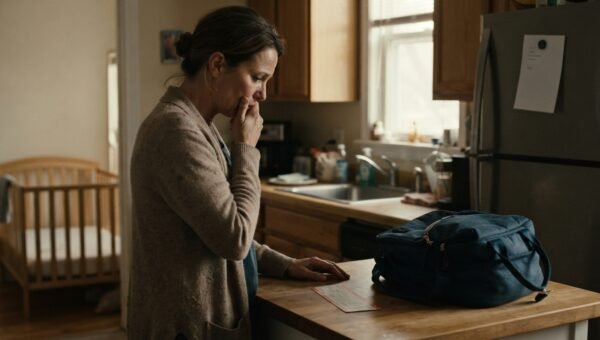
The soil on Terence’s grave had not even settled into the grass when Evelyn hauled my luggage down the curved oak staircase.
It was barely twenty-four hours since the funeral. My black dress was still hanging on the back of the bedroom door, smelling faintly of cemetery damp and carnations. I was standing in the kitchen, trying to get water to boil on the stove, when the heavy thud of Samsonite hitting the marble floor shook the downstairs hallway.
Evelyn didn’t look like a grieving mother. She looked like a woman who had finally received an overdue eviction notice and couldn’t wait to serve it. She stood in the foyer with her arms crossed over her cream-colored knit cardigan, her graying hair pinned back in an unforgiving twist.
Beside her stood Terence’s younger sister, Brenda. Brenda held her iPhone raised at chest height, the tiny red recording dot glowing against the polished screen. She had a half-smirk on her face, the kind of nervous, cruel smile kids wear on playgrounds before they shove someone into the dirt.
“Don’t bother unpacking,” Evelyn said, her voice flat, dry, and completely devoid of the tears she had put on for the mourners yesterday. “Terence is gone. His father built this estate, Terence maintained it with family capital, and you were simply his company. We tolerated you while he was sick because you saved us the cost of private nursing. But the charity ends today.”
“Evelyn,” I said, holding the kitchen towel against my apron. “We buried your son yesterday morning.”
“And today we are returning this family to order,” she replied smoothly. She kicked my suitcase toward the front double doors. “Howard agrees. Every single person with Sterling blood agrees. You came into this house with a schoolteacher’s salary and a ten-year-old sedan. You leave with what you brought.”
Howard was Terence’s older brother. He ran the family foundation, or at least he held the title. For the last four years, while Terence withered away from pancreatic cancer, Howard had visited three times, each time asking Terence if he had updated his signature cards at the bank.
Brenda laughed, stepping backward through the open front door to get a wider angle on her phone camera. “Come on, Clara. Move your feet. Don’t make us call the gate guard to carry you off.
Mom gave you the courtesy of packing your clothes yourself, but since you were dragging your heels, we did it for you.”
I walked toward the doorway. I didn’t shout. When you spend thirty months sitting beside hospital beds watching the man you love slowly turn into bone and shadow, your screaming voice dies somewhere around the eighth round of chemotherapy.
On the wide, circular driveway, rain had turned the flower beds into dark slurry. Evelyn didn’t just push the bag outside; she grabbed the leather handle of my overnight bag and hurled it down the stone steps. The zipper split.
Cheap blouses, my spare shoes, and my personal journals tumbled out across the wet gravel. And then, slipping out from the front pocket, my wedding album slid face-down into the dark, sodden mud.
Brenda giggled behind the camera. “Make sure you catch her face when she realizes she has nowhere to sleep,” she whispered into her phone mic.
I stepped down the wet limestone stairs in my flat shoes. The cold seeped right through my stockings.
I bent down on one knee, ignoring the gravel cutting through the fabric into my skin, and picked up the heavy velvet-bound album. The corner was soaked. Mud was smeared across the silver lettering that read *Terence & Clara*.
I wiped the grit off the glassine cover with the sleeve of my cardigan.
Evelyn stepped onto the top terrace, looking down at me with cold, pale eyes. “Now that Terence is gone, Clara, you get nothing. Not one dollar from the trusts. Not one piece of family silver. You are completely penniless without him.”
I looked down at the mud dripping from my fingertips. I didn’t cry. I didn’t shake.
“You’re right,” I said quietly, looking straight into Brenda’s phone lens. “I have nothing.”
Brenda snorted. “At least she knows her place. Let’s go inside, Mom. It’s starting to drizzle again.”
They slammed the massive oak front doors shut, the heavy brass deadbolt clicking into place with an echo that seemed to ring through the cold valley air.
I picked up the mud-soaked clothes, stuffed them back into the split zipper of the bag, and carried everything down the half-mile driveway to the main gate. The guard looked away when I walked through, clearly under orders not to open the passenger gate or offer me a ride.
What Evelyn, Brenda, and Howard did not know was that Terence had spent the final five years of his life systematically dismantling every single financial tie he had to the Sterling name.
Terence knew his family. He knew that when he was diagnosed, Howard had immediately called his tax attorneys to see if Terence’s share of the family holdings could be seized before medical expenses depleted them. He knew that Evelyn had privately told the cousins that my presence at his bedside was an attempt to muscle in on the family trust.
So Terence had acted. Three years before he died, Terence quietly sold his independent tech patents, cashed out his early venture shares, and rolled the entirety of his personal wealth into an offshore private foundation and direct domestic accounts registered solely under my maiden name, Clara Vance.
It wasn’t five million. It wasn’t fifty million.
When the final liquidation and transfer settled two weeks before his death, the verified liquid value sitting in my private accounts was just over five hundred million dollars.
Terence had made me promise one thing from his hospice bed. He had taken my hand, his skin paper-thin and yellowed, and looked at me with clear, lucid eyes.
“Don’t tell them, Clara,” he had whispered. “If you tell them, they will circle you like vultures. They will flatter you, they will file injunctions, and they will drag you into probate court just to bleed you dry. Stay quiet. Let them show you exactly who they are when they think you are powerless. Then, do whatever you need to do to live in peace.”
I had walked down that muddy driveway with forty-two dollars in cash in my purse, wearing ruined shoes, holding a soaked wedding album, and possessing enough liquid capital to buy every single asset the Sterling family owned three times over.
I hailed a local cab from the convenience store outside the gate, checked into a clean, modest motel on the outskirts of the county, and began to wait.
PART 2
For six months, I lived in a quiet, two-bedroom brick rental forty miles south of the estate. I didn’t buy a sports car. I didn’t purchase designer clothes. I hired a specialized estate litigation attorney named Arthur Vance—no relation to me, but a bulldog who had practiced in the state for forty years—and an independent forensic accounting team.
While I lived quietly, planting tomatoes in my small backyard and finally sleeping eight hours a night without the sound of heart monitors, the Sterling family began to unravel.
They didn’t unravel quietly. Brenda posted the video of me picking up my muddy album on social media. She captioned it: *When the gold digger finally realizes the bank is closed.* Her friends had laughed in the comments, calling me pathetic and calculating. Evelyn had shared the post to her private circle of society matrons with a short note: *A necessary cleansing of our household after Terence’s tragic passing.*
Arthur sent me screenshots of it all. “Keep it,” he advised over the phone. “Character evidence, intent to humiliate, emotional distress. It won’t matter for the probate claims, but it establishes a pattern if they try to challenge Terence’s sanity during the transfer.”
They didn’t challenge his sanity, because they didn’t even know there was anything to challenge. They assumed Terence had simply died broke after three years of experimental oncology treatments. They believed the medical bills had eaten everything, and that the ancestral estate on Crestview Hill was the only thing left of his legacy.
Except the ancestral estate didn’t belong to Evelyn.
It had never belonged to Evelyn.
The estate had been deeded solely to Terence by his late father thirty years ago as protection against Evelyn’s notorious gambling and bad real estate investments. Terence had kept the property taxes paid, the staff salaries funded, and the grounds maintained out of his private accounts.
When Howard and Evelyn locked me out, they were living inside a house that had been placed into an irrevocable trust—a trust of which I was the sole surviving trustee and beneficiary.
For six months, I let them stay there. I paid the utility bills quietly through an anonymous LLC so the power wouldn’t get shut off. I paid the property taxes. I let them host their afternoon teas, their cocktail parties, and their family dinners, playing the lords and ladies of Crestview Hill while believing they had successfully rid themselves of the schoolteacher outsider.
Then, the invitation crossed my lawyer’s desk.
Every autumn, the Sterling family hosted the Silver Oak Children’s Gala. It was their crown jewel, an annual charity dinner that brought together the county’s wealthiest donors, local judges, bank presidents, and society editors. Howard used the event to solicit funds for the Sterling Family Foundation, a non-profit that paid him a handsome six-figure administrative salary while distributing negligible grants to local libraries.
This year, however, Howard was desperate.
Arthur’s forensic team pulled the public filings. The Sterling Family Foundation was on the brink of an audit. They were down nearly four million dollars due to a series of catastrophic commercial real estate ventures Howard had funded using the foundation’s operating reserves. If Howard couldn’t raise at least three million dollars in bridge funding at the gala, the board of overseers would vote to remove him, and the state attorney general’s charitable division would open a formal inquiry.
The gala was scheduled for the first Saturday in October, held in the grand ballroom of the estate itself—my house.
Two weeks before the event, Arthur finalized the paperwork.
“Every deed is recorded, Clara,” Arthur told me, laying the thick manila folder across his desk. “The bank holds the note, but your primary holding company purchased the underlying senior debt from the commercial lender yesterday afternoon. You don’t just own the property through the trust. You personally own the mortgages on Howard’s private residence, Brenda’s retail boutique in town, and the primary credit facility for the foundation.”
I looked down at the documents. On paper, it was just ink, notary stamps, and corporate seals. But in reality, it was the exact tether Terence had spent his dying days assembling to make sure they could never hurt me again.
“What do you want to do?” Arthur asked. “We can have the sheriff serve the eviction notices on Monday morning. They’ll have seventy-two hours to vacate.”
“No,” I said, setting the pen down. “Monday is too quiet. I want an invitation to the gala.”
Arthur paused, a slow, thin smile creeping across his lined face. “The gala is strictly five hundred dollars a plate, Clara. And Howard controls the guest list personally.”
“Then buy a table under the name of the holding firm,” I replied. “Ten seats. Right in the front row, directly below the podium.”
PART 3
The evening of the gala was cold and clear, the kind of autumn night where the breath plumps into mist the moment you step outside.
The estate looked magnificent. Floodlights washed the white stone pillars in gold and amber, and valets in red vests jogged back and forth across the gravel driveway—the same gravel where my wedding album had lay in the mud six months earlier.
I arrived at eight o’clock in a plain, tailored navy blue dress. No diamonds. No flashy fur stole. Just clean lines, my silver hair pinned neatly, and flat black leather shoes that made no sound as I walked up the limestone steps. Arthur walked beside me, carrying a slim leather portfolio under his arm.
When we stepped into the grand ballroom, the room was packed with three hundred people. Crystal chandeliers reflected off champagne flutes. A four-piece string quartet was playing Mozart in the alcove.
At the center of the room, Evelyn was holding court in an emerald-green silk gown, wearing three strands of pearls that had belonged to Terence’s grandmother. Brenda was standing next to her, sipping a martini, laughing loudly with two young women from the local country club.
Howard was up on the raised mahogany dais, tapping the microphone with his index finger. The room gradually fell silent as the guests turned toward the stage.
“Ladies and gentlemen,” Howard began, adjusting his tuxedo jacket. His voice carried that practiced, patronizing warmth that politicians and bad businessmen use when they want your money. “Welcome to Crestview Hill. For fifty years, the Sterling name has stood for stability, philanthropy, and family tradition in this county. Tonight, we face a challenging economic landscape, but with your continued partnership, the Sterling Family Foundation will remain the bedrock of our community.”
A polite round of applause rippled through the room.
“Tonight,” Howard continued, leaning on the podium, “we honor the memory of my late brother, Terence. Though his final years were clouded by difficult circumstances and… unfortunate personal associations, his heart was always with this foundation. In his spirit, we are opening the bidding tonight for our legacy endowment.”
I stepped out from behind the pillar near the bar and began walking down the center aisle.
My shoes were completely silent on the thick Persian runner. Arthur fell in step two paces behind me.
A few people in the second row turned their heads. A murmur started on the left side of the room. A retired circuit judge who had known Terence for twenty years squinted at me, his eyebrows shooting up in surprise.
Evelyn, standing near the front row of tables, turned to see what people were looking at. Her glass of champagne froze halfway to her lips. The color drained from her face so fast it looked as though someone had pulled a plug beneath her skin.
“What is she doing here?” Evelyn hissed, her voice cutting through the quiet room.
Brenda turned around, her eyes widening. “Clara?” She instinctively reached for her evening clutch, as if looking for the phone she had used to record me six months ago. “Who let you past the gate?”
Howard stopped speaking mid-sentence. He stood behind the podium, clutching the wooden edges with white knuckles. He looked down at me, his chest heaving under his stiff tuxedo shirt.
“Clara,” Howard said through the microphone, trying to maintain an authoritative tone, but his voice cracked slightly. “This is a private, ticketed event for foundation benefactors. You do not belong here. Security, please escort Mrs. Vance out of the house.”
Two private security guards in dark suits moved toward me from the side doors.
Arthur Vance stepped forward and raised his hand, presenting a single embossed blue card to the lead guard. “Touch her, and your agency loses its state operating license by midnight. Step back.”
The guards hesitated, recognizing Arthur Vance instantly. Everyone in county legal circles knew Arthur.
I reached the foot of the dais. I looked up at Howard.
The ballroom was dead silent now. The string quartet had stopped playing. The only sound was the low hum of the heating vents and the ice melting in three hundred neglected cocktail glasses.
Howard cleared his throat, trying to regain his footing. “Clara, if you’re here to beg for an allowance from Terence’s estate, this is hardly the venue. I told you six months ago, Terence died with nothing. There is no money. There is nothing for you here.”
I didn’t raise my voice. I didn’t tremble. I took one slow breath and looked Howard straight in the eye.
“Howard,” I said, my voice carrying clearly into the absolute silence of the room. “Terence didn’t die with nothing; he left everything to me, and as of four o’clock today, I own the deed to this house, the mortgage on your home, and every single debt this foundation owes.”
ENDING
For five seconds, nobody breathed.
Howard’s mouth opened, but no sound came out. His hands slipped from the polished wood of the podium. He glanced toward Evelyn, his eyes wide and frantic, looking for an anchor that simply wasn’t there.
“That’s a lie,” Brenda shouted from the front row, stepping out into the aisle. Her voice was shrill, breaking with panic. “She’s lying! She was a public school teacher! She lived on Terence’s handouts! Terence didn’t have anything left—we checked the family accounts!”
“You checked the Sterling family accounts, Brenda,” Arthur Vance said calmly, stepping forward and opening his leather portfolio. He pulled out three certified copies of deed transfers and foreclosure notices, laying them squarely on the podium in front of Howard. “You didn’t check the proprietary patents Terence registered in Delaware, nor did you check the liquid reserves he transferred into the Vance Capital Trust three years before his illness took hold.”
Arthur turned slightly, addressing the room, but his eyes stayed on Howard.
“The Sterling Family Foundation does not own Crestview Hill. It never did. Terence Sterling held the primary title. Upon his passing, the full estate, the underlying acreage, and all proprietary assets transferred directly to his widow, Clara Vance Sterling. Furthermore, when the foundation fell into severe default on its commercial liquidity notes three months ago, Mrs. Sterling personally bought the underlying debt through her private holdings.”
Evelyn dropped her champagne glass.
The crystal shattered against the parquet floor, the pale wine splashing across the hem of her emerald gown. She didn’t look at the mess. She stared at me, her hands trembling as she reached out to grab the back of a nearby chair to steady herself.
“Five hundred million dollars, Evelyn,” I said, keeping my tone measured, almost gentle. “That was the final settlement of Terence’s personal estate. He knew about Howard’s embezzling from the foundation reserves. He knew about the loan defaults. He spent his final two years making sure that every single penny he earned in his life was placed far beyond your reach.”
Howard’s face turned an ugly, mottled gray. He looked down at the documents on the podium. He didn’t even have to read the fine print; the legal seals and the signature of the county registrar were unmistakable.
“Clara,” Howard whispered, his microphone picking up the ragged intake of his breath. “We… we were under tremendous stress after Terence died. You have to understand the pressure the family was under. We can talk about this in the study. We can restructure the foundation board—”
“There is nothing to restructure,” I said. “Tomorrow morning at nine, Arthur will file the formal foreclosure paperwork on your residence in Greenbrier, Howard. You have thirty days to settle the outstanding principal of one point two million dollars, or the bank will take possession. The same applies to the commercial lease on Brenda’s boutique on Main Street.”
Brenda let out a small, strangled sob and pulled her jacket tight around her shoulders. She looked down at the floor, suddenly unable to meet the gaze of any of the society women she had been drinking with five minutes earlier.
I turned back to Evelyn. The older woman was gripping the mahogany chair so tightly her knuckles were white. The sneer she had worn six months ago on the front terrace was completely gone, replaced by a hollow, terrified vacancy.
“Six months ago, you threw my clothes into the rain,” I said to her. “You dragged my wedding album through the mud and told me that because Terence was gone, I was worth nothing. You laughed while your daughter filmed it.”
Evelyn’s lips quivered. “Clara… please. I am an old woman. This has been my home for forty years. My son wouldn’t want you to throw his mother out on the street.”
“Terence watched you plan your inheritance while he was choking on his own lungs in that bedroom upstairs,” I told her plainly. “He told me to let you show me who you were when you thought I was powerless. You showed me. And now, the party is over.”
I turned my back on the dais and looked at the crowd.
“To the guests here tonight,” I said, raising my voice slightly so it filled the high arches of the room. “The Silver Oak Children’s Gala is concluded. Terence’s estate will be matching every individual charitable pledge made tonight, dollar for dollar, through an independent trust that has no affiliation with the Sterling name. The catering staff and the musicians will be paid in full for their time tonight. Please collect your coats.”
Nobody argued. Nobody asked Howard for an explanation. Within ten minutes, the grand ballroom emptied as guests quietly hurried toward the coat check and the valet stand, eager to escape the radioactive fallout of the Sterling family’s public ruin.
Two weeks later, the moving vans arrived at Crestview Hill.
Evelyn didn’t have her luggage thrown onto the lawn. I didn’t hire anyone to film her humiliation. I simply had the sheriff present her with the eviction decree, allowing her two days to pack her personal clothing and family heirlooms that dated before Terence’s father’s marriage. She moved into a small assisted-living apartment three towns away, funded entirely by a modest stipend Brenda managed to scrape together from her second job after her boutique closed its doors.
Howard avoided criminal prosecution only by liquidating his personal retirement accounts to pay back the foundation reserves he had illegally diverted, leaving him with an empty bank balance and a revoked business license.
As for me, I sold the Crestview Hill estate to a local land conservancy that converted the grounds into a public nature preserve and children’s park.
I kept the two-bedroom brick rental forty miles south. I planted hydrangeas along the front walkway, I bought a comfortable armchair for the den, and I placed Terence’s wedding album on the mantelpiece.
The mud stains on the corner of the velvet never entirely came out, no matter how carefully I cleaned them. But every time I walk past it, I look at the silver lettering and remember that Terence gave me the greatest gift a husband could ever leave behind: not the money, but the absolute, undeniable truth about who was standing beside me when the rain started falling.